Featured series

Science & Tech
Harvard-led team receives $12 million in federal funds to advance quantum computing with AI
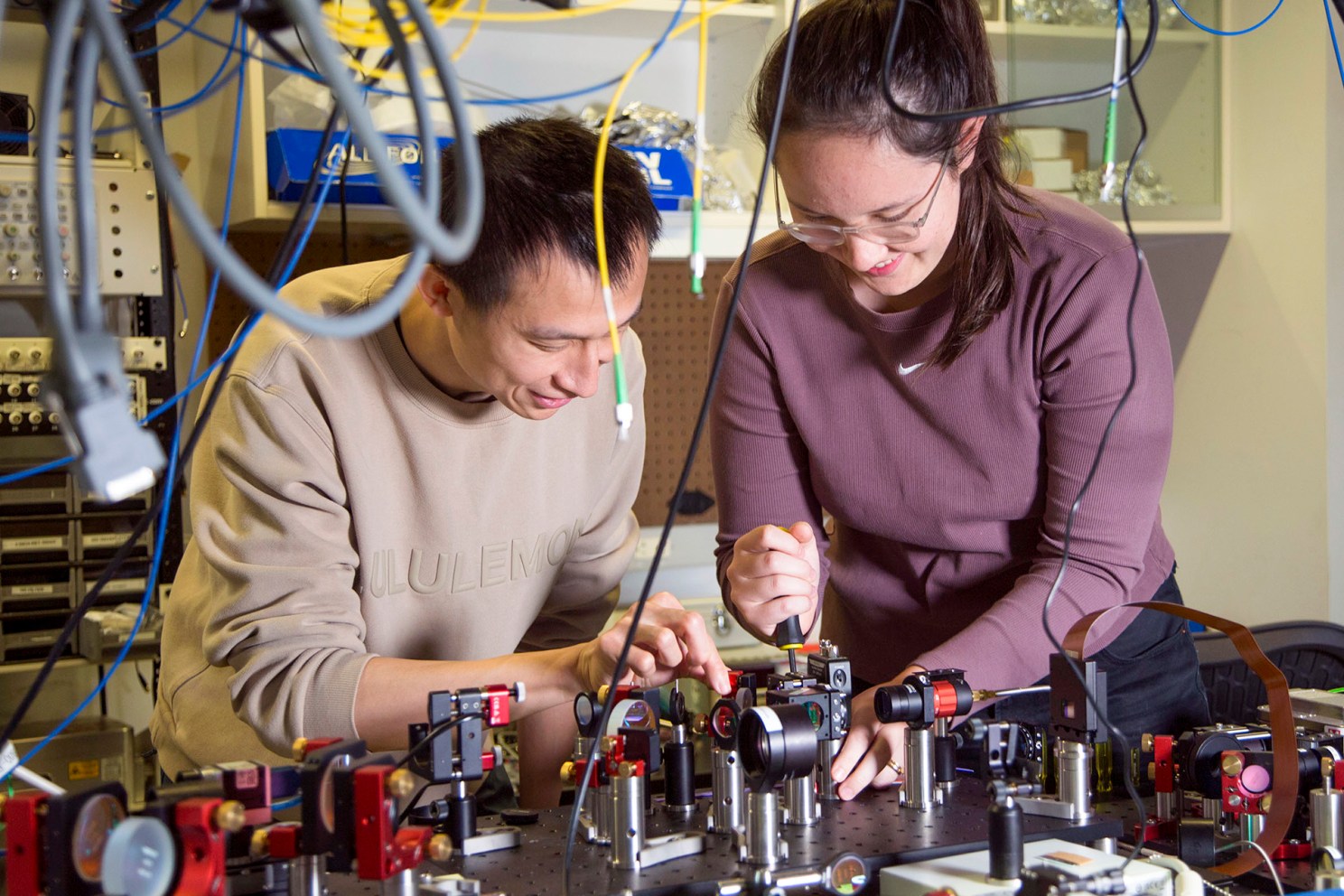
Sophie Li and Muqing Xu work with a neutral atom array system in their Harvard lab.
Photo by Paul Horowitz
Project unites MIT, Cornell, three national labs, tech partners as part of Genesis Mission
For decades, Mikhail Lukin, the Joshua and Beth Friedman University Professor, has shaped some of the biggest discoveries in quantum information science.
Now, he is using artificial intelligence to accelerate that work, leading a collaboration that has received $12 million from the U.S. Department of Energy.
The project, Application-Aware Error Correction Codesign for Scientific Quantum Computing (ASQC), is one of 12 Phase II awards announced Oct. 9 under the Genesis Mission, which aims to integrate the world’s best supercomputers, experimental facilities, and AI systems to advance American research and innovation.
Lukin, co-director of the Harvard Quantum Initiative, is the project’s principal investigator. He will work with Harvard physicists Markus Greiner and Susanne Yelin and researchers at MIT; Cornell University; Los Alamos National Laboratory; Lawrence Berkeley National Laboratory; Sandia National Laboratories; QuEra Computing (where Lukin and Greiner are co-founders and Lukin is a chief scientist); NVIDIA; and Anthropic.
“Some of the most thrilling questions in science have long seemed out of reach. But the barriers to discovery are falling rapidly as quantum computing and artificial intelligence expand the realm of the possible,” University President Alan M. Garber said. “Mikhail is a visionary leader. He will do an excellent job both driving progress and strengthening partnerships to ensure America’s competitiveness in this area of vital importance.”
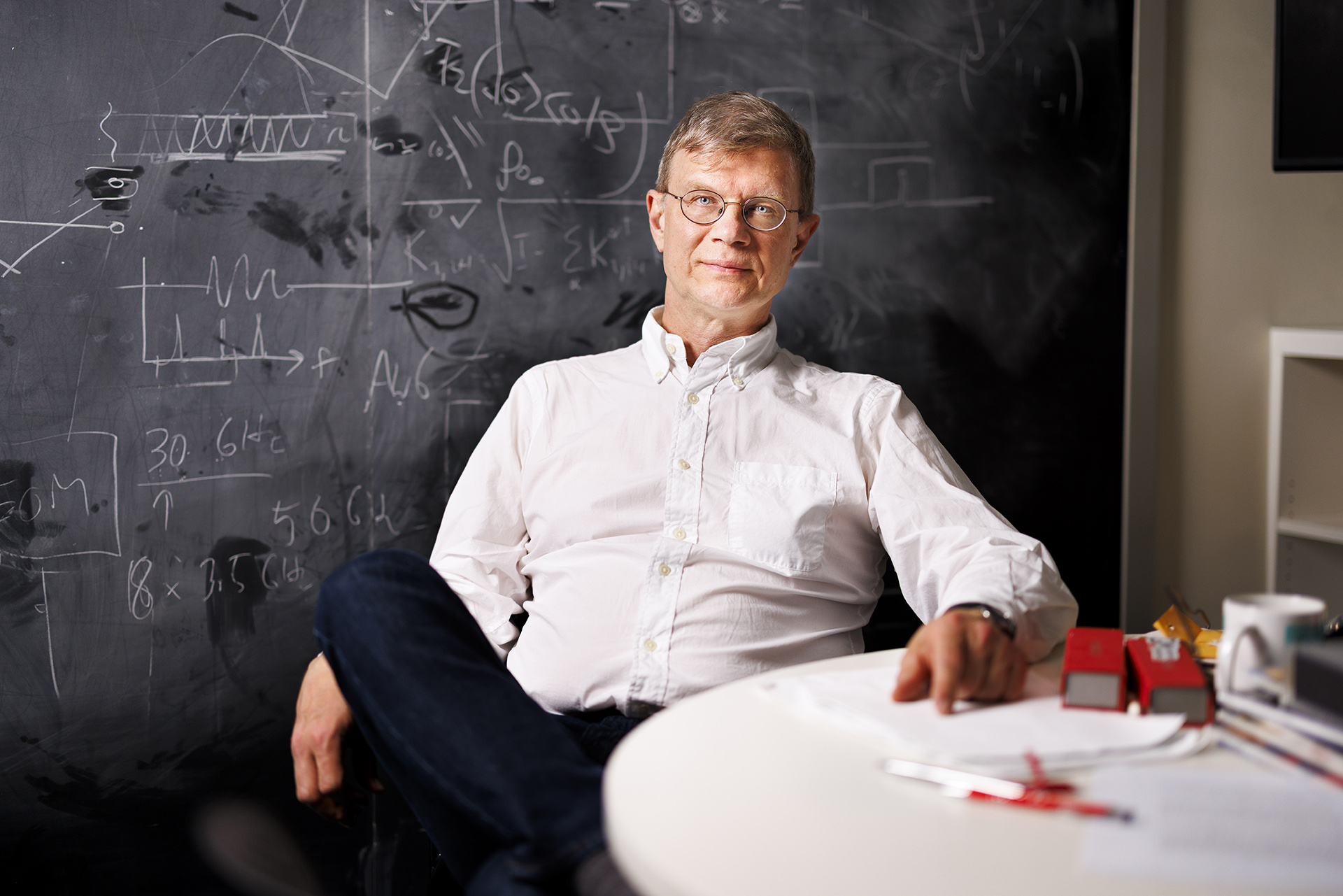
With quantum computers, Mikhail Lukin says,“you can really explore corners of the universe where you have never been, like a new kind of telescope.”
File photo by Veasey Conway/Harvard Staff Photographer
The federal award gives a boost to work Lukin and his colleagues have pioneered — from fundamental research to the construction of quantum computers — but with an added level of collaboration. While universities often work together on quantum computing research, Lukin said, it’s less common for leading academic institutions to work with researchers at national laboratories and major companies.
“This kind of collaborative approach is really needed in this case. We want to make something that no one else has been able to make, ever,” he said. “We’ll take all help.”
The project will build on research Lukin and his collaborators published last year, which addressed a key challenge in quantum computing related to environmental noise and the inherently unstable quantum bits, or qubits, that make up quantum computers. Through quantum error correction (QEC), the group suppressed errors to the point that adding qubits would reduce errors rather than add them, paving the way for larger, more complex calculations.
The ASQC project will develop an AI-driven, fault-tolerant QEC system that can adapt to scientific problems relevant to the Energy Department. The team will train AI models to learn which errors matter for problems in quantum simulation, materials science, chemistry, and nuclear science; use AI to design codes and decoders tailored to them; and test the results on hardware at Harvard, MIT, and QuEra.
“This is really an attempt to establish scientific foundations for useful fault-tolerant quantum computers,” Lukin said, “and really accelerate this progress using AI.”
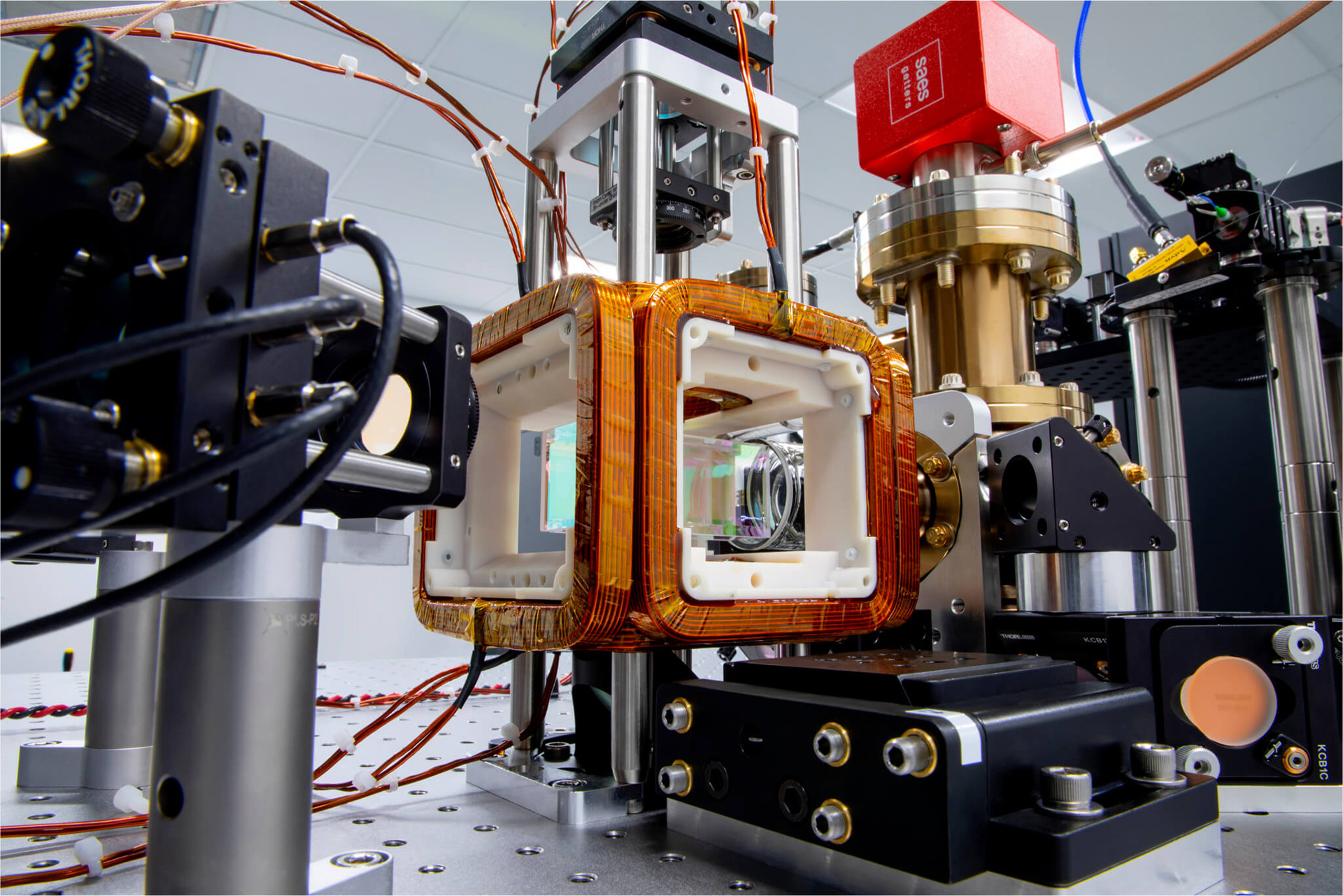
Inside QuEra’s quantum computer Aquila.
Photo courtesy of QuEra
Members of the team have already put AI to use.
In an April preprint, Lukin, Yelin, and colleagues described a neural-network decoder — software that identifies errors during computation — that cut error rates up to 17 times below existing versions and ran thousands of times faster.
In another recent work, in collaboration with QuEra and Anthropic, the team used large language models to discover state-of-the-art quantum circuits for tasks spanning numerical computation, chemistry, optimization, quantum simulation, and number theory.
Alongside Harvard’s researchers, co-investigators on this program, which is administered by the Advanced Scientific Computing Research division of the Department of Energy, include Vladan Vuletić, Soonwon Choi, and Hengyun “Harry” Zhou of MIT; Eun-Ah Kim of Cornell; Andrew Sornborger, Lukasz Cincio, and Michael McKerns of Los Alamos; Wibe de Jong and Costin Iancu of Lawrence Berkeley; Andrew Landahl, Riley Chien, and Kevin Thompson of Sandia; Nathan Gemelke and Michael Gullans of QuEra; Krysta Svore of NVIDIA; and Alek Kemeny of Anthropic.
For Lukin, the quantum computer is not just another computer but a whole new scientific instrument.
“You can really explore corners of the universe where you have never been, like a new kind of telescope,” he said. “I think as we build larger and better quantum computers, we will really start making more and more scientific discoveries.”
And with the added level of collaboration and new advances in artificial intelligence, he added, the potential growth could be even more exponential.
“We can really see these dreams the community has had for the last 40 years, for the first time, in the direct line of sight.”