Featured series

Campus & Community
Harvard launches $150M research initiative
University plans range of awards in basic and applied science, seeking to meet ‘moment of remarkable opportunity’
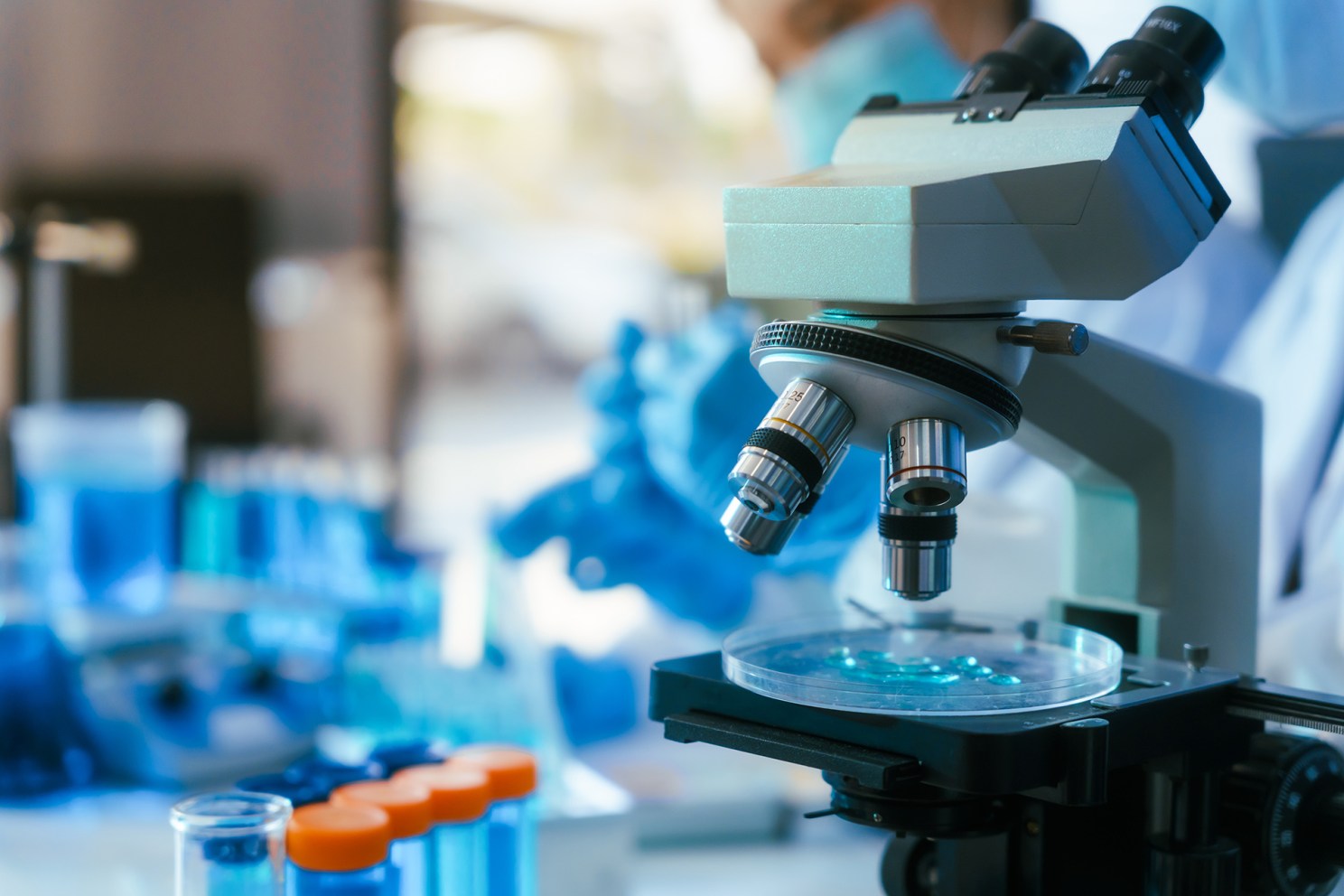
A new strategic research initiative is seeking to bolster pioneering Harvard work in areas ripe for breakthroughs, including neuroscience, immunology, quantum, artificial intelligence, and energy and climate.
The $150 million initiative, which represents one of Harvard’s largest direct investments in research, will fund promising avenues of inquiry in both basic and applied science, and fuel the creativity of the University’s exceptional scientists and researchers. Projects will address critical questions in science, engineering, and related fields, and have the potential to grow and attract external funding.
“Harvard’s long dedication to basic and applied research that serves our nation and the world has never been more important than at this moment of remarkable opportunity for science and innovation,” said Harvard President Alan Garber. “Thanks to scientific advances in many fields and the development of more powerful tools for conducting research, the potential for rapid scientific progress has never been greater. But it requires dependable support. This program will ensure that Harvard sustains its momentum in pursuing high-impact innovation even as we seek to diversify funding sources for our vital work.”
The broad-based initiative recognizes that the research funding environment for higher education has shifted dramatically since early 2025, but builds on groundwork laid by the University over many years.
“In a time of both great uncertainty and great opportunity, Harvard’s program will provide strategic support to our extraordinary scientific community,” said Harvard Provost John Manning. “With Harvard’s researchers poised to make field-changing discoveries in multiple areas of inquiry, and with the rapid development and deployment of new tools that are reshaping science and engineering, we cannot slow down.
“Drawing on the expertise of our Schools and our faculty to identify and shape strategic priorities, we are making this substantial investment to enable Harvard’s world-class researchers to pursue work of exceptional promise and impact in both basic and translational science,” Manning continued.
Harvard Senior Vice Provost for Research John Shaw said that the initiative recognizes the University’s commitment to sustained investment in promising areas of discovery, regardless of shifts in federal funding. This is a different intent, he said, than the funding the University made available for research in 2025, which sought to support continuity during difficult and disruptive months following steps by the government to terminate Harvard’s grants.
Court victories have helped sustain the flow of federal research funding to Harvard, while Congress has also maintained federal funding for research nationally. However, the pace of new awards to research institutions across the country, including Harvard, has declined substantially.
“The topics, the targets, that the federal agencies want to support are ever-evolving,” said Shaw, who is also the Harry C. Dudley Professor of Structural and Economic Geology and Professor of Environmental Science and Engineering. “We’re not focused on trying to simply plug a gap due to a reduction in federal awards. We’re trying to advance new research opportunities that will lead to new discoveries, broad societal benefits, and attract future funding from both the federal government and other sources.”
The scientific research initiative includes two key components. The first will provide $100 million to be distributed by Schools to support strategic priorities identified through School-based processes. Funding allocated to the Schools from the $100 million will be proportional to their federal funding expenditures.
The remaining $50 million will include awards in areas of research that offer promising opportunities across multiple faculties at the University, marrying strengths in different disciplines. To facilitate this, the University is launching a series of new and expanded internal award programs through the provost’s office that will support individual research labs as well as collaborative projects that connect researchers across the University.
One area Harvard will look to support through funding is neuroscience, which is experiencing rapid advances in areas related to dementia, schizophrenia, and brain structure. A second area is immunology, inflammation, and infectious diseases, where advances have been accelerating cancer treatment and the understanding of the role of inflammation in Alzheimer’s and other conditions. Individual awards of up to $275,000, with larger amounts for collaborative proposals, will go to each of the two project areas, which, as with others that are part of the initiative, will emphasize early-stage research that is likely to eventually attract outside funding.
In a third area, energy and climate, the Salata Institute for Climate and Sustainability is adding two new clusters to its existing portfolio of cross-faculty research clusters. The first involves energy technologies, markets, and systems as they relate to climate impacts. The second addresses the area of remote sensing and climate/environment measurements, in this case as applied to risk assessment and mitigation, as well as adaptation. Each of the two clusters is eligible for up to $600,000 per year for a three-year period.
Support will also be directed to the Frontiers of Innovation for Societal Impact Fund. The Frontiers Fund offers early-stage Spark Awards (up to $100,000) and more advanced Ascend Awards at higher funding levels. The two-year Frontiers awards go to projects that have as a key feature the potential to attract follow-on funding from industry or private philanthropy. In the first year of the project, the University awarded $4.9 million to 20 awardees, including for research aimed at identifying breast cancer progression earlier and efforts to advance strategies for injury prevention, rehabilitation, and treatment for musculoskeletal and neuromuscular conditions.
Other existing funding programs that focus on innovation will also be strengthened through the two components of this initiative, including a partnership with the Wyss Institute for Biologically Inspired Engineering to support validation projects, which test new ideas with the potential for both societal benefit and commercialization. University support will allow the number of projects funded to double, Shaw said.
The final piece of the initiative is aimed at augmenting Harvard’s computing infrastructure, ensuring that it will be robust enough to support the University’s increasingly computing-intensive research.
“It’s a recognition that research is increasingly dependent on access to sophisticated technology: large-scale computing, specialized hardware, leading commercial AI models,” said Harvard Vice President and Chief Information Officer Klara Jelinkova. “We are reducing barriers to access those capabilities in ways that accelerate existing research and enable new forms of scholarship.”
The infrastructure investment will include adding servers and computational capacity and providing access to other computing resources, such as cloud computing and leading AI models. Data storage is also important, Jelinkova said, particularly where it concerns regulated data — such as protected medical data — that requires a higher level of security.