Featured series
Campus & Community
‘Our University is, at its heart, an affirmation of humanity’
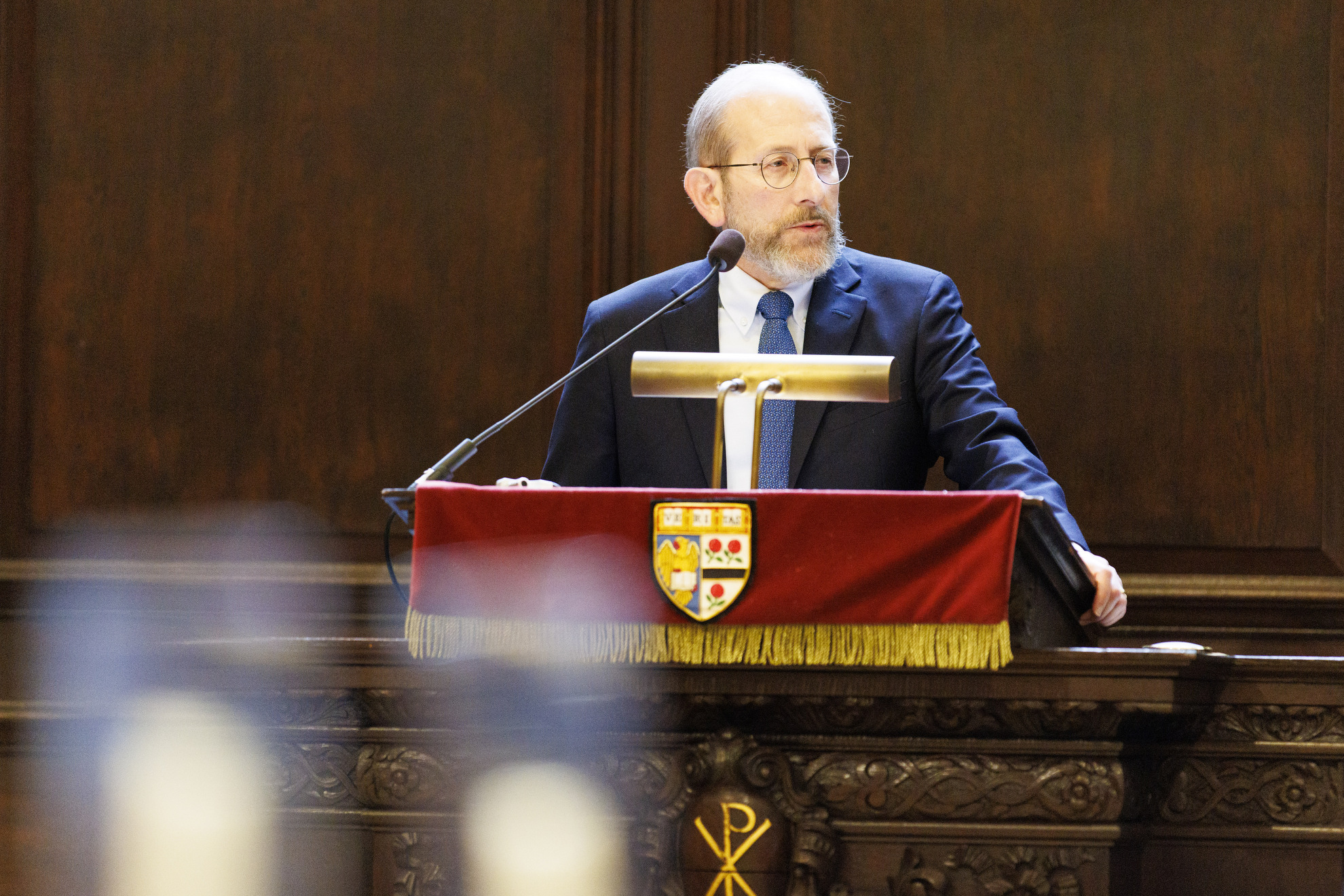
Alan Garber.
Photos by Veasey Conway/Harvard Staff Photographer
Garber reminds faculty, students at Morning Prayers that AI is powerful technology but human intelligence, values remain in charge
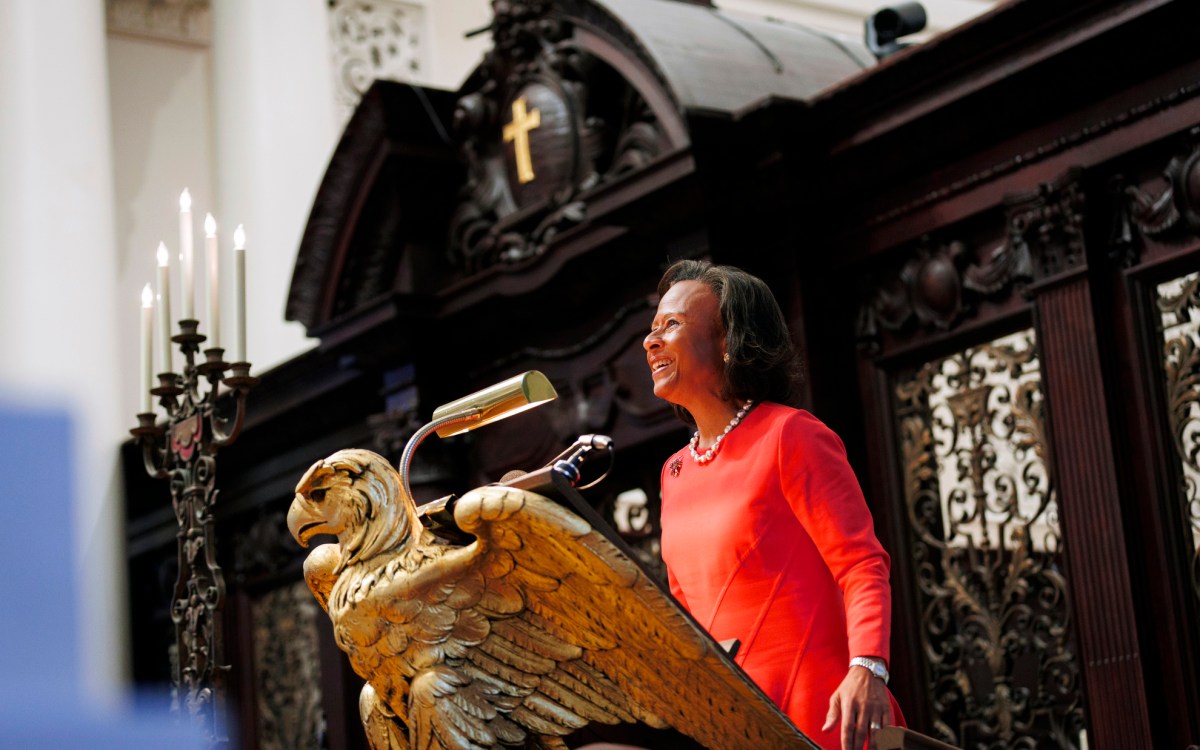
Amid the mushrooming use of AI, Harvard President Alan Garber reminded students and faculty during the first Morning Prayers ceremony of the new academic year that technology is a tool and that human intelligence and values remain in charge — and at the heart of the University’s work.
“This is a week of beginnings, as new students arrive on campus, continuing students return, and we work together to advance Harvard’s mission,” said Garber at Memorial Church’s Appleton Chapel on Wednesday morning. “This moment of renewal is an opportune time to pause and consider the meaning of all that we undertake here, powered, as ever, by human intelligence.”
The meaning, said Garber, lies in the myriad ways in which the work done at the University, across fields and disciplines, aims to “push the boundaries of knowledge” to address the world’s most significant challenges.
“What does that mean?” he asked. “It means that we seek to solve the biggest problems: approaching climate change from a wide range of vantage points; battling cancer with ever-more-powerful tools of our own design; and racing the clock to untangle the origins of degenerative neurological disease. It means we preserve life as we lengthen and improve it while marveling at the majesty and mysteries of the plants and animals that share our planet. It means that we go to extremes — from parsecs to Planck lengths — to explore the measurable, eagerly plunging into the unknown, seeking to understand the meaning of time and space. And, through the many forms of beauty and meaning held in the arts and humanities, we contend, too, with the immensurables and the immutables — grief, joy, and love among them.”
Garber spoke about the impact of artificial intelligence in transforming scientific research as its tools help scientists do their work at a much faster speed. A faculty member who used AI tools for his research told Garber recently how he was able to accomplish in six months what it would have taken him 10 years, Garber said.
“I’m convinced that advances in knowledge — essential to human progress, and at the core of our excellence as a research university — will soon be made more rapidly than at any other time in human existence.”
Alan Garber
“I’m convinced that advances in knowledge — essential to human progress, and at the core of our excellence as a research university — will soon be made more rapidly than at any other time in human existence,” said Garber. “When I think about the new age now unfolding, I tend to focus on the costs, risks, and benefits of the changes to come, and what they mean for our mission and our community. I rarely think about dreams. But perhaps, as we continue to ponder challenges and possibilities, we should give ourselves greater license to imagine the future that we hope to inhabit.”
While the pursuit of discoveries, breakthroughs, glory, and success is exciting and uplifting, that should be accompanied by “compassion, selflessness, humility, and wonder,” Garber said, as well as a love for the work itself, and the “good inherent in our work and the good that comes from it.”
Garber also spoke about how the Jewish tradition exalts human capacities for creativity and curiosity, judgment, and reason, and considers human intelligence precious and unique.
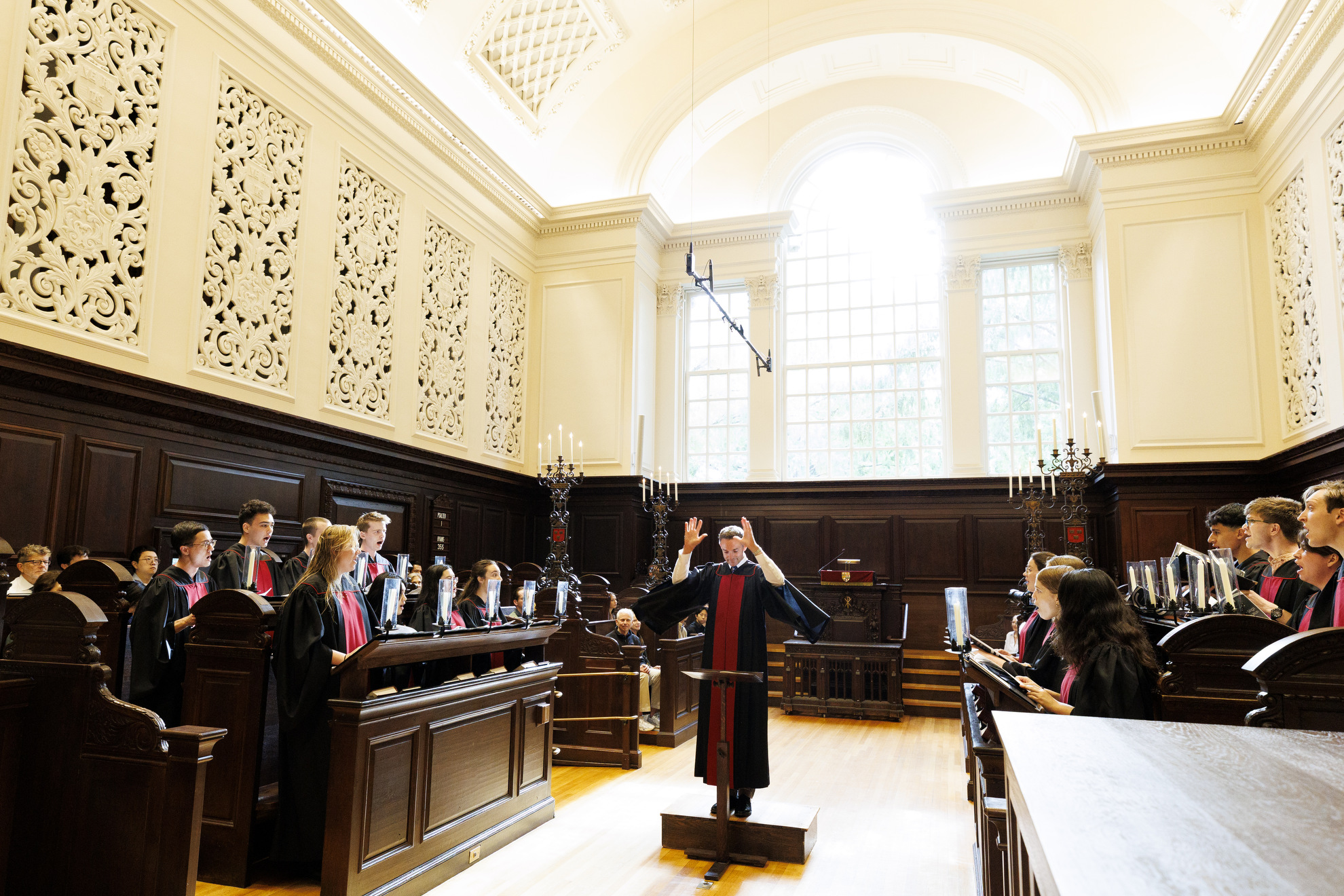
“As we are told in the book of Genesis — known in Hebrew as Bereshit, or ‘In the beginning …’ — humanity was not simply made but created ‘in His image,’” said Garber. “That verse tells us human life is sacred, each human is unique, and humans have distinct capabilities. Among them is the ability to choose freely, not by an algorithm.
“For Rabbi Akiva, the possession of self-knowledge was especially important: He commented that ‘it was made known to him that he was created in the image (as it is said “for in the image of God did He make the human.)’ [Mishna Avot 3:14] Thus human intelligence is not only precious. It is distinct from any intelligence that humans have created, as astounding as the unfolding technical advances are.”
In closing, Garber reminded the audience that Harvard is a community devoted to learning.
“Learning is at the heart of what makes us human,” said Garber. “It begins at our beginnings and persists as long as each of us does, an unceasing process of discovery and insight. Learning is not only lifelong. Learning is life. And the preservation of learning, the work to which Harvard has set itself for centuries, is more than just a path to greatness or even to goodness. The preservation of learning — the elevation and celebration of learning — is the preservation of human life itself.
“Our University is, at its heart, an affirmation of humanity, an affirmation of our unique and wondrous capacities and the care and skill they beget.”