Featured series



Science & Tech
Building useful quantum computers ‘in our direct line of sight’
Researchers say creation of startups suggests game-changing tech may be developing at faster pace than expected
Mihir Bhaskar was a self-described “total nerd” in high school. He volunteered at a computer history museum and became obsessed with the hardware and how it all came to be: from abacuses to punch cards, vacuum tubes to personal computers.
“I was really fascinated with the history of computing, the development of the semiconductor and transistors and things like that,” said Bhaskar, who received his Ph.D. in physics from Harvard in 2021.
Over the past decade, Bhaskar and other grad students, postdocs, and professors have made strides in developing quantum computing, work that one day may land their devices in a museum display. The pace of their progress has already fostered three startups, a sign the game-changing technology may be developing ahead of expectations, researchers say.
“I have never seen a science that is so ‘blue sky’ go out into the commercial sphere so quickly,” said Evelyn Hu, Tarr-Coyne Professor of Applied Physics and of Electrical Engineering. “Where are we now compared to where we thought we’d be in 2018? We are so much farther ahead than I think any of us could have imagined.”
One of the three startups, LightsynQ, was co-founded in 2024 by Bhaskar to commercialize his doctoral research in quantum networking. The company was acquired last year by publicly traded IonQ, where Bhaskar is now senior vice president for research and development.
Another, QuEra, was founded in 2018 by Mikhail Lukin, co-director of the Harvard Quantum Initiative in Science and Engineering, and Markus Greiner, George Vasmer Leverett Professor of Physics, with partners from Harvard and MIT.
QuEra recently shipped its second commercial quantum computer — based on technology from their Harvard labs — to Japan’s National Institute of Advanced Industrial Science and Technology.
The third, CavilinQ, launched in order to develop and commercialize another quantum networking technology, is taking initial steps into the market, having announced $8.8 million in seed funding.

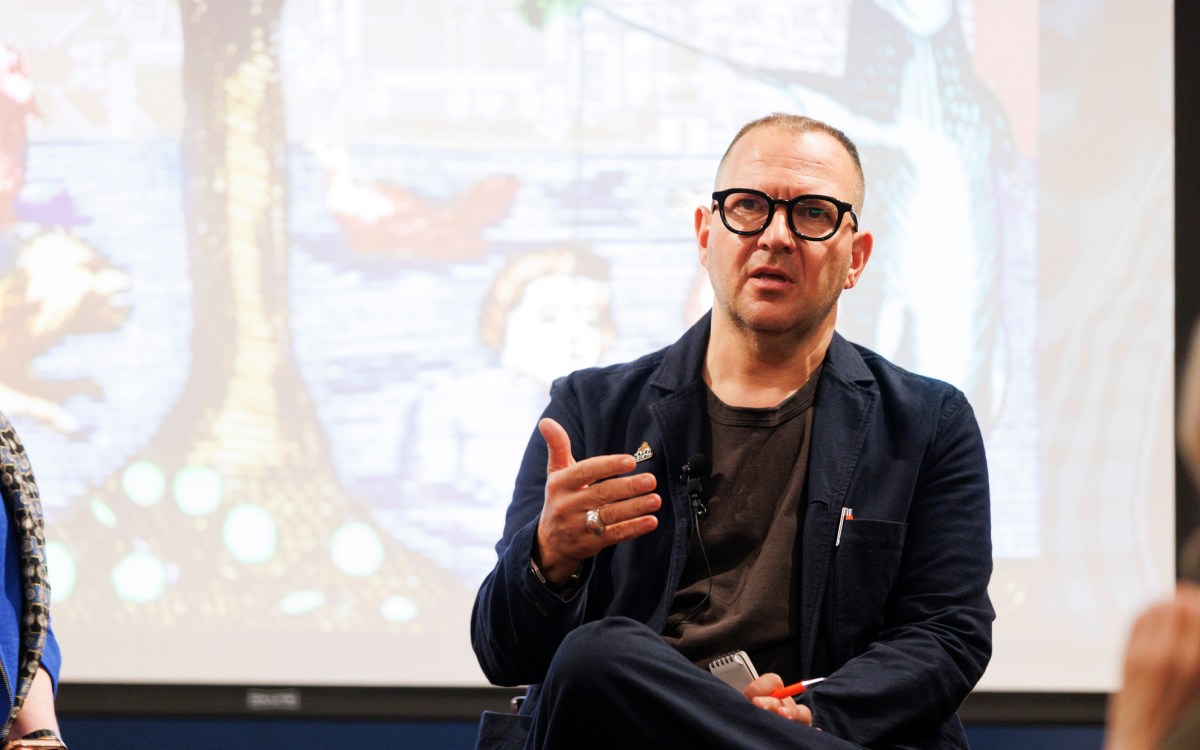
“Where are we now compared to where we thought we’d be in 2018? We are so much farther ahead than I think any of us could have imagined,” said Evelyn Hu.
Photo by Grace DuVal
Brandon Grinkemeyer, a postdoctoral fellow in physics and, with Shankar Menon, one of CavilinQ’s founders, said that quantum networking is important for the same reason that it is in classical computing.
The ability to connect many processors together increases computational power and is what makes supercomputers so powerful. The same principle applies to quantum computing, he said, where networking quantum processors enables them to tackle problems that no single processor could handle alone.
“Connecting processors can offer fundamentally new functionality beyond just scaling up,” Grinkemeyer said. “It unlocks capabilities like quantum enhanced imaging and fully secure quantum computation.”
Quantum computers leverage the strange physics that rules in the atomic and subatomic quantum realm, where ones and zeroes — the bits that drive classical computing — become ones and zeros and every value in between.
In addition something called “quantum entanglement” means particles can influence each other even when separated by a great distance.
Harnessing these and other properties at work in the atomic realm has the potential to enable vastly more powerful computers, researchers say, with potentially revolutionary applications in drug discovery, finance, materials science, cryptography, exoplanet research, chemistry, and high-energy physics, among others.
Hu is co-director of Harvard’s Quantum Initiative in Science and Engineering, from whose affiliated labs key developments have emerged.
Established in 2018, HQI researchers like Hu and Lukin, the Joshua and Beth Friedman University Professor, credit the entrepreneurial environment in and around Harvard with fostering research partnerships with industry, including Amazon Web Services, which in turn has encouraged the development of startups to promote and further develop advances in quantum computing and networking.
Of particular importance, Lukin said, is improved fault tolerance, a recent advance out of his lab that reduces errors in calculation that are byproducts of the quantum forces at work. Those errors can cascade and render results unusable.
The advance was reported late last year and has cleared a way for technology to leap beyond where many thought it would be at this stage.
“People initially thought that this sort of fault-tolerant, large-scale, quantum computers would be coming some time by the end of the next decade, and I think it’s quite likely that actually they will be here — at least in some form — by the end of this decade,” Lukin said. “So, we’re at least five, maybe 10 years ahead. And it’s really a lot of the work in the HQI that fueled that.”
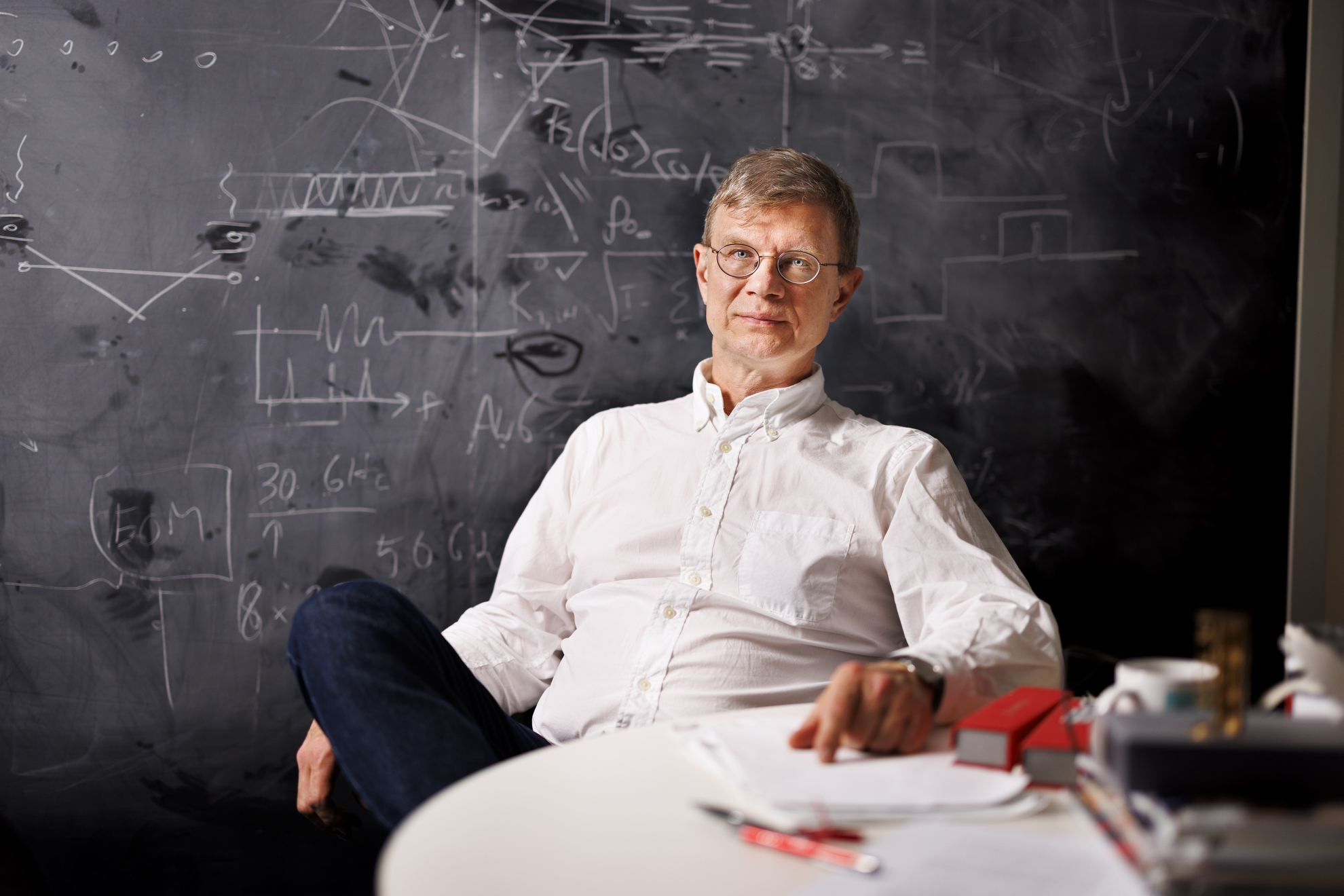
“This is completely new technology. A quantum computer is different from any kind of classical computer that’s ever been built,” said Mikhail Lukin.
Veasey Conway/Harvard Staff Photographer
Bhaskar agreed that the technology has advanced faster than he expected and said that a key element has been industry support.
“I couldn’t have predicted this. I got into the field because I knew there was promise, but the pace of innovation, the pace of development, the pace of — honestly — capital going into the technology has far exceeded what I could have possibly imagined or dreamt of,” Bhaskar said. “I didn’t get into this space to be an entrepreneur, I got into this space because I was really interested in working on the fundamental computing information processing technology and the physics of it. That’s what I love to do.”
Harvard Chief Technology Development Officer Sam Liss said the advances and their early commercialization through startups are a product not just of the drive of the researchers involved and the support from their partners, but also the Greater Boston ecosystem, which he described as a “quantum hub.”
“It’s an area of research with commercial potential, that’s one aspect of it,” Liss said. “It is a mindset and a culture of entrepreneurship within HQI, and it’s the ecosystem in which we reside. Boston is a quantum hub — this is an area of focus for the region — and that, along with the engagement of supporters and alumni, is making all the difference.”
Liss is also eager to see more quantum research projects evolve into startups, like QuEra, LightsynQ, and CavilinQ. The support and enthusiasm for quantum means that academic discoveries have the potential to become impactful ventures.
The Harvard Grid Accelerator was created by the Office of Technology Development to do exactly that, offering funding, mentorship, industry connections, and support to help research in engineering and the physical sciences turn into startup companies. Recent support from the Grid Accelerator led to the launch of CavilinQ.
Researchers say some fields will obviously benefit from quantum computing, but some important, even revolutionary, applications may come in areas where they’re not anticipated.
“The transistor was invented in 1947 and initially nobody knew what major application would benefit from its use,” Hu said. “They knew it was important, but it was perhaps too early to identify the ‘killer apps.’ The initial applications were for hearing aids and then later transistor radios.”
While useful, neither of those had the society-shaping force of the computer revolution that was enabled by transistors, which are electronic switches present on modern microchips by the billions.
But those early devices served a useful function: They kicked off the new technology’s commercialization, which got people wondering what else they might be able to do.
As with the transistor, Lukin said, we may not know until more quantum computers are out there, grinding away at problems, letting people see what they can do and begin to imagine new possibilities.
“This is completely new technology. A quantum computer is different from any kind of classical computer that’s ever been built,” Lukin said. “There are two key challenges in this field. One is building these quantum machines, and the other is using them. While a lot of hard work remains to be done, for the first time, building useful quantum machines is in our direct line of sight.”