Featured series
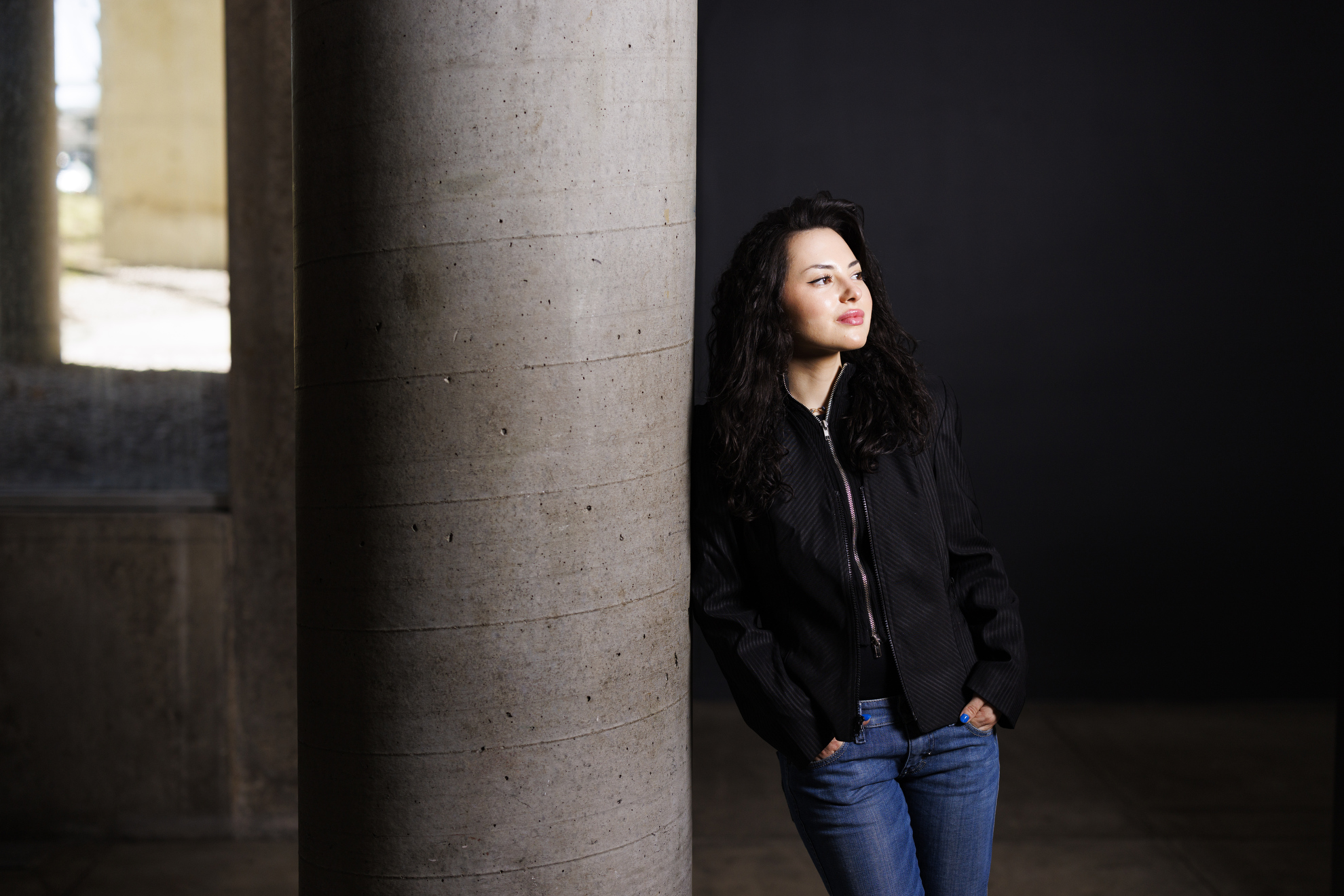
Daniela Solis.
Veasey Conway/Harvard Staff Photographer
Campus & Community
Presidential dreams can wait. For now, she can’t stop painting.
When Daniela Solis took an art class junior year, ‘it felt like time stopped.’
Part of the Commencement 2026 series
A collection of features and graduate profiles covering Harvard’s 375th Commencement.
Inspired by the trailblazing female politicians of her native Costa Rica, which elected its second woman president earlier this year, Daniela Solis ’26 arrived at Harvard with a dream to run for office.
“I’ve always wanted to become president since I was a little kid,” said Solis. “I always wanted to study government to serve my country better.”
Then an arts class in her junior year opened her eyes to an entirely new calling she never would have predicted.
“What I experienced doing art was something I had never experienced before,” Solis said. “When I was painting, it felt like time stopped. Nothing else exists.”
The government concentrator with a secondary in Theater, Dance & Media said that after graduation she plans to pursue a master’s degree in fine arts. Politics is still on her horizon, she said, but studying the arts has made her a more well-rounded person better equipped to lead others.
“I have been able to find myself through art,” said Solis. “I had never expected that I would become an artist. I have learned that every day gives you the opportunity to change and be a better version of yourself.”
“I have been able to find myself through art.”
Daniela Solis
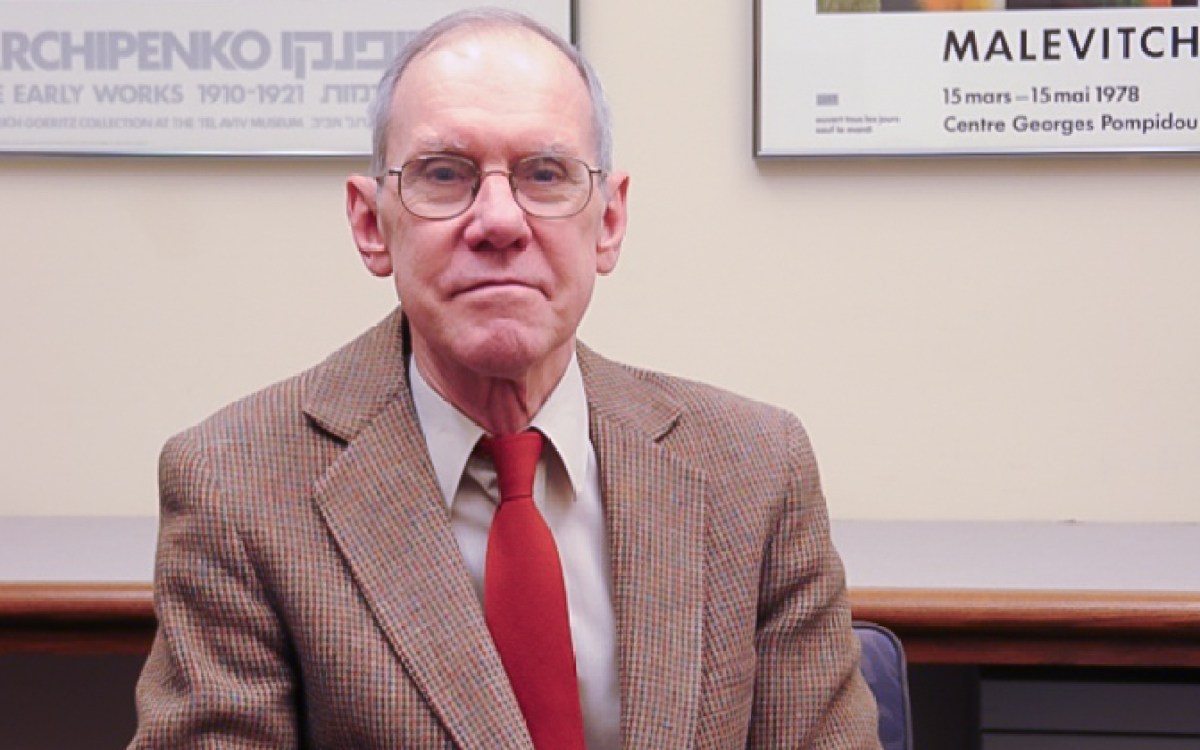
Karthik Pandian, associate professor in the Department of Art, Film, and Visual Studies, taught the class that made Solis fall in love with art. He said Soltis stood out from the beginning for her “openness” to the “process-driven ways of making art” and her “commitment” to creativity.
Many students, Pandian said, approach assignments with an eye toward the professor’s goals to get a good grade. But in his class, he said, assignments are open-ended, and students are encouraged to be open to serendipity, which can be frustrating to some.
“With Daniela, I got the sense that she was seeking a space like this throughout her studies at Harvard,” said Pandian, “and when she found it in the studio in the Carpenter Center, she leapt through the portal, so to speak, into her own very deep well of creativity and embraced the unknown. She constantly surprised me throughout the semester.”
Since taking Pandian’s class — in which students use materials such as cardboard, charcoal, and found objects to create art — Solis has produced more than 40 pieces. She sometimes spends five hours a day working on art projects. This past winter, she painted a mural in her high school in Costa Rica’s capital, San Jose. On her website Her Reset, which displays some of her work, she writes that “art [is] a way of expanding consciousness and returning to what is most authentic within us.”
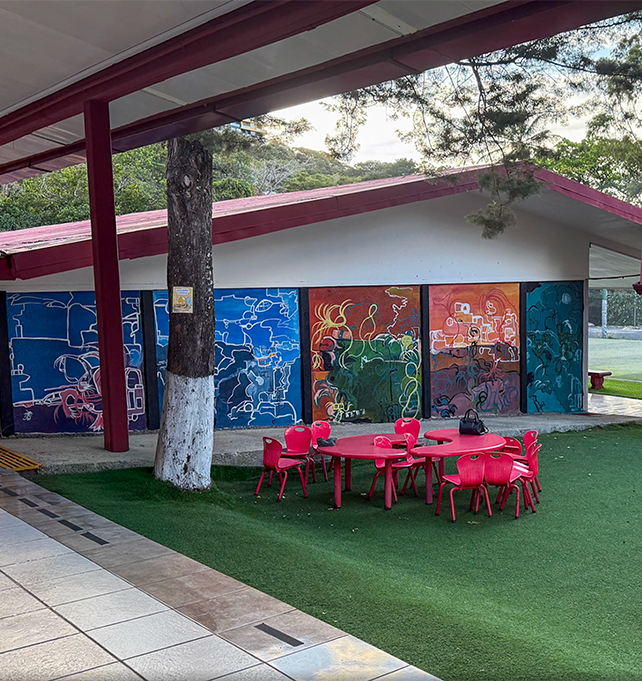
Solis’ mural at her high school.
Photos courtesy of Daniela Solis
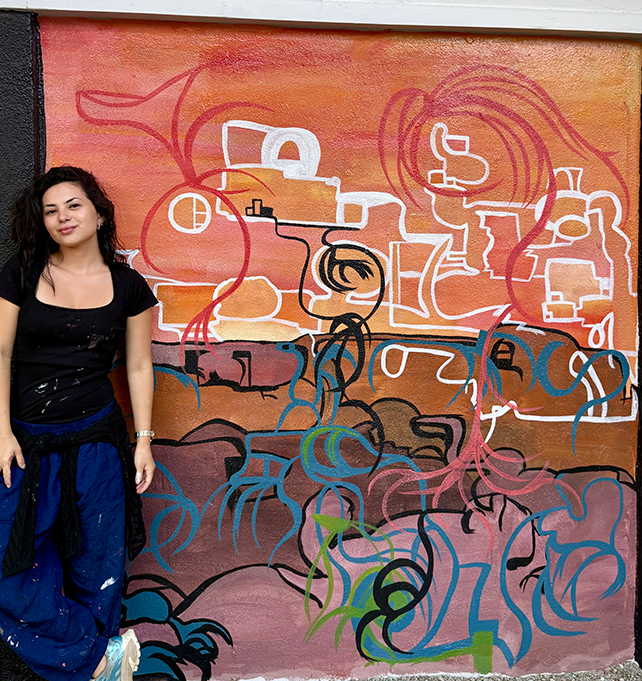
Solis’ ability to embrace a path she hadn’t foreseen when she first arrived at Harvard can be traced back to the example set by her mother. “She inspired me to be myself, and to care for others. I learned that even when no one is looking at you, you should always choose to do what’s right.”
A single parent, Solis’ mother worked as a real estate agent to provide for her daughter and secure her a good education at a small private high school in San Jose, while also getting involved in local politics. Influenced by her mother, but also by her country’s female politicians, Solis dreamed of running for office. A country of 5.2 million people, Costa Rica has had two female presidents: Laura Chinchilla in 2010, and Laura Fernández Delgado, who was elected in February. At present, female lawmakers represent the majority in Costa Rica’s legislative assembly.
For Pandian, Solis’ felicitous encounter with art is an example for all students. Many professors lament that students spend their undergraduate years preparing for a career path and a high-paying job after graduation, instead of exploring the humanities, the arts, and social sciences.
“There are many ways that you can make an impact in this world, not just through the most clear and visible forms of power,” said Pandian. “Through art, culture and transformation of consciousness, we can do great things as well.”