
 Featured series


Tag: oncology
-
Health
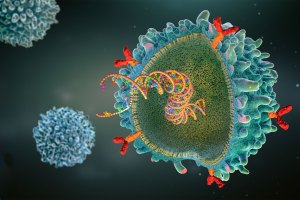
How serious is FDA warning about revolutionary blood-cancer treatment?
Dana-Farber Cancer Institute researcher details promise, peril of CAR T-cell therapy, which enlists body’s immune system to fight disease
-
Health
The social life of a dermatologist
It might be jarring when a friend, or complete stranger, pulls down their shirt while you’re trying to eat dinner. It’s also an opportunity.

-
Health
Cancer vaccine shows durable immune effects
Researchers at Harvard Medical School and affiliated institutions have shown that a personalized cancer vaccine that is specific to an individual’s tumor has lasting effects, detecting vaccine-related immune system changes years after the vaccine was given.

-
Health
Survey of oncologists finds knowledge gap on medical marijuana
Harvard psychiatrist Ilana Braun found a knowledge gap on medical marijuana in a survey of oncologists nationwide.

-
Campus & Community
Jain receives 2012 Science of Oncology Award
Rakesh Jain received the 2012 Science of Oncology award from the American Society of Clinical Oncology, recognizing his three decades of pioneering work in the field of oncology.
-
Health
Beyond DNA
On a day when Harvard celebrated the accomplishments of the Human Genome Project, the Radcliffe Institute hosted a scientist whose work focuses not just on DNA, but on the mechanisms that control its expression.

-
Health
Prostate cancer treatment increases risk of diabetes, heart disease
A treatment mainstay for prostate cancer puts men at increased risk for diabetes and cardiovascular disease, according to a large observational study published in the Sept. 20, 2006, Journal of Clinical Oncology. “Men with prostate cancer have high five-year survival rates, but they also have higher rates of non-cancer mortality than healthy men,” says study…
-
Health
Advances in chemotherapy improve outcomes in select breast cancers
Recent advances in chemotherapy have significantly reduced the risk of disease recurrence and death in breast cancer patients whose tumors are not hormone sensitive, according to a study by researchers at Dana-Farber Cancer Institute and 10 other institutions. The findings were reported in the April 12, 2006 issue of the Journal of the American Medical…
-
Health
Herceptin treatment lowers recurrence rate in early breast cancer
Encouraging findings came from an interim report from HERA, an ongoing large, international clinical trial of Herceptin, published Oct. 19, 2005 in the New England Journal of Medicine. The analysis was led by Richard Gelber, PhD, of Harvard and Dana-Farber Cancer Institute, who led the statistical analysis for the HERA trial, which is one of…
-
Health
Subtle changes in normal genes implicated in breast cancer
Scientists found that benign cells surrounding breast cancers undergo epigenetic modifications. The altered gene function causes the microenvironment cells to signal proliferation and increased aggression in the breast tumor cells. Kornelia Polyak, M.D., Ph.D., is senior author of the paper, which was posted as an advance online publication on the Nature Genetics Web site. Min…
-
Health
Scientists identify normal gene driving the growth and survival of melanoma cells
Dana-Farber’s Levi Garraway, M.D., Ph.D., and William Sellers, M.D., the paper’s first and senior authors, and their colleagues reported their findings in the July 7, 2005 issue of the journal Nature. The researchers used single nucleotide polymorphism (SNP) array technology, which focuses on the building blocks of individual genes, to identify regions of chromosomes where…
-
Health
Aspirin use may protect against colon cancer recurrence, reduce risk of death
“Our data are intriguing because they showed that aspirin use notably reduced the risk of recurrence in patients with advanced colon cancer, but more research is needed before any treatment recommendations can be made about the regular use of aspirin,” says Charles Fuchs, M.D., M.P.H., of the Dana-Farber Cancer Institute in Boston and lead author…
-
Health
Weight and weight gain may predict breast cancer survival
The study included 5,204 women with invasive breast cancer who were between the ages 30 to 55 when enrolled in the study in 1976. The researchers found that women who weighed more before they were diagnosed with breast cancer and those who were lean but gained weight after diagnosis and treatment tended to have worse…
-
Health
Gene expression profiling helps in ovarian cancer prognosis
Steven A. Cannistra, M.D., director of Gynecologic Medical Oncology at BIDMC and associate professor of medicine at Harvard Medical School, says ovarian cancer is often not detectable until its later stages. At that point, he adds, doctors typically use clinical data to assess a patient’s prognosis and determine her course of therapy, a method that…
-
Health
Study yields insights into precancerous condition
Caused by a mutation that inactivates the tumor suppressor gene LKB1, PJS causes gastrointestinal polyps that have a 30 to 50 percent chance of becoming cancerous, says senior author Lewis Cantley, PhD, chief of the Division of Signal Transduction at Beth Israel Deaconess Medical Center (BIDMC) and a member of the Department of Systems Biology…
-
Health
Quality of life continues to change long-term after treatment for prostate cancer
Researchers compared outcomes for men who had undergone surgery or radiation in the first study to look at the effects of prostate cancer treatment on quality of life beyond five years after treatment. Researchers surveyed 1,008 men with and without a history of prostate cancer about quality of life issues. The participants with prostate cancer…
-
Health
Study suggests more cancer patients receiving aggressive care at end of life
Researchers reviewed the records of 28,777 Medicare-eligible patients aged 65 and older who died within one year of being diagnosed with lung, breast, colorectal, and other gastrointestinal tumors between 1993 and 1996. They found that during this four-year period, the use of chemotherapy among these patients increased from 27.9 percent to 29.5 percent. Among those,…
-
Health
Idea inspires new screening test for anti-cancer agents
In a study published in the December 2003 issue of Cell, investigators from Dana-Farber Cancer Institute demonstrated that a new technique has helped them to identify a class of existing drugs able to kill certain types of cancer cells. “This is an example where one person’s work – that of Bill Sellers [of Medical Oncology]…
-
Health
Scientists create lab model of human pancreatic cancer
Currently, nearly all the 30,000 cases of pancreatic cancer diagnosed annually are fatal within a matter of months because they are too advanced to remove surgically by the time they cause symptoms. The standard treatments of chemotherapy and radiation are largely ineffective. Researchers at Dana-Farber Cancer Institute recently created bioengineered mice that develop aggressive, fatal…
-
Science & Tech
Minimally invasive prostate cancer treatment works as well as traditional techniques
Prostate cancer is the second most common cancer in men and the cause of approximately 29,000 deaths a year. Currently, the most common treatments for prostate cancer include radical prostatectomy (RP) and prostate brachytherapy using transrectal ultrasonography which delivers 100 percent of the radiation dosage to the entire prostate gland, thereby potentially compromising the health…
-
Health
Identifying which tumors will spread
Researchers at Harvard Medical School have identified a pattern of gene activity that seems to predict whether cancer will return after it is first treated. The ominous pattern shows up in many common types of cancer, including lung, breast, prostate, and brain. What’s more, it may be detectable before the malignancy starts to spread. It’s…
-
Health
Imaging technique tracks tumor escape into lymph nodes
For doctors as well as patients, detecting metastases can be a notoriously burdensome affair. Often, the only way to see whether a patient’s lymph nodes are invaded by cancer cells is to surgically remove and inspect them. In some cases, such as gastric cancer, this can mean several hours of sorting through the nodes in…
-
Campus & Community
New cancer drug wins FDA approval
When he was a first-year student at Harvard Medical School, Alfred Goldberg, now a professor of cell biology, wondered why the body destroys its own proteins, which are so vital to life. He wanted to know why muscles lose much of their mass with inactivity, nerve injury, or cancer. To get an answer, he started…
-
Health
Study sheds light on how the sun causes skin cancer
Scientists have discovered that the sun’s damaging ultraviolet (UV) rays target a series of biochemical signals inside the young skin cell, impairing the cell’s ability to control its proliferation. Lynda Chin and her colleagues found that they could increase both the number of tumors and the speed with which they formed by exposing newborn mice…
-
Health
Minimally invasive treatment successfully destroys kidney tumors
A research team from Massachusetts General Hospital has described how a technique called radiofrequency ablation (RFA) destroyed all renal cell carcinoma (RCC) tumors less than 3 cm in size and some larger tumors, depending on their location. The most common form of kidney cancer, RCC will be diagnosed in almost 32,000 Americans this year and…
-
Science & Tech
New 3-D mammography system may improve breast imaging
Researcher Elizabeth Rafferty of the Massachusetts General Hospital Breast Imaging Service described initial results of a study comparing a new technique, called digital tomosynthesis, to standard mammography. Among the new technique’s advantages is a significant reduction in false positive test results. “The overlap of breast structures presents a major challenge for radiologists, both because these…
-
Health
Study predicts risk of prostate cancer death
Researchers followed 381 people to “identify predictors of time to prostate specific death following external radiation therapy.” “The results of this study give us a better understanding of what form of treatment will extend a patient’s life to a point where he’s more likely to die from causes other than prostate cancer,” says Anthony D’Amico,…
-
Health
Drinking and hormones, alone and together, increase risk of breast cancer
According to the American Cancer Society, more than 190,000 women are diagnosed with breast cancer annually. It is the second leading cause of cancer deaths in women today. Using data from the Brigham and Women’s Hospital-based Nurses’ Health Study, researchers compared women’s use of postmenopausal hormones and their alcohol intake. That data showed that postmenopausal women…