
 Featured series


Tag: Cardiology
-
Campus & Community
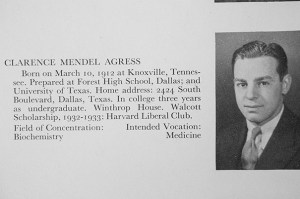
At 101, another look around
The only one of the Class of 1933 to return at Commencement has led a life of adventure and accomplishment.
-
Campus & Community
Kenneth L. Baughman
Dr. Kenneth L. Baughman died on November 16, 2009, after being struck by an automobile while running during the American Heart Association Annual Scientific Sessions in Orlando, Florida. His tragic death at age 63 threw into relief the enormous impact he had on the Harvard community in his seven years on our faculty, as the…
-
Campus & Community
Abraham Freedberg
Abraham Freedberg had a long and illustrious medical career at Harvard. He was outstanding in all the metrics of academic excellence. In addition to his research, teaching and patient care, Al (Freedberg preferred to be called Al or A. Stone) had a multidimensional fourth quality that set him apart.
-
Health
Thinking ahead on diabetes
By measuring the levels of small molecules in the blood, doctors may be able to identify individuals at elevated risk of developing type 2 diabetes as much as a decade before symptoms of the disorder appear.

-
Campus & Community
Walter H. Abelmann, professor of medicine, emeritus, 89
Walter H. Abelmann, professor of medicine emeritus at Harvard Medical School and member of the faculty of the Harvard-MIT Division of Health Sciences Technology, died on Jan. 6. He was 89.
-
Health
Checking in, saving lives
Harvard researchers have estimated the likely cost-effectiveness of post-discharge follow-up phone calls to smokers hospitalized with acute heart attacks. In a report in the Archives of Internal Medicine, the researchers suggest that phone calls to these discharged smokers encouraging them to quit would yield significant health and economic gains.

-
Health
With fasting, enzyme turns off body’s production of fats, cholesterol
Fasting helps cause an enzyme with several important roles in energy metabolism to turn off the body’s generation of fats and cholesterol, Harvard researchers at Massachusetts General Hospital have found. The findings could lead to new approaches to treating elevated cholesterol and lipid levels. The researchers’ report, published today in Genes & Development, describes how…
-
Campus & Community
Heart test debate heats up
Two studies published yesterday are expected to reignite an emotionally charged debate about whether young athletes should be screened with a heart test to reduce the small risk of sudden death from an undiagnosed heart problem.
-
Campus & Community
NIH Heart Institute Director Heading for Harvard
Elizabeth Nabel; director of the $3 billion National Heart, Lung and Blood Institute; told staff in a memo today that with “bittersweet emotions” she is leaving at the end of this year to become president and CEO of the Harvard University-affiliated Brigham and Women’s Hospital and Faulkner Hospital in Boston…..
-
Health
Lifestyle culprit in increase in cardiovascular disease
Despite the perception that cardiovascular disease is a problem of industrialized countries, it is the leading cause of death everywhere except Africa, where it is eclipsed by the raging AIDS epidemic, experts gathered at Harvard Medical School (HMS) said Wednesday. Authorities on cardiovascular disease from around the world attended a daylong conference sponsored by the…
-
Health
Common ECG finding may indicate serious cardiac problems
A common electrocardiogram (ECG) finding that has largely been considered insignificant may actually signal an increased risk of atrial fibrillation (a chronic heart rhythm disturbance), the future need for a permanent pacemaker, and an increased risk for premature death. In their report in the June 24 Journal of the American Medical Association (JAMA), researchers from…
-
Health
Advanced blood analysis may speed diagnosis of heart attacks
Someday doctors may be able to use a blood test to confirm within minutes, instead of hours, if a patient is having a heart attack, allowing more rapid treatment that could limit damage to heart muscle. A study led by investigators from Massachusetts General Hospital (MGH) and the Broad Institute of Harvard and MIT reports…
-
Health
Exercise changes structure of heart
Massachusetts General Hospital (MGH) investigators, in collaboration with Harvard University Health Services, have found that 90 days of vigorous athletic training produces significant changes in cardiac structure and function, and that the type of change varies with the type of exercise performed.
-
Health
Common prostate cancer therapy may carry risks
Androgen deprivation therapy – one of the most common treatments for prostate cancer – may increase the risk of death from heart disease in patients over age 65, according to a new study by researchers at Dana-Farber Cancer Institute, Brigham and Women’s Hospital, and other institutions.
-
Health
Harvard athletes grow bigger, better hearts
Strenuous exercise can cause a heart to grow as much as 10 percent and its chambers to enlarge, Harvard researchers have discovered after testing the University’s athletes. What they are learning from these studies could someday be applied to advising nonathletes about caring for their hearts.
-
Health
Sleeping your way to heart health
A new Harvard School of Public Health study indicates that there’s more than just olive oil and red wine keeping heart disease rates down in Mediterranean countries. There’s the naps, too.
-
Health
Web quiz helps predict women’s health
Using data collected from more than 24,000 initially healthy American women, researchers from Brigham and Women’s Hospital (BWH) have devised a new Web-based formula called the Reynolds Risk Score that for the first time more accurately predicts risk of heart attack or stroke among women. In addition to usual risk factors like cholesterol, blood pressure,…
-
Health
Marathon running can damage a heart
Running 26.2 miles is not for the faint of heart. Abnormalities in heart structure and function were found in men and women who ran the Boston Marathon in 2004 and 2005 by Harvard Medical School researchers.
-
Campus & Community
Research reveals how stem cells build a heart
Master cells that give rise to the three main cell types in a human heart have been discovered by Harvard Stem Cell Institute scientists working independently at two Harvard-affiliated hospitals. Together they found that a single progenitor stem cell differentiates into cells that cause a heart to beat, that make up its internal surface, and…
-
Campus & Community
Migraine auras and heart disease linked – risks high for women
Marsha T. saw the lights of pain coming. They flashed and zigzagged before her eyes. Her visual field shrank into a tunnel. A registered nurse, she knew what was next. In about 30 minutes, a familiar sharp, pulsating pain ripped through her head. Now 48 years old, she had been suffering from migraine headaches with…
-
Health
Study says moderate drinking reduces men’s heart attack risk
Even as studies have consistently found an association between moderate alcohol consumption and reduced heart attack risk in men, an important question has persisted: What if the men who drank in moderation were the same individuals who maintained good eating habits, didn’t smoke, exercised and watched their weight? How would you know that their reduced…
-
Campus & Community
Muscle cells grown into working heart cells
Muscle cells have been used successfully to restore life-sustaining rhythms to ailing hearts, a first step toward developing natural pacemakers. Placed in a tiny raft of collagen implanted into the hearts of rats, these cells survived for the entire lifespan of the animals. “Our experiments provide proof that engineered tissue can function as an electric…
-
Health
New data finds defibrillator recalls to be common
Data presented May 19, 2006 at the Heart Rhythm Society’s 27th Annual Scientific Sessions finds that during a 10-year study period more than one in five automatic external defibrillators (AEDs) were recalled due to potential malfunction. The findings represent some of the first data available on safety and reliability of the devices, which are used…
-
Health
Sense of security may be false with tried and true anti-inflammatories
For all the tender joints and headaches they relieve and colon cancer they may prevent, the older nonsteroidal anti- inflammatory drugs (NSAIDs) raise another serious health risk. The highly publicized danger of heart attacks and other cardiovascular side effects first discovered in randomized control trials of newer, selective NSAIDs are being found in the older…
-
Campus & Community
Fatty foods feed heart attacks, researchers say
Hold the french fries, doughnuts, and cookies, and save as many as 228,000 heart attacks and deaths from heart disease. That’s the message from a team of researchers at the Harvard School of Public Health and Wageningen University in the Netherlands. “Given the 1.2 million annual [heart attacks] and deaths from coronary heart disease in…
-
Campus & Community
Exercise cuts risk of sudden cardiac death
Exercise improves your health, but can you kill yourself with too much snow shoveling, yard work, jogging, or playing tennis? “Despite all of the known benefits of exercise, there are also well-documented associations between acute episodes of exertion and sudden cardiac death,” notes Christine Albert, an assistant professor of medicine at Harvard Medical School. “Although…
-
Campus & Community
Depression is bad for the heart
Depression is more likely to break your heart than smoking or eating fatty food. “Recurrence of cardiovascular events, including heart attacks, strokes, cardiac arrest, severe chest pain and other problems is more closely linked to depression than to high cholesterol, smoking, high blood pressure, or diabetes,” according to a Harvard Medical School publication. An article…
-
Health
Study provides first physiological evidence that insulin is critical for blood vessel formation
For people with type 2 diabetes, the death rate from a first heart attack is two to three times the death rate of patients without the disease. Similarly, patients with diabetes and ischemic (reduced blood flow) heart disease have a much higher mortality rate than the general population. Now, a team of researchers at Joslin…
-
Health
International multi-center study confirms value of blood test to diagnose heart failure
Congestive heart failure, which occurs when an impaired heart muscle cannot pump blood efficiently, is a growing health problem and major cause of cardiac death. The diagnosis of heart failure may be challenging because its symptoms can overlap those of other conditions. Now a large-scale international study has demonstrated the usefulness of a blood test…
-
Health
Women’s health study: Long-awaited findings of low-dose aspirin and vitamin E in preventing disease
The WHS trial was led by BWH researchers Nancy Cook, Sc.D., and Julie Buring, Sc.D. Its results are published in the July 6, 2005 Journal of the American Medical Association. It monitored 39,876 healthy females 45 years of age and older for cancer and cardiovascular events including heart attack, stroke, and death from cardiovascular causes.…