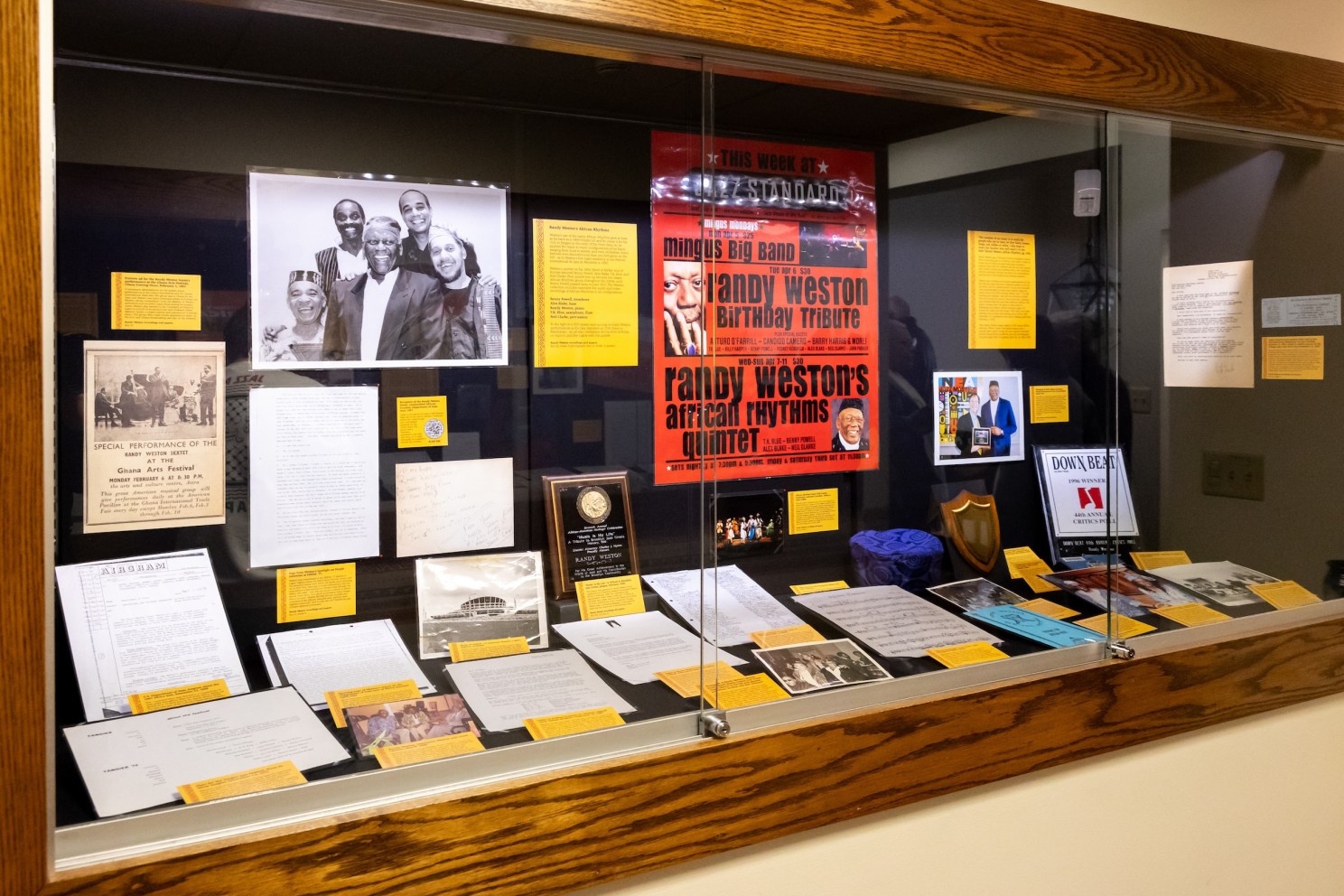
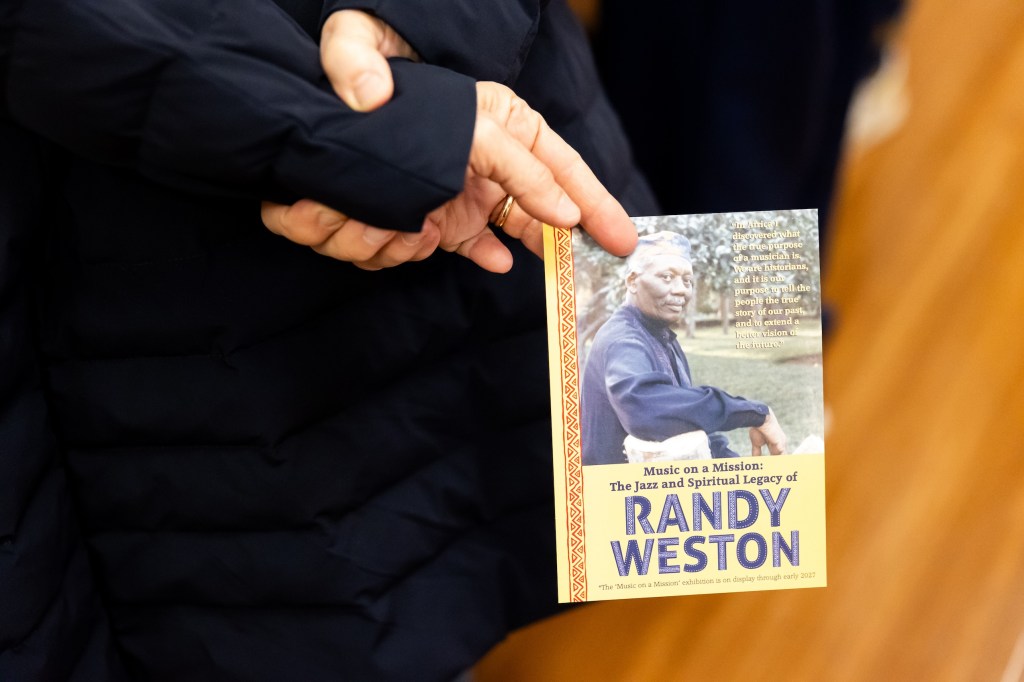
At Harvard’s Loeb Music Library, students, faculty, and visitors gathered for the opening of “Music on a Mission,” an exhibit celebrating the life and legacy of jazz pianist and composer Randy Weston. The April 12 event marked the centennial of Weston’s birth and offered a look into a rich archival collection that brings together decades of his musical career.
The exhibit was curated by Christina Linklater, curator of the Isham Memorial Library and Houghton Special Collections Cataloger, and Peter Laurence, librarian for Recorded Sound and Media. It’s the result of years of work following Harvard’s acquisition of the Weston collection in 2016. The collection — acquired from Weston’s widow, Fatoumata Weston — contains over 18,000 items, including recordings, photographs, and correspondence.
With 2026 marking what would have been Weston’s 100th birthday, Loeb Music Library and the Harvard Music Department, together with Fatoumata Weston, saw an opportunity to create a series of public-facing events, including the gallery talk and additional performances later that day.
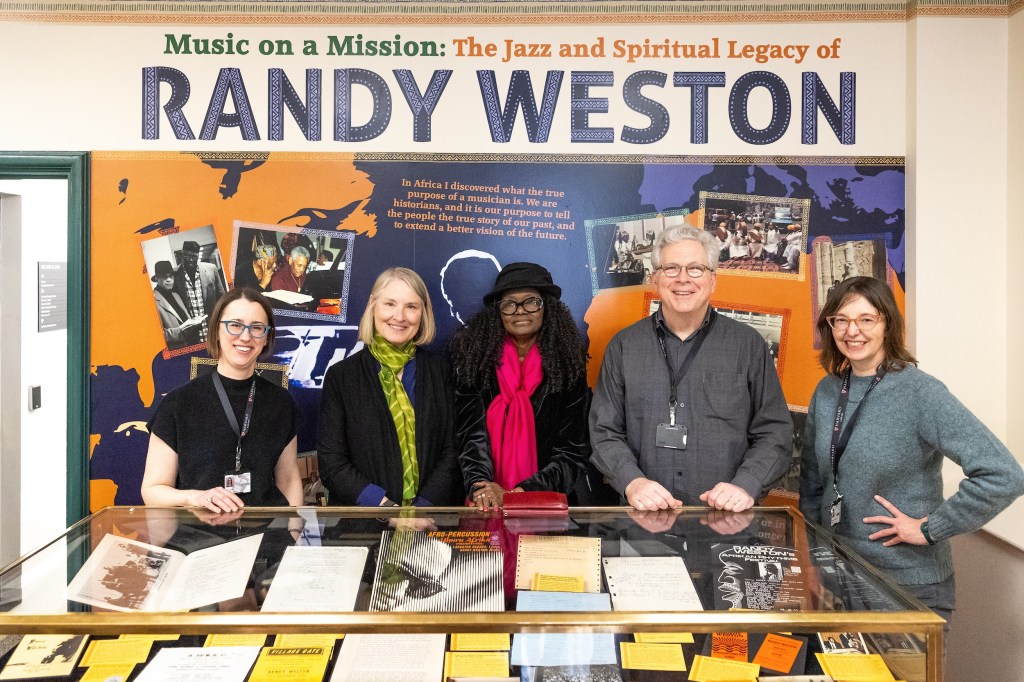
Fatoumata Weston (center) with Loeb Music Library staff at the exhibit opening.
One of the central challenges in curating the exhibit was how to tell the story of such a wide-ranging and rich life. “In a very long life, things aren’t necessarily linear,” Linklater noted. Rather than following a strict timeline, the curators chose a thematic approach that allowed different aspects of Weston’s work — his collaborations, travel, and musical influences — to shine. With thousands of items to choose from, narrowing the collection required careful thought, as Laurence explained: “When do you know you’re at the point where you’re able to tell the full breadth of this person’s life?”
With these challenges, the process was deeply rewarding. Linklater reflected that she was “really drawn to the connections that he was making,” describing Weston’s work as rooted in a “spiritual connection with music.” This idea ultimately shaped the exhibit itself, which emphasizes Weston’s role as a connector across people, cultures, and musical genres.
That sense of connection is evident throughout the materials on display. Beyond recordings and publications, the exhibit highlights concert tickets, programs, and handwritten notes that reveal the everyday vibrance of Weston’s career. These items offer insight not only into his music, but also into the communities he built and sustained.
For the curators, another key goal was to encourage visitors to engage more deeply with the archive. “We really do want to promote research at the library,” Laurence explained. To support this, the exhibit includes references and box numbers that allow visitors to locate materials and continue exploring the collection on their own. The exhibit is open to the public for the next year.
Ultimately, the exhibit invites viewers to meet Randy Weston not only as a musician, but as someone who brought people together. As Linklater and Laurence reflected, even for those unfamiliar with his work, the collection highlights what a connector he was and the capacity that music has to bridge differences and create community.
The exhibit talk concluded with an invitation to continue that engagement, both through upcoming performances and through the archive itself. Visitors are encouraged to visit the “Music on a Mission” exhibit in person.

 Featured series