Harvard Medical School’s MEDscience inspires next generation of STEM leaders
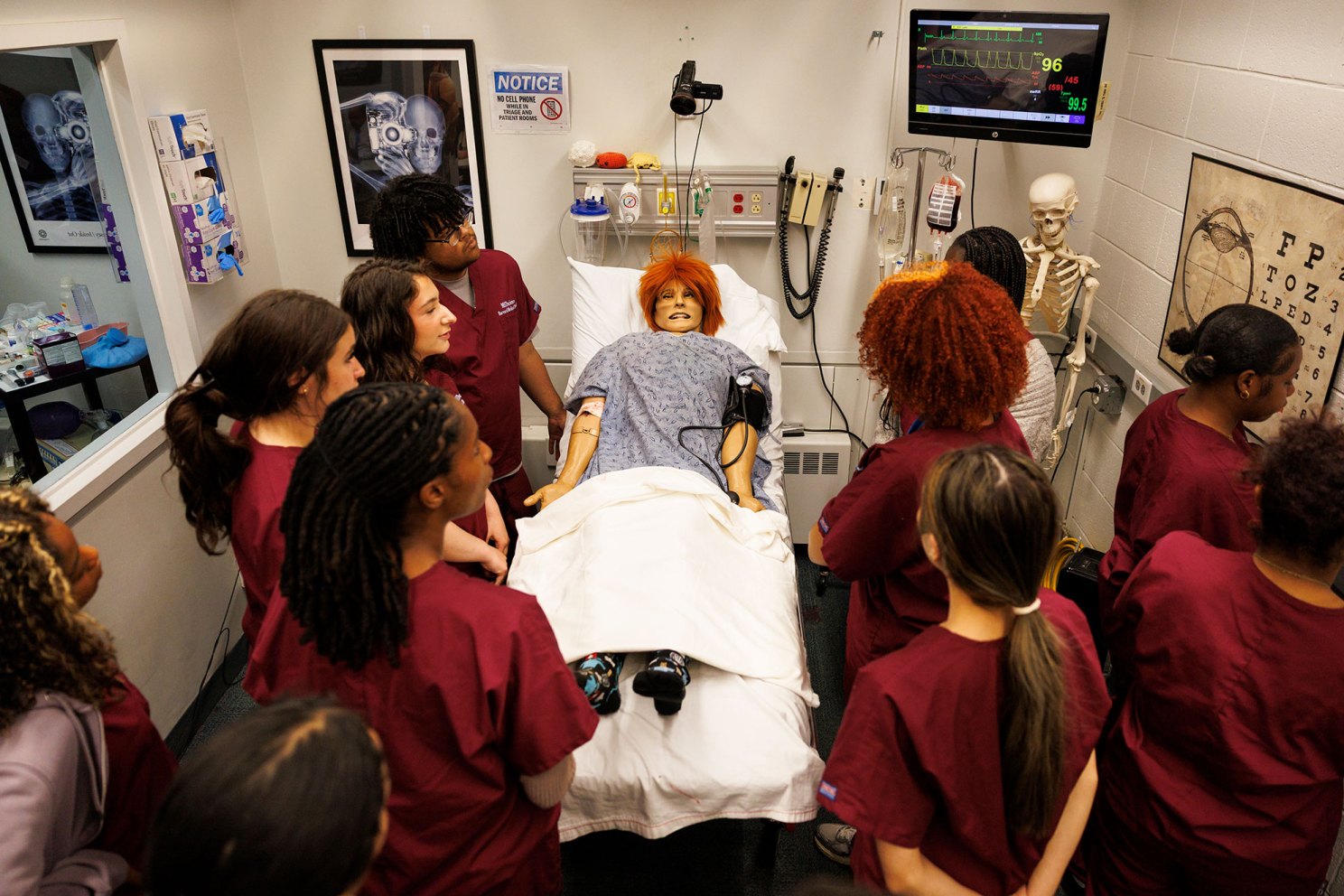
Students working together to help a simulated ailing patient.
Photos by Niles Singer/Harvard Staff Photographer.
4 min read
The 22-year-old college student was in severe stomach pain and struggling to stay awake. Her care team quickly assessed her, took her medical history, and explained that they could not administer anything for her escalating pain until proper testing was complete.
While scenes like this play out every day in emergency rooms, and on popular medical dramas like “The Pitt,” this patient, “Tig,” was a high-tech mannequin, and her care team was a group of high school seniors from Boston Latin Academy participating in Harvard Medical School’s MEDscience program.
“At HMS, we seek to improve health and wellbeing for all, through excellence and leadership in teaching and learning,” said Nancy Oriol, co-founder of MEDscience and faculty associate dean for Community Engagement in Medical Education, Harvard Medical School. “MEDscience does this by bringing students to our campus, immersing them in simulated emergencies and motivating young people to learn science and consider careers in our field.”
Each year MEDscience partners with 120 local high schools to deliver real-world learning experiences about the science of human health for more than 4,200 students. Embedded within a semester-long, credit-bearing course, the program brings high school students to HMS for weekly field trips, where they engage in hands-on, team-based simulations. These experiences build confidence while strengthening communication and problem-solving skills, that are reinforced through guided discussions that connect directly to scientific content.
“One of the most powerful outcomes of the program is the confidence students gain as they begin to envision themselves in medical careers. That sense of possibility carries back into the classroom through deeper critical thinking, stronger collaboration, and greater engagement in learning,” said Ally Via, a science teacher at Boston Latin Academy. “Whether or not students ultimately pursue careers in medicine, the program provides meaningful benefits that extend to all learners.”
The students who cared for “Tig,” were observed by Massachusetts Health & Human Services Secretary Kiame Mahaniah. Mahaniah — a practicing physician in addiction medicine and primary care, underscored the importance of programs like MEDscience in encouraging young people to explore careers in healthcare and life sciences.
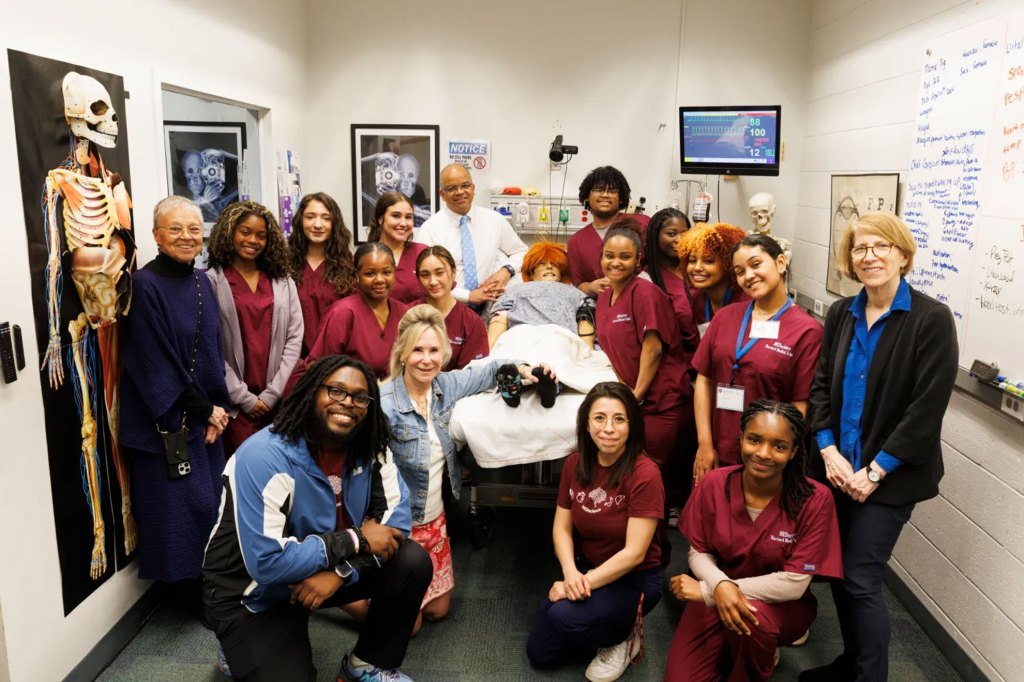
Boston Latin School students participating in the Harvard Medical School MEDscience program join MEDscience staff, Massachusetts Health & Human Services Secretary Kiame Mahaniah, and Massachusetts Assistant Secretary for Operational Effectiveness Joanne Marqusee.
“The future of the healthcare workforce in the Commonwealth is bright,” said Mahaniah. “The students I observed not only showed off their knowledge, but also their compassion, teamwork, and creativity. Through hands-on learning, programs like MEDscience are critical in building the confidence of young people to explore career pathways they may not have previously considered.”
Massachusetts has long been recognized as a global leader in healthcare, life sciences, and innovation and the state has invested in organizations like MEDscience to sustain that leadership pipeline. In recent years, MEDscience received support through the Massachusetts Life Sciences Center’s Pathmaker program, enabling the organization to broaden its reach and deepen its impact, and expand student access to healthcare and STEM career pathways.
Originally focused on anatomy and clinical skills, MEDscience has grown to include six initiatives: MEDscience Clinical, MEDscienceLAB, MEDscience Forensics, MEDscienceTech, MEDscienceDental, and MEDscienceWORKS.
Julie Joyal, who joined MEDscience as founding executive director in 2008, has been instrumental in expanding both the scope of its programming. In October 2025, MEDscience collaborated with the Museum of Science to launch a satellite location, extending access to simulation-based learning for high school students located closer to the Museum, including East Boston, Chelsea, and Everett. While MEDscience’s largest and longest-standing collaboration is with the Boston Public Schools, the program also serves students in Brockton, Lawrence, Lowell, and Springfield, representing five of the seven largest school districts in the state. Joyal has also prioritized inviting professionals to observe the simulations and share their personal stories and advice with students.
“As our state’s leading health official and a practicing physician, Secretary Mahaniah is an inspiration for students for how careers in medicine offer many pathways to change lives,” said Joyal.
As the program approaches its twentieth anniversary of partnering with schools, Joyal is confident that MEDscience will continue to grow in both reach and relevance. “Our goal is to ensure that every student can experience the power of hands-on, simulation-based learning. MEDscience is not just about preparing future healthcare and STEM professionals, we want to empower young people with the confidence, curiosity, and critical thinking skills they need to succeed in any path they choose.”

 Featured series