Featured series

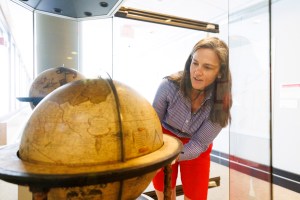
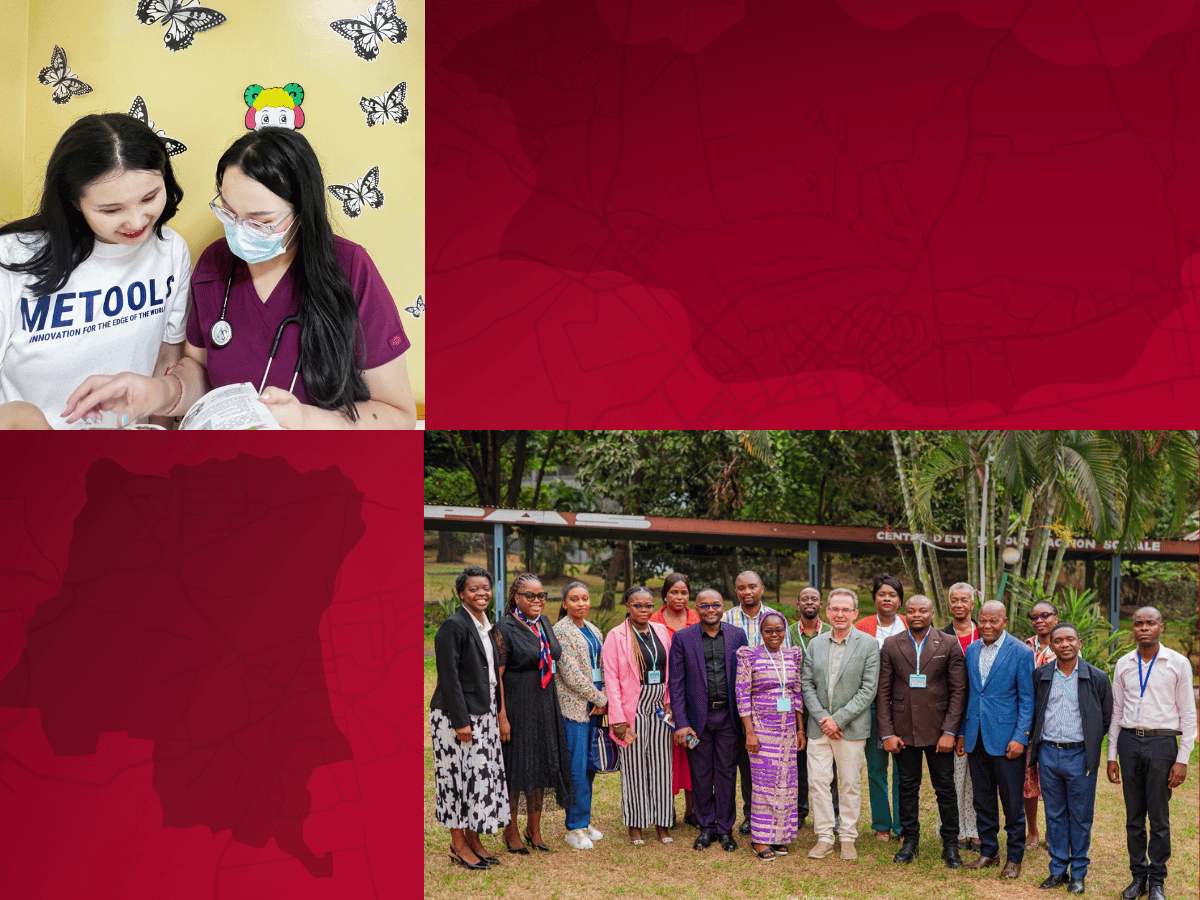
Maralmaa Chinzorig (top left) talking with a healthcare worker. Assina Kahamba (bottom left) with a group principals.
Photos courtesy of Maralmaa Chinzorig and Assina Kahamba
Nation & World
Taking vital training home
With help from the i-Lab, two students tackle improving education in the DRC, healthcare in rural Mongolia
Assina Kahamba and Maralmaa Chinzorig both arrived at Harvard for graduate school with the goal of getting the necessary training to help their communities with big problems.
For Kahamba, it was strengthening teacher education in Democratic Republic of the Congo. For Chinzorig, it was improving medical care in rural Mongolia.
Both received grants from the Harvard Innovation Labs (i-Lab) Navab Social Impact Fellowship Fund to help apply what they learned to urgent problems at home.
Assina Kahamba
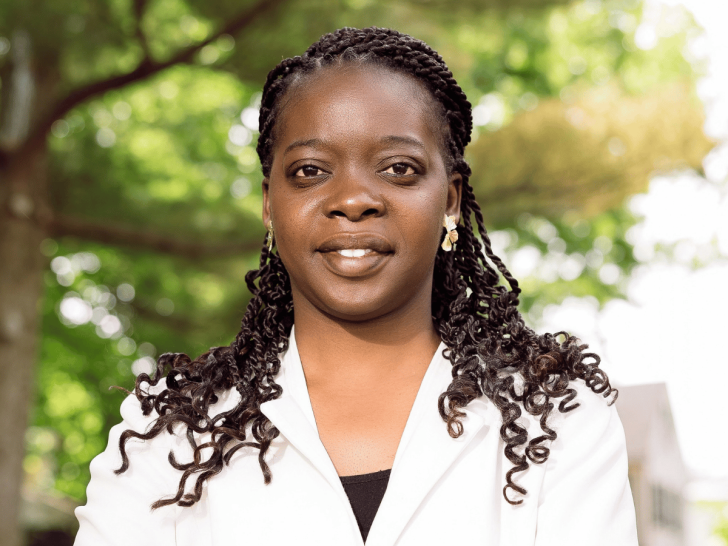
Kahamba didn’t plan to become principal of an all-girls’ school.
After finishing a computer engineering degree at the University of Kinshasa, she went to work in the private sector in the Democratic Republic of the Congo, her home country.
Eventually she began thinking about the big problems plaguing public education in DRC and decided she wanted to shift her career and focus on making it better.
Kahamba was working in an elementary school, responsible for the children’s character development, when her school’s principal abruptly resigned. Suddenly, she found herself in charge of all the teachers and students.
One of the biggest issues Kahamba found involved incomplete teacher preparation. Some had solid knowledge of a subject but poor pedagogical skills. Others were skilled at breaking down and explaining new information, but had critical knowledge gaps.
“I was in charge of providing a good education to the students,” Kahamba said, “and I was seeing my teacher unable to give a class on fractions.”
She looked for professional development programs nearby but couldn’t find any. She started one in her own school but discovered she didn’t have the background to make it effective. Ultimately she decided that if she wanted to train teachers properly, she needed more education herself.
To get it, she looked to Harvard Graduate School of Education, where — with funding help from her community — she began a one-year master’s degree in global, international, and comparative education.
Her professors encouraged her to rethink her preconceptions of teacher training.
Fernando M. Reimers, the Ford Foundation Professor of the Practice of International Education, told her old-school programs that bring educators together for just a couple of days of training have become obsolete. For better results, teachers need to be coached over time, with ongoing evaluations of effectiveness.
“We want to build a community of teachers who really want to change the world.”
Kahamba’s studies took her beyond education. Through entrepreneurship classes, she learned how to run — and sustain — a business for training teachers in the DRC.
“With this context of cuts of aid to Africa, it was very important to know how to have money as a business,” she said, “and not only expect money coming from the U.S. and Europe.”
With funding help from the i-Lab’s Social Impact Fellowship Fund, which provides about $200,000 in support for a dozen ventures started by students across the University, Kahamba was able to assemble a small team to help build out her vision with Koyekola Academy, the initiative she founded.
When she returned to the DRC after graduation, some people were surprised. “Everybody was saying that this girl had gone to the U.S. — she won’t come back,” Kahamba said.
But educators from across the country, including some who had helped fund her education at Harvard, wanted to find out what she had learned. She was surprised when two directors came from Kisangani — more than 700 miles from Kinshasa — for the training she started to develop at Harvard.
A few months after graduation, Koyekola Academy has three contracts with schools — each of which will receive ongoing training over months of work. Her goal is to have a successful pilot runand work with the government to expand the program across the country.
“We want to build a community of teachers who really want to change the world,” Kahamba said.
Maralmaa Chinzorig
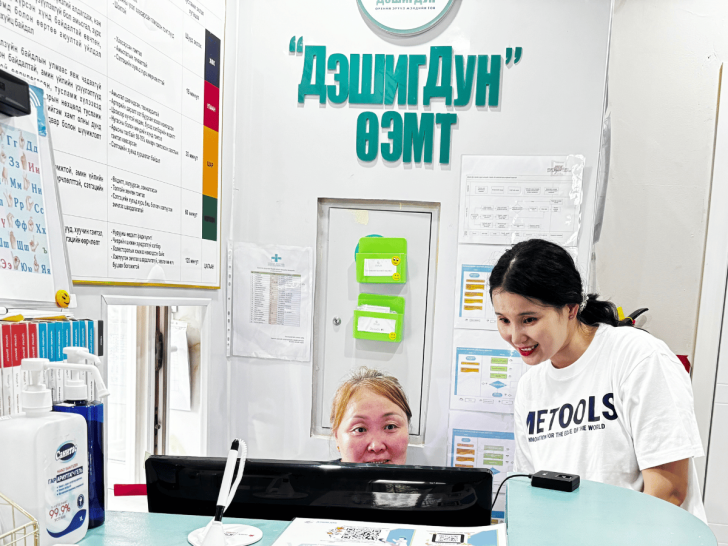
Growing up in rural northern Mongolia, Chinzorig heard harrowing stories from friends and family about trying to get medical care.
The nearest provincial hospital could take two or three days to reach during the winter. When dirt roads were impassable, residents crossed the frozen Khuvsgul Lake for better treatment.
They then arrived at local hospitals where doctors had only sparse paper records and no access to digital ones. Without knowing details about their patients’ backgrounds, doctors struggled to provide good diagnoses.
Often, frustrated patients would take any generic Soviet-era drug recommended to them by peers, even if it didn’t address the problems they were facing.
“It’s almost like an ancient, tribal healthcare system,” Chinzorig said. “It’s really shocking for people who live in urban places.”
After graduating from college in Ulaanbaatar, Chinzorig worked with the Ministry of Health in Mongolia, where she helped integrate technology into urban hospitals.
After seven years, though, she realized that she would need better project management skills if she wanted to push reforms through the government bureaucracy. She decided to attend Washington University in St. Louis for a degree in business administration.
Chinzorig was struck by the level of well-being Americans expected to have into old age. Where she grew up, she said, people expected to suffer from a long list of diseases above the age of 50.
She became determined to create a company that would ultimately challenge the government to do better.
But while Chinzorig had ideas for the digital innovations she could try to implement in hospitals, she thought she could use more training to learn how to work more effectively with the governments to help expand healthcare services.
She decided to enroll in a master of public policy program at the Harvard Kennedy School. In courses about negotiation, Chinzorig learned skills that would help her push for improved healthcare when she returned to her home country.
“I think my first year of Harvard made me become someone who is a huge advocate and brave enough to challenge the system,” she said. “You guys are telling me the system is just, but what is the standard of just?”
With funding and support from the i-Lab’s Social Impact Fellowship Fund, Chinzorig has expanded the offerings of her company, MeTools, a digital-health platform that allows clinics and hospitals to share medical records without reliable internet.
The company has helped the National Center for Zoonotic Diseases — which tracks infections like the bubonic plague — sync the records of 13 rural facilities across Mongolia.
At Harvard, she said she’s learned how to bring together different stakeholders, listen to their pain points and interests, and arrive at solutions to which everyone can agree. In Mongolia, and across the broader region, she hopes to bring these skills to use.
“Someone who knows the technology is stuck on the technology. Someone who knows disease surveillance is focused on disease,” she said. “I’m trying to become the leader who can connect and listen to all kinds of different people and have this collective solution.”