Featured series


Health
Has pancreatic cancer met its match?
Frontline researcher sees newly approved medication as ‘critical first step’ toward transformation of care
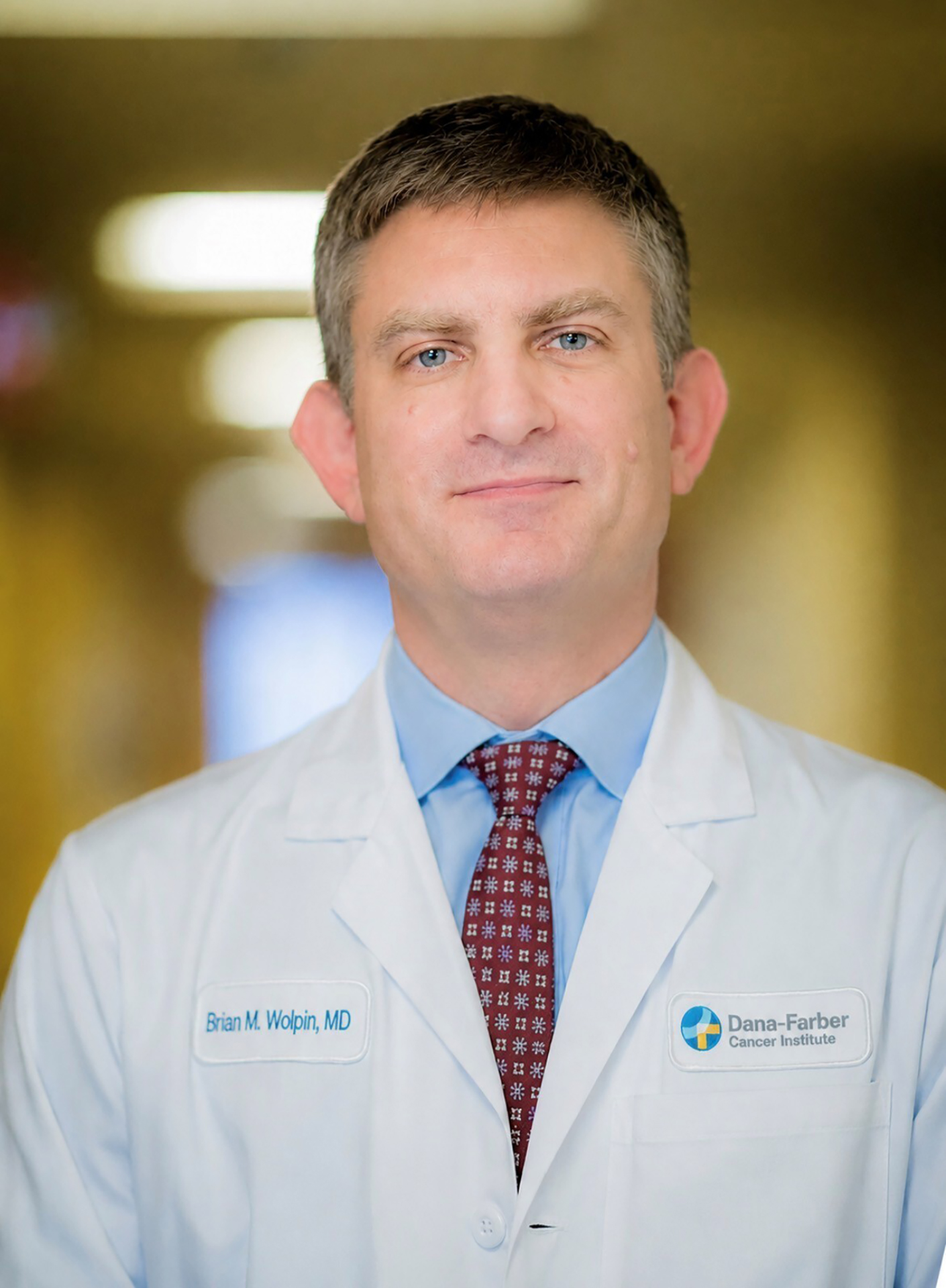
Brian Wolpin.
Last month, the Food and Drug Administration approved a new drug for one of the deadliest cancers, lending new hope to patients whose treatment options had been severely limited.
The drug, daraxonrasib, doubled survival time for patients with previously treated metastatic pancreatic cancer to a median of 13.2 months from 6.7 months for those who received the chemotherapy standard of care.
According to the National Cancer Institute, more than 67,000 people will be diagnosed with pancreatic cancer in the U.S. in 2026 and almost 57,000 will die from it. The five-year survival rate is 13.7 percent.
Brian Wolpin, Robert T. and Judith B. Hale Chair in Pancreatic Cancer and Harvard Medical School professor of medicine at Dana-Farber Cancer Institute, led the global Phase 3 daraxonrasib trial, called RASolute 302, and presented the results in May at the annual meeting of the American Society of Clinical Oncology.
The drug, created by California-based Revolution Medicines, binds to and inhibits an enzyme, KRAS, that energizes pancreatic cancer cell growth and whose molecular structure had previously made that binding difficult.
In a conversation with the Gazette, Wolpin said that the advance has the potential to transform pancreatic cancer care within a decade, shifting the narrative around a disease that till now has proven extremely difficult to treat.
This interview has been edited for clarity and length.
Gazette: At what point did you understand that daraxonrasib was something special?
Brian Wolpin: The preclinical data were very impressive, with evidence of substantial anti-tumor activity of the drug in the laboratory. However, efficacy in the laboratory does not guarantee success when a medication is given to patients.
Clinically, the first time it was clear that this was going to be different than other approaches we had tested was in an initial group of patients treated within the Phase 1 clinical trial, which was mainly designed to evaluate the safety of daraxonrasib and identify the appropriate dose to move forward into larger studies. We started to see patients who — at a relatively low dose — had resolution of their abdominal pain within a few weeks of starting on treatment. Pancreatic cancer causes substantial abdominal pain and if a patient’s pain goes away, it’s very often indicative that the tumor is shrinking. When we saw these symptomatic improvements with daraxonrasib, we thought, “Something is happening here.” Follow-up CT scans showed reduction in the tumor burden in these patients.
When we saw patients do well during the Phase 1 study and then into Phase 2, we had a clinical sense that this was really different from what we had seen in prior clinical trials. Unfortunately, we have had many trials that have been unsuccessful in pancreatic cancer, so we have comparators for when a drug is not working in patients.
“It felt like a validation that rigorous and diligent science can bring advancements to patients even for the toughest of cancer types.”
This study provided the combination of results that we were hoping for, with longer length of life and better quality of life for daraxonrasib compared to chemotherapy. Daraxonrasib is a pill that patients take once per day, so they don’t have to sit in the infusion room for five hours to get infusions. They don’t need a chemotherapy pump or central access with a port-a-cath, and the side effects are generally less than what we see with chemotherapy. It’s important to help people live longer, but you would also like them to live well with a better quality of life.
How did you feel when you heard about the FDA approval?
First, I was thrilled for patients that a new treatment option would become widely available soon. This has been a very long time in coming. Second, it felt like a validation that rigorous and diligent science can bring advancements to patients even for the toughest of cancer types. The approval was the culmination of many years of work by the field at large, our team at Dana-Farber, and Revolution Medicines. It was also a relief to see this happen, as there has been substantial pessimism that new drugs could break through and show benefit in this disease. To see that happen was extremely gratifying, and I hope will change the narrative that pancreatic cancer is too difficult for new drugs to treat.
Why did you choose to specialize in pancreatic cancer?
A little over 20 years ago, as I was starting my oncology training at Dana-Farber, I saw several patients who presented with metastatic pancreatic cancer and who died within three months or so. I initially thought that must be an anomaly. However, rapid cancer progression and short survival time were more the norm than the anomaly for patients with pancreatic cancer. That was surprising to me. It was also motivating. It seemed that patients really needed us to step up, better understand the biology of the disease, and define more effective therapeutic approaches.
When were you first aware of the key advance that led to daraxonrasib’s ability to inhibit KRAS, which had resisted earlier attempts to alter it?
Targeting mutant RAS has been something that the scientific and medical communities have wanted to do for decades. KRAS is mutated in up to 95 percent of pancreatic cancer, and KRAS along with two other RAS family members, NRAS and HRAS, are mutated at lower frequencies in many other cancer types, including lung cancer, colorectal cancer, melanoma, and others. Thus, there has been intense interest in trying to target these mutant proteins as a therapeutic approach for multiple cancers.
Some of the first evidence that this targeting might be possible occurred when fragments and then drugs were identified and designed to bind to and inhibit signaling from a specific mutation in KRAS, known as KRAS G12C. This led to a reinvigoration of the idea that RAS, which had become known as an “undruggable” target, could in fact be effectively inhibited. However, the KRAS G12C mutation is present predominantly in lung and colorectal cancers, so was not directly relevant to the vast majority of patients with pancreatic cancer. Additional work was required to identify drugs that could inhibit the KRAS mutations seen in most pancreatic cancers. One of the important aspects of daraxonrasib was that it was designed as a multi-selective RAS inhibitor, such that it binds to and inhibits signaling of most RAS mutations, including those most commonly present in pancreatic cancer.
This trial was in patients in which the disease is advanced and who had received prior chemotherapy. Is there the potential for more dramatic results in patients who are getting their first diagnosis of pancreatic cancer?
Yes. There are initial data to suggest that using daraxonrasib earlier in a patient’s treatment course may be more effective than after the patient has received prior chemotherapy. There are now ongoing Phase 3 clinical trials to formally evaluate this question.
Is there a new sense of hope in the patient community?
I definitely think so. There’s more hope today because this drug works better than anything we’ve had before and targets the driving mutation present in nearly all pancreatic cancers. This is a critical first step that’s going to open up a large number of new approaches to treating the disease. I very much think that five years — and certainly 10 years — from now we won’t recognize what we were doing before to treat pancreatic cancer. Treatment will be substantially different because of the advances that are going to come. This has opened the door.