Featured series

Health
‘Harvard Thinking’: The healing power of gene therapy
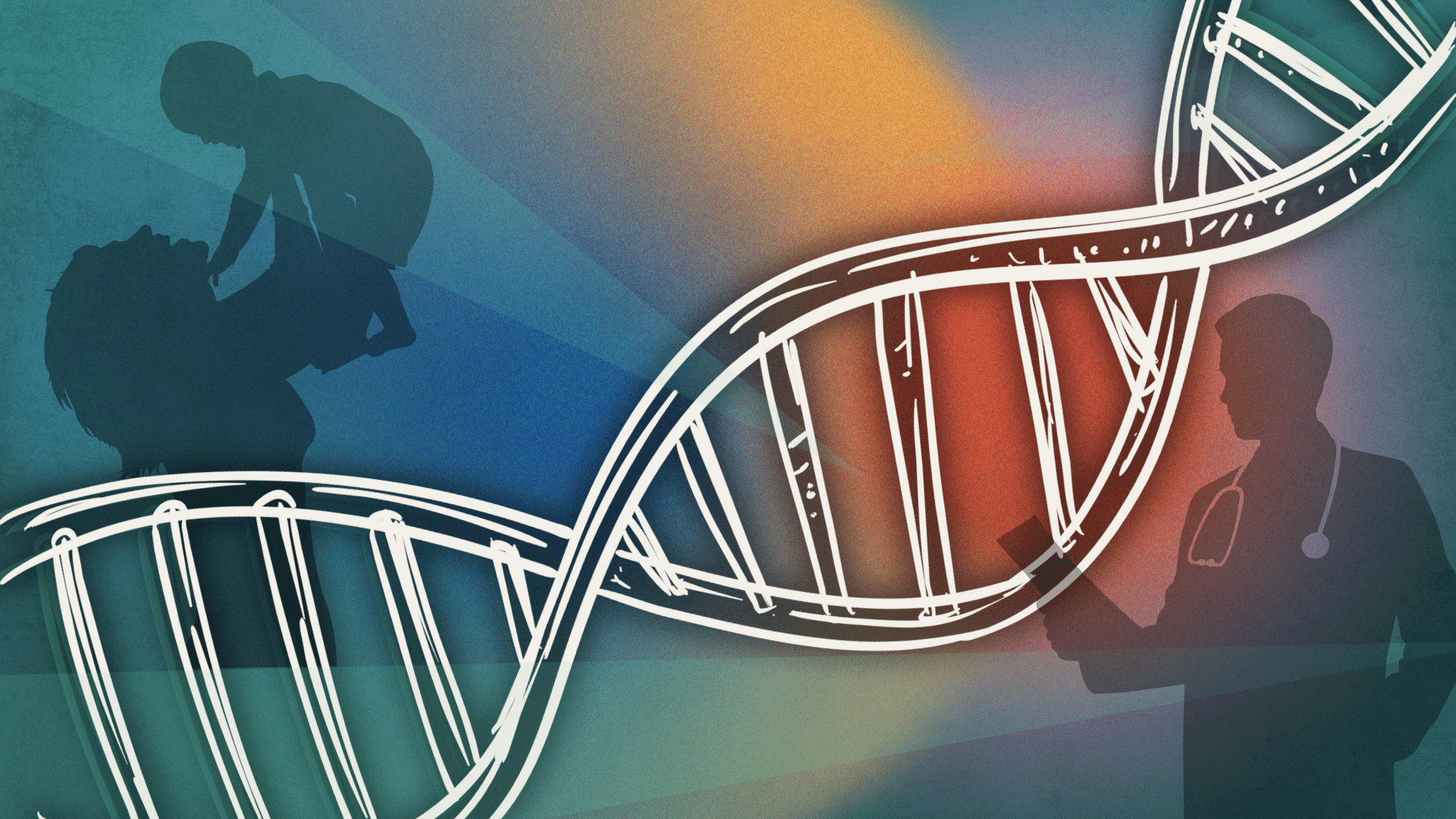
Illustrations by Liz Zonarich/Harvard Staff
How researchers are seeing their work changing lives — from restoring children’s hearing to saving a baby born with a fatal disease
Baby KJ made national headlines last year when at 6 months old he became the first person to receive a personalized CRISPR gene-editing treatment for his previously incurable genetic disorder. David Liu, the Thomas Dudley Cabot Professor of the Natural Sciences, says that the case — spearheaded by doctors at the University of Pennsylvania and at the Children’s Hospital of Philadelphia — has helped wake up the public to the potential of gene therapy.
“We are not always beholden to the misspellings in our DNA,” Liu said. KJ’s story “really made people realize that it is possible — although not easy — to diagnose a child with an otherwise fatal genetic disorder, generate a customized gene-editing agent that can correct that mutation, and administer it in time to save the life of a baby.”
Despite gene therapy’s progress in the last decade, there are still many economic, regulatory, and scientific hurdles to overcome before it can be harnessed to treat a variety of both rare and more common conditions. In this episode of “Harvard Thinking,” host Samantha Laine Perfas talks with Liu and Eliot Shearer, a Harvard Medical School pediatric otolaryngologist at Boston Children’s Hospital, about the hope gene therapy offers in treating diseases that were previously considered too rare to research.
Listen on: Spotify Apple YouTube
The transcript
David Liu: To me, one of the defining traits of our species is this relentless drive to use all of our talents and gifts and creativity to try to create better futures for our children than what we had access to. It doesn’t mean that I think humanity should willy-nilly use gene editing in irresponsible ways. But to me, merely editing our genome to treat terrible disease, I don’t see that as an incompatibility with what it is to be human.
Samantha Laine Perfas: Gene therapy has made remarkable progress in the last decade. These therapies are being used to treat many previously incurable conditions, like correcting deadly genetic disorders or giving a child born with hearing loss the ability to hear. These cases highlight the field’s potential, but there are still many economic, regulatory, and scientific hurdles to overcome if we are to adequately address a variety of both rare and more common conditions.
How can we improve gene therapy to help even more patients?
Welcome to “Harvard Thinking,” a podcast where the life of the mind meets everyday life. Today, I’m joined by:
Liu: David Liu. I’m a professor at Harvard, the Broad Institute, and the Howard Hughes Medical Institute.
Laine Perfas: Liu’s lab develops and applies gene editing technologies. He has won multiple awards for his work, particularly in base and prime editing. Our next guest:
Eliot Shearer: I’m Eliot Shearer. I’m a pediatric otolaryngologist at Boston Children’s Hospital.
Laine Perfas: He’s an ear, nose, and throat surgeon, as well as an associate professor at Harvard Medical School. He does gene therapy surgery for children with hearing loss. And I’m your host, Samantha Laine Perfas. I’m a writer for The Harvard Gazette. Today, we’ll talk about gene therapy and the hope it offers for treating diseases that were previously considered too rare.
I wanted to start with the story of Baby KJ. He was born in 2024 with a deadly genetic disorder called CPS1 deficiency, and he is now healed thanks to the use of a gene-editing method called base editing. David, could you talk about that case? What is base editing and how was it used?
Liu: Baby KJ’s story is a remarkable one, not just for the science and the medicine, but also for the impact it has had in awakening the general public and our government leaders to the fact that we are not always beholden to the misspellings in our DNA. Baby KJ was born in Philadelphia, and early on a very perceptive nurse realized that there was something wrong and ordered a blood test. And, within just a day or two of being born, the blood test revealed that Baby KJ’s ammonia levels in his blood were off the charts, which is dangerous and a sign that there’s a problem with the baby’s ability to process protein, resulting in levels of ammonia that are too high. Ultimately, this can cause brain damage and death. Baby KJ was then sequenced and the DNA sequence revealed that he had inherited two mutated copies of the gene called CPS1. And so a team decided to do something heroic, which was they believed that our base editing technology and the ways to deliver it and manufacture it had reached a point of robustness where it might be possible to save this baby by developing a bespoke, customized base editor programmed to go into baby KJ’s DNA and correct one of the two mutations.
Laine Perfas: I do want to mention briefly that the team was led by doctors Kiran Musunuru from the University of Pennsylvania and Rebecca Ahrens-Nicklas from the Children’s Hospital of Philadelphia. In this case, what was the process of going from idea to therapy, and how long did it take?
Liu: Remarkably, in what amounted to less than seven months, a base editor was developed; cell and animal models were created with baby KJ’s mutations; the base editor candidates were tested; an optimized base editor was chosen, subjected to biodistribution and toxicology studies, manufactured; the clinical trial was cleared by FDA; and the baby was dosed with lipid nanoparticles that were used to deliver this customized base editor, injected into KJ’s bloodstream that then traveled to his liver, went into his liver cells, and corrected the mutation he inherited. And now, almost two years later, the baby is thriving and meeting developmental milestones that children born without working copies of CPS1 really can’t meet, and is just thriving. And that’s really a remarkable testament to this incredible team that came together, and it really made people realize that it is possible — although not easy — to diagnose a child with an otherwise fatal genetic disorder, generate a customized gene editing agent that can correct that mutation, and administer it in time to save the life of a baby.
Laine Perfas: It’s amazing how quickly everything came together in this case, and I think it really highlights what’s possible with gene therapy nowadays. David and Eliot, could you each share a little more about the types of gene therapies you research in your labs?
Liu: Our lab works on gene editing, which is a specific subset of genetic therapies. The DNA that a person is born with can contain mutations that cause serious genetic diseases. There are over 200,000 known mutations in human DNA that cause more than 8,000 genetic diseases, many of which are very serious and many of which are fatal. The premise behind therapeutic gene editing is that we now have technologies, called base editing and prime editing, that have been validated in the clinic to allow you to programmably go to a target DNA sequence of your choosing and make a specified change. In baby KJ’s case, it was a change in A into a G. So that kind of genetic therapy, which is really a subset of a broader set of genetic therapies — some of which are decades old — that involve other strategies like introducing healthy gene copies to rescue patients born without working copies of genes.
“One of the defining traits of our species is this relentless drive to use all of our talents and gifts and creativity to try to create better futures for our children than what we had access to.”
Shearer: The category of gene therapy that my team has been working on, it’s broadly categorized as gene replacement therapy. So instead of actually editing the human genome like David’s talking about, instead you’re putting a functional copy of the gene inside the body. In some diseases or disorders this can be seen as an easier method, and for some it won’t work. It really depends on the disease and the disorder that you’re targeting. For hearing loss, for instance, there are 150 different genes that cause pediatric hearing loss, thousands and thousands of genetic mutations that cause hearing loss. It’s extremely genetically heterogeneous. And so ultimately this is going to be turned into many different treatments and therapies because there’s never going to be one gene editor that would be able to treat all different types of hearing loss or all different types of metabolic disorders. And so we’re just at the beginning of genetic medicine right now.
Laine Perfas: Eliot, your team at Boston Children’s was part of the effort to develop the first FDA-approved gene therapy for hearing loss. How does the therapy work?
Shearer: Gene replacement therapy typically works for autosomal recessive disorders, and we usually rely on a virus to get the genetic material into the target cells. Viruses have evolved over billions of years to get DNA into human cells, and so we can use that to our advantage. So for instance, the FDA-approved drug called Otarmeni, which is from Regeneron. It was FDA-approved in April and we started dosing children at Boston Children’s in August. That has a functional copy of the otoferlin gene and uses an adeno-associated virus, a virus that’s been shown to be very safe, over decades of work, and that provides a functional copy of the gene.
Laine Perfas: One of the things that is tricky about treating these diseases is that they’re so unique to each patient, and yet there are so many people affected by them. Four hundred million people worldwide, half of whom are children, have one of these rare diseases. How close are we to being able to help patients like that on an individual basis?

Liu: Yeah, that’s a major hurdle, and I would argue a major responsibility that societies have. Now that we have technologies like the ones we just summarized, we should figure out how to maximize the ability of the science to reach as many patients as possible. And in some cases, there are still scientific limitations. But in many cases, and increasingly, the barriers are less scientific and more economic or regulatory. Or is there a reimbursement mechanism that society has established that can make sustainable efforts to treat patients like baby KJ over and over again? So your question is really important because there are many patients like baby KJ who are facing life-threatening diseases right now for which we probably know how to correct the mutation that causes their disease, and even how to deliver the gene-editing agent to the right cells and how to manufacture it in a way that has a good risk-benefit ratio. But that doesn’t necessarily mean, as tragic as this sounds, that there’s a path to connect all of that science and all of that technology with the patients, because it still takes a lot of resources to produce and test and characterize to the extent that FDA requires or other regulatory agencies in other countries require. And for gene-editing agents, that can still cost millions of dollars or even tens of millions of dollars. The conundrum is if you have a disease as rare or a mutation that’s as rare as baby KJ’s, it’s not practical to spend tens of millions of dollars to develop that treatment if it can only treat one or five or 10 or 20 patients. It’s not sustainable. All of this is what motivated us to found the Center for Therapeutic Genetics, CTG. The first decision we made was that this would be a nonprofit effort. It’s a collaboration between three nonprofit entities: the Broad Institute, Boston Children’s Hospital, and Jackson Labs. And the concept is that for the rarest of genetic diseases where industry isn’t able to develop treatments simply for this economic reason among others, it makes more sense to try to take on those diseases and help those patients when the science is already well-established in a nonprofit setting.
That’s the kind of change that I think ultimately will allow this newfound ability to take some control of our genetic futures to be much more widely applied than it currently is.
Shearer: It’s interesting to hear from David’s perspective because he’s working on one end of the spectrum primarily, which is these life-threatening, deadly disorders, and then my field’s focused on improving hearing in kids. Right now we have a pretty effective treatment for pediatric hearing loss for the majority of cases, which is a cochlear implant. And that’s very functional and has been around for more than 40 years. It’s far and away the most successful neural prosthesis in humans. And if you do a cochlear implant surgery on a child who’s born with profound hearing loss by the time they’re about a year of age, by the time they’re in school, they should have typical speech and language development, which is incredible. So we have a pretty high bar. Any therapy has to meet these criteria and in fact be better. We know implants, for instance, there’s only 20 electrodes in a cochlear implant that allow a person to hear. We’re typically born with thousands of hair cells, and so where people with cochlear implants struggle is music, noisy environments, those difficult listening situations. I would also say the other part about my field is that hearing loss is incredibly common. So it’s 1 in 500 kids affected, and if you actually look at the numbers, at least half of them could at some point be a candidate for a gene therapy. The hearing loss gene therapy or the cochlear gene therapy field is really pushing things very quickly, and one part of that is how successful it’s been. Some of my patients who we’ve done the clinical trials on, they have near-normal hearing thresholds, which is just amazing to see. These children are born with severe to profound hearing loss, so couldn’t hear a jet engine or a jackhammer, and then after we do the gene therapy surgery, we just see the volume turned up over the subsequent months.
The similarities I would say in my field that David’s talking about is we need to be able to make this so that it can be applied to many different forms of genetic hearing loss and not just a single one. And then the other part about it is that we’ve worked for years to figure out a safe surgical delivery approach; I think a lot of people still think that all gene therapies are through the IV or sometimes into the spinal fluid. The surgery that we do for cochlear gene therapy is very complex and takes several hours.
Laine Perfas: Eliot, I’d love to hear just a little bit more about how these therapies are administered. Practically speaking, if you’re someone receiving gene therapy, what does that look like?
Shearer: It’s totally different depending on the disorder, and ultimately what David and I are talking about is personalized medicine, right? I think people generally think, again, about gene therapy as gene editing or have certain ideas about it, but really each of these therapies is tailored to the disorder. So some of these primarily affect the liver or the kidney or the brain, and so that totally changes the approach to the delivery of the therapeutic. There’s intrathecal delivery, which is within the spinal fluid. There’s intravenous infusion, which is what baby KJ had. There’s subretinal injection in ophthalmology. There’s some injected deep into the brain using stereotactic image-guided neurosurgery, essentially. And then the gene therapy that I work on is infused into the cochlea, this bony, encased organ a few centimeters inside the skull. It’s very difficult to access, and so we have to do a complicated surgical approach to get there.
“These children are born with severe to profound hearing loss, so couldn’t hear a jet engine or a jackhammer, and then after we do the gene therapy surgery, we just see the volume turned up over the subsequent months.”
Laine Perfas: When you have a gene therapy, do those changes in your DNA get passed down to your offspring?
Liu: They do not unless you edit the germ cells, meaning the sperm and egg cells, which is currently illegal in the United States and in pretty much all countries that are capable of doing it. So, we actually go to great lengths to make sure that our treatments that go to the clinic do not edit germ cells. Although I’ll point out, one of these treatments that we’re about to file the IND (Investigational New Drug) paperwork for is to treat progeria, the rapid aging disease caused by a single C to T change. The progeria research community, when they hear the answer to your question, just roll their eyes and say, “Well, I’m sorry, what’s the problem if you actually get rid of this horrible mutation in future generations? If we’re so fortunate that the first progeria patient ever reaches an age and a health that they can actually have kids, would you want to have the kids go through all of this again?” I think it’s inevitable, if these treatments continue to show positive signs of safety and efficacy, that people will start to ask, if you’re treating horrible genetic diseases such that the patients can now have kids, why wouldn’t you tailor the delivery system to make sure that their kids don’t also have those diseases?
Laine Perfas: We touched on this already, but I did want to devote some time to talking about the financial viability of gene therapy. What are some of the challenges of making these therapies more financially viable?
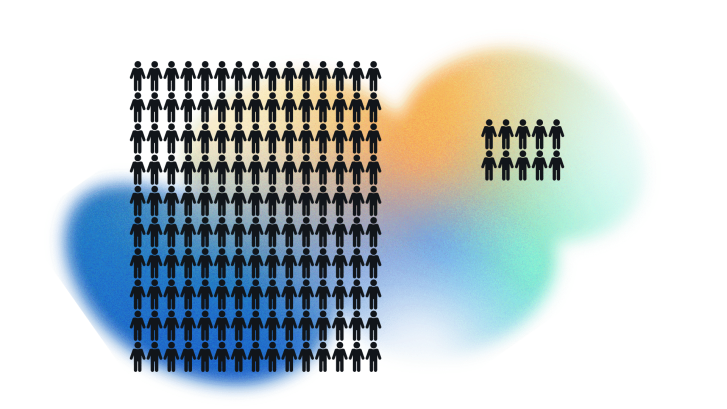
Liu: There are some genetic disorders — sickle cell anemia, now called sickle cell disease, being the poster child – that have a prevalence high enough that clearly an effective treatment can be profitable enough to recoup the costs and more, which is why so many genetic medicine companies have pursued sickle cell disease. So gene-editing medicines and genetic therapies in general, especially if it’s a one-time gene-editing treatment that can cure the patient, in principle for the rest of their life, can be financially viable for diseases where there are at least thousands of patients whom you can treat. The typical genetic disease patient, although that itself is an oxymoron, but the average genetic disease patient, costs the U.S. healthcare system between 2 and 10 million dollars over their lifetime. There is some room for these treatments to both help patients and their families and end up saving the U.S. healthcare system money in the end. But it does get a lot harder once the number of patients in a disease falls below thousands. In some cases, science can help. The simplest way to imagine gene editing is the baby KJ story, where there’s a mutation that causes a fatal genetic disease, and you correct the mutation back to the normal sequence, so the disease is no longer present. But there are many other ways to use gene editing that can be more mutation-agnostic, meaning one treatment can treat multiple patients. For example, one common genetic medicine strategy to treat sickle cell disease is to turn on a set of sort of backup hemoglobin genes that we’re all born with called fetal hemoglobin genes, which can rescue mutations in your adult hemoglobin genes regardless of whether those mutations give you sickle cell disease or give you other kinds of blood diseases caused by mutations in your adult hemoglobin. So that’s an interesting case which has been quite successfully used and is actually the strategy used in the first FDA-approved gene-editing therapy, Casgevy. It reawakens the silenced fetal hemoglobin genes to rescue mutations in adult hemoglobin. So in some cases, and that’s really been a leitmotif of genetic medicine, researchers do our best to come up with creative ways to use these treatments to benefit as many patients as possible.
Shearer: I totally agree. I mean, figuring out a framework that can help for a set of disorders is a way that I can think of it. For inner ear or cochlear gene therapies, if we can show that a surgical approach is safe, a certain vector is safe, a promoter is safe, the question is how much preclinical data do we need? Do we need animal models? Do we need non-human primates? Because each of these steps adds hundreds of thousands or millions to the development pipeline. I would hope that we can get to a point where we can come up with a minimal threshold to determine safety that’s less than it is now but still keeps our patients safe.
We have a program at Boston Children’s Hospital where we’re taking patients with hearing loss, drawing blood, taking their white blood cells, turning those into stem cells, and then growing their own inner ear hair cells in a dish. And then we can test the gene therapies on the patient’s own cells. The big question is, is that enough to show that it’s safe to use in a patient if we’ve already shown that similar therapies are safe in other patients? Those are sort of the regulatory questions that we’re going to be grappling with over the next couple of years.
Liu: I should also make it clear that regulators are on our side. They’re not the enemy. It’s really important to have rigorous, centralized regulatory requirements because every experimental therapy has some risk, and it’s all about risk-benefit ratio. As Eliot pointed out, if your patient can’t hear, there’s a different benefit-risk calculus than if your patient is going to die within three months of not getting treated. You’re willing to take more risks in the latter case, but of course, you still want those risks to be as informed and minimized as possible. I admire the fact that regulators play this incredibly important role and do so often, I think, without a lot of thanks, and it’s actually very difficult to get the regulations to evolve in lockstep with the science because the science can actually advance very quickly, typically much faster than legislation.
Laine Perfas: This question is going to be a bit of a departure from what we’re talking about, but I wanted to ask it. There’s this philosophical concern, if you will, that is often raised about gene therapy. Some liken it to trying to play God. There’s something that feels different about going in and editing someone’s DNA. I’d love to know your thoughts on that as clinicians and people working with patients and seeing how the science can positively address a lot of diseases and disorders — but just because we can change our genes, should we?
Shearer: I’m happy to answer this first, Sam. I deal with this on a daily basis in my clinic. I think it’s important to acknowledge that not every family who’s affected by hearing loss sees that as a disability or a problem. There’s a very large Deaf community, so Deaf with a capital D, that doesn’t see having hearing loss or reduced hearing as a disability at all, and actually maybe sees it as a benefit. They use American Sign Language to communicate. The key for me as a physician when I’m caring for families is respect for patients’ autonomy and then trying to treat them how they want to be treated. Every parent is trying to make the best decision for their child, and so I see children in my clinic who, their parents are part of the Deaf community, and they want their children to be part of the Deaf community. So in no instance would we ever force one of these therapies on that child. The 90 percent or more of children who are born with hearing loss are born to typically hearing parents, and they see a different future for their child that uses spoken language. Ultimately I think I’ll let David answer the harder question, but for me, we want to meet families where they are and treat them how they would like to be treated. But right now we’re doing gene replacement therapy, and I specifically tell parents that this is not gene editing, so we’re not changing the patient’s genome. It’s a whole different discussion when you talk about changing the genome that they were born with.
Liu: That was a great perspective. I teach a class on gene editing, and one of the three-hour sessions talks about ethics, and I walk the class through a slippery slope of five cases. And hearing loss is actually case No. 3, in part because, as Eliot pointed out, there are plenty of D/deaf people who don’t view it as a disease or a disability at all. In fact, there was a rather famous case in the UK where parents wished to use pre-implantation genetic diagnosis to ensure that their child was deaf, because the parents were deaf, and they believed that being deaf opens up your access to a very rich culture. And of course, there was a lot of debate about that case.
But I’ll start from the easier end that I think is typically not as debated or controversial, which is, the very serious diseases where the child has a life expectancy of 10 and suffers 20 seizures a day and their disease has profoundly affected not just them, but all of their loved ones. Those are the cases that most people think about when they think about serious genetic diseases. Those types of diseases tend also to be not super prevalent, but in aggregate, they are quite prevalent. As you mentioned, 400 million patients have genetic disease in aggregate in the world, 35 million in the U.S. One answer to your question is all of the early and current therapeutic gene-editing efforts, at least the ones that are credible, are aimed at treating life-threatening, or severely life-compromising diseases. Sickle cell disease, alpha-1 antitrypsin disorder, metabolic diseases like baby KJ’s, blood diseases, immunodeficiencies — there’s a whole spectrum of cases that start with severe life-threatening or debilitating genetic diseases for which I don’t see a lot of controversy, at least in the students I’ve polled and in the people I’ve talked to, including the general public, about using gene editing to treat and hopefully permanently cure those patients. But there is a slippery slope that you can walk down, and to walk a little bit further than the deafness example, there are disease prevention alleles. Something like 0.1 percent of Icelandic people and almost nobody else have a mutation in a gene that gives them a much lower than normal chance of getting Alzheimer’s disease. I ask my class, Would it be ethical to use gene editing to install that variant into a person that has the, quote, normal gene, the one that all three of us probably have? There’s a gene called APOE, and a variant of APOE that’s called APOE4. If you have two copies of APOE4, you have about a 15-fold higher than normal chance of getting Alzheimer’s disease. You can use a base editor to change it back into the, quote, normal form, but you can also use a base editor and have a lower-than-normal chance of getting Alzheimer’s disease.
So there are interesting questions about disease prevention that are not as far off as people might think. It’s easy, I think, for people, healthy people especially, to pontificate about whether it would be ethical or not to edit somebody’s genome to reduce their risk of getting Alzheimer’s disease. If you are an Alzheimer’s disease patient or have family members with Alzheimer’s disease, one’s perspective changes quickly. And I’ve spoken to patients who suffer from genetic diseases or at least diseases with a genetic risk component that seem to feel quite strongly that, “Why are you ivory-tower academics pontificating about what’s right or wrong? This is a horrible disease that causes enormous suffering, enormous economic destruction, emotional destruction, often results in destruction of a family. And, maybe you should put that energy towards trying to ameliorate the disease and not worry so much about whether disease prevention is ethical or not.”
And then finally I’ll say that, with respect to “what does it mean to be human,” that aspect of the argument: To me, one of the defining traits of our species is this relentless drive to use all of our talents and gifts and creativity to try to create better futures for our children than what we had access to. It doesn’t mean that I think humanity should willy-nilly use gene editing in irresponsible ways. But to me, merely editing our genome to treat terrible disease, I don’t see that as an incompatibility with what it is to be human. I actually see that as maybe a uniquely human capability. So while I do believe that there are unethical ways to use gene editing, I think there’s actually quite a bit of good you can do for humanity with gene editing, without changing what it is to be human.
Laine Perfas: Speaking of being human, I would be remiss if we did not also talk about the role of technology in this work, specifically artificial intelligence. Do you use AI in your labs?
Liu: Everyone in my lab uses AI every day. In fact, I know this because I just polled them at our group meeting. Some things are trivial but actually quite useful, like looking up references, analyzing data, making plots of very large data sets. All of that’s actually quite important, I would say, to the operation of science, even though it’s not intellectually as romantic as coming up with a great new project idea. But increasingly, we’re using AI and developing our own AIs using the principles of what’s out there, to do things that we really just couldn’t do before. We published a paper in Nature showing that you are much better off, in the cases that we tested at least, using an AI-stabilized protein as the starting point for evolving a protein with new function in the lab than using natural proteins, which is what we and others have done for decades; and the reason turns out to be actually quite logical, I think. When you evolve a protein, you introduce mutations in the protein that give the protein the new function but typically destabilize the protein too. And so a natural protein is not that stable. But an AI can generate a version of that protein that is rock solid, much more stable than the natural protein to begin with. So that’s just one example of how we’re using AI to generate proteins with therapeutically relevant properties that we couldn’t do in the sort of pre-AI renaissance that we’re experiencing now.
Shearer: I completely agree. Everyone in my lab uses AI daily, and one of the most important things we use it for is to determine whether a genetic variant is actually pathogenic or disease-causing. As David talked about, we have hundreds of different genetic variants that we’re born with, and some of these cause diseases and others don’t. A big part of my clinical work is seeing children with hearing loss and determining why they have hearing loss. AI is becoming more important at determining the pathogenicity of genetic variants so that we can then offer gene therapy for some of these patients.
“You can imagine if genetic diagnosis becomes a standard of care worldwide how the numbers will explode, and we will probably realize that many of the conditions that we previously classified as idiopathic are actually based in our genes.”
Laine Perfas: What do we still need to learn? Where do each of you see the field 20 years from now?
Shearer: A big missing piece in all of genetic medicine is genetic diagnosis, so making sure that everyone has access to rapid genetic diagnosis for their disorder is critical. In the field for hearing loss, less than half of children with likely genetic hearing loss actually obtain genetic testing, and so making sure that everyone has access to that is key. And then, I really see my clinic in five, 10 years, we’re going to have a whole menu of clinical trials, whole menu of gene therapies, many different options, and patients and families will come in with a genetic diagnosis, and then we choose the best therapy for them. It’s a really exciting time, and gene therapy for hearing loss has totally changed the course of my career, and I’m excited to see where things go over the next few years.
Liu: I share many of Eliot’s thoughts and optimism. Genetic diagnosis is critical. Fortunately, the incredible reduction in the cost of DNA sequencing over the past several decades means that now we can sequence patients for often hundreds of dollars, which is stunning to me. That’s critical because if you ask patients whether they want to know whether they have a genetic disease, the response is highly correlated with whether you can do something about that disease. We’re at this perfect-storm moment where we are now starting to have genetic medicines that can address the root cause and, in some cases, permanently correct the root cause of genetic diseases. That will very likely lead to, I believe, an increase in diagnosis, which will lead to an increase in prevalence. You can imagine if genetic diagnosis becomes a standard of care worldwide how the numbers will explode, and we will probably realize that many of the conditions that we previously classified as idiopathic are actually based in our genes. And that will add additional impetus and opportunity to evolve the regulatory, the reimbursement, and the science behind all of these treatments to make sure that we fulfill our societal obligation to bring as much of this science to as many patients that would benefit from these treatments as possible.
Laine Perfas: Thank you both for joining me today.
Liu: Thanks for having us.
Shearer: Thank you very much.
Laine Perfas: Thanks for listening. For a transcript of this episode and to see our other episodes, visit harvard.edu/thinking. And if you like this podcast, rate and review us on Apple and Spotify, or like us on YouTube. It helps other listeners find us. This episode was hosted and produced by me, Samantha Laine Perfas. It was edited by Ryan Mulcahy, Paul Makishima, and Sarah Lamodi. Original music and sound design by Noel Flatt. Produced by Harvard University. Copyright 2026.
Recommended reading
- “Baby Is Healed With World’s First Personalized Gene-Editing Treatment” by The New York Times
- “Rewriting genetic destiny” by The Harvard Gazette
- “Gene therapy for hearing loss: Tag-teaming from the lab to the clinic” from Boston Children’s Hospital
- “A new treatment at Boston Children’s Hospital, the first of its kind in US, offers hope for children born deaf” by The Boston Globe
- “‘Too Rare to Care’? A New Center for Rare Diseases Hopes to Change That” by The New York Times