Featured series
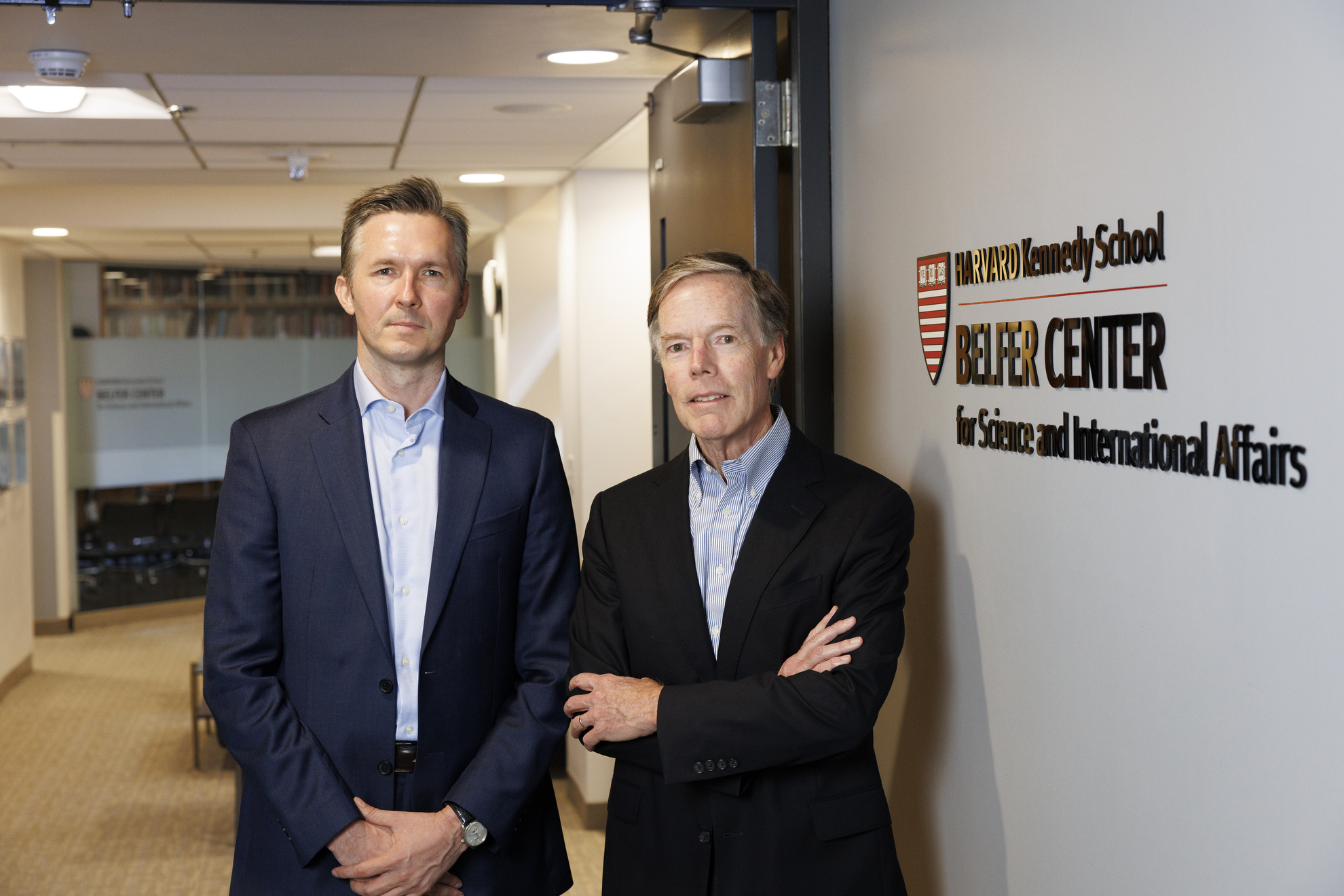
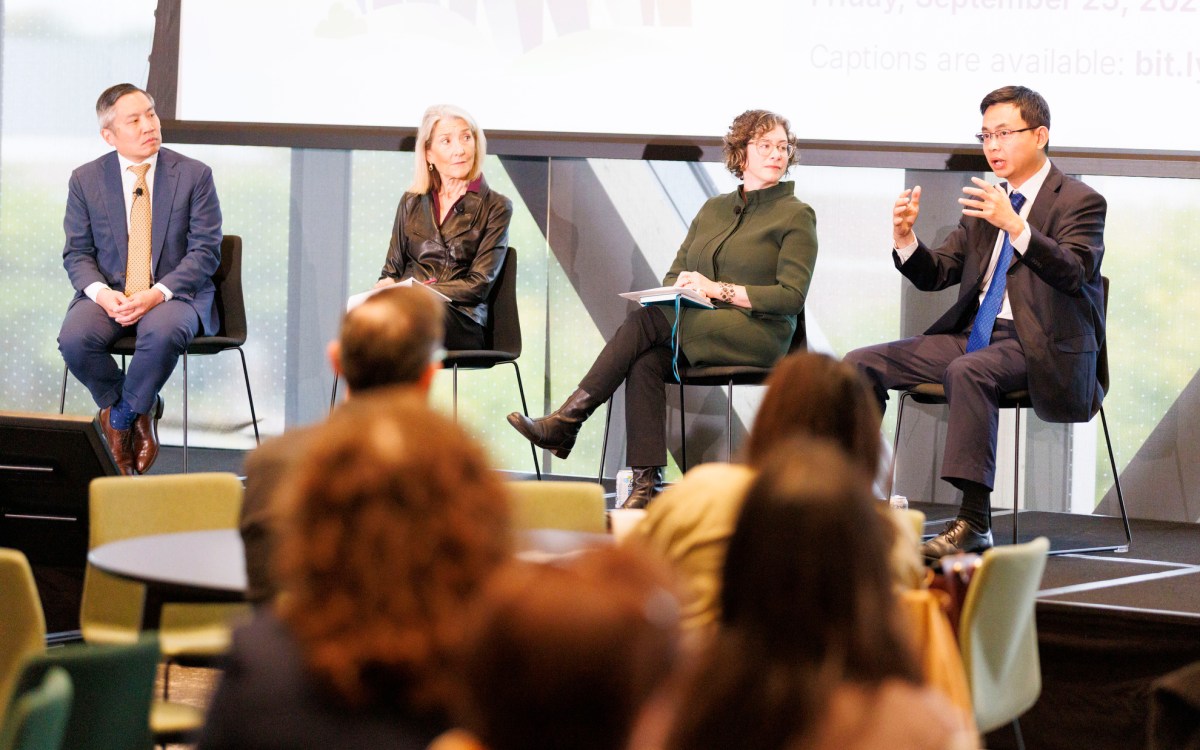
Julian Simcock (left) and Nicholas Burns.
Niles Singer/Harvard Staff Photographer
Nation & World
A new diplomacy for 21st century as economic, political, tech power shifts
New Harvard Kennedy School program to focus on emerging issues, building bench of professionals, scholarship on negotiation, building and managing ties
American foreign policy is currently being tested by bloody conflicts in the Middle East and Ukraine and escalating political and trade tensions with powerful rivals like China, historic allies such as Canada and Mexico, and dozens of other nations.
At the same time, the U.S. diplomatic bench is rapidly dwindling, warns Ambassador Nicholas Burns, the Roy and Barbara Goodman Family Professor of the Practice of Diplomacy and International Relations at Harvard Kennedy School.
There have been staff cuts of 20 percent at the State Department and about one-third of U.S. ambassadorships remain vacant. In addition, the share of trained career ambassadors in the U.S. diplomatic corps, rather than political appointees, has shrunk since 2025, from 70 percent to just 17 percent as of Aug. 2026.
“This is a catastrophically low level and a complete change from any prior president over 60 years, and if you couple that with the destruction of USAID back in the winter of 2025, you’re looking at a dramatically weakened Foreign Service,” said Burns, the U.S. ambassador to China during the Biden administration. He will lead a new Harvard Kennedy School initiative to advance the practice and study of diplomacy.
The Program on Diplomacy and Statecraft is a nonpartisan, multipronged effort at the Belfer Center focused on the key issues diplomats around the world confront. Its members will contribute scholarship to the fields of negotiation and diplomacy, and help build up a new diplomatic bench to prepare for national security challenges.
Hit Netflix dramas like “The Diplomat” notwithstanding, being an ambassador or a member of the Foreign Service is “an all-encompassing job,” said Burns. “Yes, we have American diplomats assigned to the embassy in Paris in gilded halls negotiating with French diplomats, but we also have people on the front lines of the worst disasters in the world.”
Informed by Burns’ experience in China (“by far, the major foreign policy challenge for the American people in the next 20 years”), the program will emphasize managing the U.S.-China relationship and competition across the Indo-Pacific region, as well as diplomacy across the globe.
The program also includes the American Secretaries of State Project, a longstanding historical study of high-stakes negotiation established by Burns; James Sebenius, the Gordon Donaldson Professor of Business Administration at Harvard Business School; and Robert Mnookin, professor emeritus at Harvard Law School.
In 2025, they interviewed former Secretary of State Mike Pompeo about his work during the first Trump administration and have invited former Secretary of State Anthony Blinken to visit next year.
Also featured in the program are modules on cultural diplomacy and preparing a new generation of leaders to serve in diplomatic roles.
Despite its centrality to American power overseas, few schools of government have a platform dedicated to teaching diplomacy in the same way they do for the military and intelligence, said Director Julian Simcock, M.P.A. ’13, who served in national security and diplomatic roles at the White House and State Department, respectively.
“At its core, diplomacy is often about addressing disputes without the use of force. It’s not a refuge from conflict; it’s a way of managing conflict.”
Julian Simcock
“At its core, diplomacy is often about addressing disputes without the use of force. It’s not a refuge from conflict; it’s a way of managing conflict,” he said.
“It’s my view, and I believe Nick shares it, that the vast majority of conflicts and current geopolitical complexities are going to be addressed by diplomats, not by the use of force, and so we want to create a place which is really dedicated to those issues,” Simcock said.
Without first-hand experience, understanding what really happens in diplomacy and what it takes to do well can be difficult, which makes learning from practitioners vital, he said.
“So often, it’s practiced beyond the view of the public, and I think one part of the appeal for students seems to be to learn more about what this craft looks like inside those negotiations,” said Simcock. “What does it sound like when you’re in one of these rooms negotiating with a foreign counterpart?”
While the abrupt dissolution of USAID and dramatic Foreign Service and State Department staff cutbacks have drawn widespread criticism, Burns says there is room for improvement.
“I certainly would not say the Foreign Service or the State Department is perfect,” he said. “The State Department, like many government agencies, is often reactive, slow to reform and slow to accept change.”
To that end, one early ambition of the program will be to reassess how U.S. diplomacy is organized and administered. A comprehensive nonpartisan report of recommendations will be published by early 2028.
“We can’t go back to the blueprint of the State Department in 1924 or even 2014, or USAID. We’ve got to imagine, reimagine, reinvent the Foreign Service and State Department of the future,” said Burns.
Diplomacy in the 21st century, for example, will require some knowledge of evolving tech.
“You can’t be a modern diplomat right now without at least a fundamental elementary understanding of AI and other frontline technology fields because so many future global challenges revolve around those issues,” Burns noted.
Replenishing and revitalizing American diplomacy is demanding work that students, not faculty or practitioners, must helm if real change is to take place, he said.
“This younger generation at Harvard and around the country is going to have to lead us forward.”