Featured series
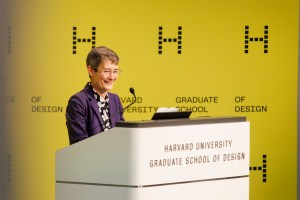
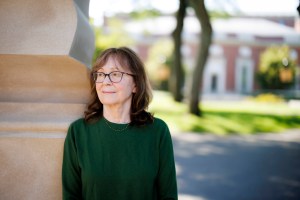
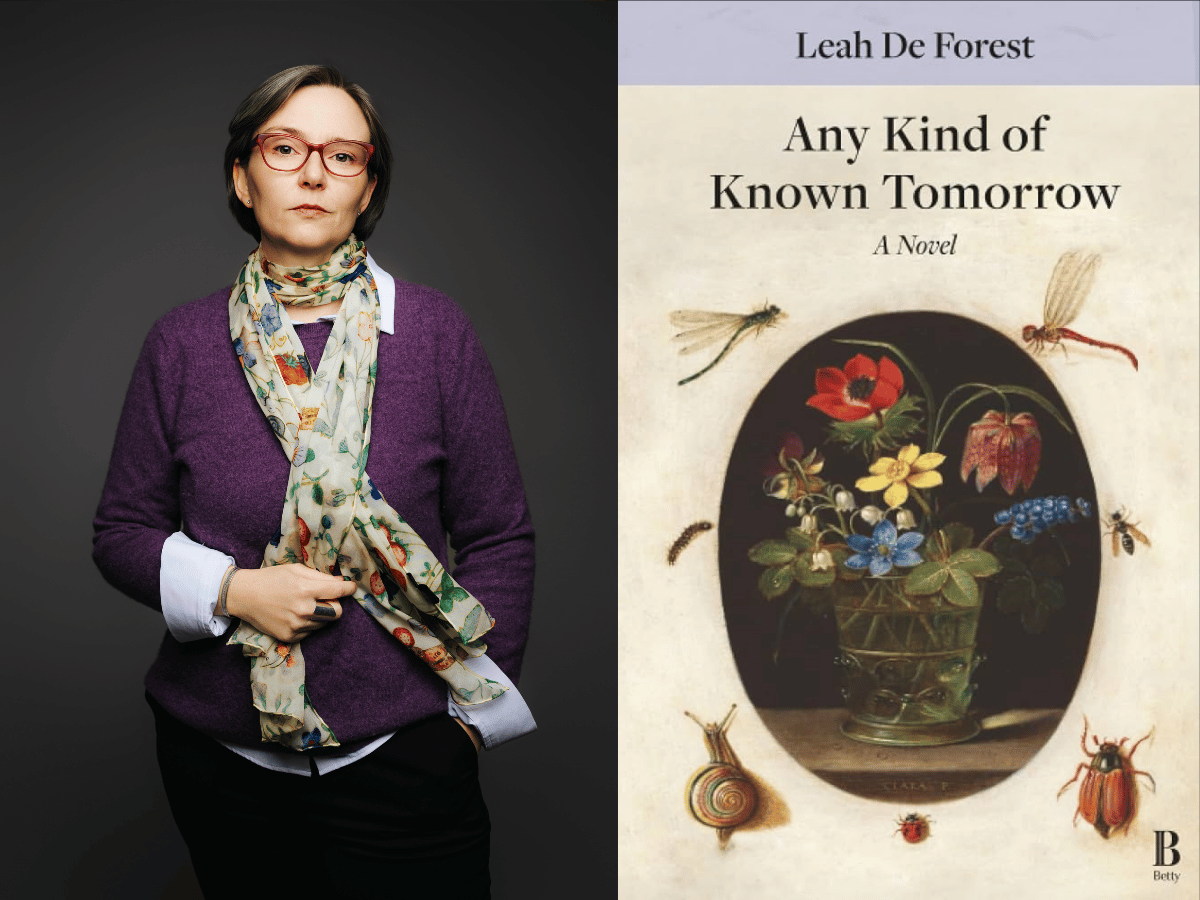
Leah De Forest.
Photo by Adrianne Mathiowetz
Arts & Culture
Reliving 2020 through fiction
Instructor’s debut novel joins growing subgenre of books confronting pandemic’s surreal early days
Early in Leah De Forest’s debut novel, New Yorkers pause to appreciate fat raindrops viewed from the comfortable side of a window. It’s miserable to be caught in the rain without an umbrella, but through the glass, it’s beautiful.
“And aren’t so many things?” De Forest writes in “Any Kind of Known Tomorrow,” out Sept. 15. “Beautiful not just from a distance, but from the right distance.”
The novel takes place in the surreal early days of the COVID-19 pandemic, a time of makeshift facemasks, bleach-wiping groceries, and wondering just how bad things would get. It follows four women — a daughter, a mother, and a grandmother, along with an unexpected guest — sardined in a New York City apartment during the pressure-cooker weeks of the lockdown. The book joins a growing catalog of novels that tackle that bizarre period, including Ben Lerner’s “Transcription,” Ann Patchett’s “Tom Lake,” and Gary Shteyngart’s “Our Country Friends.”
De Forest, an instructor and academic adviser at Harvard Extension School, talks about the challenges and possibilities of revisiting the pandemic in fiction. The interview was edited for clarity and length.
Gazette: What made you want to engage with the very particular moment of the early pandemic?
Leah De Forest: I actually started writing this book in 2018. The draft I finished in 2019 was set in New York City, generally concerned with displacement and belonging, and it featured a character struggling with a novel disease.
In 2020, I started working on the next draft — and changed course to account for what was going on in the world. Everything felt unstable at that time, and I was interested in how people were dealing with that. Denial, anxiety, retreat: I’m sure we all saw lots of different responses. I took my characters and explored how each of them was metabolizing those early weeks.
Did you worry that readers wouldn’t be ready to, or wouldn’t want to, revisit such an intense and difficult time?
When you’re writing a book, you’re writing the story that’s in front of you. This is what was in front of me. Later on, you might start thinking about whether there are readers for a book and what the marketplace is like.
Fiction has always been an important part of how I process the world. Literature has an ongoing role in representing a range of experiences — including, I think, the pandemic, which affected so many people. Any book can only get at a slice of any event or experience, right? My hope is that as people start to feel ready to read about the pandemic, they’ll find the right books for them.
What do you make of the subgenre of COVID-19 literature that’s come out in the last few years?
Looking back, the pandemic can seem like a sort of bubble. We entered this strange time together, and then at some point — and exactly when was different for everybody, and for some people it’s of course still ongoing — we came out of it. In just beginning to talk to people about this book, I’ve noted that people often have a story to offer. It might be, “I went back home to be with my family for the first time in a decade and we fought all the time,” or “I had to quarantine in my childhood bedroom.” And of course, there was so much loss. There’s a lot to process.
“We entered this strange time together, and then at some point — and exactly when was different for everybody, and for some people it’s of course still ongoing — we came out of it.”
In terms of books out there, I admired how Ann Patchett’s “Tom Lake,” for example, captured the sense of isolation people felt during the pandemic — and the way the family in that book has to retreat. The need for isolation folded the family back in on itself, in a way.
Your book follows three generations of women in the Parris family who each engage with the pandemic in different ways, so tell me a little bit about those women.
Hadley Parris, the mother, is convinced at first that everything is going to be fine. Understandably, she thinks, “Well, surely this can’t be happening.”
Hadley’s mother, Aileen, gets kind of obsessed with the news. She tracks everything blow by blow — in some ways, she’s as fascinated by the performance as by the reality. As time goes on, though, she’s afraid. And Isabelle, one of the younger characters, is anxious about the future generally, so for her, it’s a confirmation of what she already knew: Things are bad. There’s tension between the characters, because you have one person saying, “Everything is going to be fine,” and somebody else saying, “Wait, I really don’t think this is going to be OK.”
The fourth primary character, Anna, is a teen girl whom the Parris family takes in in a moment of need. But Anna needs to keep working outside of the home to make ends meet, which Aileen perceives as a selfish exposure risk. Talk to me about that tension.
I’m always interested in how structural factors, such as class, affect the way people interact. In Aileen’s case, she just doesn’t get other people’s perspectives, though she does sometimes try. That made her interesting to work with, because she’s often misunderstanding what’s going on and struggles to understand other people’s emotions. In this situation, although she might eventually come to understand that it’s not possible for someone to just quit their job, she’ll struggle to really feel why.
Through your omniscient narrator, you also dip into the heads of other people in this world, the man at the bus stop, a nurse at the hospital. Why did you choose to visit these other worldviews?
The pandemic reminded us how connected we all are. People bonded with neighborhood groups and pods; it was, in many cases, a shared experience. But in other ways we were really isolated. The experience was not the same for everyone. In terms of the book, there was an interesting tension: These characters are in this very confined space, but the whole big world is always right out there, affecting them all very directly, in ways they can’t always see.
With every beat of the heart, every moment we’re alive, there’s so much going on. In our own bodies, of course, and also in our families, our communities, and beyond. Writing in this way allowed me to at least have the fantasy that I could access some of that complexity. An omniscient narrator can capture a sense of scope that isn’t always possible when you’re living in the moment. And I really enjoyed working in this mode. It’s the ideal fantasy, right? Like going to a dinner party and being able to read everybody’s minds at the table, what everybody’s thinking and not saying to the other person — as well as pop into the passing Toyota Corolla, see what’s going on in there, and maybe zoom into a distant warehouse, where someone’s packing broccoli or socks or bicycle parts.
The book and its characters are all wrestling with uncertainty in their own way. What do you hope readers take away about how we can relate to the discomfort of not knowing?
So many things in this world are uncertain, and I think we all have to find our way to live with that. I don’t have a simple answer for how, which is probably why I wrote a book around it. But I’ll say this: The books I love the most show me something that I recognize in the world and maybe haven’t fully articulated for myself yet. I hope that readers who are interested in examining uncertainty, and the complicated relationships between mothers and daughters, and the strange and sometimes amazing ways we’re all connected, might find some of that in this book.