Featured series


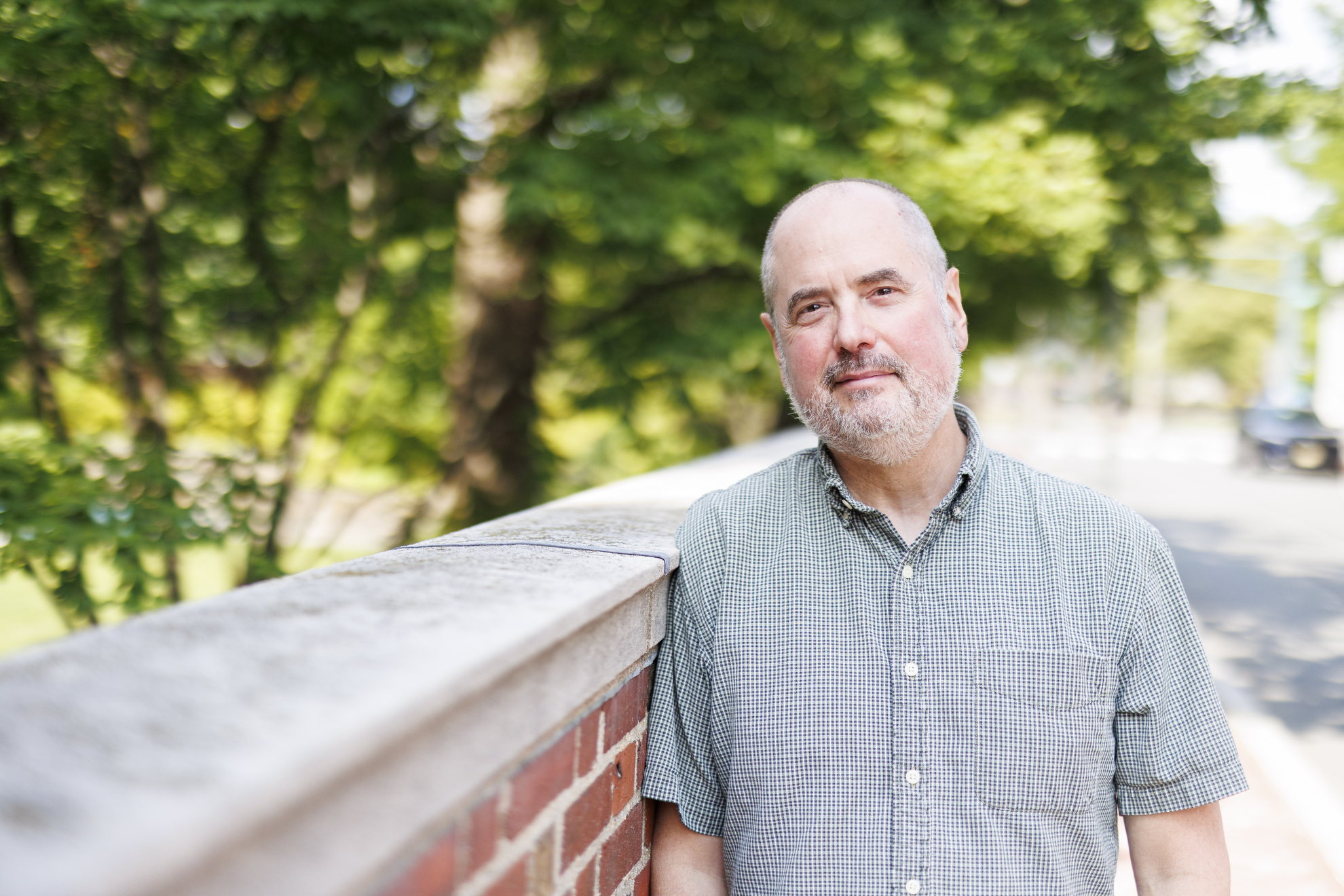
Jon Star.
Niles Singer/Harvard Staff Photographer
Campus & Community
One answer but with more than one way to get there
Jon Star, professor of teaching and learning, finds flexibility is key to helping students master math

A series focused on the personal side of Harvard research and teaching.
Finding a calling wasn’t the hard part for Jon Star. That came when he started figuring out the complexities of his chosen profession.
Growing up in Columbus, Georgia, Star worked as a camp counselor and a math tutor, and the jobs sparked something in him. He liked helping kids learn.
His path became clearer years later during a stint as a math teacher at Albuquerque Academy in New Mexico.
Star was tutoring a smart, hardworking student who came from a family where everybody excelled at math, except her. Trying to help this student work through (and sometimes around) roadblocks sparked questions for Star about how math is taught and learned.
“The student ended up being successful in the course, but I’m not sure how much that had to do with me or her hard work,” recalled Star, now the Carl H. Pforzheimer, Jr. Professor of Teaching and Learning. “That experience made me realize that learning math is a complicated process in which the mind of the student and the actions of the teacher have to come together.”
Star, who has studied how children learn math in middle and high school over the past 20 years, says one of the most effective ways to teach math is by helping students figure out how to solve math problems using multiple strategies, rather than a single method.
In a research paper co-authored with researchers from Vanderbilt University on algebra instruction, Star found that math teaching and learning improve when students begin to develop flexibility in problem solving, a concept that involves the knowledge of several strategies and the ability to choose among them on a particular problem.
“There are many ways to solve a math problem,” Star said. “There is never one way.”
In fact, that observation highlights the problem with the way math was — and sometimes still is — taught. By rote.
“Learning to solve problems in multiple ways helps them understand the math, but also to be able to solve unfamiliar problems when they encounter them.”
Jon Star
“We often think that the best way to teach someone how to solve a math problem is to show them one way to do it, including the steps, and then have them practice that one way to do it,” said Star. “What I’m after is not just, ‘Did you get the right answer?’ or ‘Did you follow the steps?’ but it’s so much broader, richer and deeper than that. … Learning to solve problems in multiple ways helps them understand the math, but also to be able to solve unfamiliar problems when they encounter them.”
Math teaching in the U.S. has improved over the years, said Star, but it has yet to translate into students’ math scores, which lag behind pre-pandemic scores as well as those of many peer nations.
According to the latest Nation’s Report Card released in 2024, the average math score for fourth-graders was two points higher than in 2022, but three points lower than the 2019 pre-pandemic score. The 2023 results from the Trends in International Mathematics and Science Study (TIMSS) showed that U.S. fourth-graders’ math scores were better than the international average but worse than those of Singapore, Japan, England, Sweden, and Germany, and several other countries.
Among the factors that can complicate math teaching are emerging technologies — AI in particular — along with dwindling investment in teacher training and mounting shortages of practitioners, said Star. He worries that math teachers may be choosing to teach in ways that are easier for them but may not be the best for students.
“Teachers are facing a difficult choice,” said Star. “The questions are how do we create incentives in the teaching profession that lead teachers to teach in a more ambitious way, and how can we maintain high standards in teacher training so that teachers are trained to teach the way we know through 30 years of work that teachers should be teaching?”
Math teachers should see themselves as discussion guides, not merely lecturers explaining concepts, said Star.
“There’s certainly going to be times when they’re going to teach, but there are other times when they need to stimulate a discussion and mold it into the outcome that they seek and the points they want to make,” he added.
Star should know.
He has been teaching math in a Watertown middle school for seven years using a practice based on his research. And his work there more often informs his teaching at Harvard rather than the other way around, he said.
As a working teacher, Star knows what new teachers need to do to help students deepen their knowledge of mathematics and their appreciation for it.
“In mathematics, we’re not just interested in getting the right answer, but we’re interested in how you get the right answer,” said Star. “Creative, innovative mathematicians have a word for this, which is elegance.”
Star said he enjoys mathematics’ elegance and beauty, but what really keeps him going is teaching math and teaching in general.
He recalled that after graduating from Brown University with a degree in electrical engineering, he received two job offers, one from an engineering company and another from a private high school.
The decision was easy, he said.
“It was a sort of a fork in the road,” said Star. “I could have made three times more money as an engineer, but I ultimately decided to take the teaching job. I never looked back. … It’s not the mathematics that drives me so much, it’s the drive to help children make sense of and understand the mathematics that they are learning in school and to help them experience the very beginnings of the beauty of mathematics.”