Featured series


Photos by Jodi Hilton
Campus & Community
‘It would have been safer to play nice and not rock the boat.’
Radcliffe medalist Ruth J. Simmons lauded by Michelle Obama, Drew Faust, Tomiko Brown-Nagin for pioneering career
Part of the Commencement 2026 series
A collection of features and graduate profiles covering Harvard’s 375th Commencement.
Ruth J. Simmons received a message shortly after she published her memoir, “Up Home: One Girl’s Journey.” A cousin — from the white side of the family — wanted to reunite their racially divided lineage. When Simmons approached her siblings, they rejected the idea. But Simmons viewed it as an example of the evolution needed to heal the division in our country.
“So many people I know lived that anger, died with it, and passed it on to their children,” she said on Radcliffe Day, speaking of historic racial injustice. “I’m determined not to do that. Because what will we be as a country if we hold on to that? We need to move on.”
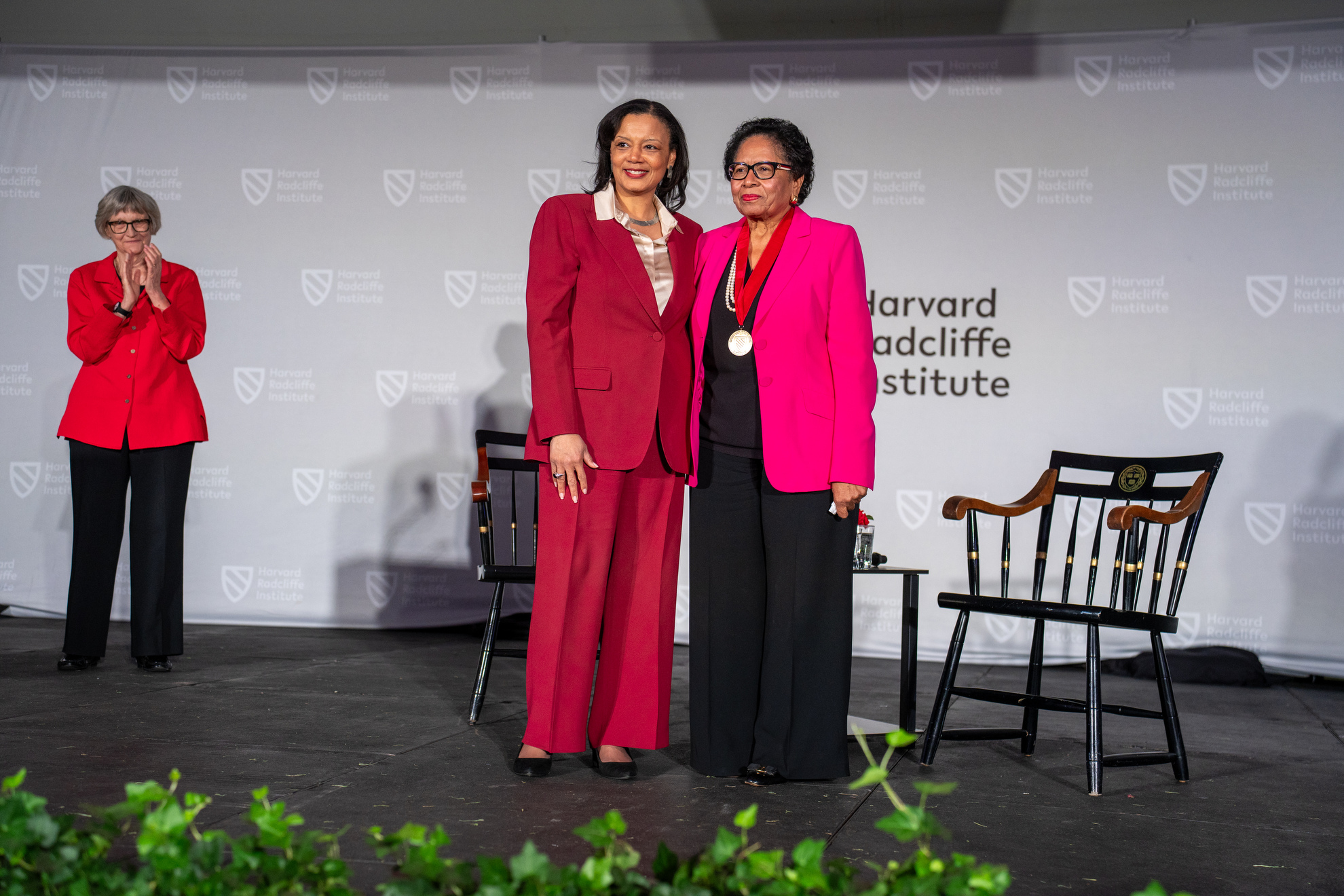
On Friday, Harvard Radcliffe Institute awarded the 2026 Radcliffe Medal to Simmons, an acknowledgement of her commitment to excellence and impact. As a three-time university president — Smith College in Massachusetts (1995-2001), Brown University in Rhode Island (2001-2012), and Prairie View A&M University in Texas (2017-2023) — Simmons has transformed innumerable lives and had a significant impact shaping generations of learners.
During Simmons’ time as president of Prairie View A&M, the students saluted her advocacy by dubbing her “Ruth the Truth.”
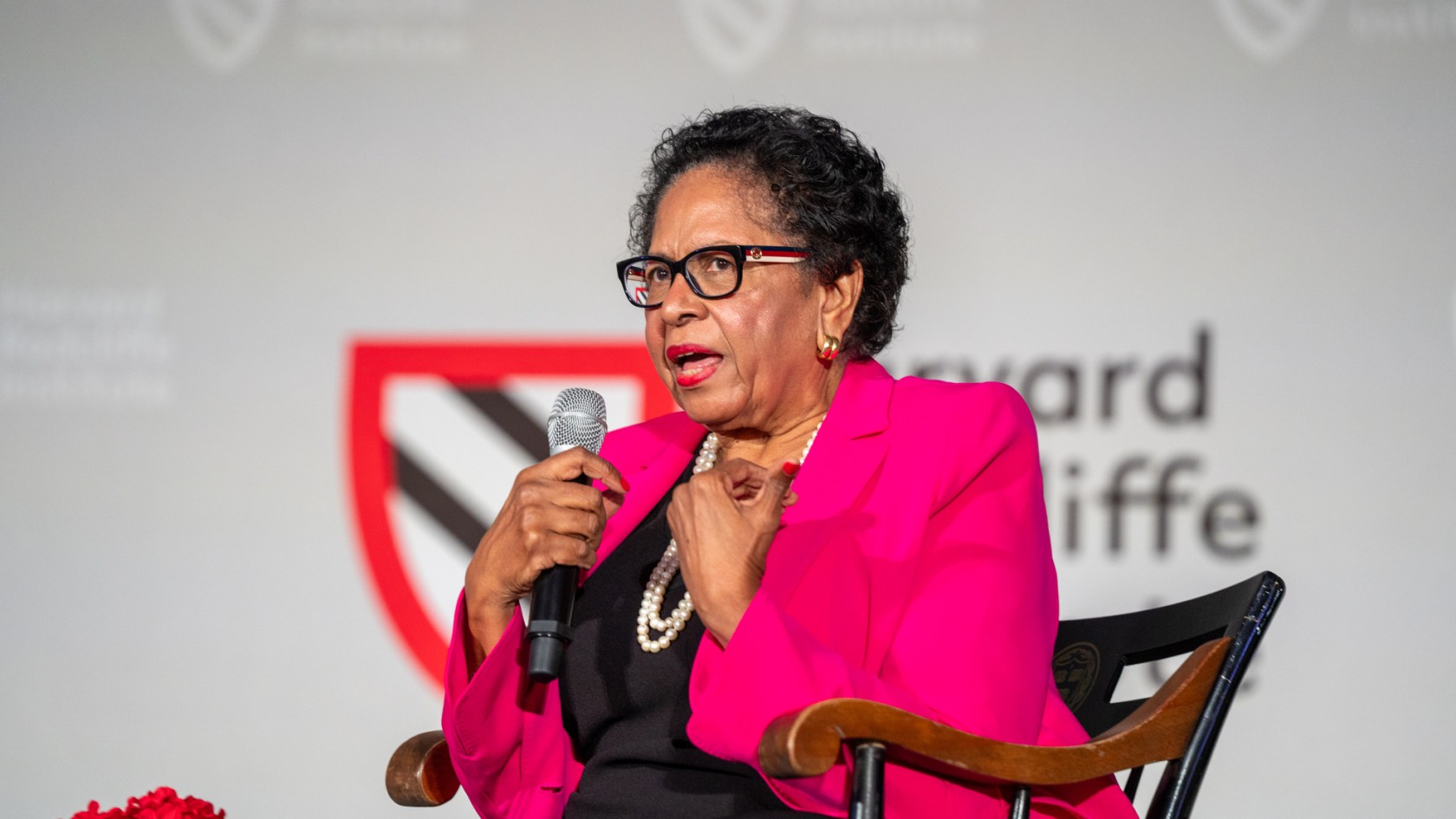
“Thank you, Ruth, for your courage throughout your career. Thank you for your courage at this moment and inspiring us to put our courage forward,” said Harvard President Emerita Drew Gilpin Faust, who joined Simmons in conversation at Radcliffe.
Simmons grew up on a “diet of Jim Crow,” she described in her memoir. The great-great-grandchild of slaves and the daughter of sharecroppers, Simmons was born and raised in Texas in a time when segregation and racism were still the law of the land.
“There was such manifest general agreement in this country that if you were Black, you had no right to see yourself as a citizen of this country; you were at best relegated to bestial-type work,” she said. “You certainly had no intelligence, and you were undeserving of common courtesies and respect.”
Her parents, Fanny and Isaac Stubblefield, did their best to raise their 12 children in such an environment. Simmons was taught that there were certain behaviors expected of her, like stepping off the sidewalk so a white person could pass, avoiding certain stores, and minding the tone of voice she used to address white people. Simmons acknowledges such lessons were designed to keep her safe but also realized they positioned the Black community as separate, lower, less than.
“My parents gave us a lesson in subservience, which, of course, I didn’t learn very well,” she said, eliciting laughs from the audience.
Faust said she was surprised Simmons decided to return to Texas, given her experience growing up there. Simmons responded that even as a child she yearned to be seen as a member of the community. She mentioned that recently she had received a letter from the Texas State Cemetery — she paused dramatically — inviting her to be buried there.
“It was an honor,” she proclaimed to the shocked laughs. “I want to represent the legacy of Jim Crow. I want to represent the people who toiled across time in Texas. I am who I am today because of that journey.”
Radcliffe Dean Tomiko Brown-Nagin praised Simmons’ advocacy for justice and equality in academia.
“She has been a tireless champion of education and its distinct capacity to empower individuals and serve society. She dedicated her life to expanding access and opportunity for others, driven by her fierce conviction that ‘education makes possible the smoothing out of unequal circumstances into which many are born,’” said Brown-Nagin, quoting Simmons.
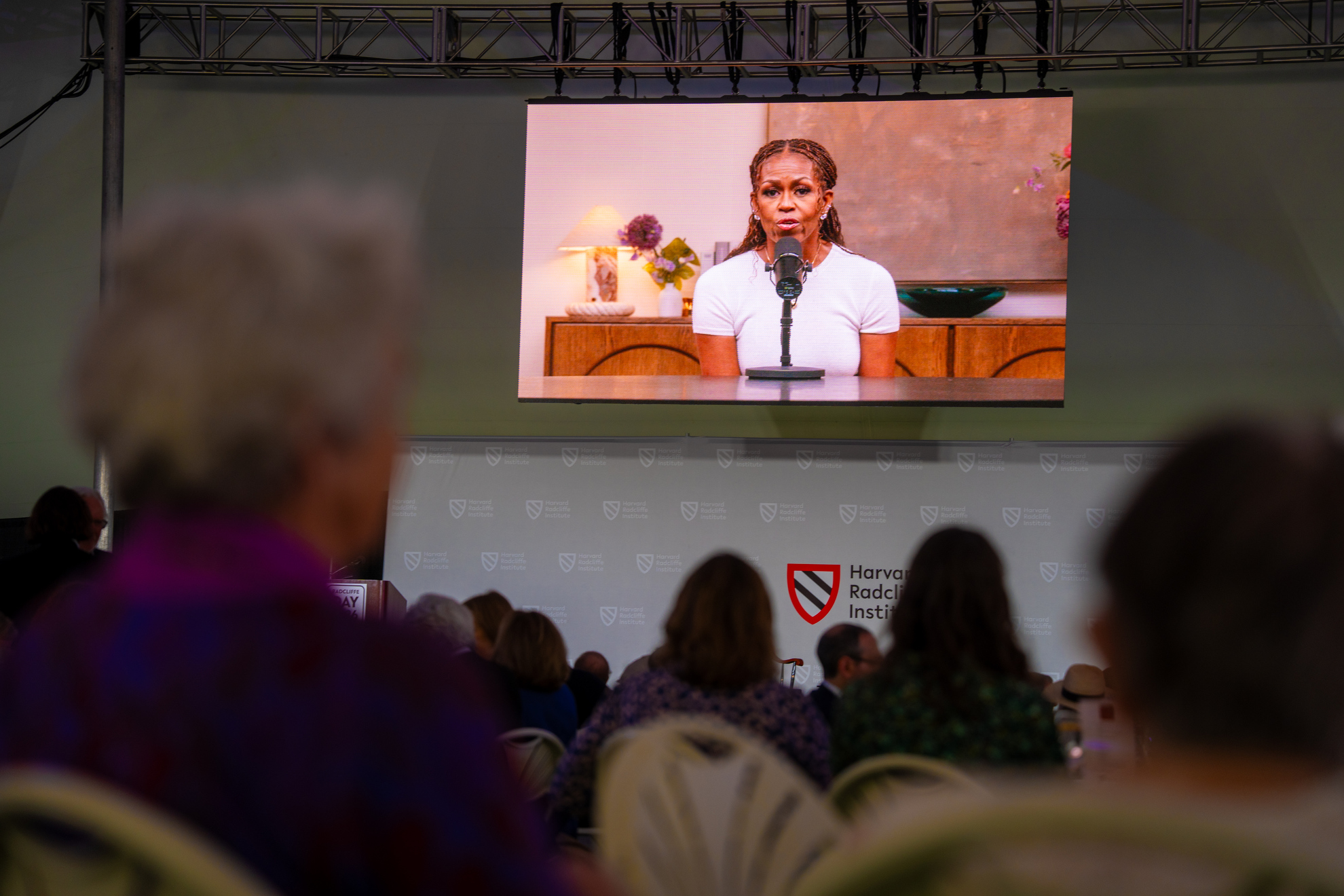
The program also included a video tribute by former first lady Michelle Obama.
“It wasn’t an easy act to get here,” Obama said, referencing Simmons’ career path. “It would have been safer to play nice and not rock the boat. But that’s just not who Dr. Simmons is. She is precisely the character and caliber of leader that we must look toward. Her inspiring leadership and legacy should remind us all about the transformative power our institutions hold.”
Simmons reflected on the challenges facing society today. There are the attacks on institutions of higher education, but also efforts toward inclusion and equity. Upon reflection, she acknowledges it’s a complicated story — one that is still being written.
“One of the things in trying to build a nation of inclusion is we focused on particular groups to the detriment of the little poor white kid in a trailer park. What about them? So, we made a mistake,” she said. “Malevolent forces can use that against our desire, which is, in my view, a very pure desire for us to come together and to work together and to be one nation.”
The Radcliffe Medal was first awarded to Lena Horne in 1987; recent honorees include Jodie Foster, Sonia Sotomayor, Ophelia Dahl, Sherrilyn Ifill, Melinda French Gates, and Dolores Huerta. The formal award was presented by Brown-Nagin.
“Simmons is an inspiring educator who both embodies and champions the power of learning to ignite the mind and expand opportunity,” Brown-Nagin said as part of the citation. “She is a visionary who reimagines what is possible and has the courage and the tenacity to do what is needed.”