Featured series
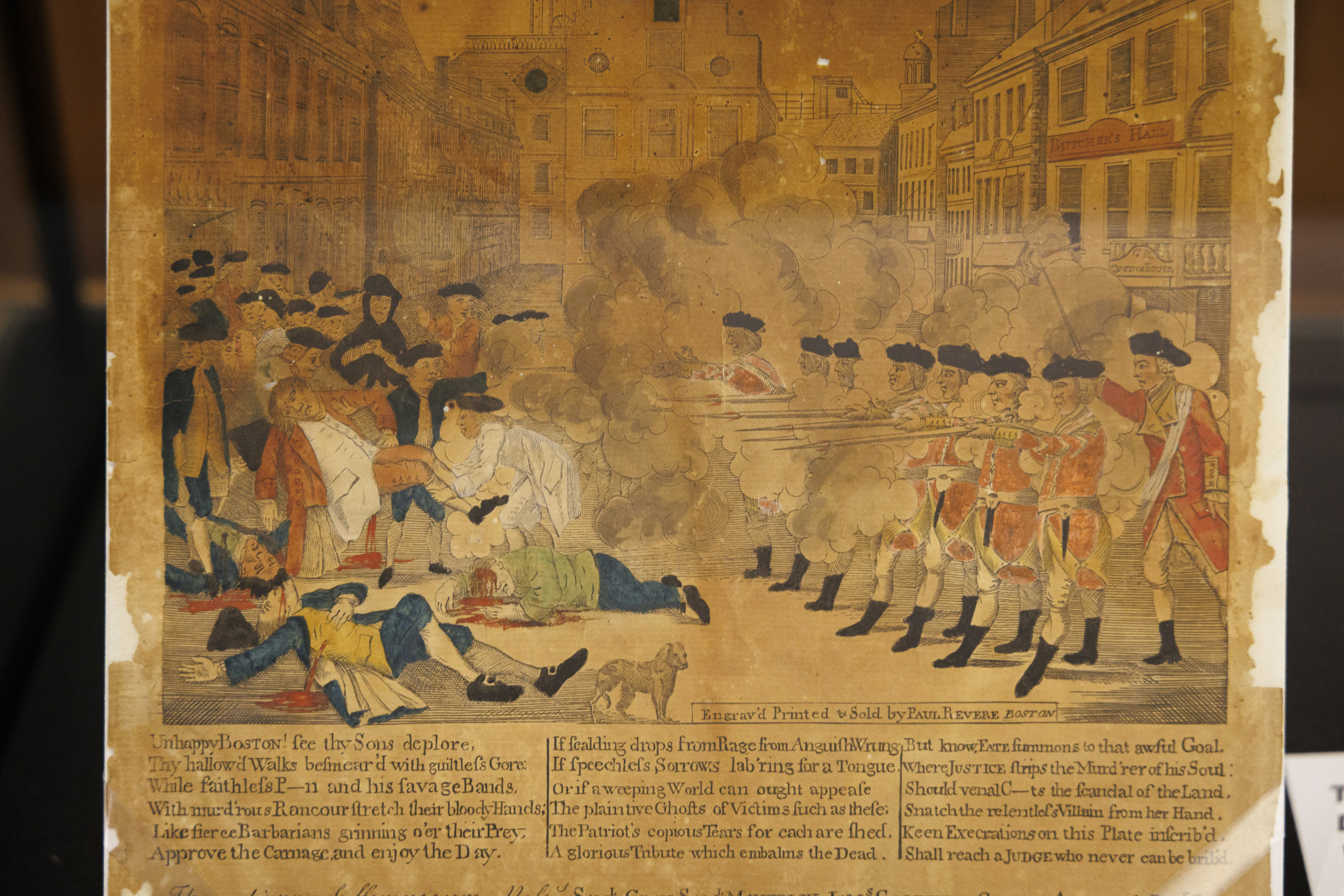
“One of the most powerful propaganda images of the whole Revolution,” Houghton Library curator John Overholt said about this Paul Revere illustration of the Boston Massacre.
Photos by Niles Singer/Harvard Staff Photographer
Nation & World
How did Ben Franklin’s barber keep up with news on war for independence?
Houghton exhibit showcases newspapers, pamphlets, other media, offering on-the-ground view of what regular citizens knew, and when they knew it
Today, news is 24/7 and as near as the closest digital device.
Not so in 1776. Information then moved at a much slower pace, even as the colonies found themselves under attack from a well-organized invading force and scrambling to invent a nation unlike any that had come before.
In honor of the 250th anniversary of the nation’s founding, Houghton Library is showcasing some of the most significant pieces of media connected to the American Revolution — including one of only 26 surviving copies of the Declaration of Independence printed on July 4, 1776.
The exhibit, “War of Words: A Citizen’s Eye View of the Revolution,” is on display and open to the public in the library’s Edison and Newman Room.
“I wanted to focus on the things that people would have read to learn about what was going on,” said Houghton curator John Overholt. “So it’s mostly pamphlets and newspapers and posters and things that circulated in the time period telling people, why are we having a revolution, and what’s happening?”
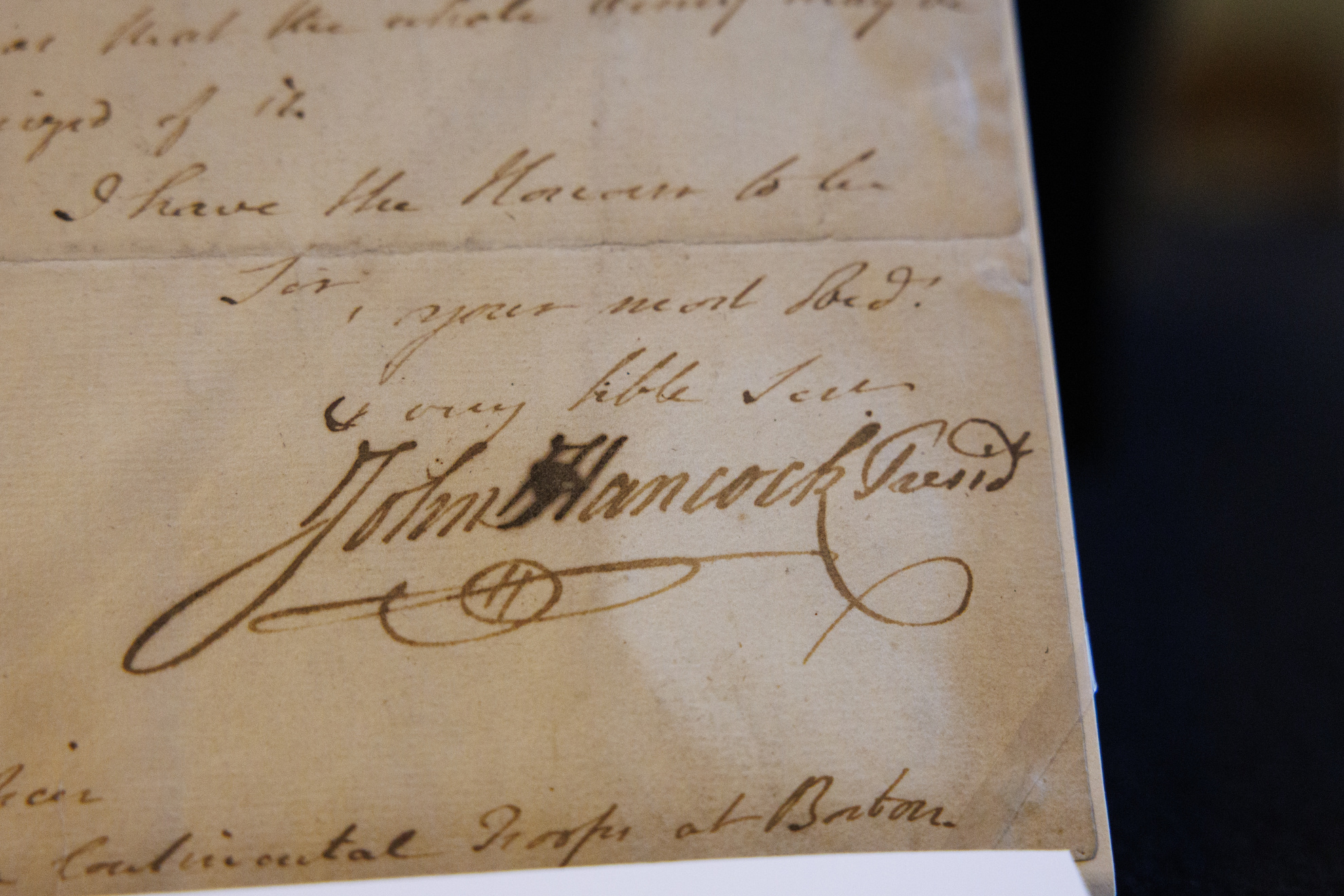
On display is a letter from John Hancock to Gen. Artemas Ward, who, along with George Washington, was one of the top commanders of the recently formed Continental Army. In it, Hancock tells Ward that he will soon receive a copy of the Declaration of Independence and asks him to have it read to the troops.
“That really fits in closely with the theme of, how did people learn stuff? Well, one way was, read this Declaration out to the assembled troops to say, ‘Hey, we’re an independent nation now.’ And of course, it’s got John Hancock’s famous, fancy signature on it.”
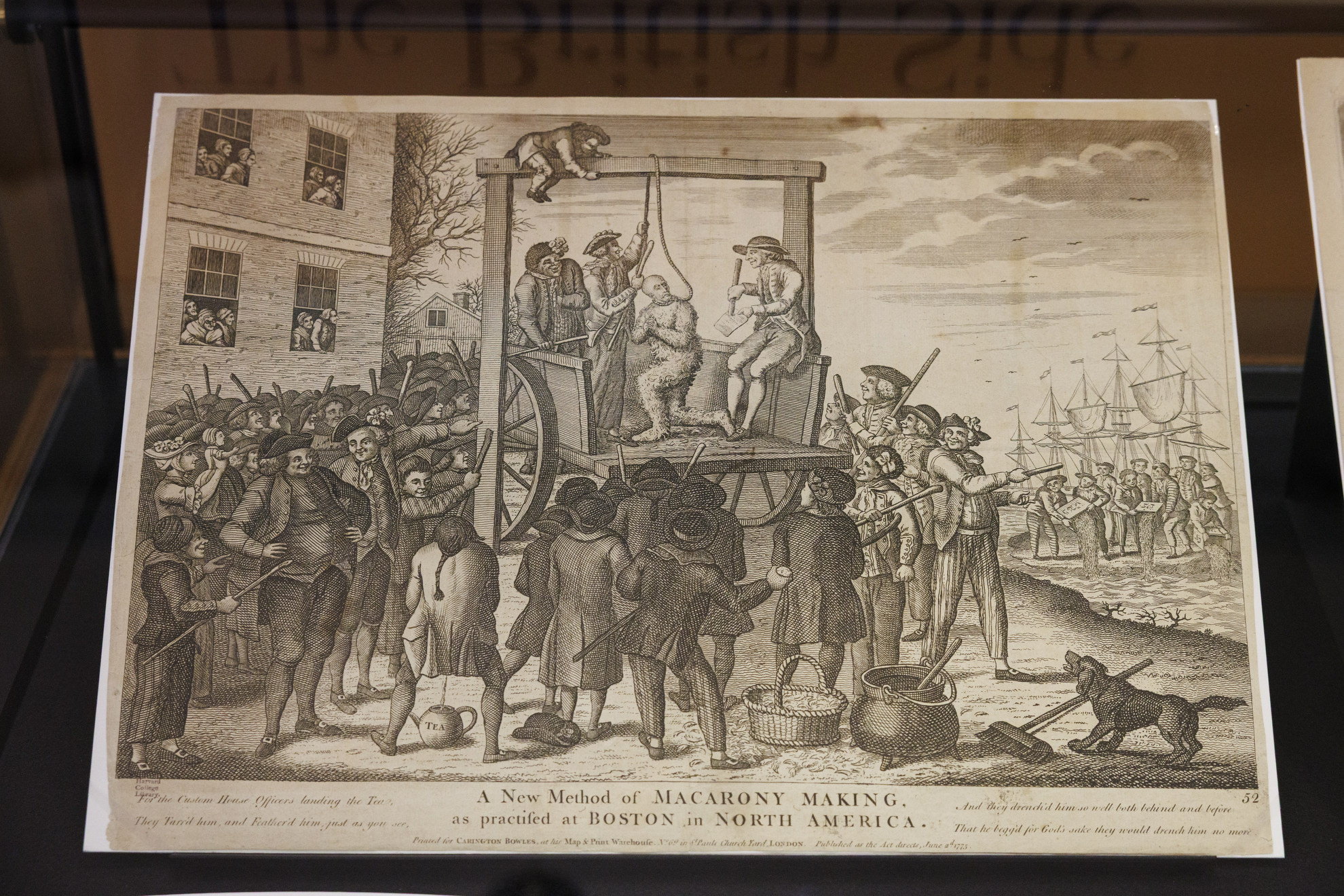
Also on display is an illustration that was circulated in England of a British tax collector being tarred and feathered by a mob of colonists who had dragged him out of his house and forced him to renounce his position with the crown.
According to Overholt, “War of Words” makes a point to include text and images from the other side in order to show exhibit visitors the kind of information British citizens were getting about the uprising.
“This image was to show what they would have seen as the incredible barbarity of the colonists,” Overholt said. “I thought it was really interesting to know not just how the Revolution was being perceived in the colonies but also how it was seen in England.”
An iconic image that circulated on the Colonial side was that of the Boston Massacre. In Houghton’s exhibit, a full-color copy of the Paul Revere illustration shows a group of defenseless Bostonians being fired upon by uniformed British soldiers.
“This particular image is one of the most powerful propaganda images of the whole Revolution. And was very much intended as such,” Overholt said. “I think seeing it in full color makes that impact even more vivid.”
All in all, there are eight cases in the exhibit. There’s material exploring the lead-up and first battles of the war as well as the economy of the Revolution era — looking at the ways funds were raised for the war effort, price controls, and runaway inflation.
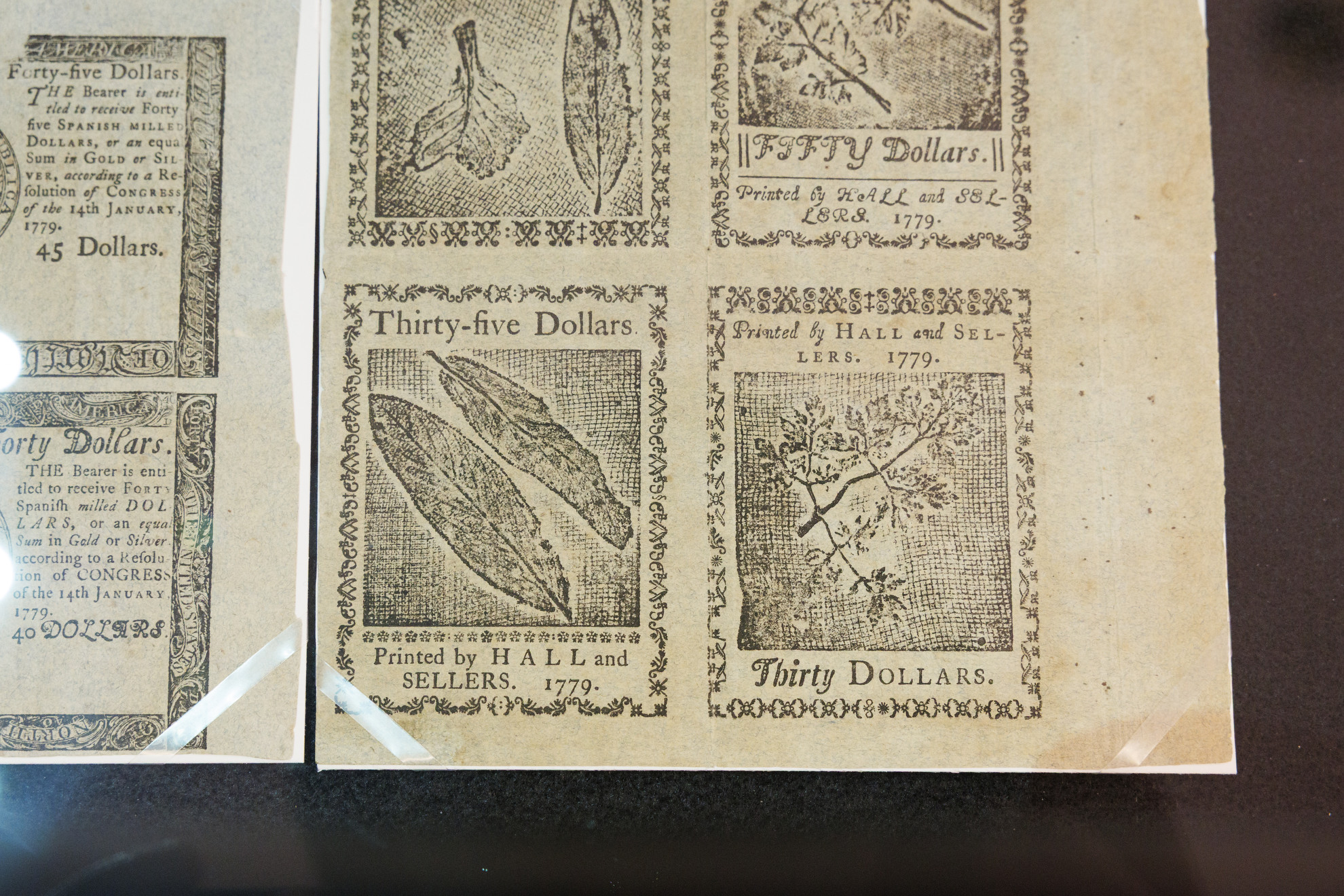
There are even uncut printed bills that are among the earliest examples of Continental currency.
Also of note is a case called “dissenting voices” that looks at both British responses to the war and those of Americans who could not offer full-throated support.
One of the manuscripts included in that case is a sermon by Lemuel Haynes, the infant nation’s first ordained African American minister. Haynes calls out the hypocrisy of the Declaration’s assertion that “all men are created equal” while also allowing slavery.
The last time Houghton did an exhibition including many of these early American artifacts was for the bicentennial in 1976. This time around, he noted, he wants viewers to not only get a sense of Harvard’s role in the Revolution, but of what it felt like to be living in the historic moment.
“I wanted people to feel like they were there in the period, as though they were experiencing it firsthand,” he said.
Houghton Library is open Monday through Friday from 10 a.m. to 5 p.m.
More like this
-
One of first to receive University honorary degree? George Washington.
Archivist says it’s an early example of ‘long tradition of honoring national leaders’
-
Helping to give birth to nation — and Harvard Med
School founder John Warren numbered among alumni who were part of revolutionary generation
-

Did the British unleash biological warfare against Washington’s troops?
Historians trace role of physicians, medicine, disease during war in articles marking 250th anniversary of Declaration of Independence
-
Moved by what’s missing in Homer’s ‘Harrow’
Curator launches series steeped in U.S. history
-
Walking in Harvard’s ‘Revolutionary footsteps’
Exhibit traces University’s role in America’s birth — from campus barracks to Founding Father alumni
-
High-tech for the 1700s
Exhibit showcases tools that powered Revolutionary America