Featured series


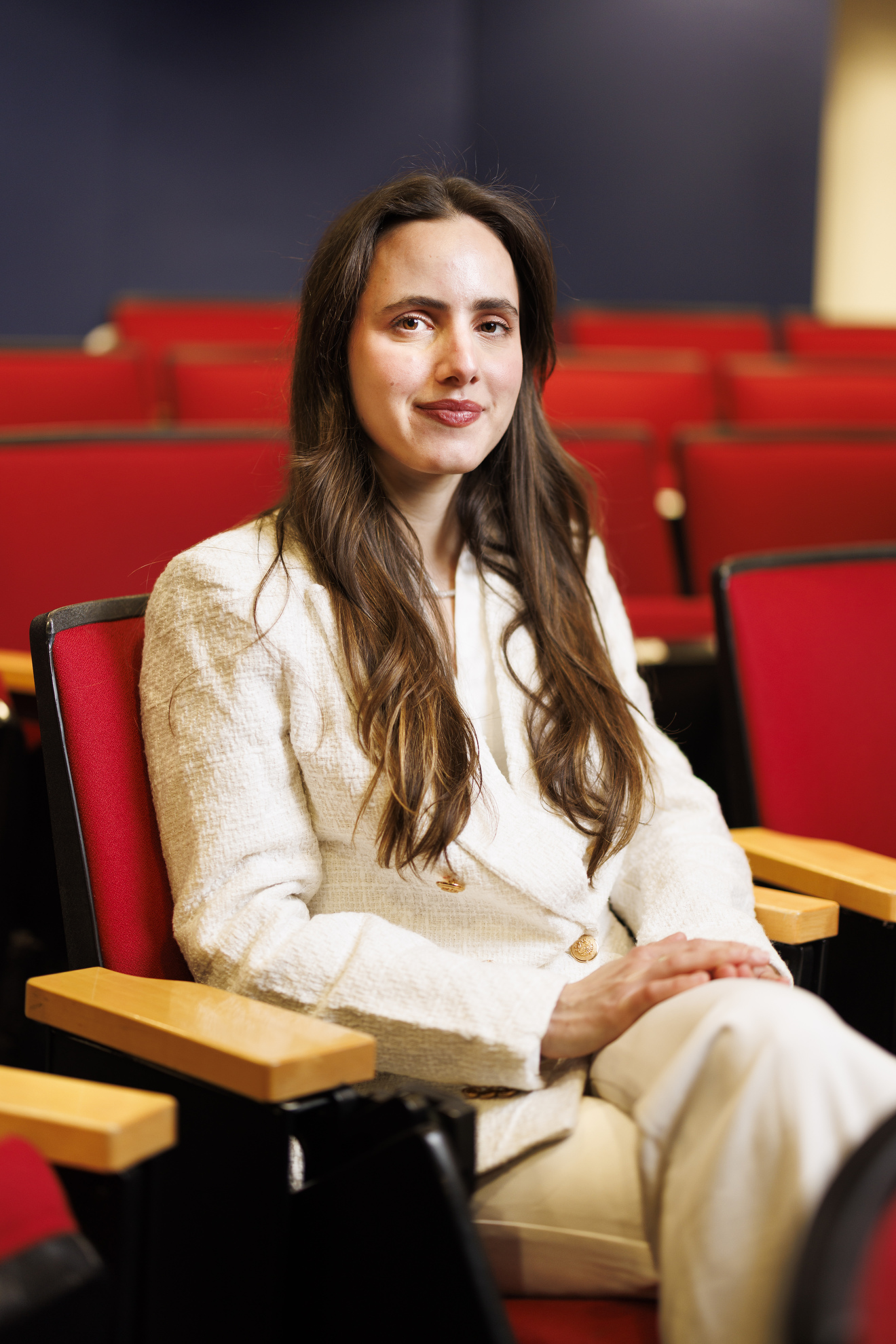
Luiza Lima Vieira.
Veasey Conway/Harvard Staff Photographer
Campus & Community
Why are other kids starving?
Witnessing poverty as a child sparked Luiza Lima Vieira’s quest to vanquish hunger — but first, she had to learn to listen to her own body
Part of the Commencement 2026 series
A collection of features and graduate profiles covering Harvard’s 375th Commencement.
While growing up in Brazil, Luiza Lima Vieira recalls walking past children her age living on the streets of her native Sao Paulo and wondering why they went hungry and she did not.
Attempting to answer that question is what led Lima Vieira ultimately to the Harvard T.H. Chan School of Public Health, where she earned a master’s of public health in nutrition in December — all while navigating health struggles of her own.
“I didn’t understand why I had access to food and other children my age didn’t, and that didn’t make sense in my head at the time,” Lima Vieira said. “Injustice was something that always shaped my path and I wanted to do something about that.”
Lima Vieira — whose family moved to Ithaca, New York, when she was 16 so her mother could pursue medical studies — credits a symposium she attended as an undergraduate at Cornell as the catalyst for her turn to public health.
“I heard students from all different backgrounds talk about work they’d done in public health, and a lot of them mentioned nutrition,” Lima Vieira said. “That kind of clicked in my head. I had a lightbulb moment and since then I’ve been on a path to work at the intersection between nutrition, medicine, and public health.”
But Lima Vieira’s path to medical school took another turn at Cornell when she developed the neuromuscular condition myasthenia gravis. The autoimmune condition affects signaling between nerves and muscles and is marked by muscle weakness, particularly in the face, arms, and legs.
It took months to diagnose the disease. Treatment followed, involving surgery to remove her thymus gland and medication. The myasthenia gravis, Lima Vieira said, was a wake-up call for her not to sacrifice her health to academic and career ambitions.
“I wanted to be in the arts, I wanted to do medicine, I wanted to do nutrition, I wanted to do global health. I pushed myself to a point where my body gave up.”
“I like to do everything. I wanted to be in the arts, I wanted to do medicine, I wanted to do nutrition, I wanted to do global health,” Lima Vieira said. “I pushed myself to a point where my body gave up.”
So, instead of medical school when she graduated Cornell in 2022 with a bachelor’s degree in nutritional sciences, Lima Vieira went to work, taking a job at Action for Boston Community Development as the organization’s health and nutrition services manager. She worked there for two years, managing day care centers for disadvantaged children up to age 5. The experience got her interested in learning how large-scale programs and government policy might help that population.
In 2024, Lima Vieira entered the Chan School’s master of public health in nutrition program and spent the next 18 months learning not just about nutrition, but also about policy.
“I was never interested in politics, but while at Harvard I understood how important policy is,” Lima Vieira said. “Systemic change is the way to go.”
While at the Chan School, Lima Vieira was a teaching fellow for Paul Farmer Professor and chair of global health and social medicine Vikram Patel’s “Foundations of Global Mental Health” class. Patel said it was Lima Vieira’s enthusiasm for the class when she took it a year earlier that made her ask to be a teaching fellow a year later. Patel said she talked up the class so much to her classmates that a good proportion of her cohort took it. And even though her stint as a teaching fellow was her second time through the course material, she stayed engaged during class sessions.
“She was always available and always interested,” Patel said, adding that the course’s mental health focus has connections with nutrition in that people have used food to manage moods for a long time.
Food, in fact, is an important part of how Lima Vieira has managed her neuromuscular condition. In addition to taking medication, she makes sure she eats well and limits ultra-processed foods. She still exercises regularly — she’s a certified classical Pilates instructor — but builds in adequate recovery time, including sleep, between sessions.
Six and a half years of living with the condition have taught her to slow down and focus, to prioritize her health and concentrate on one thing at a time. In fact, after Commencement, she hopes that her new focus will be an old one: medical school. Though she graduated in December, she looks forward to participating with her family in Harvard’s Commencement Day ceremonies. She’s already taking steps, however, for what comes next, having moved back home to Ithaca, where she’s studying for the MCAT exam. She plans to apply to medical schools in June for classes beginning in fall 2027.
“I’ve decided I’m going to medical school and I wanted to take time to focus on this next step, which is studying for this exam, and be close to family,” said Lima Vieira, the eldest of three siblings. “We should not give up on pursuing our dreams even as challenges arise. Staying true to yourself while taking care of your body is the most important thing you can do for yourself and others. The challenges and twists and turns only make us stronger.”