
 Featured series

Science & Tech
-
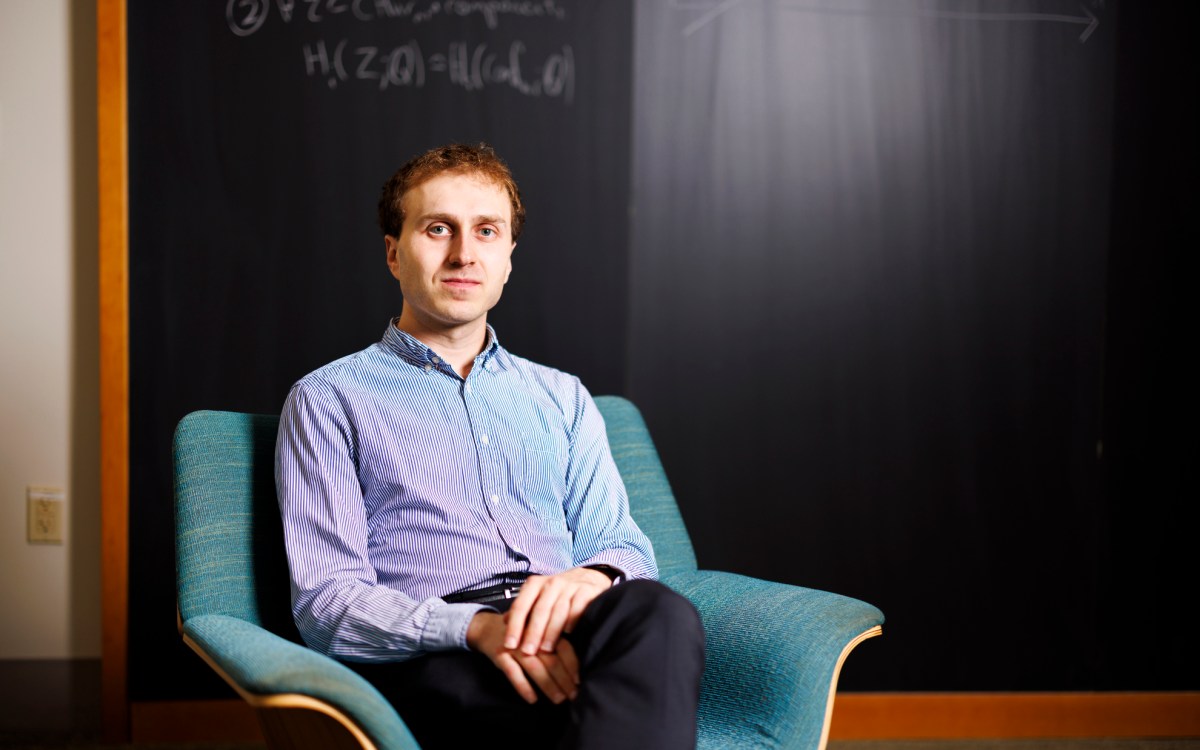
What it takes to solve math’s toughest problems
Logic skills, yes, but also two seemingly incompatible traits: Confidence and humility
-
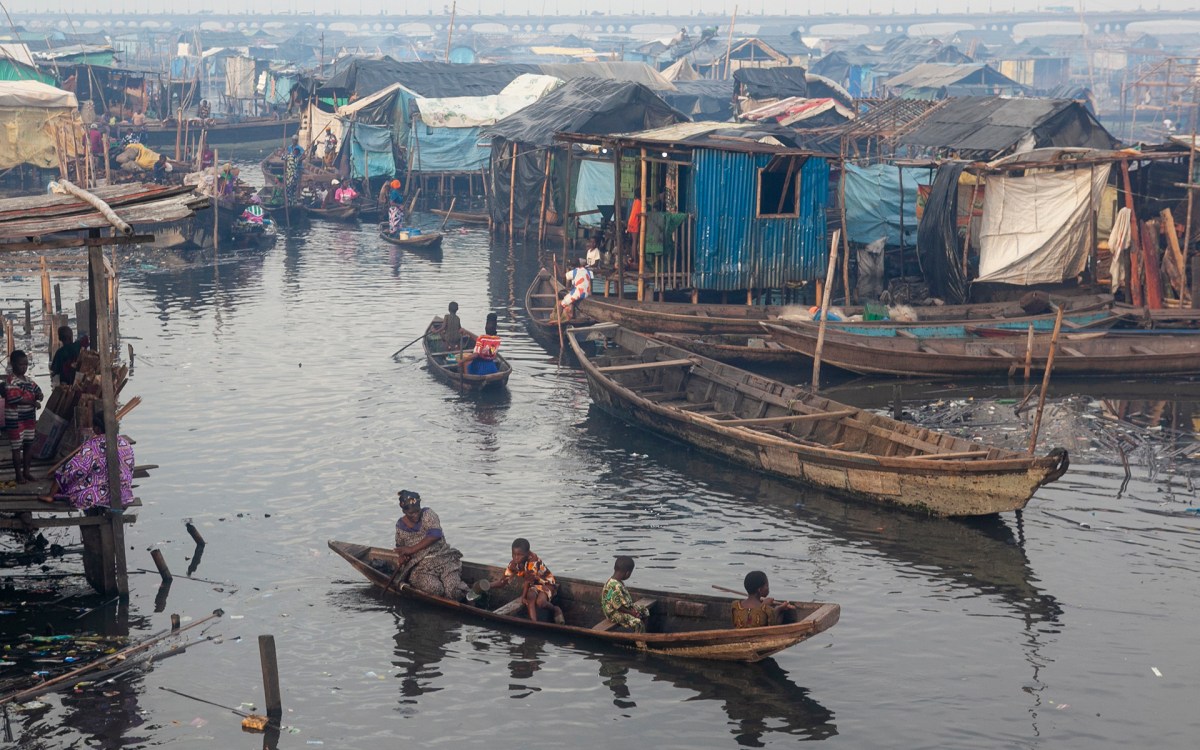
When the sea steals homes and jobs
Along West Africa’s Gulf of Guinea, Salata Institute research is helping communities weigh excruciating choices
-

Will Meta settlement reduce physical, mental health risks for young users?
Experts say many of its terms may help limit use, negative social comparisons, but regulation may still be necessary
-
The why behind sex
Research details answer to a question that’s more complex than it seems
-
Does vitriol make you feel special?
Beyond the algorithm, online negativity takes on a life of its own. Here’s why.

-

Do you have a guilty AI secret?
Media, legal experts discuss angst of individuals over appropriate use of powerful technology as institutions, culture scramble to set boundaries
-
Life in the universe? Almost certainly. Intelligence? Maybe not
We are likely not alone in the universe, though it may feel like it, since life on other planets is probably dominated by microbes or other nonspeaking creatures, according to scientists who gave their take on extraterrestrial life at Harvard last week.
-
Geneticist ‘who doesn’t believe in God’ offers new conception of divine
The Paul Tillich Lecture, offered annually at Harvard since 1990, commemorates the memory of a public intellectual who was once “the largest theological figure in our orbit,” said The Rev. Peter J. Gomes.
-
Carol Robinson: Pushing a technology’s boundaries
The distinguished chemist Carol Robinson has used mass spectrometry throughout her career to tackle increasingly complex problems in biology. When she delivered the Radcliffe Institute’s first Lecture in the Sciences…
-
A collaboration with a long lifetime
It was a crisp, classic fall day in Cambridge, but little of the golden afternoon sunlight trickled down to Cynthia Friend’s laboratory in the basement of the Harvard chemistry building.…
-
Jefferson Lab Harvard’s newest historic site
The American Physical Society (APS) designated Jefferson Physical Laboratory a historical site in a special ceremony on Monday (April 27).
-
Dinosaur protein preserved over time
Ancient protein dating back 80 million years to the Cretaceous geologic period has been preserved in bone fragments and soft tissues of a type of duck-billed dinosaur, according to a…
-
HMNH welcomes opportunities to develop NSF research-related outreach programs with University researchers
HMNH welcomes opportunities to develop NSF research-related outreach programs with University researchers Posted April 27, 2009 at http://harvardscience.harvard.edu/directory/programs/husec The Harvard Museum of Natural History has partnered successfully with faculty from…
-
The upside of rejection
Want a dose of veritas? Even at a place like Harvard, rejection and failure are regular visitors.
-
Cyclones spurt water into the stratosphere, feeding global warming
Scientists at Harvard University have found that tropical cyclones readily inject ice far into the stratosphere, possibly feeding global warming.
-
Earth Week emphasizes notion of human stewardship
Earth is shielded by a film of air barely 6 miles high. About 10 million species of plants and animals, including 6 billion humans, reside within this thin skin of gases.
-
GPM tells you more than MPG, say management professors
“Miles per gallon” (mpg) is the most common measure of a car’s fuel efficiency. The typical U.S. consumer, in shopping for a car, uses mpg as a way of calculating gas consumption and carbon emissions.
-
Florida: The far side of paradise
It was near midnight. Gnarly oak trees and sandy pines draped with Spanish moss encroached upon the narrow road. Warm air sweetened by the scent of orange blossoms wafted through the windows as the van lurched to a stop. The headlights illuminated a metal sign pinned to a gate that read “Archbold Research Station.” We had arrived.
-
Saving lives, saving money
Seguro Popular, a Mexican health care program instituted in 2003, has already reduced crippling health care costs among poorer households, according to an evaluation conducted by researchers at Harvard University in collaboration with researchers in Mexico.
-
Expedition: Blue Planet 2009 explores water
When environmental advocate Alexandra Cousteau left in February on a nonstop, 100-day expedition to critical water sites across five continents, she brought with her a writer, a photographer, an editor, and a support team of more than 60 researchers, all Harvard Extension School students. But the students needed no airline tickets. From their desktops in Cambridge and its environs, these intrepid virtual explorers provide critical support for the expedition team’s field activities.
-
Energy policies: ‘Forty-year failure’
In 1973, four weeks after the Arab oil embargo, President Richard Nixon went on national television to talk about an energy crisis that had been mounting for two years. He asked Americans to turn off their Christmas lights.
-
International conference thinks about sustainable cities
What will the cities of the future look like? Harvard’s Graduate School of Design (GSD) offered some ideas last week at a three-day international conference, “Ecological Urbanism: Alternative and Sustainable Cities of the Future,” April 3-5.
-
Reservoir system proposed to meet needs
A former Massachusetts water official is proposing a new network of central Massachusetts reservoirs to meet population-driven demand that he says will outstrip current supplies in the coming decades.
-
Climate change an ‘opportunity’ as well as a threat
Conservation pioneer Russell A. Mittermeier started this year’s Roger Tory Peterson Memorial Lecture (April 5) with a quiz. In front of several hundred listeners at Harvard’s Science Center he turned on a small recorder.
-
Planning to save a changing world
Climate change is not only altering Alaska’s natural world, it’s also affecting how humans interact with it, particularly those whose culture and traditions have pointed the way for generations to survive in the sometimes inhospitable far north. Terry Chapin, a professor of ecology at the University of Alaska’s Institute of Arctic Biology, said that climate change is already affecting Alaska in many ways.
-
Not Cancun, just can do
When I and 11 fellow Harvard students drove into Money, Miss., last week searching for the site of Emmett Till’s murder, we were expecting to find something to mark the event credited with igniting the Civil Rights Movement. Instead there was nothing.
-
A mother’s criticism strikes nerve
Formerly depressed women show patterns of brain activity when they are criticized by their mothers that are distinctly different from the patterns shown by never-depressed controls, according to a new study from Harvard University. The participants reported being completely well and fully recovered, yet their neural activity resembled that which has been observed in depressed individuals in other studies.
-
Disasters, and how to cope with them
Nine out of 10 disasters in the world are related to climate change — the consequence of “a new normal of extreme weather,” said Sir John Holmes. He talked about an accelerating pace of floods, drought, heat waves, and catastrophic storms.
-
Countway marks development of ‘the pill’
The birth control pill, which revolutionized contraception and sparked a cultural reassessment of the purpose of sex and the sanctity of life, was developed by a Harvard fertility doctor who…
-
Narayanamurti named director of Science, Technology, and Public Policy Program at Belfer Center
Venkatesh “Venky” Narayanamurti will be the new director of the Science, Technology, and Public Policy Program at Harvard Kennedy School’s Belfer Center for Science and International Affairs, Belfer Center director…
-
Five at Harvard named HHMI Early Career Scientists;
Five Harvard scientists are among 50 young scientists nationwide who will have their work supported for the next six years by a new initiative from the Howard Hughes Medical Institute…
-
Policies regarding IRB members’ industry contacts often lacking
At a time of heightened concern about conflicts of interest posed by relationships between academic medical researchers and commercial firms, a new study finds that a significant number of academic…
-
Fijian girls succumb to Western dysmorphia
In 1982, Harvard Medical School psychiatrist Anne E. Becker was still an undergraduate at Radcliffe when she traveled to Fiji for a summer of anthropology fieldwork. What struck her about this South Pacific island nation — and has in many research trips since — was “the absolute preoccupation with food and eating,” she said. “Family and social life really revolve around food. … It’s all about food, all the time.”
-
Researchers find majority of fire and ambulance recruits overweight or obese
Researchers from Boston University School of Medicine (BUSM), Boston Medical Center, Harvard University, and Cambridge Health Alliance found that more than 75 percent of emergency responder candidates for fire and…
-
Do you know what makes you happy?
Want to know what will make you happy? Then ask a total stranger — or so says a new study from Harvard University, which shows that another person’s experience is…
-
Computer science pioneer Barbara J. Grosz awarded Allen Newell Award
Barbara J. Grosz, Higgins Professor of Natural Sciences at the Harvard School of Engineering and Applied Sciences (SEAS) and dean of the Radcliffe Institute for Advanced Study at Harvard University,…