Featured series


Science & Tech
Rubies decoded: ‘Color is just one piece of the puzzle’
Photos by Grace DuVal
Rare gems shine in new Harvard exhibit
Rubies — seared in the popular imagination as sparkling adornments for Dorothy’s slippers in “The Wizard of Oz” and as loot spilling out of pirates’ treasure chests — are more than just ornaments. The precious gemstones help scientists understand the natural world.
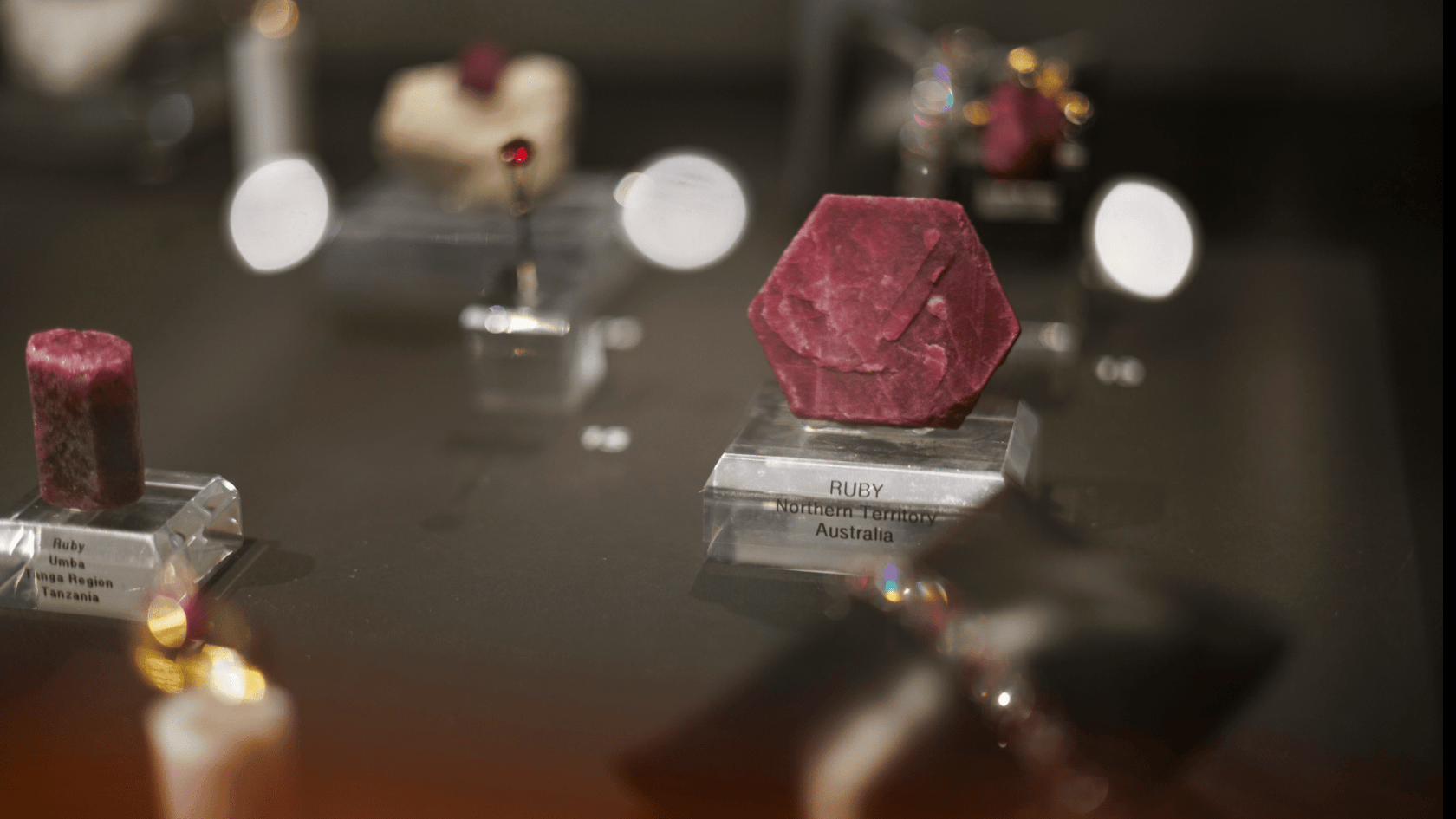
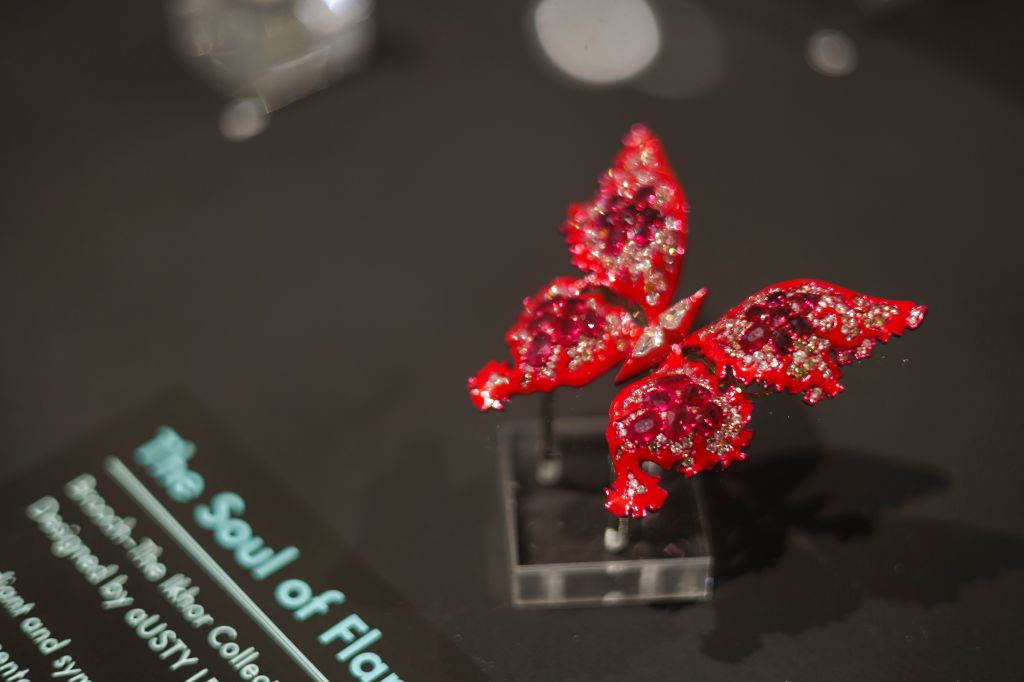
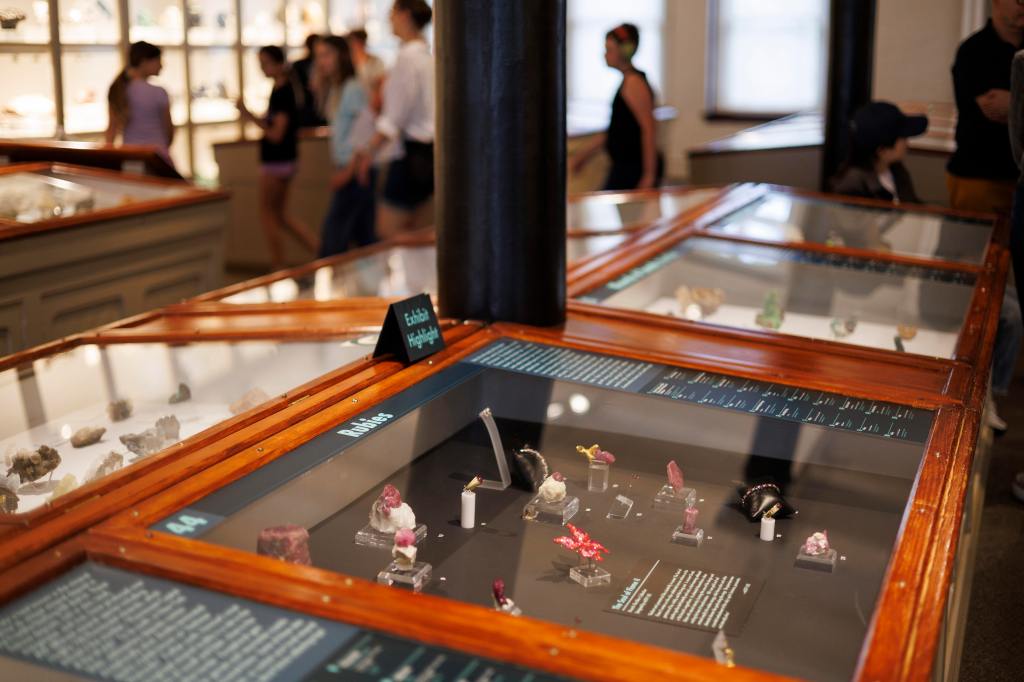
Newly displayed in the Earth and Planetary Sciences Gallery of Harvard’s Museum of Natural History are rubies big and small, sparkly and rough. They were mined from Harvard’s vast Mineralogical and Geological Museum collection, which includes more than 300,000 mineral specimens.
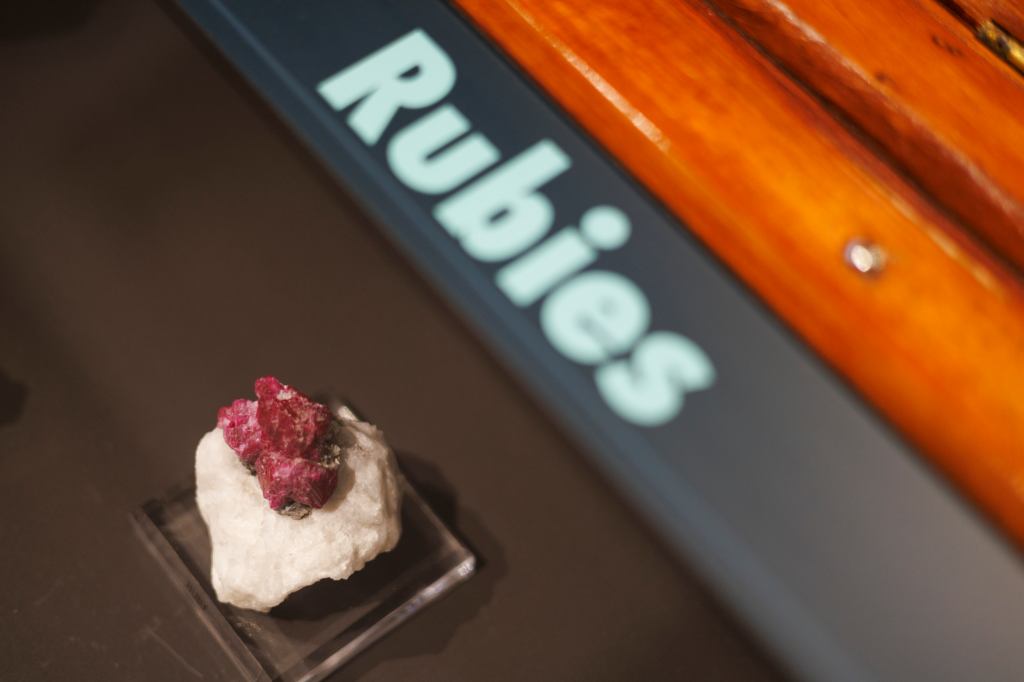
“We wanted to highlight both the gem specimen and the rough crystal that it comes from, so you’ll see some jewelry and some gems, but you’ll also see natural rubies,” said Rachel Gnieski, a collections manager at the Mineralogical and Geological Museum.
Rubies in their natural form have multiple material applications. Because of their strength, lower-grade rubies can be used as industrial abrasives. And the chromium in rubies allows for the emission of red light, making ruby crystals crucial components in lasers used in medical procedures, communication systems, and scientific research.
“This gives them a specific technological value beyond gemology,” said Raquel Alonso-Perez, curator of the Mineralogical and Geological Museum.
While the museum contains thousands of minerals, rocks, ores, and meteorites, it’s the gems Alonso-Perez finds most fascinating.
“Gems are remarkable because they’re so clean and pure; they represent the essence of minerals in their most concentrated, ideal form. This purity makes them invaluable for geochemistry and traceability studies, allowing us to understand mineral composition without the noise of impurities,” she said.
Alonso-Perez’s academic research has focused largely on gemology, and outside of Harvard she serves as the president of Boston’s chapter of the Women’s Jewelry Association.
“Understanding where any gemstone comes from, how to read its geological fingerprint, and how to distinguish natural from synthetic and treated specimens — that’s where the real scientific excitement lies,” she said. “The gem type is less important than the fundamental questions about origins, authenticity, and material composition that apply across all gemstones.”
Rubies’ hue contains valuable information about mineral compositions that vary by geography — but “color is just one piece of the puzzle when trying to understand how these rubies formed,” said Alonso-Perez. Take Burmese rubies, prized for their rarity and rich red color.
“All rubies are aluminum oxide, but Burmese rubies are distinctive because of their composition and formation conditions. The Himalayan geological environment influences the chromium concentration, which contributes to their deep, intense red.”
“The Himalayan geological environment influences the chromium concentration, which contributes to their deep, intense red.”
Raquel Alonso-Perez
Another piece of the puzzle is the surrounding material attached to the mined ruby solid. Two environments form rubies — metamorphic rock, like marble or gneiss, that forms when tectonic plates combine, and igneous rocks that form from cooled magma. Each reveals the history of the environment and may provide clues for better understanding the earth.
“The chemistry of a mineral works like a fingerprint or DNA, unique and diagnostic. That chemical signature reveals the geological conditions and origin of each mineral,” Alonso-Perez said. “When we combine chemical analysis with machine learning methods, we can achieve even better insights into where and how these materials formed.”
The rubies will be on display at the Museum of Natural History through at least the end of the year. Gnieski said a new gem will be featured next year.