
 Featured series

Health
-
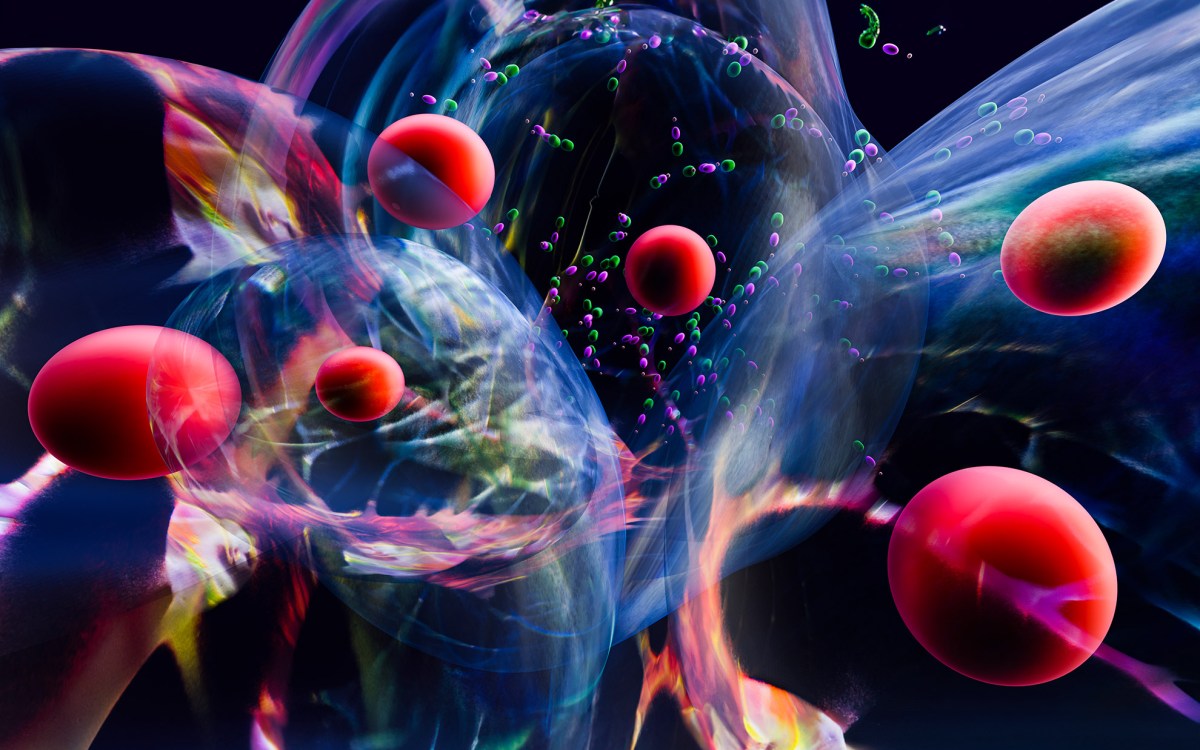
Break in the case for long COVID investigators
Research highlighting chronic inflammation opens path to treating illness that affects millions of Americans

-
The problem with the school smartphone debate
Study finds most districts already regulate devices. Is the real issue enforcement?
-
Just who gets a say at FDA public drug-approval hearings?
New research shows negative voices are relatively rare in drug approval hearings.
-

Your digital twin might save your life
AI, statistics offer new possibilities for personalized medicine
-
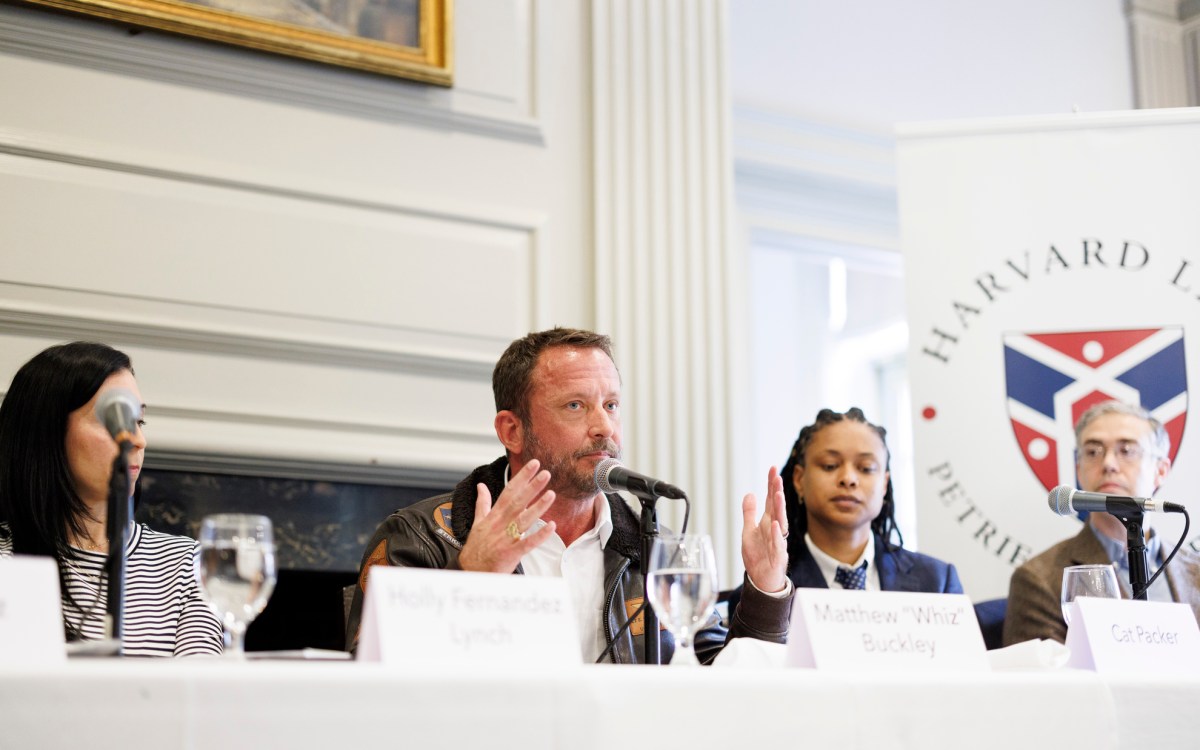
Time to legalize psychedelics?
Campus debate weighs therapeutic need vs. safety questions
-
How a toxin from the gut microbiome may help spark colorectal cancer
Findings suggest colibactin may be promising target for disease prevention
-
Obesity linked to dangerous sleep apnea in truck drivers
Truck crashes are a significant public health hazard, causing thousands of deaths and injuries each year, with driver fatigue and sleepiness being major causes. A new study by Harvard researchers…
-
Wildlife biologist named Roger Tory Peterson Medal recipient, speaker
Russell Mittermeier, renowned wildlife biologist and president of Conservation International, has been selected to receive the 12th annual Roger Tory Peterson Medal presented by the Harvard Museum of Natural History (HMNH). Mittermeier will deliver the Roger Tory Peterson Memorial Lecture on April 5.
-
Culture skews human evolution
The rise of agriculture 10,000 years ago meant the end of the hunter-gatherer lifestyle for which human beings had been optimized by millions of years of evolution and the beginning of an era where culture encourages habits unhealthy for us and for the world around, with uncertain evolutionary outcomes.
-
Scientists create cell protein machinery
Harvard scientists have cleared a key hurdle in the creation of synthetic life, assembling a cell’s critical protein-making machinery in an advance that has practical, industrial applications and that enhances our basic understanding of life’s workings.
-
Blood types indicate greater risk for cancer
Offering a novel clue about the basic biology of pancreatic cancer, researchers at Dana-Farber Cancer Institute have confirmed a decades-old discovery of a link between blood type and the risk of developing the disease.
-
Harvard scientists praise lifting of stem cell restrictions
All across Cambridge and Boston, researchers gathered just before noon on March 9, 2009, for President Barack Obama’s announcement that the federal funding ban on stem cell research would be lifted.
-
The third chapter can be the best in the book
There may be something to the adage about growing older and wiser. A lot, in fact, according to the new book by Sara Lawrence-Lightfoot, “The Third Chapter: Passion, Risk, and Adventure in the 25 Years After 50,” (Farrar, Straus and Giroux, 2009). The work explores the trend of learning and development for adults who are in their “third chapter” of life, or, as Lawrence-Lightfoot puts it, “the generative space that follows adulthood and middle age.”
-
Blood type study sheds light on biology of pancreatic cancer
Offering a novel clue about the basic biology of pancreatic cancer, researchers at Dana-Farber Cancer Institute have confirmed a decades-old discovery of a link between blood type and the risk…
-
Faculty approves undergraduate concentration in human developmental, regenerative biology
Harvard’s Faculty of Arts and Sciences late today voted to approve a new undergraduate concentration, or major, in Human Development and Regenerative Biology. One of the first of its kind…
-
Higher temperatures lead to more severe headaches
Although large numbers of headache sufferers, particularly individuals who struggle with migraines, attribute their pain to the weather, there has been little scientific evidence to back up their assertions. Now,…
-
End-of-life conversations associated with lower medical expenses
Few physicians are eager to discuss end-of-life care with their patients. Yet such conversations may result in better quality of life for patients and could lower national health care expenditures…
-
Taking a stride toward synthetic life
Harvard scientists have cleared a key hurdle in the creation of synthetic life, assembling a cell’s critical protein-making machinery in an advance with both practical, industrial applications and that advances…
-
Banking of umbilical cord blood has little physician support
A survey of physicians has found broad support for the position that parents should not bank their newborns’ umbilical cord blood in a private blood bank unless another member of…
-
Congressmen highlight challenges of mental illness, substance abuse
In 2008, 54 million Americans suffered with mental illness; 35,000 Americans committed suicide due to untreated depression; and 180,000 people died as a direct result of an untreated addiction. Congressmen Jim Ramstad (R-Minn.) and Patrick Kennedy (D-R.I.) spoke at the John F. Kennedy Jr. Forum Monday (March 2) on the truths and realities of mental illness and addiction in America.
-
Runyon Foundation names fellows from Harvard
The Damon Runyon Cancer Research Foundation has named six Harvard affiliates among its 13 new fellows. The recipients of this prestigious, three-year award are outstanding postdoctoral scientists conducting basic and translational cancer research in the laboratories of leading senior investigators across the country.
-
Watching evolution in real time
In 1831, the young Charles Darwin set off on the H.M.S. Beagle, a Royal Navy sloop bound for detailed surveys of South America. He took with him the first volume of the massive trilogy “Principles of Geology” by Scottish geologist Charles Lyell. (He had the other volumes sent later.)
-
Capillary formation’s mechanical determinants
Harvard researchers have established a link between the growth of blood vessels and the mechanical stresses caused by the environment within which the vessels grow, a new understanding that researchers hope can lead to novel disease treatments based on manipulating blood flow to living tissues.
-
Darwin’s empathy, imagination highlighted
On Feb. 12, the world celebrated the 200th anniversary of Charles Darwin’s birth. Much was made of his key idea, natural selection, and how it still resonates and informs science in the 21st century.
-
Patients untapped resource for improving care
As the United States transitions to a new administration, and as the health care crisis mounts, the debate about how to buttress primary care delivery with information technology is getting louder. While much of the attention — and controversy — is focused on how to better equip physicians, little focus appears to be aimed at how to better equip patients to improve their health care.
-
Bacteria have more to say than previously thought
Bacteria are the oldest living organisms, dating back 4 billion years. So it is only logical that they have evolved ways to communicate.
-
Vitamin B, folic acid may reduce risk of age-related vision loss
New research from Brigham and Women’s Hospital finds that taking a combination of vitamins B6 and B12 and folic acid appears to decrease the risk of age-related macular degeneration (AMD) in women. This research is published in the Feb. 23 issue of Archives of Internal Medicine.
-
Low-income diabetic women at increased risk for postpartum depression
Researchers at Harvard Medical School (HMS) and the University of Minnesota have found that living just above the poverty line and having diabetes increases by 50 percent a woman’s chance of developing postpartum depression — a serious illness that affects about one in 10 new mothers.
-
Calorie reduction key to weight loss, not food type
Many popular diets emphasize either carbohydrate, protein, or fat as the best way to lose weight. However, there have been few studies lasting more than a year that evaluate the effect on weight loss of diets with different compositions of those nutrients.
-
New ALS gene identified
A collaborative research effort spanning nearly a decade between Harvard researchers at Massachusetts General Hospital (MGH) and King’s College London (KCL) has identified a novel gene for inherited amyotrophic lateral…
-
Alzheimer’s-associated plaques may have impact throughout the brain
The impact of the amyloid plaques that appear in the brains of patients with Alzheimer’s disease may extend beyond the deposits’ effects on neurons — the cells that transmit electrochemical…
-
Weight loss bottom line: Fewer calories
A new study by Harvard researchers and colleagues shows that eating fewer calories leads to weight loss, regardless of where those calories come from. Many popular diets emphasize either carbohydrate,…
-
Predicting risk of stroke from one’s genetic blueprint
A new statistical model could be used to predict an individual’s lifetime risk of stroke, according to the results of a study by Harvard researchers at the Children’s Hospital Boston Informatics Program.
-
Vitamin B and folic acid may reduce risk of age-related vision loss
Harvard Medical School (HMS) researchers at Brigham and Women’s Hospital have found that taking a combination of vitamins B6 and B12 and folic acid appears to decrease the risk of…
-
Low-income women with diabetes at increased risk for postpartum depression
Researchers at Harvard Medical School (HMS) and the University of Minnesota have found that living just above the poverty line and having diabetes increases by 50 percent a woman’s chance…
-
Patients are untapped resource for improving care, study finds
A 15-month study of 21,860 patients and 110 primary care physicians at 11 Harvard Vanguard health centers found that patients who received mailed reminders that they were due for colorectal…