
 Featured series

Tag: BWH
-
Nation & World
Walk this way
For many older women, the 10,000-step-a-day paradigm may seem daunting, but a new study suggests just 7,500 confers the same mortality-lowering benefit.

-
Nation & World
Shorter shifts lead to better-rested doctors
In a multiyear randomized clinical trial, investigators from Brigham and Women’s Hospital found that senior resident physicians who work no more than 16 consecutive hours get an average of 8 percent more sleep than those who work extended-duration shifts of 24 hours or more.
-
Nation & World
Discovering predictor for fatal infection in preterm babies
Katherine Gregory, a nurse scientist at Brigham and Women’s Hospital, searched for an answer to the mystery of necrotizing enterocolitis (NEC), a sometimes fatal infectious disease of the newborn gut affecting preterm infants.
-
Nation & World
Making old hearts younger
Two Harvard Stem Cell Institute researchers have identified a protein in the blood of mice and humans that may prove to be the first effective treatment for the form of age-related heart failure that affects millions of Americans, a study says.
-
Nation & World
Pain relievers increase hearing loss risk
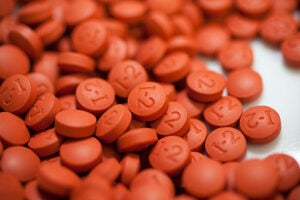
According to a study by researchers at Harvard-affiliated Brigham and Women’s Hospital, women who took ibuprofen or acetaminophen two or more days per week had an increased risk of hearing loss.
-
Nation & World
Women pay high price for high job strain
New research from Brigham and Women’s Hospital (BWH) finds that women with high job strain are more likely to experience a cardiovascular-related event compared with women with low job strain. These findings are published in the open access journal PLoS ONE.
-
Nation & World
Helping the heart help itself
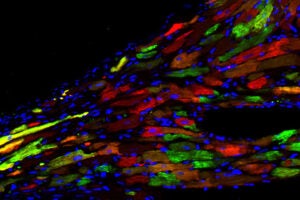
Stem cells being transfused into post-heart attack patients may not be developing into new heart muscle, but they still appear to be beneficial. Some stem cells in the bone marrow, called c-kit+ cells, appear capable of stimulating adult stem cells already present in the heart to repair damaged tissue.
-
Nation & World
Adult kidney stem cells found in fish
It has long been a given that adult humans — and mammals in general — lack the capacity to grow new nephrons, the kidney’s delicate blood filtering tubules, which has meant that dialysis, and ultimately kidney transplantation, is the only option for the more than 450,000 Americans who have kidney failure.

-
Nation & World
Brigham face transplant recipient goes home
James Maki, a 59-year-old who became the nation’s second face transplant recipient in April to repair injuries from a horrific subway accident, left Brigham and Women’s Hospital on Thursday (May 21), thankful for what he called a “new chance to build my life.”
-
Nation & World
Embryo’s heartbeat drives blood stem cell formation
Biologists have long wondered why the embryonic heart begins beating so early, before the tissues actually need to be infused with blood. Two groups of Harvard Stem Cell Institute (HSCI) researchers from Children’s Hospital Boston (Children’s) and Brigham and Women’s Hospital (BWH) — presenting multiple lines of evidence from zebrafish, mice, and mouse embryonic stem…
-
Nation & World
Lack of sleep is easier on older adults than others
In a recent sleep study testing alertness and performance in sleep-deprived adults, researchers at Brigham and Women’s Hospital (BWH) determined that healthy older adults handle sleep deprivation better than younger adults. The findings appeared online on May 3, in an advance online edition of the Journal of the American Geriatrics Society.
-
Nation & World
Brigham surgeons perform face transplant
Surgeons at Harvard-affiliated Brigham and Women’s Hospital toiled in twin operating rooms Thursday (April 9), becoming just the second U.S. team to perform facial transplant surgery.
-
Nation & World
HMS professor receives first Thomas H. Lee M.D. Award
Michael Aaron Lambert, assistant professor of medicine in Harvard Medical School, received the inaugural Thomas H. Lee M.D. Award for Excellence in Primary Care on April 3. Lambert is the medical director of Southern Jamaica Plain Health Center in Boston.
-
Nation & World
Robotic radical hysterectomy has advantages
New technologies now allow surgery to be performed with less impact on patient quality of life. As the trend toward minimally invasive surgery grows, robotic-assisted surgery has become an appealing tool for gynecologic oncology surgeons. However, to date, there is little data to confirm the benefits of this technology. New research from Brigham and Women’s…
-
Nation & World
Drug trial shows dramatic reduction in hidden heart disease
A Harvard-led study shows that the risk of heart attack and stroke among subjects with “silent heart disease” — and normal cholesterol levels — can be dramatically reduced by the use of an already widely prescribed class of drugs.
-
Nation & World
Shore Fellowship affords breathing room
The weekend was hectic for physician Rhonda Bentley-Lewis: two full days of activities, including her son’s birthday party. Then came the trip to the emergency room, not to attend to a patient, but to Christian, the 11-year-old birthday boy, and his broken wrist.
-
Nation & World
HMS’s VanRooyen earns Humanitarian Award
At its annual dinner on Sept. 5, the Hippocrates Society honored Harvard Medical School Associate Professor of Medicine Michael VanRooyen with the 2008 Humanitarian Award. VanRooyen, who is also associate professor in the Department of Global Health and Population at the Harvard School of Public Health (HSPH), was recognized for his extensive work in humanitarian…
-
Nation & World
Genetic mechanisms linked to Parkinson’s disease uncovered
A new genetic finding from a group of researchers at Brigham and Women’s Hospital (BWH), the University of Wisconsin School of Medicine and Public Health (SMPH), and the University of Ottawa may help pave the way for the discovery of therapies that could effectively treat Parkinson’s disease (PD).
-
Nation & World
Prostate cancer treatments are contrasted
Jim Hu and colleagues at Harvard-affiliated Brigham and Women’s Hospital (BWH) assessed surgical utilization and complications, lengths of hospital stay, and cancer outcomes in more than 2,700 men who underwent prostate cancer surgery.
-
Nation & World
Hormone therapy linked to increased risk of stroke
Postmenopausal women taking hormone therapy appear to have an increased risk of stroke regardless of when they started treatment, according to a report in the April 28 issue of Archives of Internal Medicine, one of the JAMA/Archives journals.
-
Nation & World
Ho-Am Prize, ‘Korea’s Nobel,’ is awarded to BWH’s Charles Lee
Assistant Professor of Pathology Charles Lee of Brigham and Women’s Hospital (BWH) has been named the recipient of the 2008 Ho-Am Prize in Medicine.
-
Nation & World
FDA deadlines may compromise drug safety by rushing approvals
Many medications are approved by the U.S. Food and Drug Administration (FDA) on the brink of congressionally mandated deadlines, and those drugs are more likely to face later regulatory intervention than those approved with greater deliberation, researchers at Harvard University have found. Drugs fast-tracked by the FDA are more likely to eventually be withdrawn from…
-
Nation & World
Link between deep sleep and visual learning
A relationship has been observed between deep sleep and the ability of the brain to learn specific tasks. Researchers at Harvard-affiliated Brigham and Women’s Hospital (BWH) have now shown that the processes that regulates deep sleep may affect visual learning. These results are published in the March 12 issue of the Journal of Neuroscience.
-
Nation & World
BWH-led tuberculosis research project receives $14M NIH grant
Researchers at Brigham and Women’s Hospital (BWH), the Harvard School of Public Health (HSPH), Harvard Medical School (HMS) and Partners In Health (PIH) have received a grant of $14 million over five years from the National Institutes of Health to study multi-drug-resistant tuberculosis (MDR-TB) and extensively drug-resistant tuberculosis (XDR-TB). The goal of the project is…
-
Nation & World
Cancer stem cells can be targeted for destruction
It’s increasingly believed among scientists that nearly every cancer contains small populations of highly dangerous cells — cancer stem cells — that can initiate a cancer, drive its progression, and create endless copies of themselves. On the theory that targeting these cells might be an effective therapeutic strategy, researchers around the world have begun isolating…
-
Nation & World
Selective attention most impaired during first night shift worked
Our biological propensity for keeping awake during the day and sleeping at night makes night work a challenge. Now, researchers at Brigham and Women’s Hospital (BWH) have found that attention is especially affected during the first night shift. This research appears in the Nov. 28 issue of the Public Library of Science One.
-
Nation & World
Beta-carotene reduces dementia risk in men
Researchers affiliated with the Channing Laboratory at Brigham and Women’s Hospital (BWH) report in the Nov. 12 issue of Archives of Internal Medicine evidence that men who take beta-carotene supplements for 15 years or longer may have less cognitive decline and better verbal memory than those who do not.
-
Nation & World
Flavonoid-rich diet helps women decrease risk of ovarian cancer
New research out of the Channing Laboratory at Brigham and Women’s Hospital (BWH) reports that frequent consumption of foods containing the flavonoid kaempferol, including nonherbal tea and broccoli, was associated with a reduced risk of ovarian cancer.
-
Nation & World
Researchers track down arthritis gene
Researchers at Brigham and Women’s Hospital and the Broad Institute of MIT and Harvard have discovered a gene involved in rheumatoid arthritis, a painful inflammation that affects 2.1 million Americans and which can destroy cartilage and bone within the afflicted joint.
-
Nation & World
Broken hearts found to mend themselves
Stem cells apparently try to mend hearts damaged by heart attacks or high blood pressure. But they do not refresh hearts run down by aging. Evidence for this heartening and disheartening news comes from experiments with mice done at Harvard Medical School (HMS) and Brigham and Women’s Hospital in Boston.