
 Featured series

Tag: circadian rhythm
-
Health
Shelter for the psyche
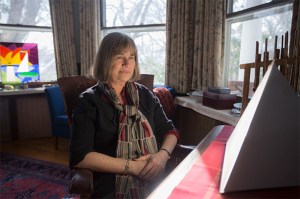
Harvard psychiatrist Jacqueline Olds offers some tips for coping with the snow and the dark days of winter.
-
Health
What wakes me
Clifford Saper, chair of neurology at Harvard Medical School, and colleagues at Beth Israel Deaconess Medical Center recently discovered a brainstem area that senses oxygen dips and drives waking.

-
Science & Tech
Researchers find potential cause of heart risks for shift workers
Harvard researchers at Brigham and Women’s Hospital (BWH) and colleagues have identified the potential cause of the increased risk for cardiovascular and metabolic disease in shift workers. The researchers found that misalignment between the internal biological clock and the sleep/wake and fasting/feeding cycles, known as circadian misalignment, resulted in hormonal and metabolic changes that, if…
-
Health
Researchers discover second light-sensing system in human eye
New research on blind subjects has bolstered evidence that the human eye has two separate light-sensing systems — one that perceives the familiar visual signals that allow us to see and a second, separate system that tells our body when it is day or night. Researchers have long known that the eye performed both functions…
-
Science & Tech
Basic understanding of biological clock advances
Writing this week in the journal Science, researchers at Harvard describe what causes a trio of proteins, if placed in a test tube with the common biochemical fuel ATP as a source of phosphate, to function as a minimalist biological clock of sorts, maintaining an accurate circadian rhythm for long periods of time. The new…
-
Health
Peripheral ‘Swatch’ watches are powerful force in modulating body’s circadian rhythms
Clinicians have known for years that organs function at different rates — the heart beats, kidneys transport ions and electrolytes, the liver metabolizes lipids, sugars, and amino acids differently over the course of the day — and have used this knowledge to design more effective drug regimens for patients. A better understanding of what drives…
-
Health
Link found between body rhythms and circadian clock, light
The brain’s circadian clock is a tiny cluster of neurons behind the eyes. This cluster of cells sends out signals that control the body’s daily rhythms. New research from Harvard Medical School has started us on the path to understanding better how this process works. The possible implications of understanding how the circadian clock works…
-
Health
Are you an ‘early bird’ or a ‘night owl’?
Harvard researchers working at Brigham and Women’s Hospital have found that whether someone is a morning person or an evening person depends on a basic aspect of the circadian timing system that is known as intrinsic period. The study was published in the August 2001 issue of “Behavioral Neuroscience. “While some have argued that extremes…
-
Health
Circadian rhythms may distinguish Alzheimer’s disease
Researcher David Harper and his colleagues monitored two key components of the circadian system — the rise and fall of core body temperature and the waxing and waning of spontaneous motor activity — in 38 dementia patients with either Alzheimer’s disease or another form of dementia, frontotemporal degeneration. They found that body temperature reached its…