Xiaowei Zhuang awarded the 2026 Dickson Prize in Medicine
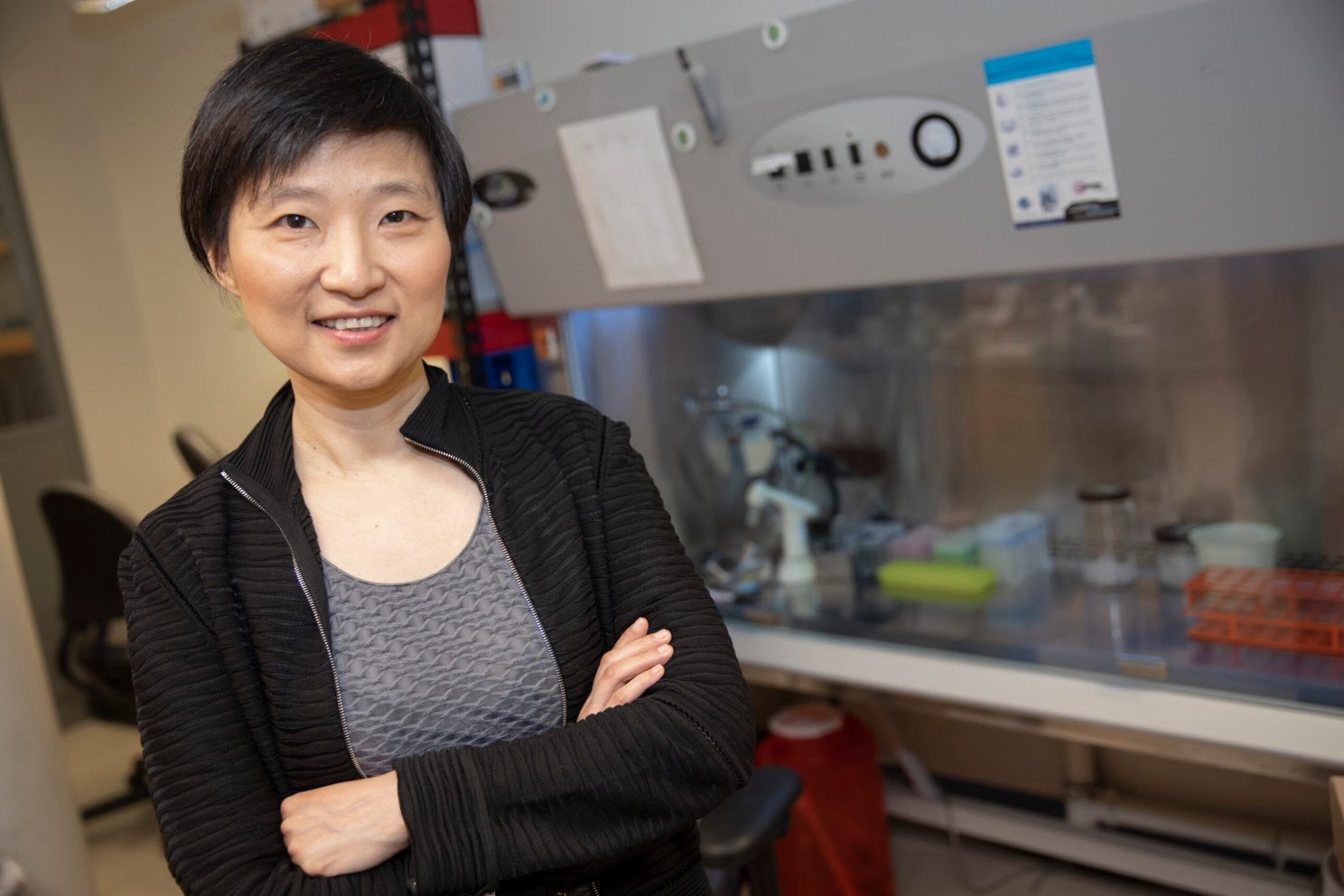
Xiaowei Zhuang researches to understand the mechanisms of cellular function and their dysfunction in disease which requires a detailed picture of the molecular interactions in cells in the Naito Lab.
Xiaowei Zhuang, David B. Arnold Jr. Professor of Science at Harvard University and Howard Hughes Medical Institute investigator, has been named the recipient of the 2026 Dickson Prize in Medicine, the University of Pittsburgh School of Medicine’s highest honor. The award recognizes Zhuang for developing transformational imaging and genomic technologies that have reshaped multiple fields, especially neuroscience and cancer research, and that are now widely used to study tissue organization in health, aging and disease.
As part of the Dickson Prize festivities, Zhuang will deliver a lecture titled “Spatially Resolved Single-Cell Genomics and Functional Genomics” on July 16 at the University of Pittsburgh’s Oakland campus.
The Dickson Prize in Medicine is awarded annually to an American biomedical researcher who has made significant, progressive contributions to medicine. The prize consists of a specially commissioned medal and a $50,000 honorarium, underscoring its stature as one of the nation’s premier recognitions for scientific achievement.
The award has a distinguished history as a bellwether of future honors in biomedicine. Since 1970–71, the inaugural year of the prize, 17 Dickson Prize recipients have gone on to receive Nobel Prizes. Twenty-four have also been honored with Lasker Awards, among the most prestigious accolades in biomedical research.
“Xiaowei Zhuang’s work on single-molecule, super-resolution and genome-scale imaging fundamentally changes how scientists can observe and understand biology at the smallest usable scale — inside living cells and tissues,” says Anantha Shekhar, Pitt’s senior vice chancellor for the health sciences and John and Gertrude Petersen Dean of the School of Medicine. “Her work is revolutionizing the study of diseased versus healthy cells across any number of health afflictions and keenly represents the kind of game-changing science we aim to honor with the Dickson Prize.”
Zhuang is widely regarded as a pioneer in super-resolution and genome-scale imaging methods. She invented stochastic optical reconstruction microscopy (STORM), a super-resolution imaging technique that broke the diffraction limit and enabled light microscopy with nanometer-scale resolution. Using STORM, Zhuang and her collaborators discovered novel molecular structures inside cells, revealing previously invisible aspects of cellular architecture.
To tackle biological questions at the genome scale, Zhuang also invented multiplexed error-robust fluorescence in situ hybridization (MERFISH), a genome-scale imaging method that enables spatially resolved single-cell transcriptomics, 3D genomics, epigenomics and functional genomics. With MERFISH, her lab has uncovered molecular signatures, spatial organization and functions of cells in complex tissues, as well as principles of 3D genome organization and gene regulation within cells.
Zhuang’s scientific journey began with a bachelor’s degree in physics from the University of Science and Technology of China, followed by a doctorate in physics from the University of California at Berkeley and postdoctoral training in biophysics at Stanford University. In recognition of her scientific impact, she has received honorary doctorate degrees from Stockholm University, Delft University of Technology and the Icahn School of Medicine at Mount Sinai.
Her contributions have been recognized by many of the world’s leading scientific societies. Zhuang is a member of the National Academy of Sciences, the National Academy of Medicine and the American Academy of Arts and Sciences. She is also a fellow of the National Academy of Inventors, a member of the American Philosophical Society and a foreign associate of the Chinese Academy of Sciences and the European Molecular Biology Organization.

 Featured series