Featured series


Arts & Culture
A bond stronger than blood
Tayari Jones digs into themes of latest novel, ‘Kin’: ‘We all need chosen family.’
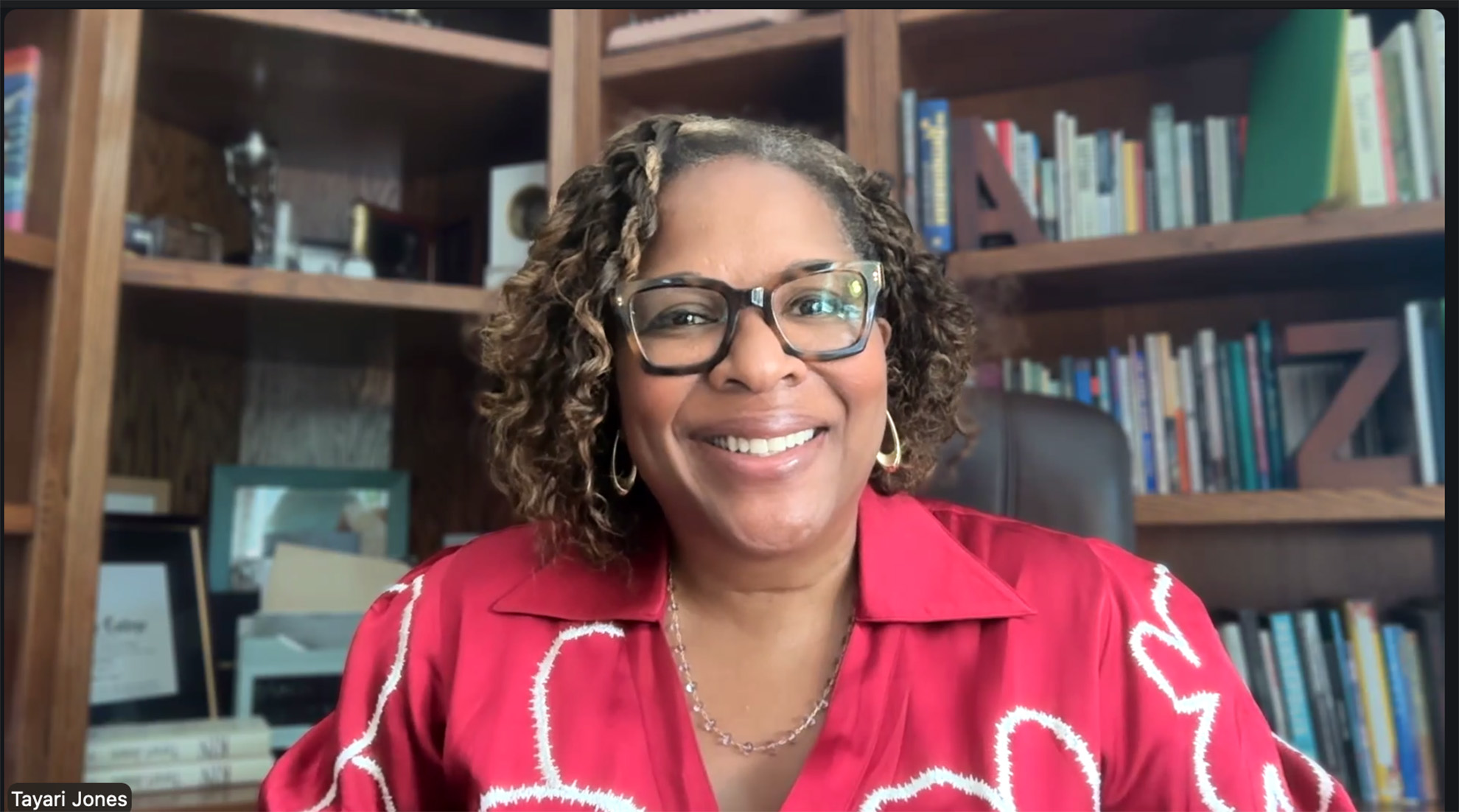
Tayari Jones.
Kin, by definition, are the people with whom we share a common ancestor. Author Tayari Jones takes it a step further, defining kin as the family we inherit from our mothers — either through birth or circumstance.
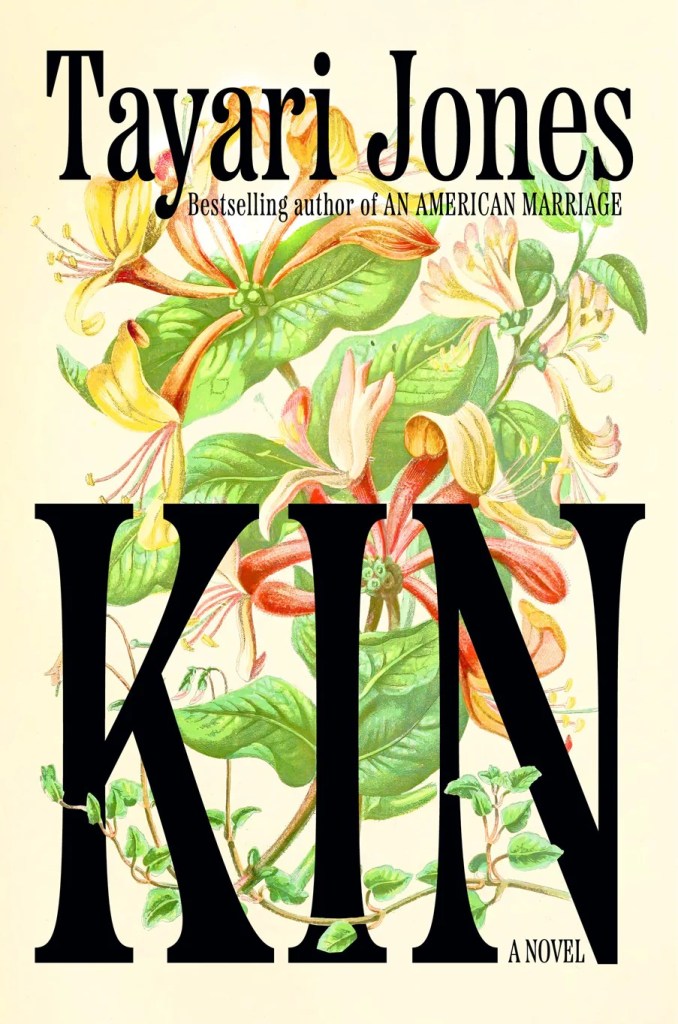
“It’s about matrilinearity,” said Jones, whose latest novel, “Kin,” was published in February. She calls the work “a novel about the things we inherit and carry through the women in our biological families, but also the women in our lives.”
Jones, a 2012 Radcliffe fellow, discussed the book and its characters in a recent Virtual Radcliffe Book Talk.
“I think that we know one another to the extent to which we allow ourselves to be known.”
“Kin” follows lifelong friends Annie and Vernice, Black girls growing up motherless in Jim Crow Louisiana. Vernice’s mother was killed by her father while she was an infant; Annie’s mother abandons her for life outside of their tiny town of Honeysuckle. Despite growing up extremely close, the pair take different paths in life before ultimately coming back together.
Their bond, Jones said, exemplifies how our most important familial ties are not always those born of blood.
“So often when we talk about curated family or chosen family, we say that people choose family when their biological family isn’t there, but I think that puts chosen family in a second-place position, almost like a contingency plan,” Jones said. “I believe we all need chosen family.”
Annie seeks to find her mother while Vernice pursues college and marriage. They both face racism and classism while navigating romantic relationships and other life experiences. There are moments of deep connectedness, and of withholding from each other as they grow and change.
For instance, Vernice is conflicted when a same-sex relationship challenges her ideas of the future. Unlike Annie, who openly shares her first love with her best friend, Vernice holds off on sharing this aspect of her life with her closest confidante.
The story, said Jones, is partially about how we let others in — or hesitate to do so.
“I think that we know one another to the extent to which we allow ourselves to be known,” she said. “I think that’s one of the fundamental questions of this story: Every secret you hold is a withholding of intimacy, and every secret disclosed creates intimacy.”
Despite the sometimes-heartbreaking ups and downs in the women’s lives, Jones said “Kin” is also full of humor — just like life.
“There is this expectation that the gravitas of Black life necessarily involves just unrelenting misery,” she said. “And while I think a lot of sad things happen … there were a number of times when these people tickled me, and I laughed out loud.”
As for the process of writing “Kin,” her fifth novel, Jones said she knew it was done when she had answered all the questions its characters’ dynamics raised.
“I feel like I satisfied my curiosity in writing this book, and I think this is a novel ultimately about, can you have dignity and shame at the same time?” she said. “I came to understand that what is most important in your life is that you have dignity, and that is what I think the book is about: motherhood, friendship, but ultimately it’s about dignity.”