As part of the institutional partnership between Heidelberg University and Harvard University, Heidelberg has recently announced its second call for proposals for two funding opportunities: the Heidelberg-Harvard Strategic Partnership Grant and Explorer Seed Fund.
“We are so pleased to partner with Heidelberg University, one of the most distinguished institutions of higher learning in Germany, to launch this second request for research proposals,” said Mark C. Elliott, Harvard’s Vice Provost for International Affairs. “The Heidelberg-Harvard collaboration offers faculty the unique opportunity to work across disciplines, and across borders, in pursuit of innovative research and real-world solutions.”
“The first months of our cooperation have demonstrated how quickly an institutional partnership can evolve into a vibrant research collaboration,” said Marc-Philippe Weller, Heidelberg University’s Vice-Rector for International Affairs and Diversity. “The response to the first call for proposals was extraordinary, and we were able to fund a large number of excellent projects that have already begun working together. Through this second call, we look forward to further strengthening our transatlantic network, advancing excellent research, and fostering lasting collaborations that will extend well beyond individual projects.”
The call invites submissions for projects in any discipline that promise to deepen cooperation between Harvard and Heidelberg researchers, strengthen transatlantic academic networks, and foster innovation and scientific progress. The Strategic Partnership Grant supports the development and establishment of long-term institutional collaborations between the two universities’ schools, departments, and research centers, while the Explorer Seed Fund supports travel for research stays and academic events. Both programs are supported by funding from Heidelberg’s home state of Baden-Württemberg, through its Global Partnership in Science program.
The Heidelberg | Harvard Cooperation was established in August 2025, when Harvard President Alan Garber and Heidelberg Rector Frauke Melchior signed a Memorandum of Understanding (MOU) formalizing the two institutions’ longstanding collaboration. Its aim was to provide a framework for the many existing scholarly connections between the two institutions, as well as to form the basis for further agreements at the school, departmental, and research center level. It represents an exciting opportunity for both early-career and established researchers to engage in international collaboration.
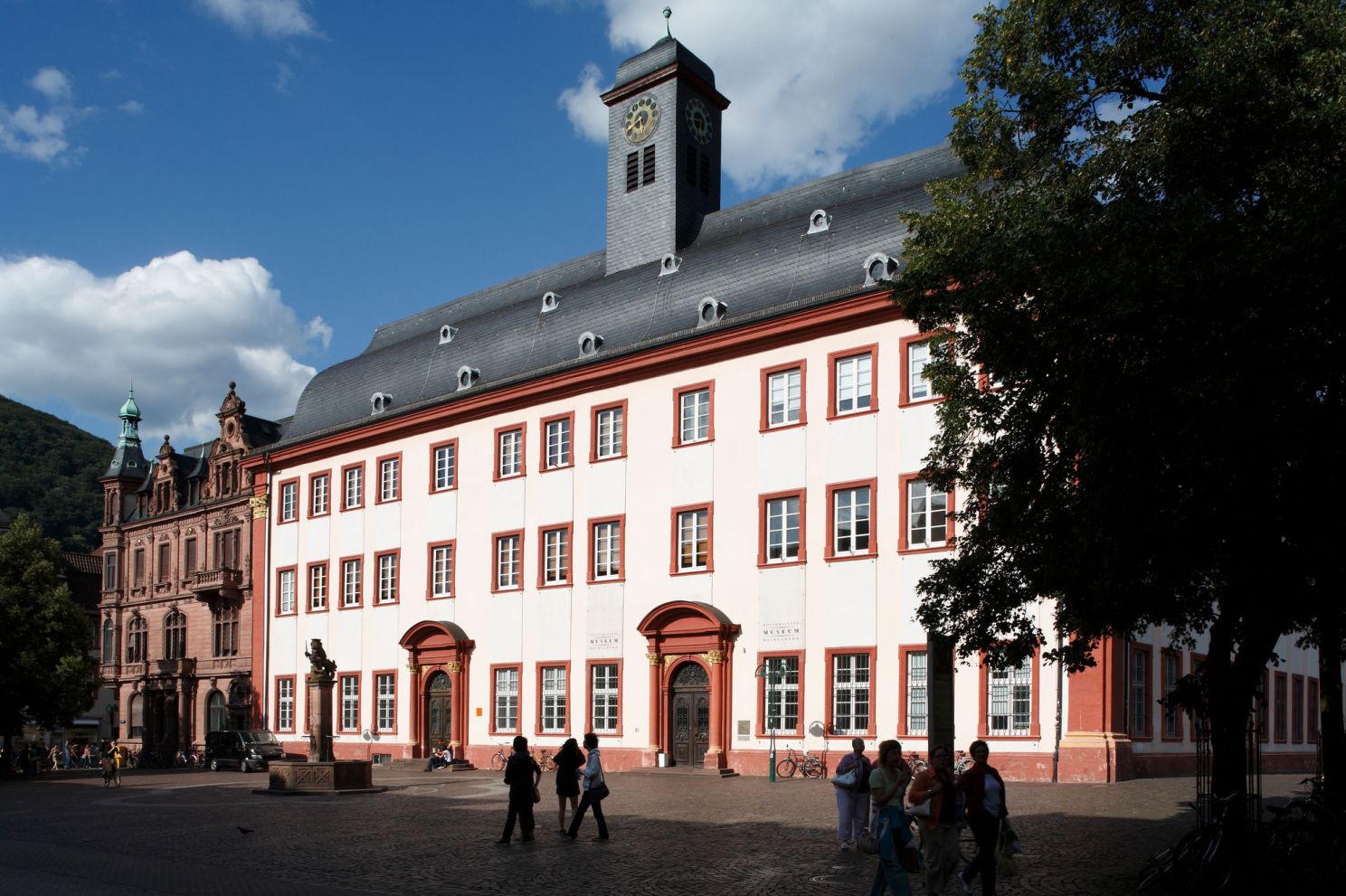
Established in 1386, Heidelberg is Germany’s oldest university and one of Europe’s leading research institutions. It has a rich history of academic exchange with Harvard dating back to the mid-1800s, when many Harvard scholars visited Heidelberg for advanced training and, as Harvard began to slowly grow into an international research university, welcomed German and international scholars to its campus in turn. Recent years have seen a number of academic collaborations and joint research projects, as well as thousands of coauthored publications between researchers at the two universities.
Interested Harvard faculty may learn more via Heidelberg’s Strategic Partnership Grant and Explorer Seed Fund pages, as well as its Information Portal for Funded Projects. All projects must be jointly led by principal investigators at both Harvard and Heidelberg, and proposals must be formally submitted by the Heidelberg PI. Selected projects are expected to be announced in late 2026 for work running through October 2028.

 Featured series