Featured series

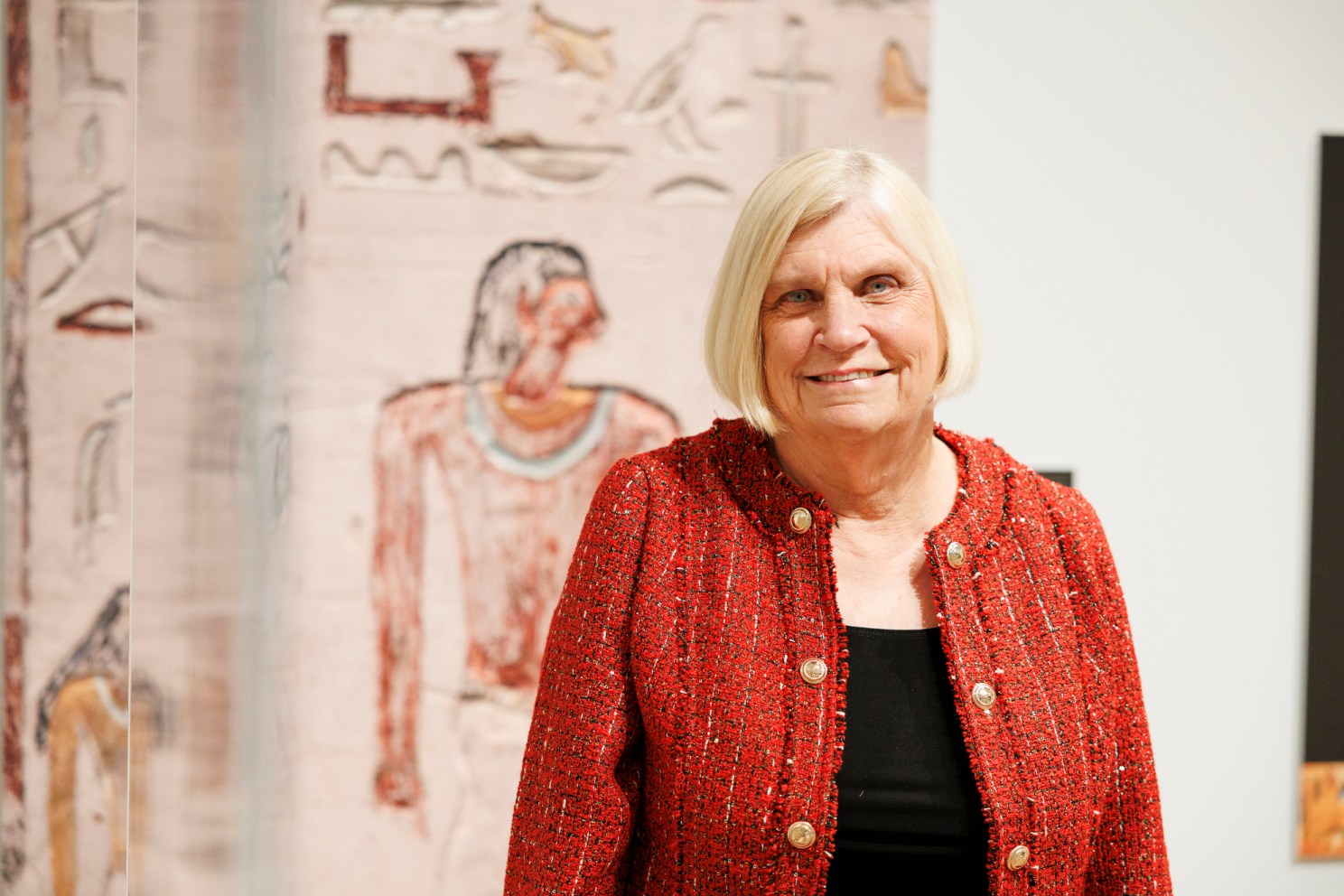
Betsy M. Bryan.
Niles Singer/Harvard Staff Photographer
Arts & Culture
A nice, orderly Festival of Drunkenness
Egyptologist explains how ritual drinking at the Temple of Mut brought worshippers face-to-face with a goddess
Anybody expecting hors d’oeuvres at an ancient Egyptian Festival of Drunkenness would have been disappointed. On tomb walls in ancient Egypt, depictions of these festivals show much less food than one might expect at a banquet today. That was purposeful. Eating would only sidetrack guests from their goal: getting blackout drunk.
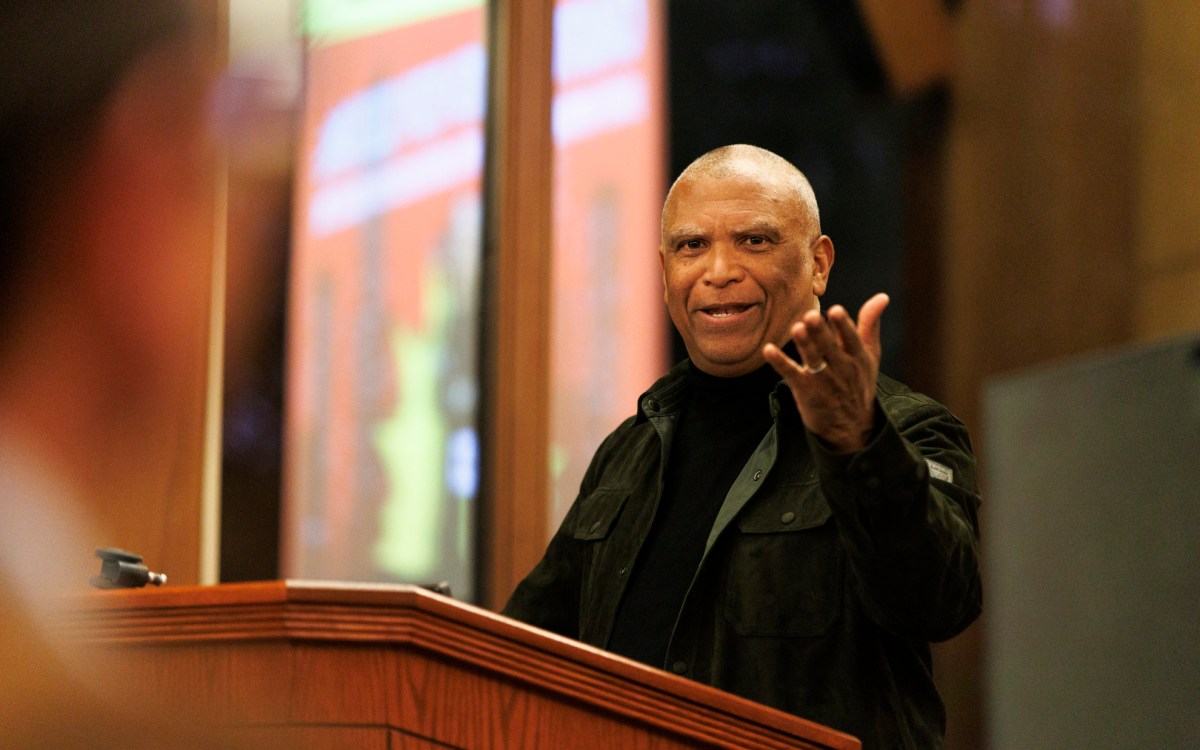
“The idea is to gain an altered state,” said Betsy M. Bryan, professor emerita of Egyptian Art and Archaeology at Johns Hopkins University. “You are drinking to achieve that, and in fact, first, to achieve inebriation to the point that you pass out.”
In a lecture sponsored by the Harvard Museum of the Ancient Near East, Bryan described how these festivals — celebrated at the Temple of Mut and beyond from the Early New Kingdom through the Roman era — had aims more sacred than profane. Ancient Egyptians believed they could commune with the gods through collective inebriation.
Unlike typical parties today, the Festival of Drunkenness was quite organized. It was important that people got drunk and passed out at the proper time so they could be awakened in the middle of the night with tambourines.
“They will see her, and she will see them and finally, if this happens, they are able to make a request of the goddess on behalf of the gathering.”
Betsy M. Bryan
“You can imagine how their heads felt at that point,” remarked Bryan. But it was also the point when epiphanies occurred. In that grogginess, the image of the goddess was carried into the room and the room shared in community with her.
The beer and wine were altered with other substances that would enhance inebriation. In deeply hierarchical ancient Egyptian society, everyone was encouraged to gather and participate. Sexual activity was encouraged.
The red wine and red beer consumed at the gathering was based on two stories about the goddess Mut. In the first, Mut wanders off and is enticed to return home by a dog-like baboon who draws her in with alcohol and music. In the other story, the sun god, Ra, becomes angry at mankind, and Mut develops a desire to kill and eat people. The sun god changes his mind but, unable to divert Mut, he floods the fields of Egypt with beer tinted red. She drinks all of it and passes out; mankind is saved.
If all was successful at the Festival of Drunkenness, Mut would emerge to the participants. “They will see her, and she will see them,” Bryan said. “And finally, if this happens, they are able to make a request of the goddess on behalf of the gathering.”
At festivals in Dendera, Egypt, Bryan said, the requests to the gods boiled down to joy for everybody and protection for the king against people who wished to do evil.
Historians long knew that these festivals took place. The Greek historian Herodotus described a festival of drunkenness at the ancient Egyptian city of Bubastis, writing, “More wine is drunk at this feast than in the whole year beside.” Many details of the festival survive from the words to hymns and drinking songs, which Bryan said was unsurprising because music and dance were fundamental to the festivals. On the walls of the Temple of Hathor at Dendera, constructed around 54 B.C., inscriptions lay out the details of the festival’s practices.
But it wasn’t until Bryan and other researchers got permission to dismantle the front porch of the Mut Temple — before rebuilding it — that the team discovered the festival had been going on for well over 1,000 years earlier than previous archaeological evidence indicated. Beneath and behind the limestone blocks, Bryan and her team found the actual foundation of the temple itself, built by Hatshepsut and Thutmose III around 1470 B.C. The team found 12 columns, six of which referenced celebrations of a Festival of Drunkenness in the reign of Hatshepsut.
“With one stroke of a spade in the ground,” Bryan said, “we moved what was known about that festival at Mut Temple from 200 B.C. back to 1470 B.C.”
During the Q&A portion of the talk, a member of the audience asked about the festival’s efficacy. “In the inscriptions that followed, was there evidence that there was joy, that the ruler was protected?”
“Well,” joked Bryan, “the fact that they kept having to do it would suggest that it didn’t hold.”