Featured series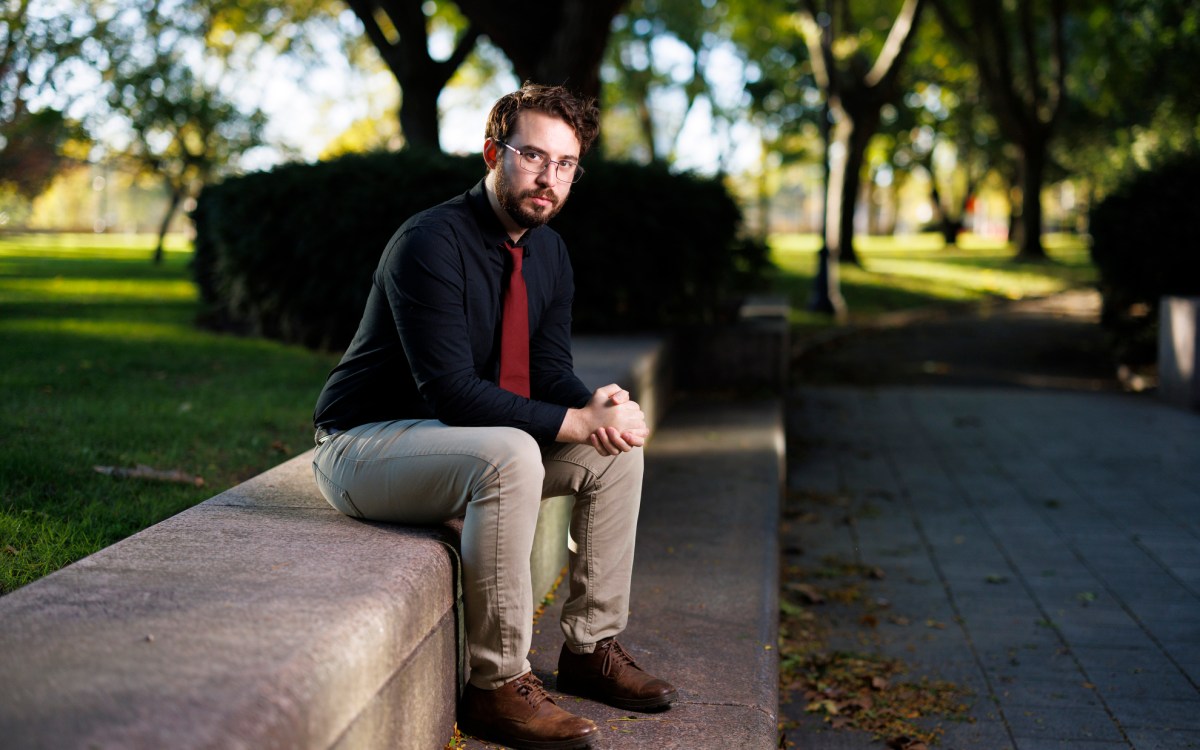

Aaron Landesman.
Veasey Conway/Harvard Staff Photographer
Science & Tech
What it takes to solve math’s toughest problems
Logic skills, yes, but also two seemingly incompatible traits: Confidence and humility
This is a story about keeping the faith in a discipline not exactly known for its religiosity: mathematics.
The field of arithmetic statistics — the study of statistical patterns in arithmetic objects such as number fields, class groups, and elliptic curves — rests on sets of conjectures whose predictions have been only partially proven.
In 2001, mathematician Jordan Ellenberg ’93, Ph.D. ’98, and some colleagues set out on a humbling yearslong odyssey to disprove one of the field’s most famous sets of predictions, the Cohen-Lenstra conjectures.
“We were like, there’s no evidence these conjectures are true,” Ellenberg said. “People conjecture them because we can’t think of any reason to think otherwise, but there’s no real evidence that they’re true.”
The conjectures — formulated by Henri Cohen and Hendrik Lenstra in the 1980s at the dawn of computational number theory — predict that the structures of certainarithmetic objects display statistical regularities.
In a simple example, non-prime number can be broken down into a unique set of prime factors, like the number 6 factors as 2 x 3. But if you allow numbers that can be more complicated, factorization is not necessarily unique — for example, 6 can also be factored as (1+ √-5) x (1 – √-5). The Cohen-Lenstra conjectures predict, then, the chance that numbers factor uniquely when we allow the use of a random square root.
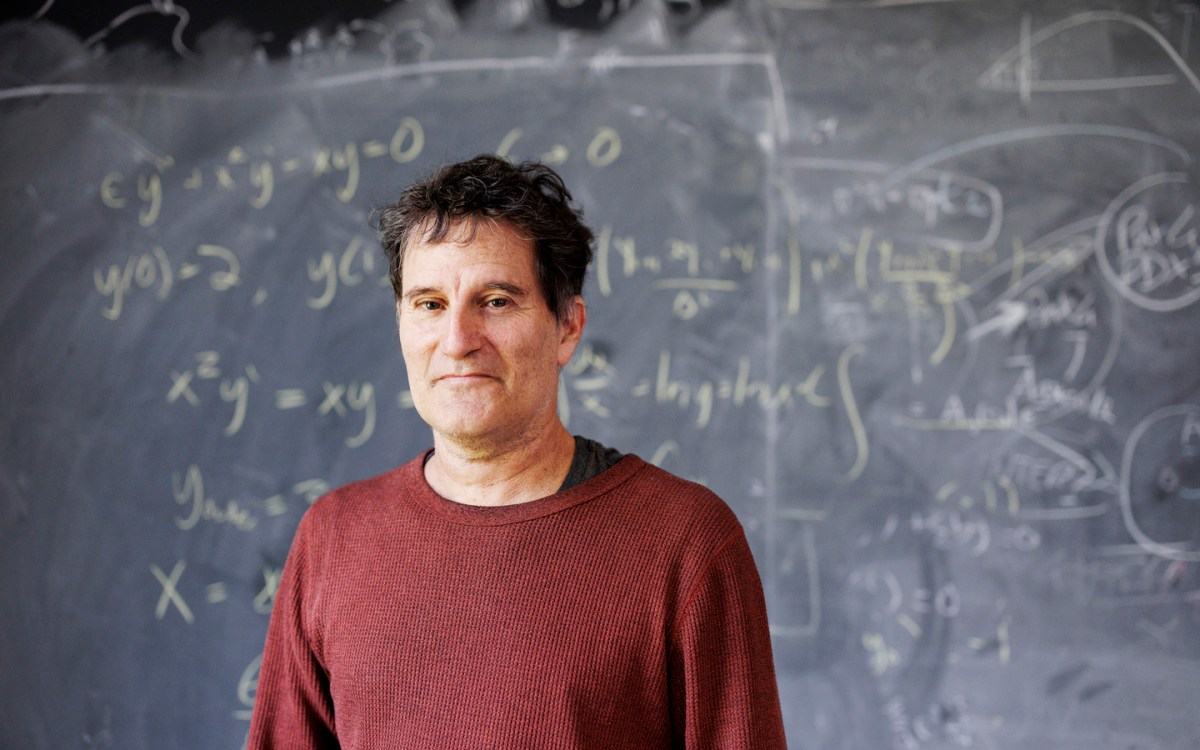
Ellenberg, who is now a professor of mathematics at the University of Wisconsin-Madison, is a prominent scholar best known in his field for his work on number theory. Outside of his field, he’s best known for breaking down math concepts for lay audiences, as well as for his 2014 book, “How Not to be Wrong: The Power of Mathematical Thinking.”
Book title notwithstanding, Ellenberg has been wrong, at least a couple of times.
He was wrong in 2001 when he set out to disprove the Cohen-Lenstra conjectures: After enough time spent trying and failing to find evidence against them, he was forced to admit defeat and started trying to prove them instead.
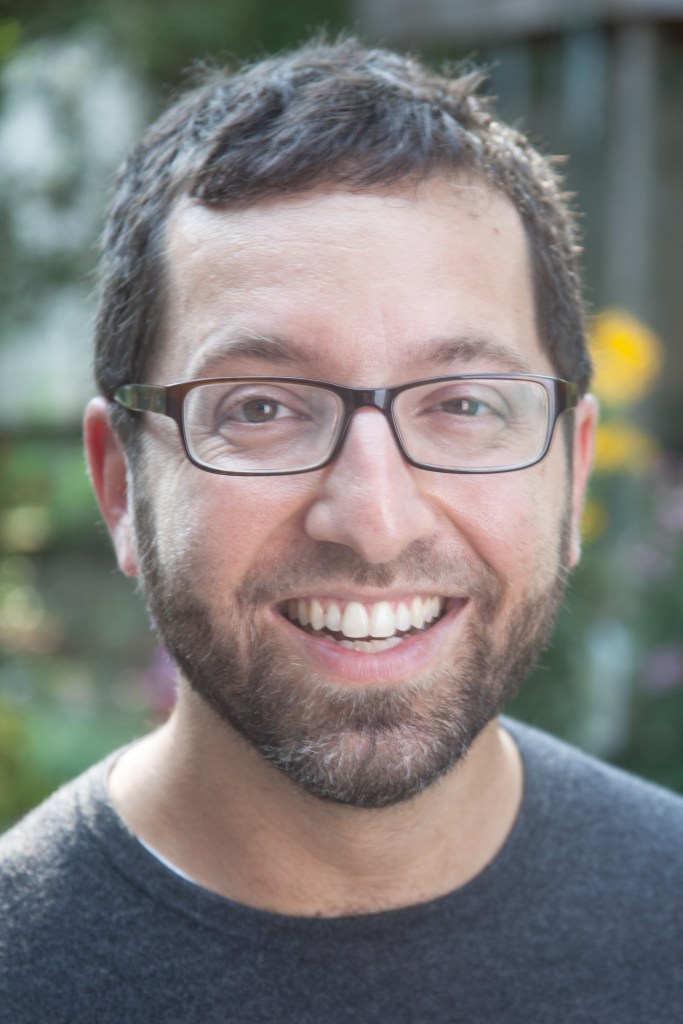
Photo by Mats Rudels
His first major step toward that goal was a celebrated paper, co-written in 2009 along with his frequent collaborators Akshay Venkatesh and Craig Westerland. That paper proved a weaker form of the conjectures by showing that geometric spaces eventually stabilize in predictable ways as the spaces grow.
Later, the trio realized they could take their conclusions a step further if they could figure out the number to which those spaces stabilize. They posted a follow-up paper in 2012.
That too was well-received. The authors had given seminars about it. But in 2013, a colleague alerted Ellenberg to a problem with the paper’s conclusion.
It’s the kind of problem that scholars have nightmares about. Ellenberg could have been forgiven for indulging in one or several of humankind’s unhealthy coping mechanisms. But instead he called his co-authors, and they spent weeks going over their work.
Finally, they concluded there was no easy workaround.
“What we hoped was a minor technical issue was not going to be easy to fix,” Ellenberg said.
The mathematicians retracted their paper. Ellenberg published a blog post owning up to the error — and calling on others in the field to be more honest about theirs.
Thirteen years later, the retraction is a minor plot point in a flourishing career, but one Ellenberg doesn’t mind revisiting.
“Honestly,” he said, “I don’t mind being identified as a guy who made a mistake. I think it’s important that people have models for what to do in this situation, because we’re human beings carrying out a human endeavor; there are going to be mistakes.”
Math, Ellenberg has discovered, is a profession that requires two seemingly incompatible traits: a wild belief in one’s own ideas, and the humility to abandon them graciously.
“A project might take years, and there might be 100 things that have to go your way,” he said. If just one of them doesn’t, proof could be doomed.
“You have to have the faith, possibly misplaced, that the thing is going to work out.”
Jordan Ellenberg
“You have to have the faith, possibly misplaced, that the thing is going to work out,” he said. “You need that to drive you through, but you also need resilience when it doesn’t work out. And maybe you have to have incorrigibility in your faith, even after it’s failed to be justified in the past, to be like, ‘Well, I blew it this time, but next time I feel just as confident.’”
But blowing it, mathematically speaking, is not a binary. Much of the math in the retracted paper remains useful. And further work, including by Harvard’s William Caspar Graustein Professor of Mathematics Melanie Wood, has uncovered related predictions in other settings. More recently, Aaron Landesman ’16 has proved new cases of Cohen-Lenstra’s predictions over function fields, staking a much stronger claim in the conjectures’ favor.
Landesman talks about Ellenberg with the enthusiasm of a devotee. He’s gone out of his way to attend Ellenberg’s lectures; he’s read his books. “He gives the most inspiring talks, and it’s a lot of fun talking to him,” Landesman said.
As a graduate student, Landesman’s favorite paper was the piece Ellenberg co-authored in 2009 on the Cohen-Lenstra conjectures. Was Landesman intimidated, then, when he set out to prove what they had failed to in the retracted 2012 paper? Not in the least.
“What’s important is to be aware of the past work and make sure you understand the error, because you don’t want to do the same thing,” he said.
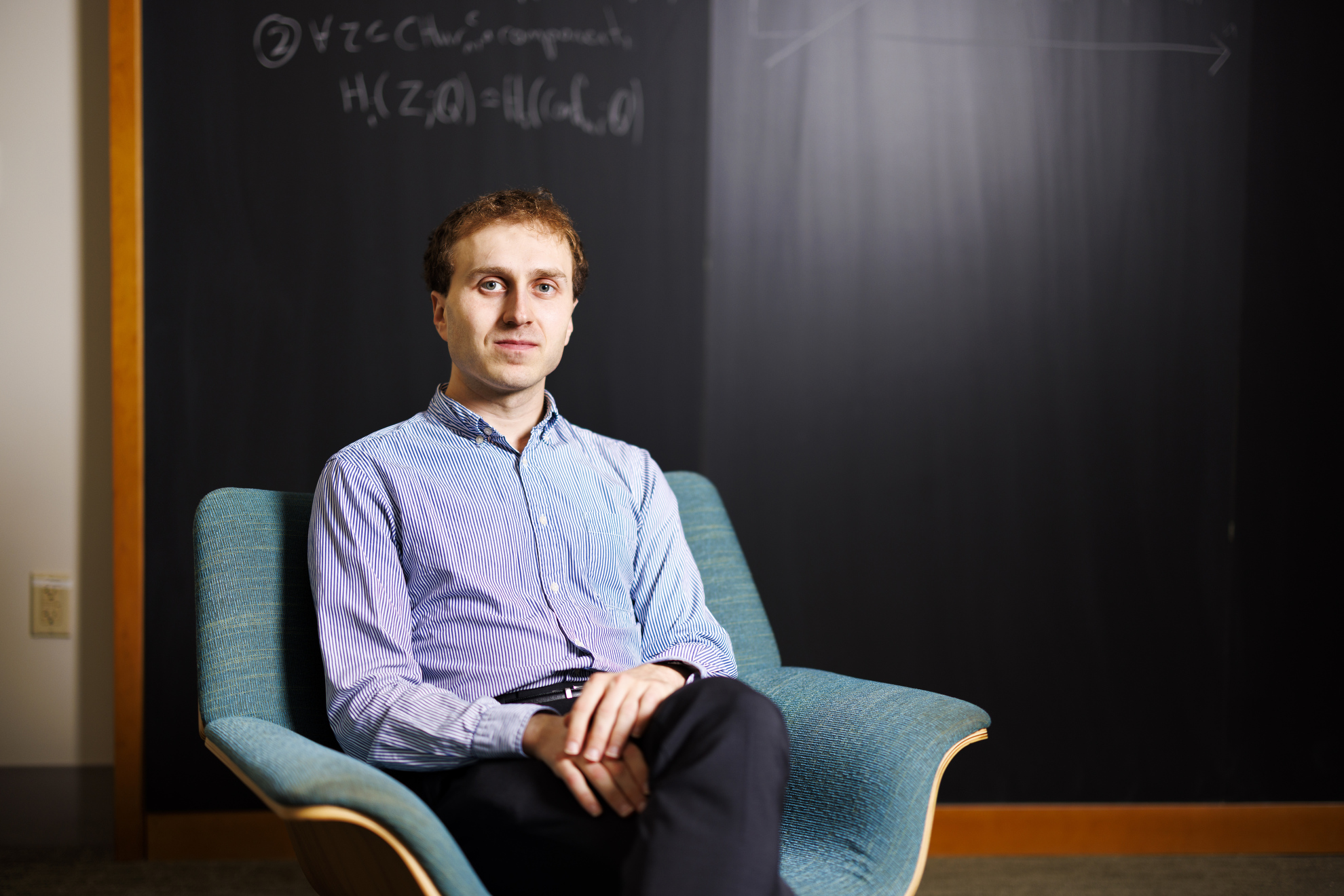
In other words, whatever combination of faith and humility propelled Ellenberg through more than a decade of wrestling with Cohen-Lenstra, Landesman has it too. In a series of papers co-written with his friend and collaborator Ishan Levy, Landesman — now a researcher at Harvard — made progress on Cohen-Lenstra and on what he describes as the other two major conjectures in arithmetic statistics, the Poonen-Rains conjectures and Malle’s conjecture.
“There’s still a long way to go to actually prove the full Cohen-Lenstra conjecture,” Landesman said, “but we’re getting closer.”
“My hat is off to them,” Ellenberg said of Landesman and Levy. “To put together a very long argument like what they did — maybe stamina is the wrong word. Maybe faith is a better word.”
For his part, Ellenberg is getting ready to publish another book, this one to be titled “Don’t be Too Sure.”