Featured series

Chloe Chapin.
Stephanie Mitchell/Harvard Staff Photographer
Arts & Culture
Weirdest fashion trend ever
Dad’s uniform might look boring, but the history behind it is not
While working as a costume designer for over two decades, Chloe Chapin, Ph.D. ’23, often wondered how men’s clothes evolved from flamboyant to plain.
In her new book, “Suitable: The Sartorial Revolution and the Fashioning of Modern Men,” Chapin finds her answer in a 75-year period between the 18th and 19th centuries, during which Enlightenment ideas of liberty and equality helped give rise to the American and French revolutions.
In this edited interview, Chapin talks about the fashion of the founders and how their adoption of plain and dark suits came to symbolize American republican ideals of democracy and equality.
What sparked the idea for “Suitable”?
The idea was born during a conversation I had with actor Daniel Radcliffe in 2008 when he was starring in the Broadway play “Equus,” which I designed the costumes for. When I complimented the gorgeous midnight blue tuxedo he wore to the opening night party, he told me about the history of British royalty wearing midnight blue for formalwear, which I thought was so glamorous and fascinating.
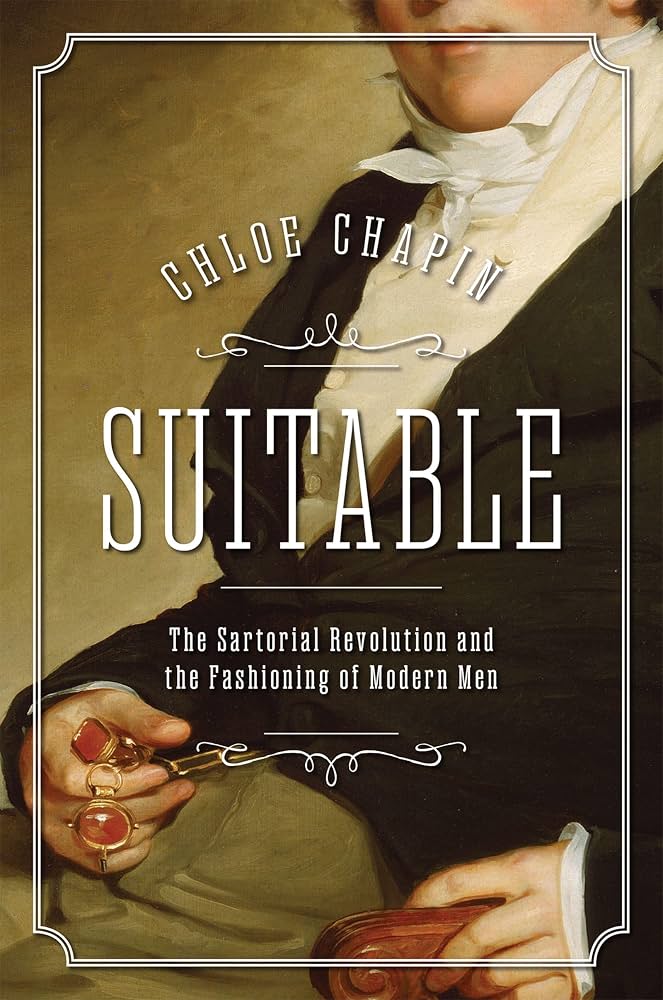
My interest in the history of formalwear was reignited a few years later when I was doing research for the opera “La Traviata,” which was set in the 1860s. As a designer, you develop a mental database of images, and as I was scrolling back in my mind, I noticed that even though men had been wearing formal attire in black and white for half a century, they hadn’t worn black and white at all in the 18th century. I thought this was so odd! Why did they suddenly adopt this plain uniform? This book originally started off as a history of formalwear, but I expanded it to include all suits because I thought there was a bigger story there about why men adopted such plain, uniform suits, when previously their dress had been so colorful and decorative.
Fashion is always trying to push boundaries by being tawdry and sexy and changing all the time. What is weird is when fashion stops changing. Suits are one of the biggest outliers in the history of dress because of their plainness, their lack of variety, and their lack of change over time. I wanted to understand why this happened.
The book follows the history of men’s attire from the 18th century to now. Can you describe the evolution in men’s clothes and the forces behind it?
The book’s first chapter is titled “Peacocks to Penguins,” which I think is a helpful way of picturing this change in men’s attire from flamboyant and decorative to plain and uniform. Throughout the 18th century, men’s clothes existed in a range of colors — from beautiful rich grays to baby blues and hot pinks to deep reds. The fabrics were luxurious — from silk to wool to velvet — and decorated with sequins, beads, and embroidery. An interesting character in this transition is John Quincy Adams. In his early life as a diplomat abroad, he wore silk suits with breeches, which were knee-length tight pants. By the time he was elected president, in 1825, he dressed in a shapely tailcoat and tight pantaloons (which his father, John, absolutely hated). Later in his life, in a photograph from when he was a senator, he’s wearing trousers. That change, from aristocratic breeches to fashionable pantaloons to plain trousers, is quite a remarkable thing to have experienced in one lifetime.
Between the 18th century and the 19th century, a sartorial revolution took place. Philosophically, the American Revolution inspired the Founding Fathers to reject flashy, aristocratic extravagance in favor of plain, dark clothing that represented new ideals of equality and democracy. Practically, the Industrial Revolution mechanized the way fabric was made, eventually making plain woolen suits cheaper and easier to produce. This allowed this new uniform to spread rapidly among everyday men. But “plainness” isn’t a neutral term, and it doesn’t always mean that men’s clothing was less expensive, just that it was visually less decorative.
The book spends a lot of time on the clothes of the Founding Fathers. What did you learn about their fashion sense?
I did not expect this book to be about the Founding Fathers, but their online archives were such a treasure trove. I found all these letters that George Washington wrote to his tailor back in London, complaining about how his pants never fit. He basically had a wedgie for 10 years! That’s such a relatable story. It’s so difficult to find evidence in the historical archives of how men feel about their clothes, and this was such a rare piece of evidence — I knew I had to incorporate it.
“I found all these letters that George Washington wrote to his tailor back in London, complaining about how his pants never fit. He basically had a wedgie for 10 years!”
Washington was also thinking carefully about his role as the first American president. At the time, there was a real discussion of whether or not a president should be called “Your Majesty.” There were no other presidents before Washington, so what should he wear? He certainly didn’t want to dress like a king.
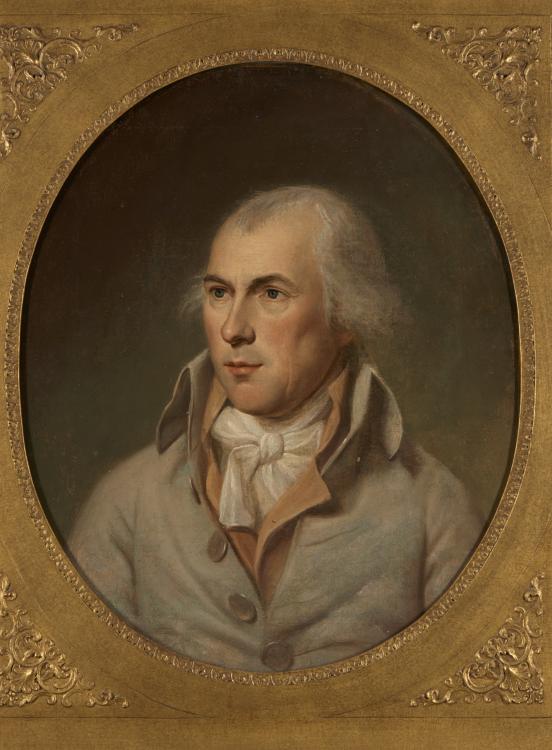
Americans were trying to figure out what kind of government they wanted, and they adopted plain, dark suits intentionally, as a symbol of democracy and equality. But the transition was slow, and it was certainly not inevitable. In his presidential portrait from 1816, James Madison wears a black suit, but in a miniature painting of him from 1790, he looks like a dandy.
What role did the U.S. play in the spread of suits around the world?
My book ends around the Civil War, but I point to what happens next. What takes place in the second half of the 19th century is the “manifest destiny” of the suit, in which democracy, and suits, were offered to — or forced upon — cultures around the world. Wherever democracy went, the suit followed.
Some people might say that men don’t wear suits anymore, and that is true on some level — a lot of occupations today don’t require suits like they used to. But look to the people who have the most cultural authority, such as sectors of politics, law, finance, and you can see that they all wear suits. If you follow money and power, you’ll find suits. In the end, the suit is a profound testament to the crafts and innovations that helped early Americans convey their foundational ideals of equality, industry, and modernity. It was carefully designed to be the uniform of the rational, enlightened, civilized man. And when we look at the world today, we can see just how brilliantly that design succeeded in dressing power in a seemingly plain package.