Featured series
Nation & World
Over the American dream? Watch this.
Video series spotlights schools, communities where economic mobility is top of mind
At a time when prospects for attaining the American dream feel to many like they’re slipping away, education remains key to ensuring that children realize their full potential, and it still provides for many a pathway out of poverty and into the middle class.
Recent research by Harvard economist Raj Chetty, director of Opportunity Insights, and others have shown that improving school quality alone isn’t enough to boost the future economic trajectory of a child from a low-income family. To make a real difference, those efforts must also address the circumstances and conditions in students’ lives outside of school that undermine their ability to succeed academically.
That’s no easy task, but there are some very promising solutions happening in cities and towns across the country that deserve far more attention, said Rob Watson, executive director of the EdRedesign Lab at Harvard Graduate School of Education, which conducts research and training that focuses on ways to improve educational achievement beyond the classroom.
“Universities are in the business of generating knowledge, but where we often fall short is ensuring that knowledge gets to people who are in positions to do something with the good research and innovation that happens here or that we study from across the country and around the world,” he said.
To try to bridge the persistent information gap between scholars, practitioners, and the public, the Lab launched “Dream On,” a new video series collaboration with independent journalists Joe Posner, a Vox Video co-founder, and James Watson, who’s also an Ed Redesign Lab fellow.
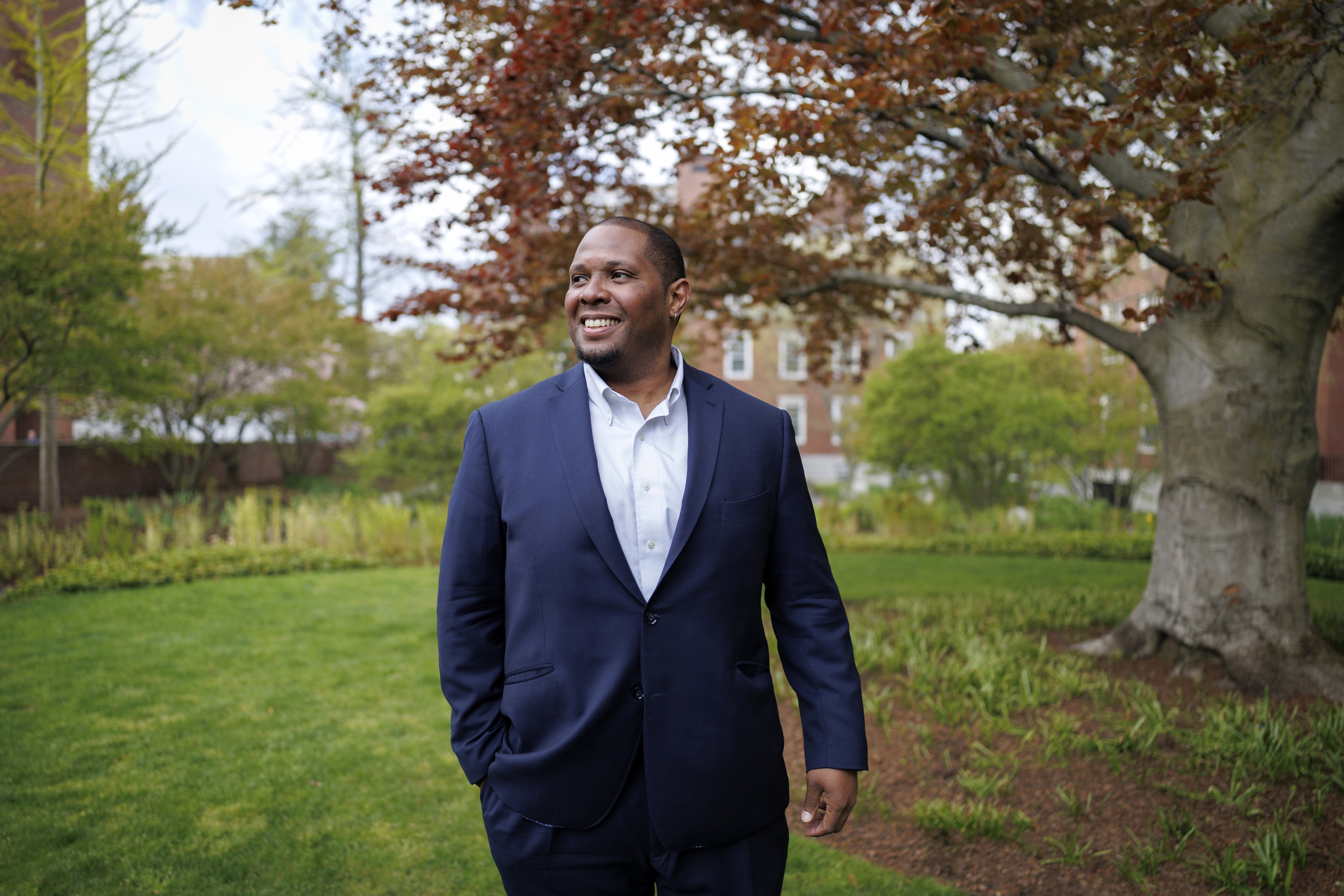
“In red, purple, and blue America, at the local level, people are coming together to get things done for young people and families,” said Rob Watson.
Stephanie Mitchell/Harvard Staff Photographer
The series spotlights communities and organizations across the U.S. that are tackling the complex challenges of growing up in high-poverty neighborhoods. Those featured have found locally-driven solutions that are grounded in the research of scholars across Harvard and the country and can be duplicated in other places.
“There are no silver bullets. There is no one thing that’s going to solve issues of intergenerational poverty in the country, but there are things that are working,” said Watson. “And often, practitioners and people on the ground are hungry to know about these stories and think about how they can adapt and innovate on them in their local context.”
The first episode profiles Communities in Schools, a nonprofit that provides schools in high-poverty areas in 29 states and Washington, D.C., with “navigators” who help families, teachers, and school administrators find the most appropriate support services for a child’s specific needs, such as housing, nutrition, and healthcare.
“Often, the absence of those types of supports doesn’t allow a kid to come to school ready to learn, or a teacher or principal to do their job,” said Watson.
Future episodes will focus on efforts in Spartanburg, South Carolina, that have yielded significant strides in educational achievement but also reduced violent crime and spurred new housing in the city, as well as on the Child Poverty Action Lab, a data-driven organization that focuses on reducing childhood poverty in Dallas.
Watson, who grew up in a low-income area of Poughkeepsie, New York, said he “saw firsthand how important it is to see strong examples of community-led solutions to big problems we’re facing in every community.”
He hopes the stories will demonstrate to policymakers the viability of these efforts and inspire parents, teachers, school districts, local and state officials, and philanthropists to come together and find an approach that works for their community, whether urban, rural, or anything in between.
“We think the powerful part of this project is not just a technical challenge of declining economic mobility or educational limitations or poverty, it’s also that in red, purple, and blue America, at the local level, people are coming together to get things done for young people and families,” said Watson.