Featured series

Campus & Community
Moved to act
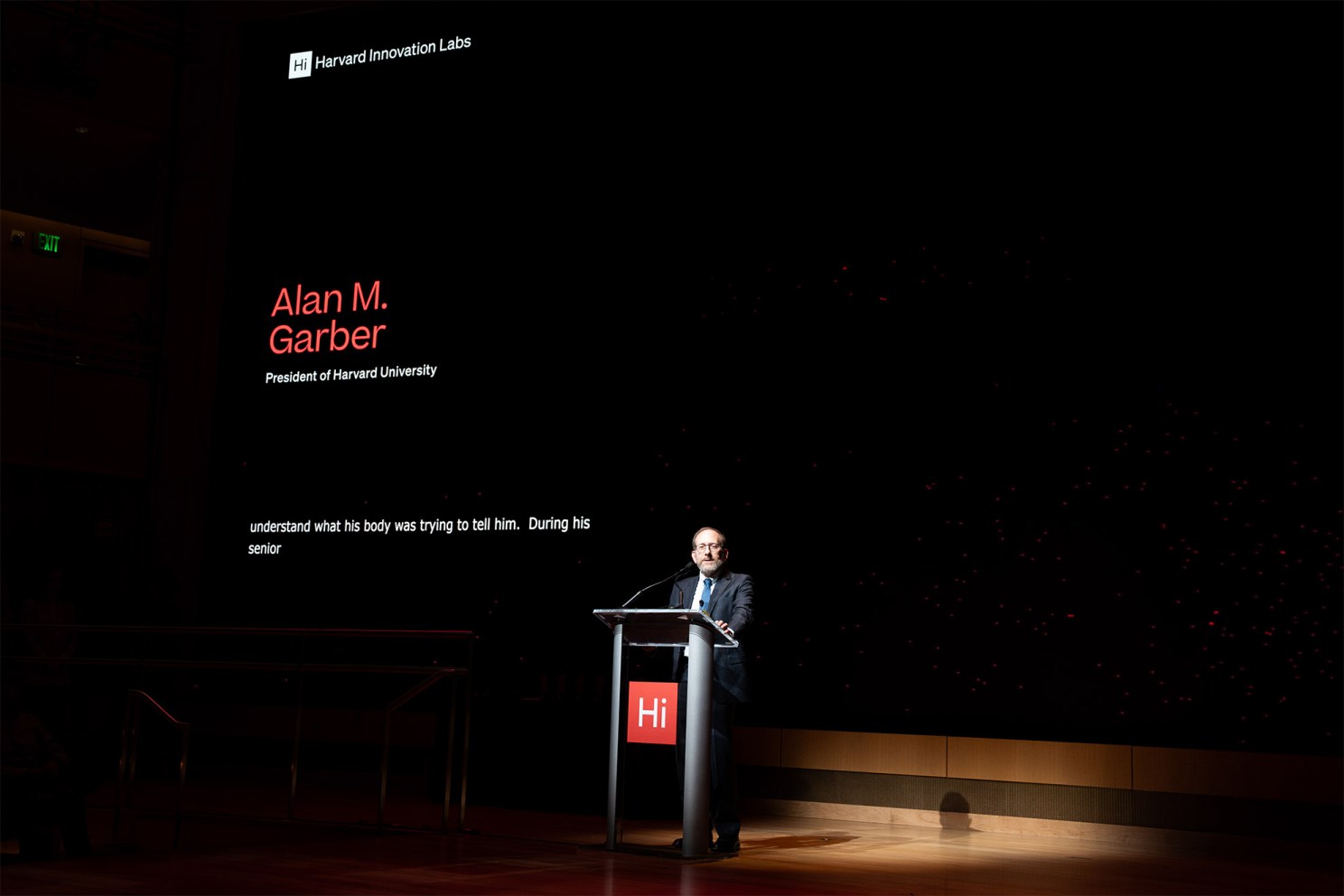
“I love this event,” said President Alan Garber from the Klarman Hall stage.
Photos by Sam Mironko
Eco-friendly, AI, medical, and other inventions earn funds for President’s Innovation Challenge winners
Using the sun to power oxygen delivery in Africa, developing AI to mitigate risks on construction sites, and curing chronic inflammatory diseases with novel small molecules are a few many winning ideas from the 2026 Harvard President’s Innovation Challenge.
“I love this event,” said President Alan Garber. “Turning an idea into a pitch, a pitch into a contender, a contender into a finalist, and a finalist into a prize winner. The excitement is palpable. Congratulations to all of you. Your curiosity and drive moved you to action, and we are eager to see where your ambition leads.”
The President’s Innovation Challenge is Harvard University’s flagship venture competition for students across Harvard’s 13 Schools as well as select alumni and affiliates. In the weeks leading up to the May 6 awards ceremony, finalists presented their ventures to a panel of judges who selected the winners in advance. During the ceremony in Klarman Hall, founders showcased their work to a global audience of in-person and virtual attendees. Winners received a share of more than $500,000 in non-dilutive funding, made possible by a generous gift from the Bertarelli Foundation, co-founded by Ernesto Bertarelli, M.B.A. ’93.
“I’ve been fortunate to meet finalists from this year’s President’s Innovation Challenge — all of them have demonstrated an entrepreneurial energy which I’m confident will leave the world a better place,” said Bertarelli. “It remains an honor for the Bertarelli Foundation to be able to help them develop their incredible and innovative ventures.”
The winning ventures represent 10 Harvard Schools and are working on ideas spanning multiple industries and disciplines.
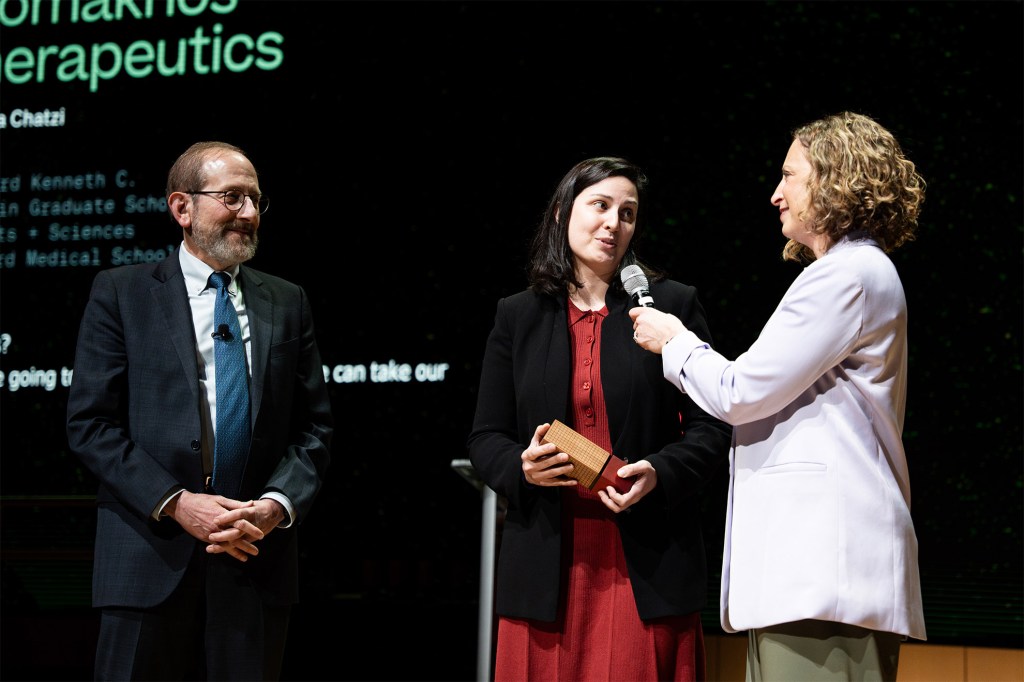
$75,000 award recipients
Adalat AI (Harvard Kennedy School, Harvard Law School): Building India’s first end-to-end justice technology platform to address systemic inefficiencies in the judicial system.
Overture Therapeutics (Harvard Business School): Creating better, healthier weight-loss intervention therapies for treating obesity and its co-morbidities by targeting emerging biological pathways.
Promakhos Therapeutics (Harvard Kenneth C. Griffin Graduate School of Arts and Sciences, Harvard Medical School): Developing oral, non-immunosuppressive small molecules to cure chronic inflammatory disorders.
Refine Technologies (Harvard Kenneth C. Griffin Graduate School of Arts and Sciences, Harvard John A. Paulson School of Engineering and Applied Sciences): Developing AI peer review for research papers to create reviewer-grade feedback in minutes instead of months.
Winko Solar (Harvard Kennedy School): Delivering solar-powered oxygen to hospitals in Africa, with plans to expand globally.
“This will help us build one of the best applied AI teams in the world,” said Yann Calvó López, CEO and co-founder at Refine Technologies when asked how the President’s Innovation Challenge funding will help his venture.
“We’ve got a lot of work to do,” said Akonkwa Mubagwa, CEO and co-founder of Winko Solar, after receiving $75,000 in funding. “This prize will help us standardize our deployment so we can deploy faster.”
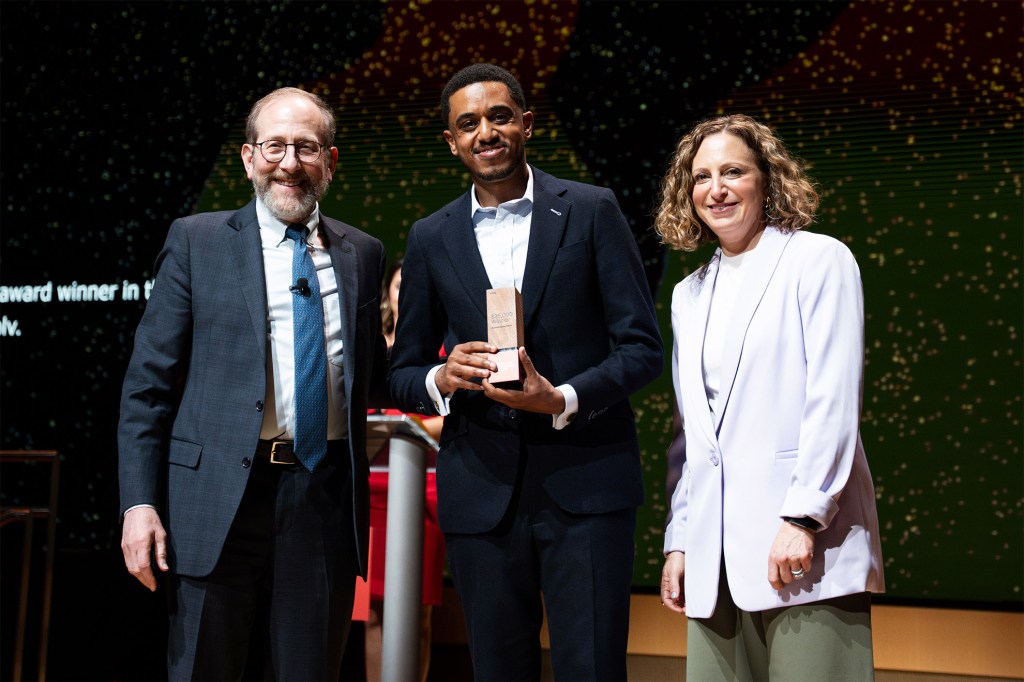
$25,000 award recipients
Colombiando (Harvard Graduate School of Education): Creating a new rural education model with multigrade teachers, turning hard-to-reach, one-room schools into learning hubs.
Enlaye (Harvard Business School): Helping construction teams identify, quantify, and mitigate risk across the entire project lifecycle with an AI-native platform.
FIND Neuro (Harvard Medical School): Revolutionizing drug-resistant epilepsy surgery with an FDA-path clinical decision support platform.
Revolv (Harvard Business School): Turning organic waste into affordable animal feed and fertilizer that boosts farmer incomes and nutrition.
Stenoa (Harvard T.H. Chan School of Public Health): Building the operating system for mission-critical care.
Ingenuity award winners
Bite By Byte (Harvard School of Dental Medicine): Developing an AI-powered, custom night guard that continuously measures bite force, frequency, and duration in real time.
CryoFab (Harvard Graduate School of Design, Harvard John A. Paulson School of Engineering and Applied Sciences): Building a 3D ice printer that uses water as a sacrificial material to create internal channels for tissue engineering.
ReMine (Harvard T.H. Chan School of Public Health): Converting toxic abandoned mines into geothermal energy systems that power communities for generations.
VitaLoop (Harvard Medical School): Shifting dialysis care from centralized supply chains to point-of-care manufacturing with low-cost, on-demand production of dialysis fluid using local water and non-grid-dependent energy.
“More than 3,000 students have participated in Harvard Innovation Labs programming this year,” said Jill Kravetz, Bruce and Bridgitt Evans Executive Director of the Harvard Innovation Labs. “The President’s Innovation Challenge finalists aren’t just part of our innovation ecosystem. They’re helping to shape it and strengthen it.”