Featured series

Health
Food as medicine? How nutrition can improve cancer outcomes.
Tufts professor shares early research regarding programs as part of oncology care
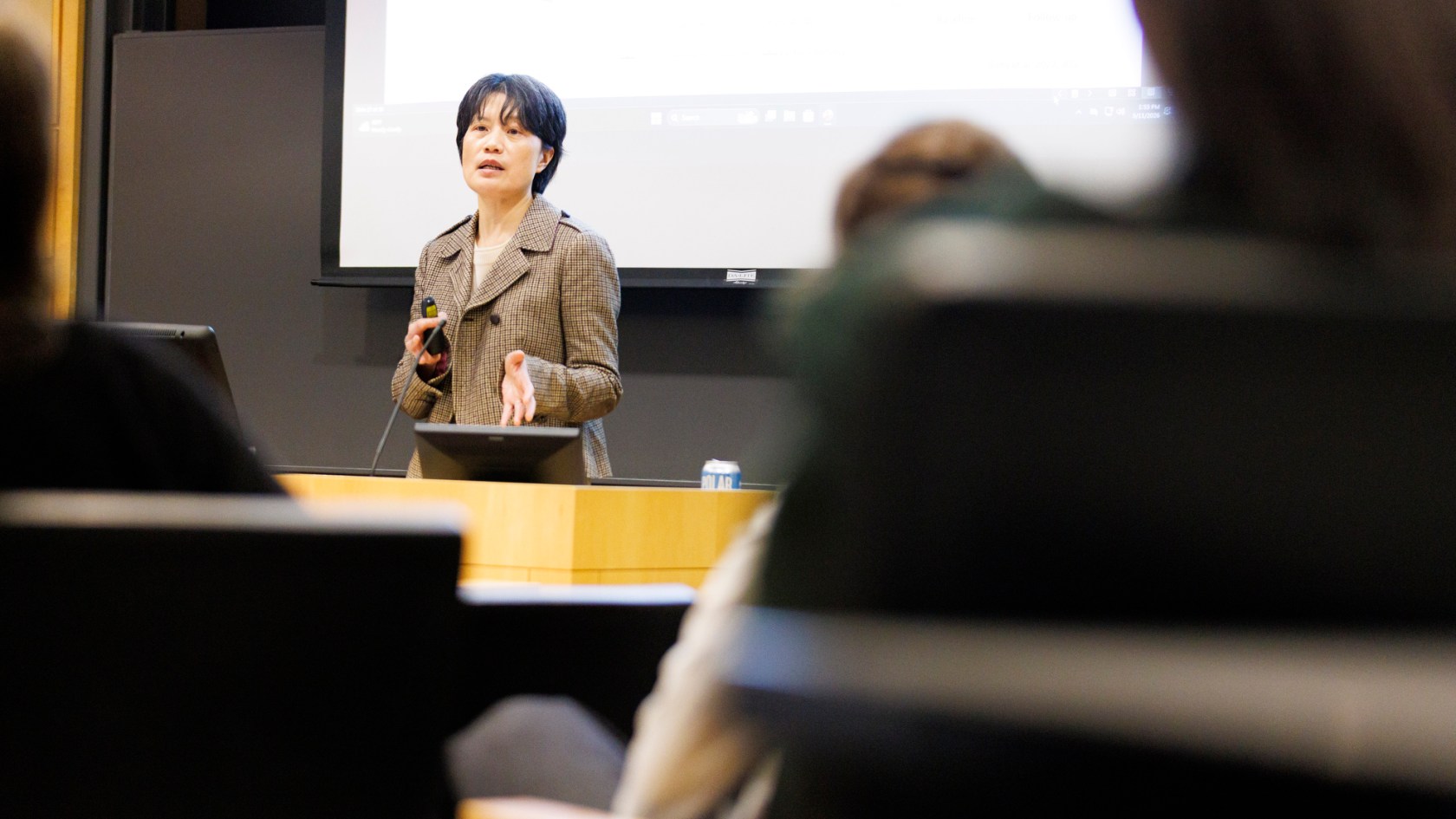
Fang Fang Zhang.
Veasey Conway/Harvard Staff Photographer
Cancer treatment plans are many and varied, but research is beginning to show there is one element that can benefit virtually all patients: a greater focus on nutrition.
“Cancer patients have increased nutritional needs due to cancer itself or due to treatment-related nutrition impacts symptoms, such as fatigue, nausea, vomiting, which place them at high risk of malnutrition,” said Fang Fang Zhang, who specializes in cancer epidemiology and nutrition.
85% of cancer patients at risk of malnutrition
Zhang, a professor and chair of the division of nutrition epidemiology and data science at the Friedman School of Nutrition Science and Policy at Tufts University, recently spoke on campus as part of the weekly Monday Nutrition Seminar Series at the Harvard T.H. Chan School of Public Health.
Zhang explained that up to 85 percent of all cancer patients, especially those undergoing treatment or diagnosed with late-stage disease, are at risk of malnutrition. This can lead to increased inflammation, weight loss, decrease in muscle mass, and weakened immune function, all of which can negatively affect a patient’s ability to tolerate treatment and can lead to more hospitalizations.
For this reason, nutrition-based interventions may provide ways to not just increase the quality of life for patients but also reduce billions of dollars in direct medical costs each year nationwide that occur due to these issues, said Zhang, who is also a faculty member of the Food Is Medicine Institute at Tufts.
Zhang explained that there are three main Food Is Medicine programs that provide nutritional support to patients with diet-sensitive conditions.
The first is through medically tailored meals, designed for the specific needs of individual patients and delivered to their home. This might include high-protein and high-calorie menus for patients experiencing substantial weight loss, texture-modified meals for those with swallowing difficulties, or carbohydrate- and sodium-controlled foods for individuals with diabetes or hypertension.
Second, there are medically tailored groceries that come in the form of food boxes or meal kits. And finally, “produce prescriptions” can be redeemed at grocery stores in the form of vouchers or electronic benefits cards.
“All of these programs include nutrition education as an essential component,” Zhang said, noting “quite consistent evidence that these programs can reduce food insecurity, can improve dietary intake, and can support mental health.”
Zhang and her colleagues evaluated the effects of a Food Is Medicine program on patients with lung cancer. Those in the control group received printed nutritional education materials only, while those in the intervention group additionally received home-delivered medically tailored meals and remote nutrition counseling from dietitians.
The intervention group exhibited statistically significant improvement in their nutrition as measured by the Healthy Eating Index.
The findings “are still limited,” Zhang said. “There are new studies that have currently been conducted in the space of Food Is Medicine and cancer, so hopefully in the next year or few years from now, we’ll receive more evidence evaluating these programs for cancer.”
But there are barriers, she explained. There is inadequate screening for malnutrition for patients with cancer; standard oncology care offers limited nutrition support; and lack of access to quality, affordable, nutritious food is a hurdle for many patients.
“Food insecurity occurs in more than half the cancer patients with low income,” Zhang said. “To address these system-level barriers, we need system-level approaches to integrate food and nutrition into healthcare.”
Massachusetts was one of the first states to gain approval for Food Is Medicine programs under the Section 1115 Medicaid demonstration waiver.
To date, 13 states have approved waivers, with three additional states pending, which allow states to experiment with innovative approaches to care. As these programs become more common, Zhang is hopeful that we will better understand their real-world efficacy and how to best implement them to help patient outcomes.
“The overall research direction, I think, for future research is not only to answer the question does it work?” she said. “But also, how does it work in the real world? And ultimately, how do we make it work everywhere?”