
 Featured series


Tag: Life Span
-
Science & Tech
Scientists pinpoint neural activity’s role in human longevity
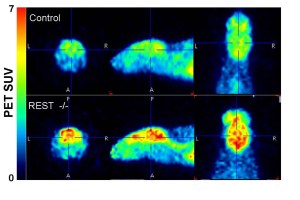
The brain’s neural activity, long implicated in disorders ranging from dementia to epilepsy, also plays a role in human aging and life span, according to research led by scientists in the Blavatnik Institute.
-
Health
Love life
A new Harvard study shows that ratios between males and females affect human longevity.

-
Health
Researchers learn how mutations extend life span
In the sense that organisms existing today are connected through a chain of life – through their parents, grandparents, and other ancestors – almost a billion years back to the first animals of the pre-Cambrian era, an animal’s reproductive cells can be considered to be immortal. These germline cells generate their offspring’s somatic cells –…
-
Health
Video can help patients make end-of-life decisions
Viewing a video showing a patient with advanced dementia interacting with family and caregivers may help elderly patients plan for end-of-life care, according to a study led by Massachusetts General Hospital (MGH) researchers. See the advanced dementia video More videos from the same researcher In their report in the journal BMJ, the investigators found that…
-
Science & Tech
Hospice care under-used by many terminally ill patients, study finds
A new study led by researchers at Harvard Medical School (HMS) found that only about half the patients diagnosed with metastatic lung cancer discuss hospice care with their physician within four to seven months of their diagnosis. “Many terminally ill patients who might benefit from hospice aren’t discussing it with their physicians and may not…
-
Health
New study assesses quality and cost of care at nation’s hospitals
Costly care isn’t necessarily better care at the nation’s hospitals. New research conducted by a team including Harvard Kennedy School Professor Amitabh Chandra represents one of the first nationwide analyses of quality and spending at the level of individual hospitals in the United States. The study is published on the Health Affairs Web site. The…
-
Health
Smoking, high blood pressure and being overweight top three preventable causes of death in the U.S.
Smoking, having high blood pressure, and being overweight are the leading preventable risk factors for premature mortality in the United States, according to a new study led by researchers at the Harvard School of Public Health (HSPH), with collaborators from the University of Toronto and the Institute for Health Metrics and Evaluation at the University…
-
Health
End-of-life conversations associated with lower medical expenses
Few physicians are eager to discuss end-of-life care with their patients. Yet such conversations may result in better quality of life for patients and could lower national health care expenditures for cancer care alone by tens of millions of dollars each year, according to a study led by Harvard researchers at Dana-Farber Cancer Institute. As…
-
Campus & Community
The longer you live, the longer you can expect to live
f you were born in the United States and celebrate your 65th birthday this year, you can expect to be around for your 81st birthday if you are male, and for your 84th if you are female. Life expectancy in this country has been rising steeply since 1990, and the National Center for Heath Statistics…
-
Campus & Community
Study says ‘widower effect’ is real
A spouse’s illness can not only be bad for your health, it can kill you, according to a new study of couples over age 65 that highlights the importance of social networks to a person’s health. The study, by researchers at Harvard Medical School and the University of Pennsylvania, shows that the impact of a…
-
Health
Study finds that both weight and exercise are key to longevity
Over 115,000 participants who were free of cardiovascular disease or cancer, who were between the ages of 30 and 55 and had filled out biennial health and lifestyle questionnaires between 1976 and 2000, were chosen for the study from the Brigham and Women’s Hospital-based Nurses’ Health Study. The women answered questionnaires that asked on average…
-
Health
Wine molecule slows aging process
Called resveratrol, a wonder substance discovered by Harvard researchers seems to work in the same way as does drastic calorie cutting. Dramatic reduction of calories has been shown to increase the life span of mice, rats, and monkeys. Such diets are being tried in humans but results are not yet in. Severe dieting also cuts…
-
Health
Adding years to your life
A research team did the first global study of the potential increase in life expectancy if 20 well-known risk factors could be eliminated or reduced to safer levels. These factors include overnourishment and undernourishment, unsafe sex, high blood pressure, elevated cholesterol, tobacco, alcohol and other drugs, polluted water, poor sanitation, and certain on-the-job risks. “We…
-
Health
New molecular model increases longevity and could allow you to eat cake, too
Scientists have known about the longevity benefits of caloric restriction since experiments in the 1930s showed that rats lived much longer if their food intake was severely restricted. Broadly speaking, the reason is stress. Although usually viewed as the enemy of good health, stress can actually boost longevity, driving an organism to slow down metabolism…
-
Health
Tiny creatures offer clues to human aging
When its aging gene is not working right, a worm named C. elegans lives three times longer than normal, according to Harvard researcher Gary Ruvkun. The development gene keeps an animal forever youthful in the sense that it never develops into a reproducing adult. There is a corresponding human gene, opening up fascinating possibilities. Worms…