
 Featured series
Tag: biology
-
Campus & Community
Harvard Forest director awarded for conservation efforts
The Trustees of Reservations recently recognized David R. Foster with their prestigious Charles Eliot Award at the organization’s annual meeting and dinner held on Sept. 25.
-
Health
A new target for Parkinson’s therapy
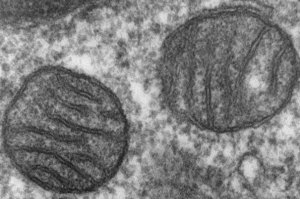
In a new finding from Harvard-affiliated Brigham and Women’s Hospital (BWH), researchers identify a link between Parkinson’s disease onset and dysfunctional activity of energy genes in the brain and identify a potential therapeutic target to reverse this energy gene failure.
-
Health
Killer mushrooms!
It is thought to have been responsible for the deaths of emperors. In parts of California’s forests, it is everywhere. It is the deathcap mushroom, Amanita phalloides, so filled with toxins that a single cap can kill anyone who mistakenly eats it and does not get medical treatment. Because it looks like an edible mushroom,…
-
Health
How does a worm build a throat?
Mention worms to most people, and they probably think of fishing, gardening, or trips to the vet. Mention them to Susan E. Mango, and she begins telling you how “absolutely beautiful” they are, how she marvels at their development from single cells into the six chromosome, 20,000 gene organisms upon which she has built a…
-
Health
New steps forward in cell reprogramming
Harvard Stem Cell Institute (HSCI) researchers at Massachusetts General Hospital (MGH) have substantially improved the odds of successfully reprogramming differentiated cells into induced pluripotent stem cells (iPS) by blocking the activity of the gene that instructs the cells to stop dividing. Konrad Hochedlinger and colleagues at the MGH Center for Regenerative Medicine also found that…
-
Health
Glimpsing the birth of our earliest reproductive cells
It has long been a mystery how the developing embryo designates those rare, precious cells destined to produce sperm and eggs — enabling us to have offspring – since these primordial germ cells’ existence is fleeting and hard to spot with the tools of biology. Now, using mouse embryonic stem cells, Harvard Stem Cell Institute(HSCI)…
-
Science & Tech
Massachusetts Lt. Governor tours Harvard research facilities
Massachusetts Lt. Governor Timothy Murray on Wednesday toured Harvard labs in both Cambridge and Boston. “The Patrick Administration has been very supportive of the university research sector in Massachusetts and we welcomed the opportunity to show him the range of projects ongoing at Harvard, in both Cambridge and Longwood, that are cutting-edge, multidisciplinary and often…
-
Health
Study finds genetic links to age of first menstrual period, menopause
Newly identified gene variants associated with the age at which females experience their first menstrual period and the onset of menopause may help shed light on the prevention of breast and endometrial cancer, osteoporosis, and cardiovascular disease.
-
Science & Tech
Exploring hidden life’s abundance
Two miles below the surface of the Sargasso Sea lies a depression in the Earth’s crust filled with sediment and, scientists believe, teeming with life — exotic, microscopic, and very likely never before seen by human eyes. Called the North Pond Basin, the site — researchers at Harvard and beyond believe — can provide a…
-
Health
Efficiency of producing iPS cells markedly improved
Some of the most challenging obstacles limiting the reprogramming of mature human cells into stem cells may not seem quite as daunting in the near future. Two independent research groups, one lead by Harvard Stem Cell Institute Principal Faculty member Konrad Hochedlinger, and another at the Whitehead Institute, are describing new tools that provide invaluable…
-
Health
Harvard Stem Cell Institute researchers turn one form of adult mouse cell directly into another
In a feat of biological prestidigitation likely to turn the field of regenerative medicine on its head, Harvard Stem Cell Institute (HSCI) co-director Doug Melton and post doctoral fellow Qiao “Joe” Zhou report having achieved what has long been a dream and ultimate goal of developmental biologists – directly turning one type of fully formed…
-
Health
Driven:
When the baby vomited again, Gail Melton knew something was seriously wrong with her second child, a son she and her husband, Doug Melton, had named Sam. She phoned Doug and took Sam to Harvard Health Services in Holyoke Center. Doug hurried to the clinic from his Fairchild Biochemistry Building lab on Divinity Avenue, where,…
-
Health
Experiment advances understanding of cell reprogramming
The announcement last year by scientists in Japan, at the Harvard Stem Cell Institute (HSCI), and at the Whitehead Institute that they had each — independently — coaxed adult cells into reverting to an embryonic stem cell-like state was arguably the biggest news in developmental biology since the cloning of Dolly the ewe. This creation…
-
Health
Major progress toward cell reprogramming
Two Harvard Stem Cell Institute (HSCI) researchers and scientists at Whitehead Institute and Japan’s Kyoto University have independently taken major steps toward discovering ways to reprogram cells in order to direct their development – a key goal in developmental biology and regenerative medicine. Additionally, the group led by Kevin Eggan, an HSCI principal faculty member…
-
Campus & Community
Mode of seed dispersal shapes placement of rainforest trees
The apple might not fall far from the tree, but new research shows that how it falls might be what is most important in determining tree distribution across a forest. A recent study of the seed dispersal methods of rainforest trees demonstrates that these methods play a primary role in the organization of plant species…
-
Campus & Community
Students search for Thompson Island’s hoppers
Education met hands-on science on Boston Harbor’s Thompson Island on Oct. 9, 2006, as roughly 100 Harvard undergraduates fanned out from beach to beach collecting insects to be included in a new database of Harbor Island insect life. The students, part of biology professors Brian Farrell and Missy Holbrook’s OEB 10 class, “Foundations of Biological…
-
Campus & Community
Spring in your step helps avert disastrous stumbles
From graceful ballerinas to clumsy-looking birds, everyone occasionally loses their footing. New Harvard University research suggests that it could literally be the spring, or damper, in your step that helps you bounce back from a stumble. The work, published this week in the journal Proceedings of the National Academy of Sciences, sheds new light on…
-
Campus & Community
Some like it hot: Deep-sea worms favor a fiery 45-55° c
Scientists have found that worms dwelling at deep-sea hydrothermal vents opt for temperatures of 45-55 degrees Celsius (113-131 degrees Fahrenheit) when provided a choice of conditions, giving them the highest thermal preference of any animal studied to date. This unique preference for extreme temperatures may be the undersea worms’ meal ticket, because they are apparently…
-
Campus & Community
Sweeping changes in life sciences education approved
Professors at Harvard University have overwhelmingly approved a plan that will reinvent the experience of the University’s undergraduate life sciences students, broadening degree options to better track modern biology and its related fields as it is practiced by scientists while boosting student advising and strongly encouraging undergraduate research. Following a Tuesday (April 18) vote by…
-
Campus & Community
Eating plants that grow on plants
Parasitic plants are not just a biological curiosity. Every year, parasitic plants damage farmers’ fields, particularly in Africa. Kristin Lewis, a junior fellow at the Rowland Institute at Harvard, is learning more about plants and their parasites. For instance, in Africa, seeds of parasitic plants blow in from surrounding environments or are deposited in bird…
-
Campus & Community
Evolution follows few possible paths to antibiotic resistance
Darwinian evolution follows very few of the available mutational pathways to attain fitter proteins, researchers at Harvard University have found in a study of a gene whose mutant form increases bacterial resistance to a widely prescribed antibiotic by a factor of roughly 100,000.
-
Campus & Community
Dominican insects make natural art
It’s the brilliant colors and otherworldly shapes of the Dominican insects that catch the eye and draw a viewer in. It’s the alien forms magnified for all to see clearly that keeps one standing before the images hung at the Cambridge Multicultural Arts Center, studying them. The digital images are one-third of the center’s show…
-
Campus & Community
Science losing war over evolution?
This just in from the front lines of the battle between evolution and intelligent design: evolution is losing. That’s the assessment of Randy Olson, a Harvard-trained evolutionary biologist turned filmmaker who explored the debate in a new film, “Flock of Dodos: The Evolution – Intelligent Design Circus,” which was screened Monday (Feb. 6) at the…
-
Campus & Community
Drug prevents spread of genital herpes
A new type of treatment has been found to protect mice against a nasty strain of herpes virus common in humans. Because this genital virus is an important co-factor for the transmission of AIDS, the discovery could lead to inexpensive protection against the ongoing epidemic that will kill more than 3 million people this year.…
-
Campus & Community
Using physics to understand biology
Anita Goel is using the tools of physics to examine one of the most basic processes of biology, the way genetic information is extracted from DNA molecules and how this process is influenced by the environment. Goel, an associate of the Physics Department, is hoping her unique approach will lead to both a new understanding…
-
Campus & Community
Dog genome latest DNA to be fully sequenced
Scientists at the Broad Institute of Harvard and MIT have sequenced the domestic dog’s DNA, thanks to the blood of a boxer named Tasha. Now they hope to follow Tasha’s genetic code to a new understanding of shared diseases (such as cancer) and the genetic roots of the differences between man and beast. The unique…
-
Health
Dog genome unleashed
An international research team led by scientists at the Broad Institute of MIT and Harvard has decoded the DNA of the domestic dog and pinpointed millions of genetic differences that distinguish dog breeds. The study also includes the first comparative analysis to encompass three distinct mammalian genomes, revealing important DNA elements common among them. Such…
-
Science & Tech
Taking a look at how ant (and human) societies might grow
Edward O. Wilson has learned a great deal about life by studying ant societies. In this knowledge, he finds parallels between the social interactions of insects and those of birds, lions, monkeys, apes, and even humans. The last parallel got him into trouble in the late 1970s, but he now enjoys credit for establishing a…
-
Campus & Community
Chimp genome effort shines light on human evolution
A research effort, led by scientists at the Broad Institute of MIT and Harvard, the Washington University School of Medicine in St. Louis, and the University of Washington, Seattle, focused on the chimpanzee in hopes that genetic comparisons with humanity’s closest relative will lead to answers to both practical questions – such as the causes…