Pope Leo XIV names epidemiology professor, human flourishing expert to Vatican advisory group
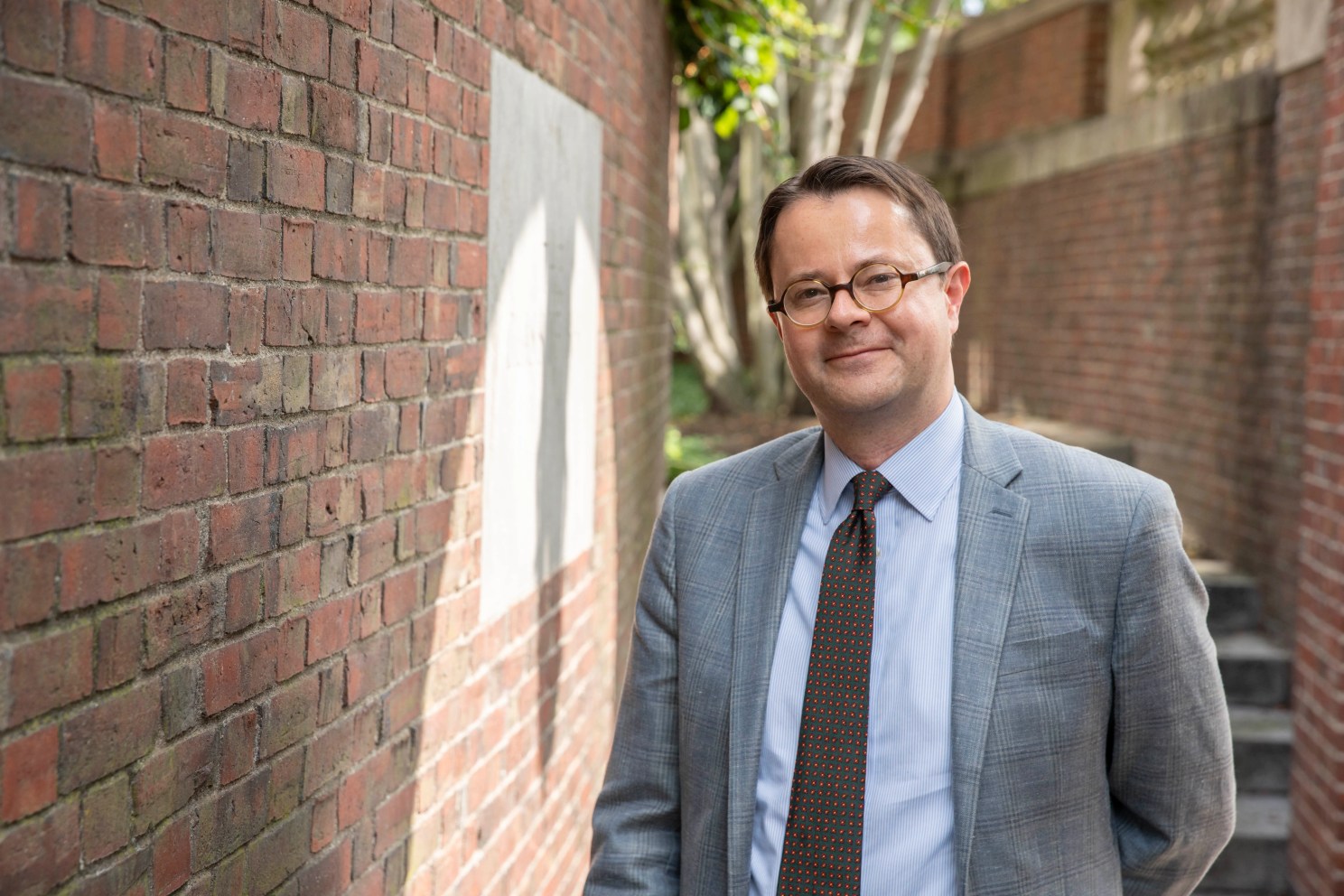
Tyler J. VanderWeele, a faculty member since 2009, will help advise Catholic teachings on everything from climate to family to democracy.
Niles Singer/Harvard Staff Photographer
ContactChristy DeSmith
2 min read
Tyler J. VanderWeele, John L. Loeb and Frances Lehman Loeb Professor of Epidemiology in the Departments of Epidemiology and Biostatistics at the T.H. Chan School of Public Health, is the newest member of Pontifical Academy of Social Sciences.
Appointed this week by Pope Leo XIV, VanderWeele will serve alongside 35 global experts in law, political science, economics, and sociology. The founding director of the Human Flourishing Program at the Institute for Quantitative Social Science joins a Vatican Academy charged with advising church teaching on everything from climate to family to the future of democracy.
“I am honored and humbled,” VanderWeele said. “Catholic social teaching has powerfully shaped the way I think about my own work, and about the pursuit of societal flourishing. The principles of the dignity of the human person, the common good, subsidiarity, and solidarity provide a powerful roadmap for our life together.”
A faculty member since 2009, VanderWeele holds degrees from the University of Oxford, University of Pennsylvania, and Harvard in mathematics, philosophy, theology, finance, and biostatistics. Today, he is known for applying rigorous quantitative methods to research on human flourishing, religion, psychology, and health, with a body of peer-reviewed publications numbering more than 600.
The Human Flourishing Program was launched in 2016. In 2021, VanderWeele announced the program’s partnership on the Global Flourishing Study project, an ambitious investigation into the drivers of well-being across six continents. The longitudinal study measures residents of 22 countries on factors related to happiness, health, purpose, character, and relationships.
Early results, based on surveys of more than 200,000 individuals, pointed to the importance of marriage, employment, and religious service attendance. Middle-income countries, including Indonesia and Mexico, ranked highest on the study’s measures largely due to higher relationship quality, sense of meaning, and pro-social character. Also uncovered, in contrast to earlier work, were flattened rates of well-being for young adults in most countries.
The Pontifical Academy of Social Sciences was established by Pope John Paul II in 1994. Previous members include Mary Ann Glendon, a professor emerita at the Law School, who served as the academy’s president from 2003 to 2013.
Current trends ‘not sustainable,’ says Fed chair, whose conversation with Harvard undergrads also touched on inflation, impact of war, independent decision-making

 Featured series