 Featured series
Arts & Culture
Designing for world in flux
Photos by Stephanie Mitchell/Harvard Staff Photographer
Exhibit at Graduate School of Design highlights innovation that makes possible structures, projects that balance efficacy, affordability, efficiency
At Harvard’s Graduate School of Design, students are often hoping to make structures and innovations that last.
But the current era has been marked by relatively rapid environmental, social, political, and technological shifts across the globe. Designers are increasingly being asked to make things that can be adaptable, accessible, and economical.
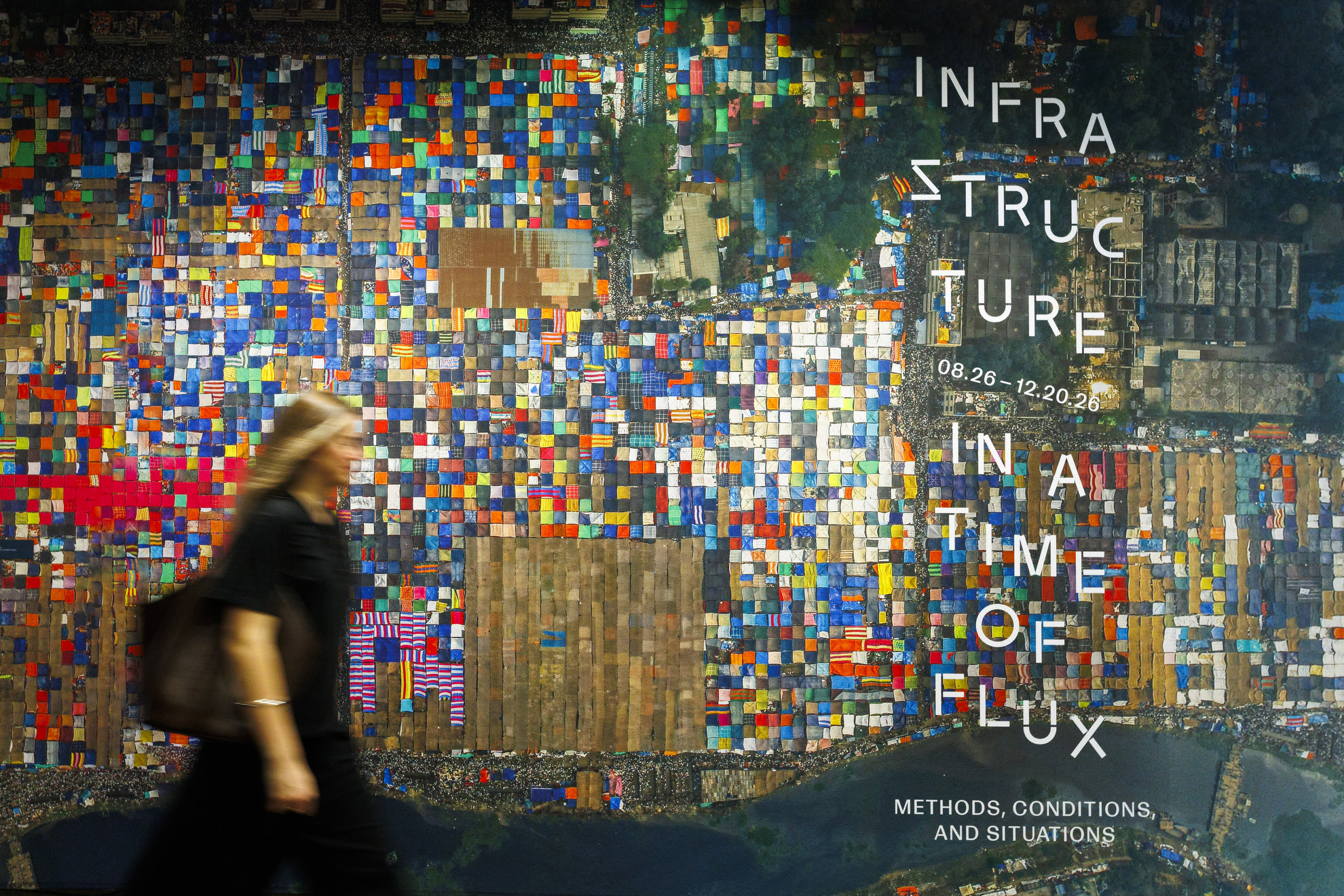
Enter “Infrastructure in a Time of Flux: Methods, Conditions, and Situations,” the School’s fall exhibit on display in the Druker Design Gallery through December. The show spotlights architectural, engineering, urban planning, and design innovations focused on building for a world in transition.
“I think there’s an interesting tension between these two words,” said Rahul Mehrotra, professor of urban design and planning and co-curator along with Dan Borelli, GSD exhibitions director. “Infrastructure is generally understood as a stable framework within which life happens, but flux suggests almost the opposite. Flux implies movement, change, uncertainty, transformation. So what happens to our understanding of infrastructure when permanence can no longer be assumed as the fundamental condition of the city?”
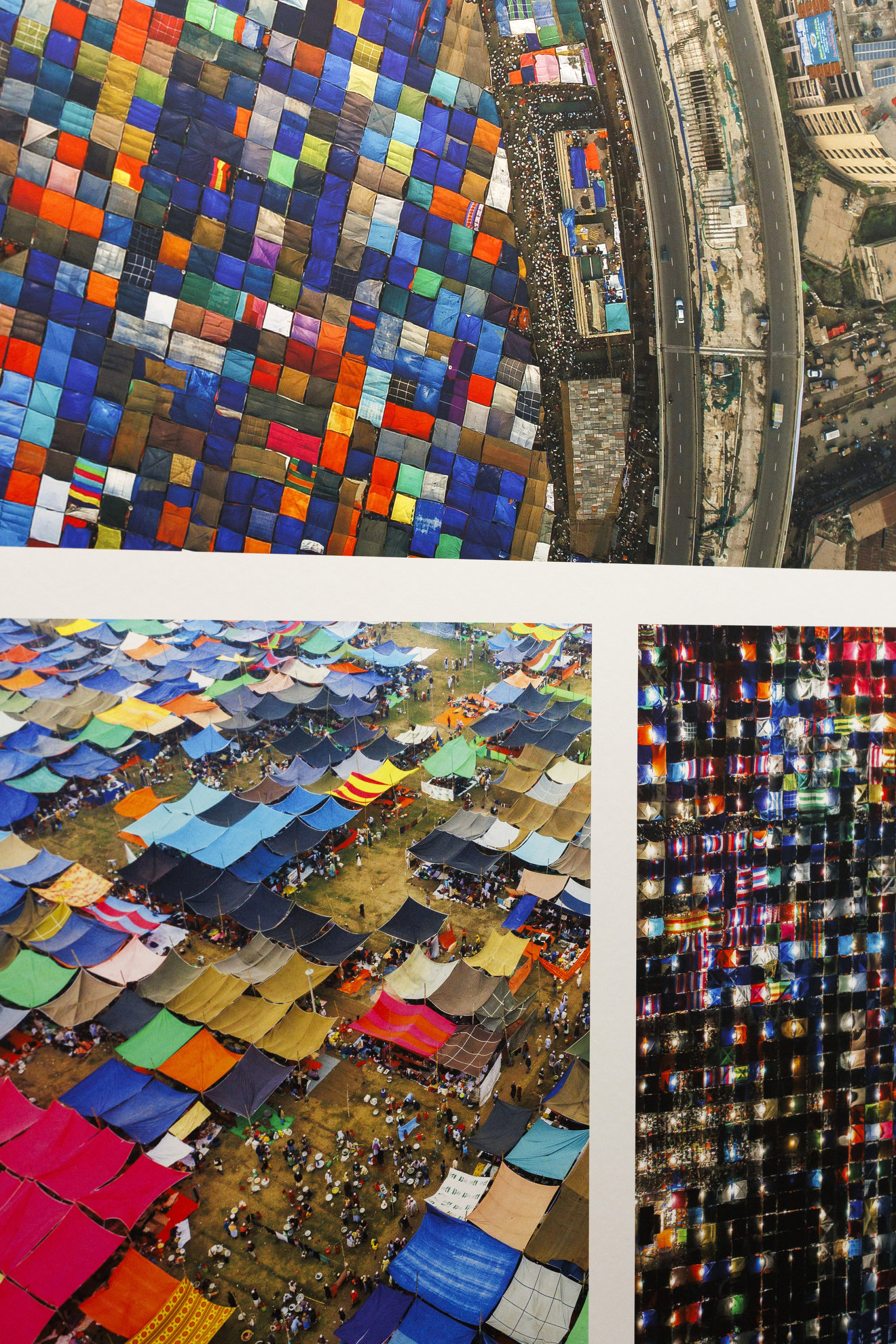
Mehrotra said he was inspired in part by his home city of Mumbai, where the Hindu Kumbh Mela festival brings millions of people into a camp created just for the celebration. The festival grounds are dismantled just as quickly as they are constructed — a temporary city within a city.
“Millions of people arrive, infrastructures are assembled — roads, bridges, sanitation, electricity, water, housing, markets, security systems — all come together,” Mehrotra said. “It has all the attributes of a regular city, and then after a relatively short period — 55 days — it takes only three or four weeks to assemble it and takes 10 days to disassemble it. The land returns to another condition.”
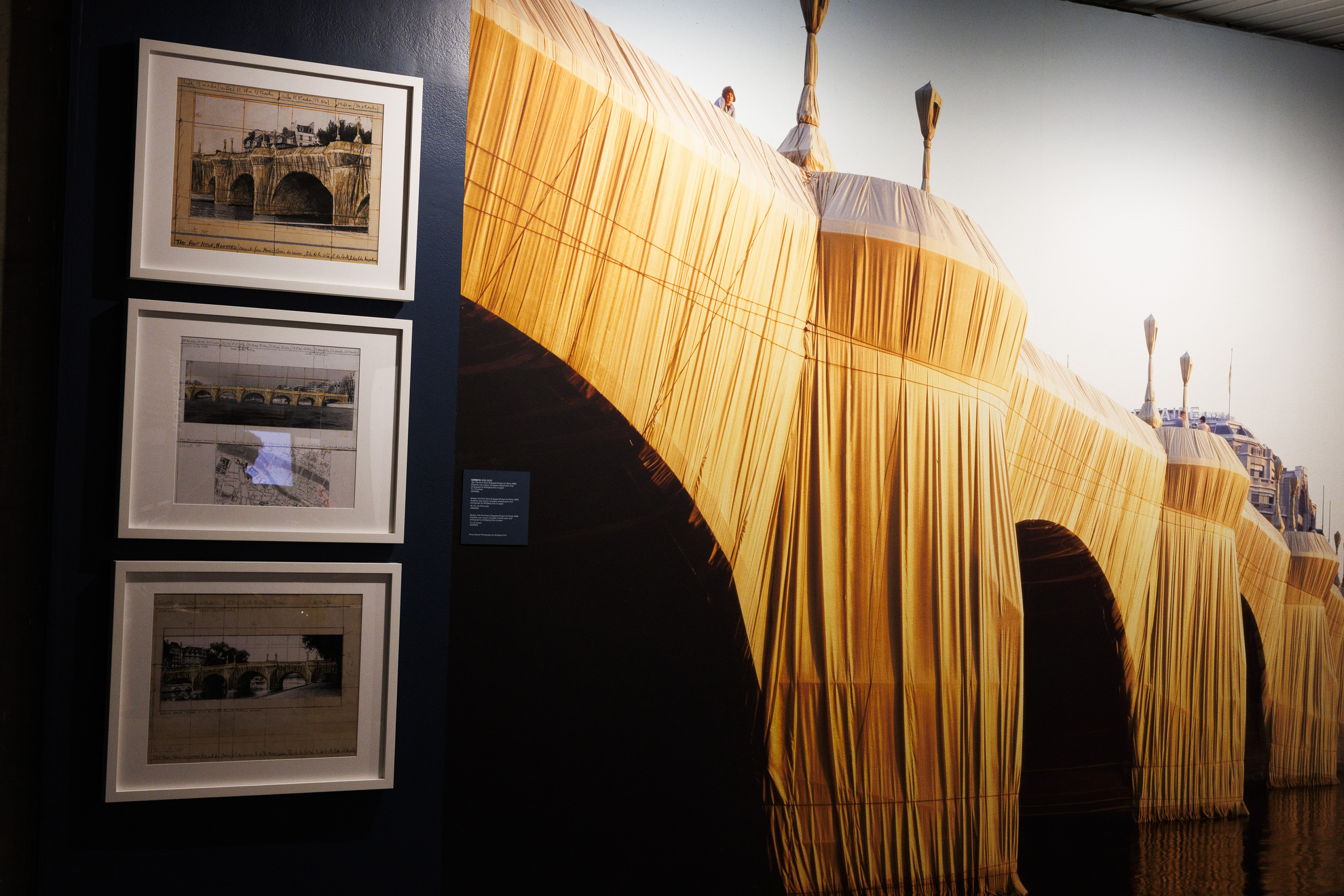
He’s also drawn inspiration from artists, including Christo and Jeanne-Claude, who made their mark creating large-scale temporary installations across the globe. The exhibition features stills of their work, including the iconic 1985 covering of the Pont Neuf in Paris.
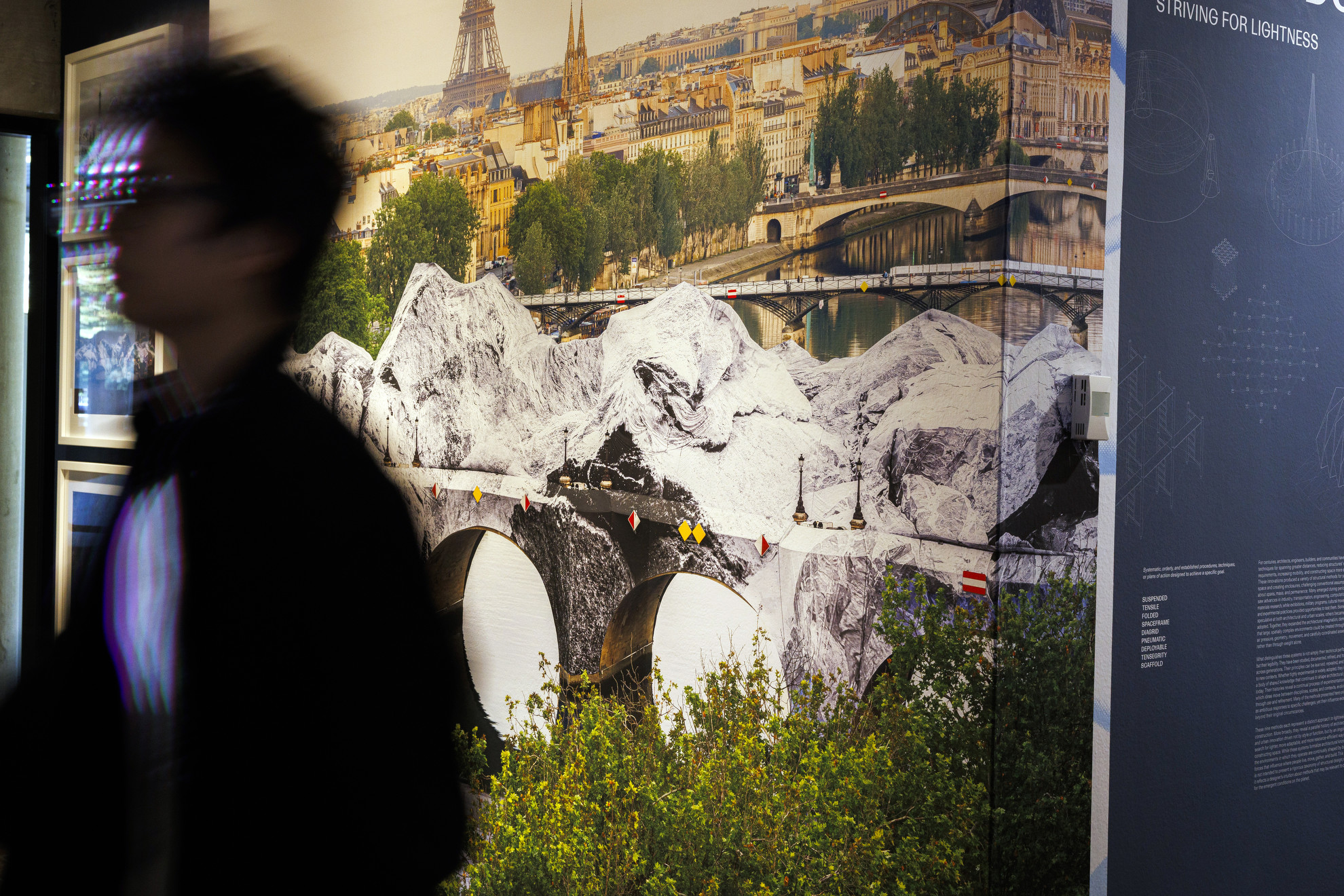
“[Christo] would always say permanence is the enemy of freedom,” said Vladimir Yavachev, director of operations at the Christo and Jeanne-Claude Foundation. “You can pick up and go at any time. You don’t have to be dependent.”
In addition to exploring impermanence, the exhibition is an examination of feasibility, highlighting techniques, materials, and practices that balance efficacy with affordability and efficiency.
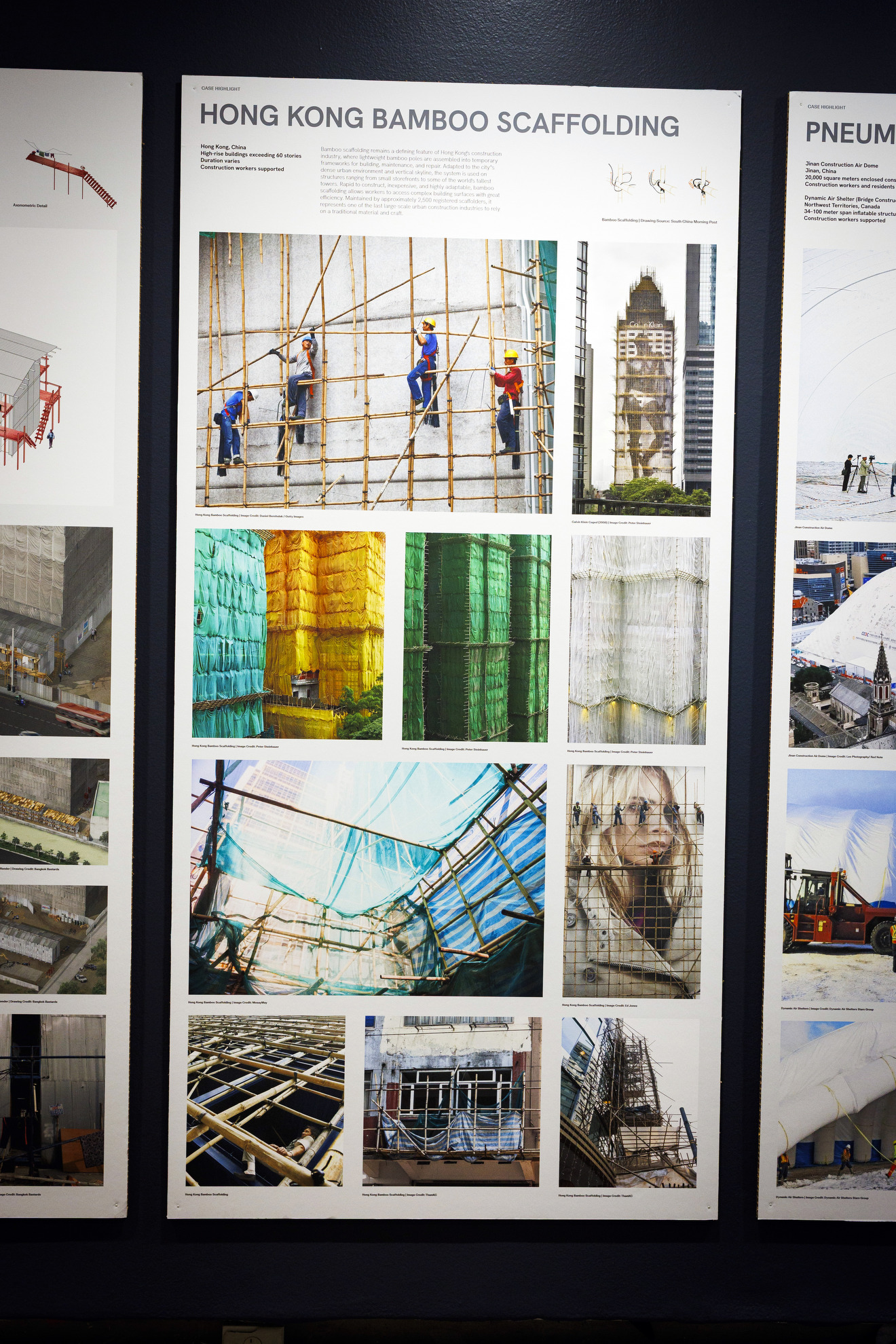
Some examples include scaffolding in New York City that allows construction to take place without interrupting pedestrian traffic, and plastic housing for Ethiopia’s Kobe Refugee Camp, where there are about 37,000 people.
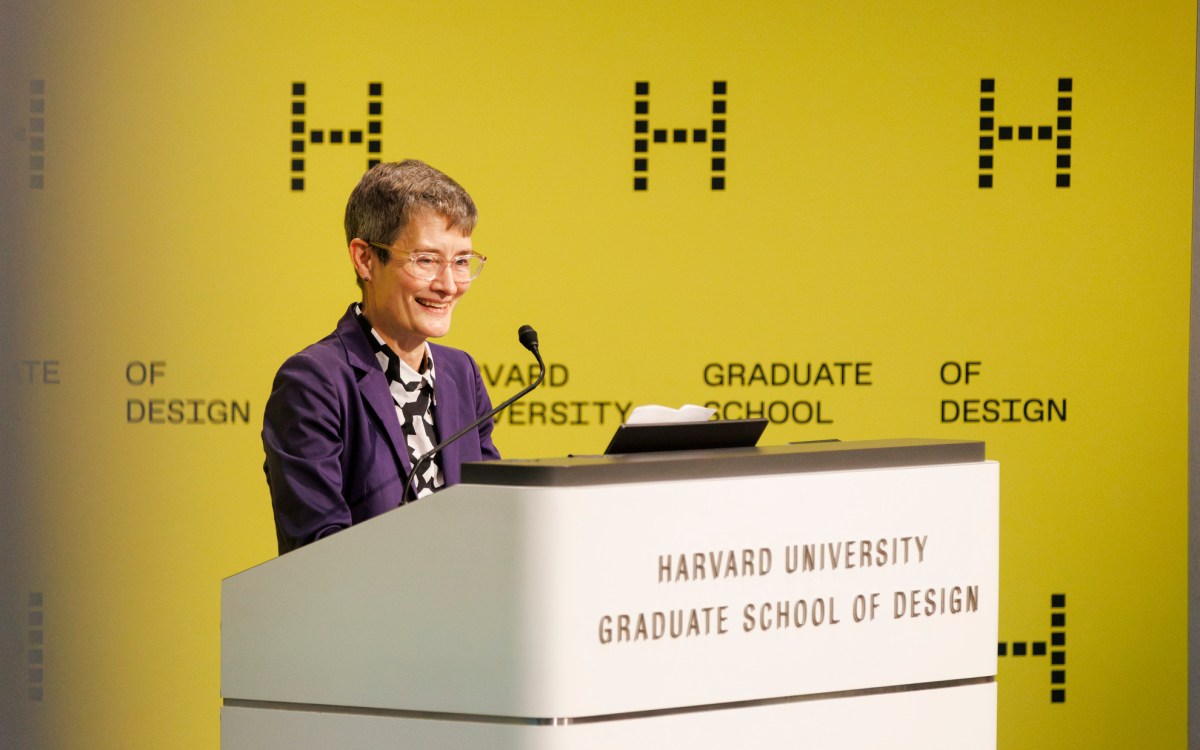
“Some of the examples in the exhibition are speculative, artistic, and even dreamy. Others are scrappy, ad hoc, and poignant. Some harken back to very old traditions. Other others are futuristic,” said Sarah Whiting, GSD dean and Josep Lluís Sert Professor of Architecture. “Every example offers fodder for thinking and acting. We have nine different degree programs here at the GSD, ranging from urban design to design engineering to ecologies, architecture, and more. And I think every one of them is reflected by the work displayed in the exhibition out there.”
Some methods embrace geometry and dynamic movement to create lightweight and affordable structures and infrastructure.
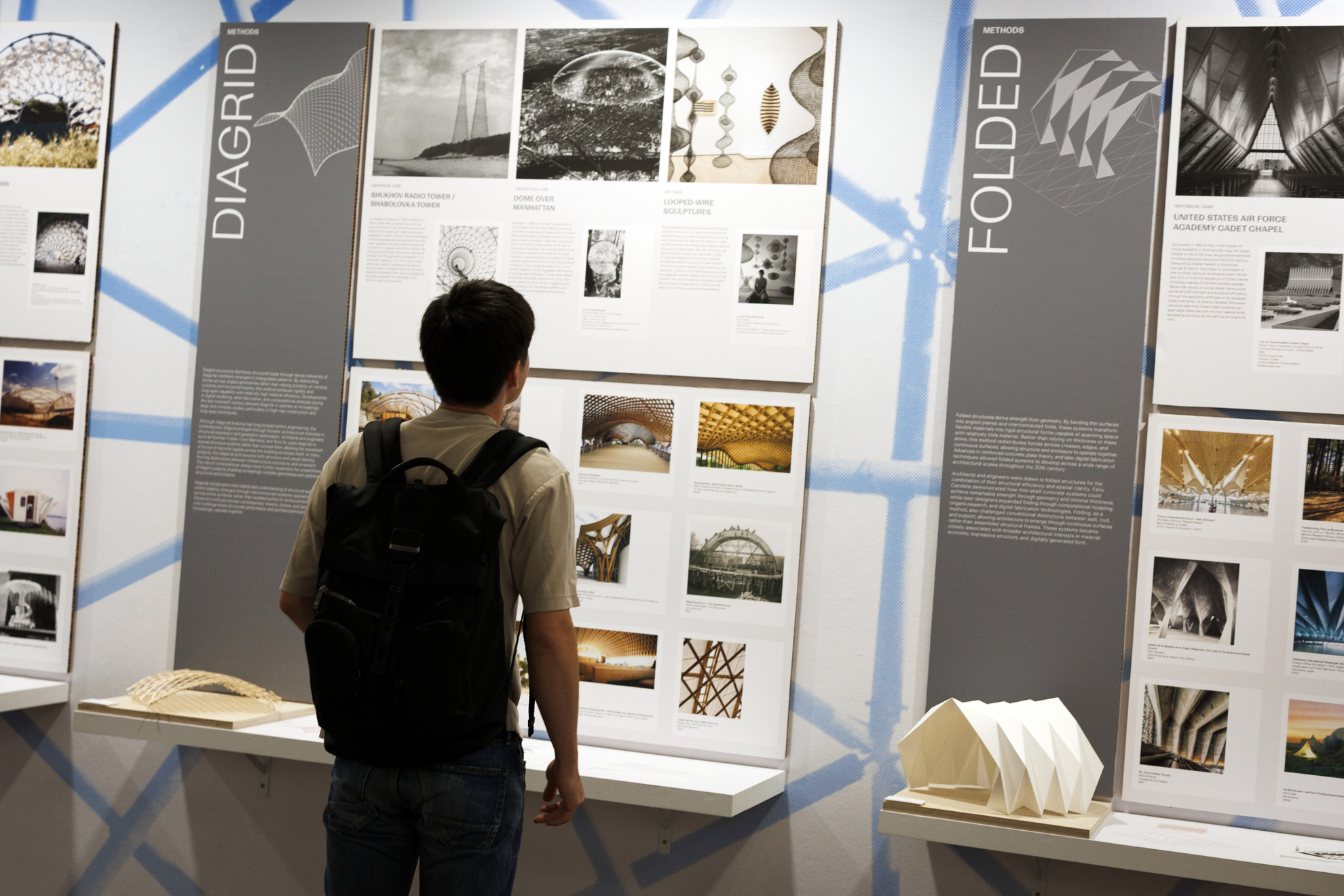
One example are space frames — truss lattices of interlocking geometric patterns like you might see in an airplane hangar — which distribute load evenly across structures and eliminate need for permanent load bearing beams or columns.
Another involves folded structures, often done with stiff plastic, that transform flexible materials into sturdy shapes.
Scholars say designers often face projects that require them to consider questions like: How do people actually access different resources? Would they be willing to travel for certain things? How far? What occupied the site before and what connotations does that space hold? How much buy-in exists from stakeholders?
“People move, economies change, buildings are adapted, spaces are occupied differently, new meanings are attached to old places,” Mehrotra said. “The city is constantly being adjusted.”
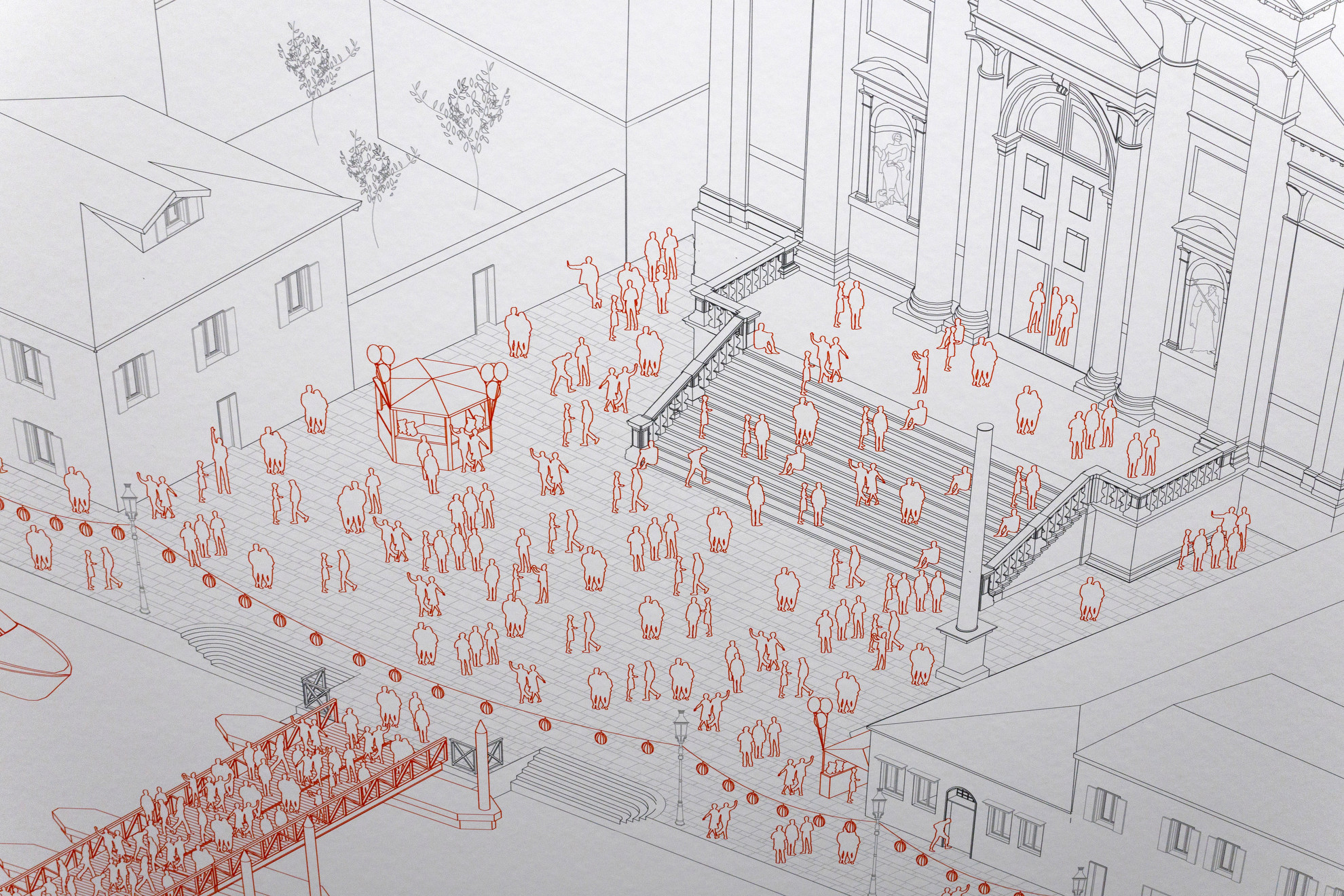
And sometimes design is only intended to be temporary for celebrations, religious gatherings, nomadic groups, disaster victims, and military refugees.
During Italy’s Feast of the Redeemer, a temporary pontoon bridge brings visitors and pilgrims to the Church of the Most Holy Redeemer, commonly known as Il Redentore. At Burning Man, a temporary city in the desert makes sure festival-goers have access to food, water, and bathrooms.
“Reversibility is not just about whether we can take something apart. It is about how we think. It asks whether the things we build can anticipate change. Can they be adapted? Can they be moved? Can they be reused? Can they be dismantled? Can they leave something behind, or perhaps leave almost nothing behind?” Mehrotra said.
A symposium will be held on Nov. 12 and 13 bringing together designers, architects, humanitarian workers, and historians to reflect on the exhibition’s three themes and interrogate the Kumbh Mela festival as a case study.