Featured series


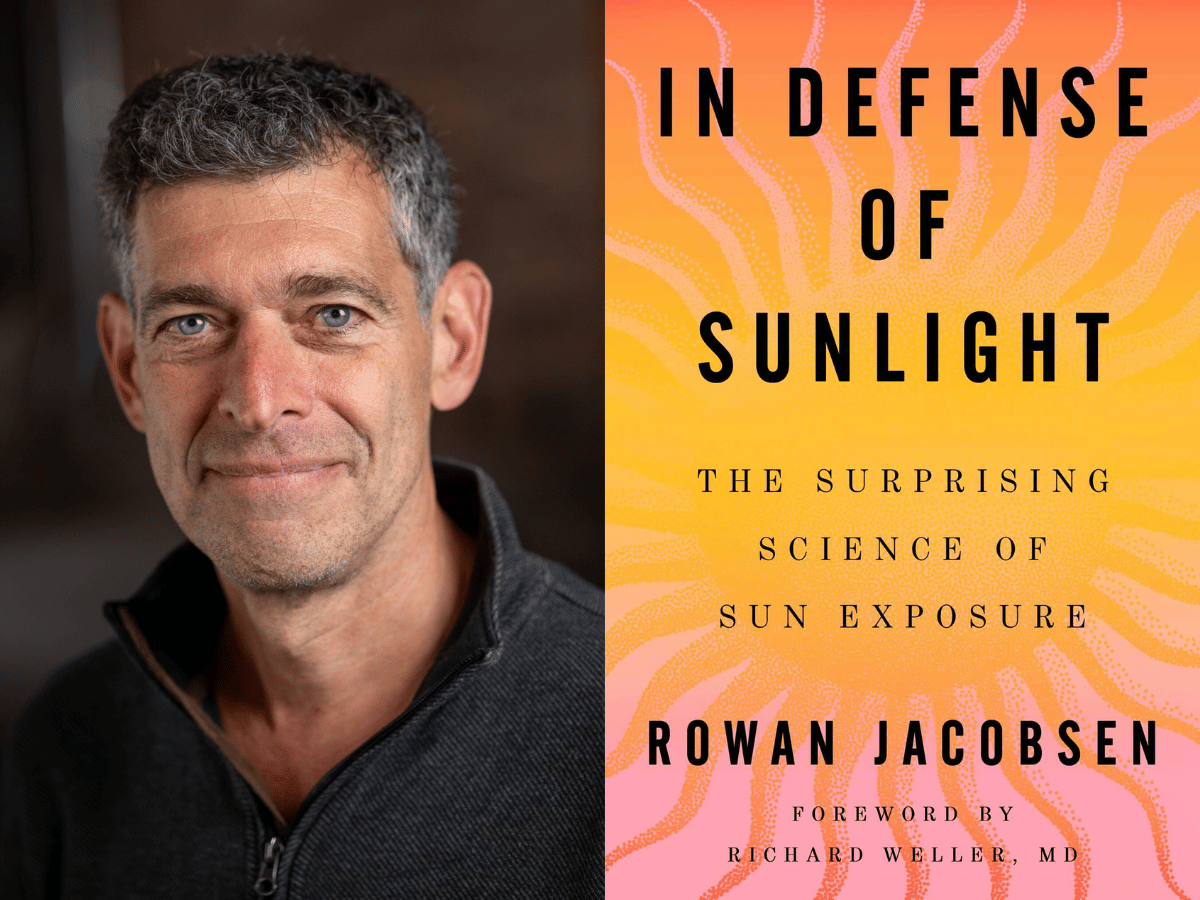
Rowan Jacobsen.
Photo by Chris Hartlove
Health
Sunlight is not your enemy
Health benefits outweigh the risks for most of us, according to new book
Public health messaging about the sun tends to emphasize skin cancer risk, urging everybody to cover up and slather on sunscreen before going outdoors. But although it’s come to feel counterintuitive, research suggests small daily amounts of sun exposure confer an array of health benefits that outweigh the risks for most people, according to award-winning science and cultural writer Rowan Jacobsen. In an interview edited for clarity and length, Jacobsen digs into the findings from his new book, “In Defense of Sunlight: The Surprising Science of Sun Exposure,” ahead of his upcoming Harvard Science Book Talks event at Harvard Book Store on Wednesday.
The research around sun exposure is complicated, which in part has led to an oversimplification of public health messaging. Could you talk about that?
Science is always more complicated than we tend to get told in a public messaging context. You can’t do nuance in a 30-second PSA. There is an effort to tailor recommendations to be as risk-proof as possible. In the case of sun exposure, the recommendations were set for the most susceptible people on earth to skin cancer: those with really fair skin. The assumption was that having everyone follow along wouldn’t cause any harm, but when you look at the science you realize those recommendations probably are harmful to people who are less sensitive to skin cancer.
Are the dangers of sun exposure overblown?
In terms of actual mortality, skin cancer is a tiny, tiny player. We tend to think it’s a bigger cause of death than it is because we hear a lot about it, but it’s not one of the top 40 killers in the U.S. or worldwide. That doesn’t mean it isn’t problematic; but at the same time, there is growing evidence that moderate amounts of sun exposure can have positive impacts, especially on other, more prevalent causes of mortality.
And to be clear, I’m not talking about sunburn. The science shows that burning is really bad for you; but small, daily amounts of sunlight have a lot of benefits.
What are other benefits of sun exposure that we don’t often hear about?
Sun exposure — even just a little — lowers blood pressure, reduces inflammation throughout the body, makes vitamin D and a lot of other compounds that heal damage in the body. All that together means that you get significantly lower rates of the big diseases, the ones that tend to move the needle the most in public health: cardiovascular disease, including heart disease, strokes, diabetes, cancers (other than skin cancer), and autoimmune diseases. Studies have found that sun exposure reduces mortality (from any cause) by 10 to 30 percent.
“Studies have found that sun exposure reduces mortality (from any cause) by 10 to 30 percent.”
Additionally, there are mental health benefits. Sun exposure triggers a release of natural endorphins in the brain and natural opiates, relieving depression and helping people feel better. It reduces anxiety and improves sleep by helping your circadian rhythm. And good sleep improves everything. The overall impact is a huge improvement in well-being.
Does it matter if you are someone with a very fair complexion as opposed to someone with darker skin?
It makes a huge difference and that has to be part of the conversation. The recommendations have been one-size-fits-all, which makes no sense. A particular phenotype — which is very fair skin, light-colored hair (especially reddish), and freckles — is more at risk of melanoma than anyone else. If you are in that category, you do need to be very cautious with sun exposure. On the opposite end of the spectrum, people with dark skin have almost no risk of melanoma or skin cancer and can really reap the benefits of sunlight without any downside. And in between there’s a gradation, but the upshot is that for everyone who doesn’t have very fair skin, the benefits of sunlight clearly outweigh the risks.
Let’s talk vitamin D. There was a time when taking a supplement was all the rage. How does that compare to being in the sun?
We thought vitamin D was going to be a magic pill, because people who naturally have high levels of vitamin D in their blood from sun exposure have lower rates of every disease. We began supplementing with vitamin D to tens of millions of Americans — and all the big clinical trials showed essentially no impact from that supplementation. It didn’t improve a single condition (unless you had extremely low levels of vitamin D to begin with).
Vitamin D through a pill doesn’t deliver the benefits of vitamin D through the skin, and everyone’s still trying to figure out why. Maybe vitamin D was just a marker for sunlight, and it was actually other benefits of sun exposure that were responsible for some of those benefits. Or maybe vitamin D is just one of many related compounds (we now know) made in the skin through different combinations of sunlight and enzymes, all of which seem to be anti-inflammatory, anti-carcinogenic, full of antioxidants. If you take a pill, you only get one vitamin, while if you are getting sunlight on your skin, you’re getting a couple dozen of these compounds. I think that’s probably part of the answer, but the research is still early.
What do you hope people will get from rethinking their relationship to the sun?
We have this weird context where we tend to fear the sun. Or any time we’re in the sun, we feel guilty. That’s almost always not supported by the evidence. I want to return us to a better relationship with the sun; regular exposure to the sun should be part of the joy of everyday life. I hope I can help people get back to that.