Featured series

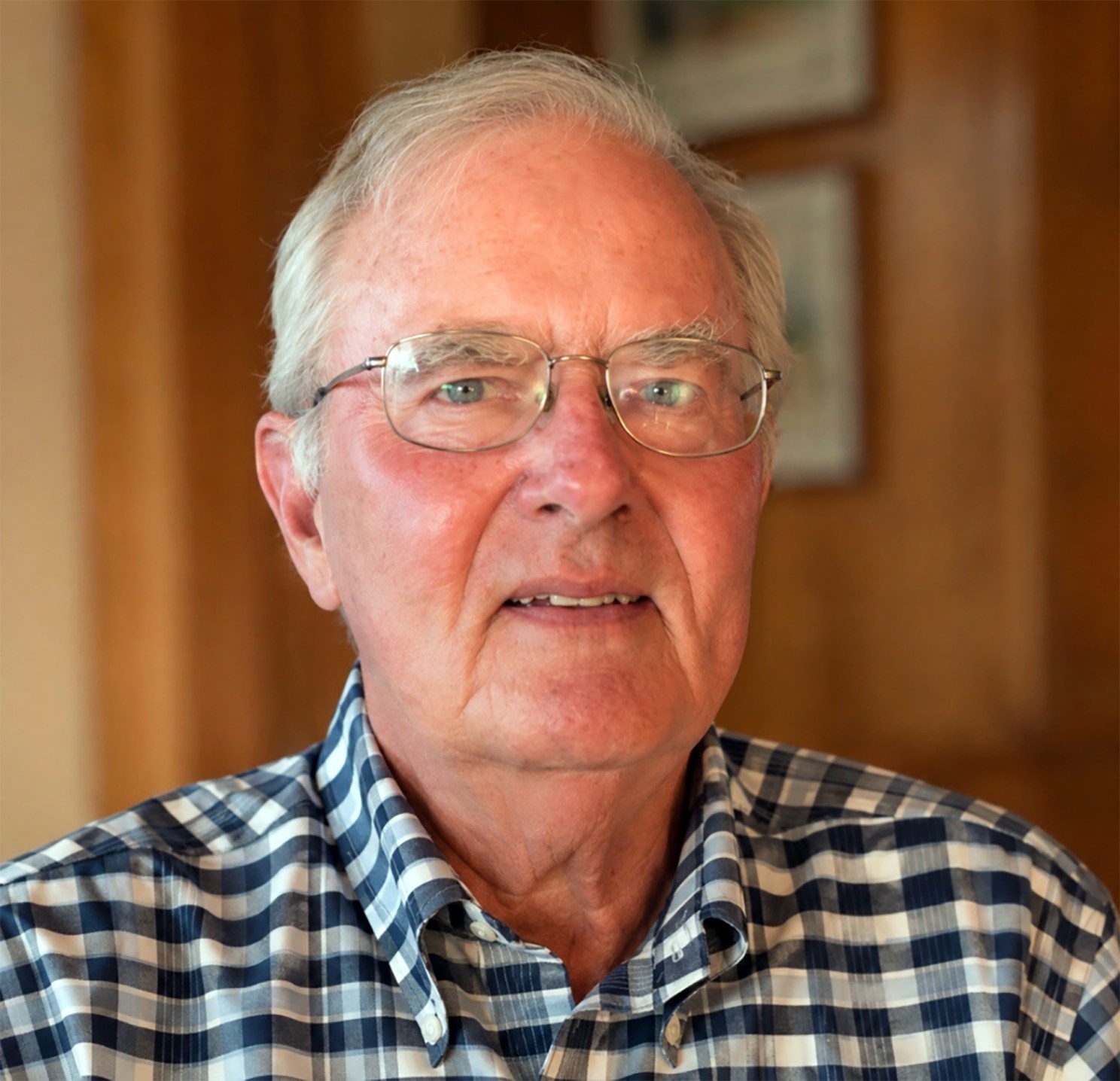
Photo courtesy of Walter M. Cabot’s family
Campus & Community
More than an endowment pioneer, ‘a good man’
Friends, colleagues recall Walter M. Cabot, longtime leader of Harvard Management Co., as modest, thoughtful, ‘with a rare combination of judgment and grace’
Walter M. Cabot is widely viewed as the architect of the Harvard endowment, the world’s largest, and a pioneer in the field.
Beyond his many achievements, colleagues and friends also recall him as a man of uncommon modesty and grace, one who fostered an atmosphere at Harvard Management Company (HMC) more like a family than the kind of harsh competitiveness more common in investment firms.
Cabot served as president, chief executive officer, director, and deputy treasurer at HMC, which manages the University’s endowment, over nearly two decades. He died on June 2 at the age of 93.
Cabot was a mild-mannered man with a genuine interest in people, said his son David R. Cabot. He tended to be short on words but open-minded, qualities that may be traced to a malady he experienced at a young age.
“He had a bout of polio at age 10 or 11,” David Cabot said. “I think that made him persevere, and it also made him a little humble and aware of other people’s conditions. He was a very sensitive man.”
Michael Eisenson, managing director and co-chairman of Charlesbank Capital Partners, met Cabot in the mid-1980s, and remembers him as an exemplary manager — and person.
“He was a pioneer and a leader in the world of endowment management,” said Eisenson. “He struck me as a leader with a rare combination of judgment and grace. He created a culture inside Harvard Management Company that was collaborative and supportive.”
Robert Matson, who was a Harvard Management partner from 1986 to 1992, agrees.
When Matson worked there, the place had “a collegial, like a family atmosphere” unlike other investment firms where competition and animosity run high, he said.
“There’s a lot of huge egos in the investment business, and he never had that,” Matson said of Cabot. “He was always open to new ideas. He was a man of tremendous integrity, which is not always common in the investment business. He was also a real gentleman, and he was a real straight shooter. He could smell a phony from a mile away.”
Hunter Lewis, who co-founded Cambridge Associates as an investment adviser to American research universities and colleges, worked with Cabot since the early 1970s. Lewis praised Cabot’s vision and stewardship.
“He radically changed the asset allocation of Harvard’s endowment in favor of equities,” said Lewis. “Without Walter, there wouldn’t be a Harvard Management Company.”
As an investment executive, Cabot was known as a moderate risk-taker, but when he took over HMC in 1974, he made a bold move.
Back then, most university endowments relied on a traditional 60/40 mix of stocks and bonds, but with Cabot at the helm, the endowment expanded into equities, venture capital, foreign markets, real estate, and other investment assets.
That not only made Harvard the first major endowment to diversify beyond stocks and bonds, but it also established the foundation for the modern endowment model.
“He thought that with risk came, in the investment world, perhaps return, but he was thoughtful about it,” David Cabot said. “He was not a high-risk-taker, but he did appreciate the idea that if you didn’t challenge yourself or didn’t take a risk, you might not get much of a reward.”
Under Cabot’s leadership, Harvard’s endowment grew from nearly $1 billion to $5.5 billion in 1991. According to last year’s report, the endowment was valued at $56.9 billion, making it the largest in higher education.
Cabot relished his time at HMC. In an interview with the Harvard Crimson in 2005, he said it was “the best job you could possibly have.”
A descendant of the Massachusetts Cabots, Cabot grew up in Dover, Massachusetts, and graduated from Harvard in 1955. After Harvard, he served in the U.S. Army and the CIA. He earned his M.B.A. from Harvard Business School in 1959.
Cabot also served as treasurer of Wellesley College from 1978 to 2000, a period during which the institution’s endowment increased from nearly $100 million to $1.2 billion. He led an active civic life in his hometown, where he was chairman of the Warrant Committee.
Cabot is survived by his wife of 70 years, Dorothy S. Cabot, four children, 10 grandchildren, and six great-grandchildren. Memorial services will be held on Sept. 19.
“He had a good set of principles that he didn’t ever waver from,” David Cabot said. “I never heard him swear in his whole life. I never saw him getting angry at anybody. He would want to be remembered as honest, fair, and reliable, and as a good man.”