Featured series


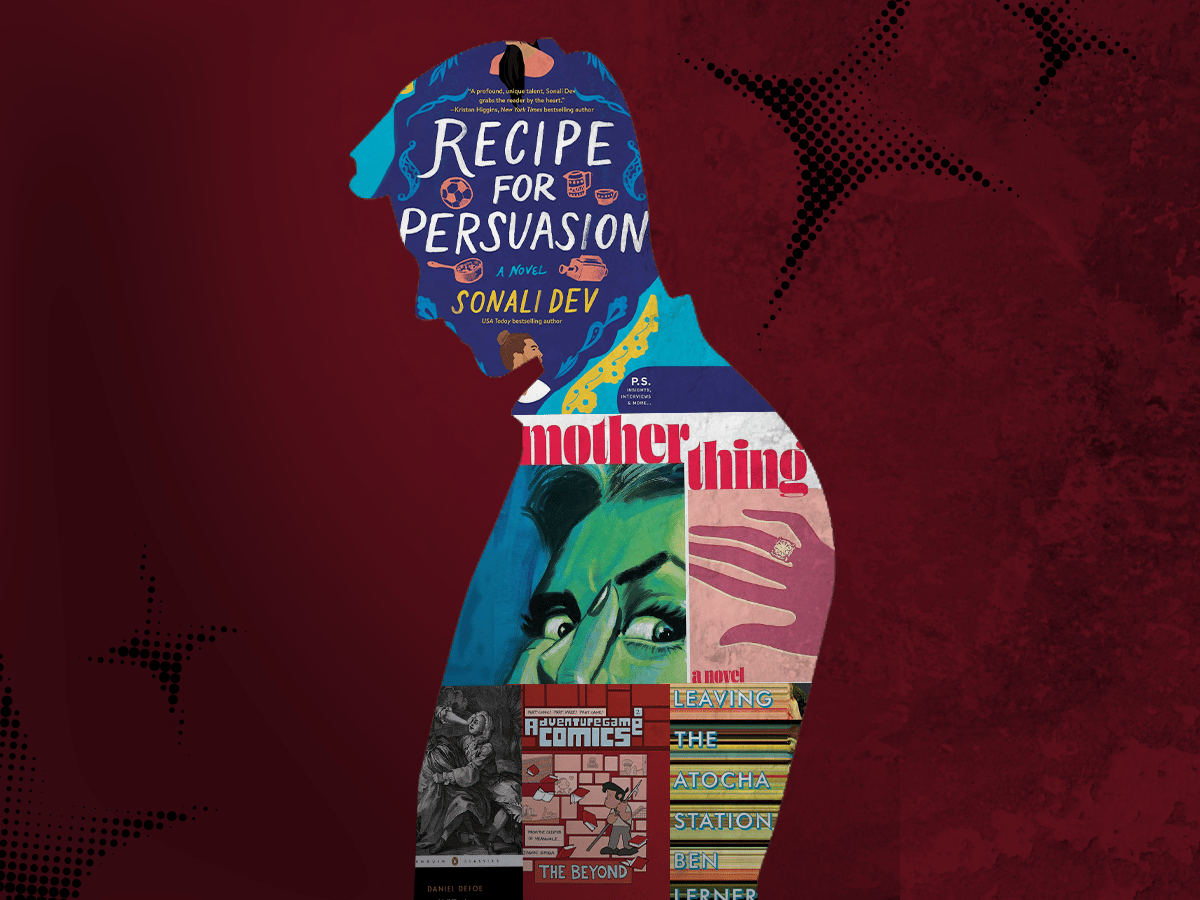
Illustration by Liz Zonarich/Harvard Staff
Arts & Culture
Don’t believe everything you hear — or read
Faculty, staff recommend fiction with unreliable narrators — and try to explain why we can’t resist them
There have been unreliable narrators for as long as people have told each other stories — and that includes novels.
The unstable relationship between reader, narrator, and author produces a “uniquely intensive reading experience,” said Ian Shank, a preceptor in expository writing and the instructor of a Division of Continuing Education course that explores the mechanics of unreliable tellers of tales.
But it also reflects a truth about our lived experience, which perhaps explains why we find it so compelling.
“An uncomfortable fact of life is that we are always deceiving ourselves and others,” Shank said. “Every time we sit down to write, or interview for a job, or go on a date, we’re putting forward a persona that is, to some degree, artificial — more a performance of the person we’d like to be or be seen as than who we truly are. What unreliable narrators do particularly well is expose these fictions as fictions — the ways, in other words, that we live fictions every day — while also showing just how desperately we still cling to these visions of ourselves.”
Whatever the reason, readers clearly are intrigued by storytellers with their own foibles or agendas. Here are a handful of favorites suggested by Shank, along with other faculty and staff from around the University.
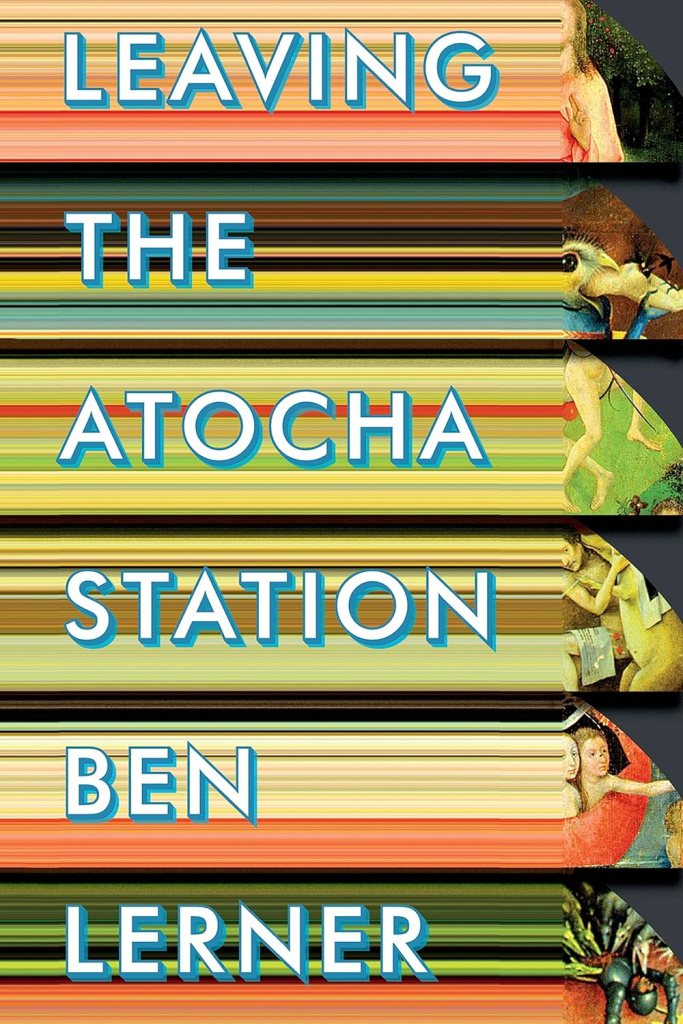
“Leaving the Atocha Station” (2011) by Ben Lerner
Recommended by Ian Shank, writing preceptor and continuing education instructor of “Unreliable Narrators”
Though Ben Lerner was already a celebrated poet by the time he published “Leaving the Atocha Station” in 2011, it was this novel — his debut — that cemented his status as one of the leading voices in contemporary literature.
A subsequent winner of a 2015 MacArthur “Genius” Grant, and described by The New York Times Magazine as “the most talented writer of his generation,” Lerner followed “Leaving the Atocha Station” with two more autofictional novels — “10:04” and “The Topeka School” — to round out something of a trilogy, the latter going on to be shortlisted for both the National Book Critics Circle Award and the Pulitzer Prize.
Still, it’s “Leaving the Atocha Station” that sticks with me. In it, a young poet meanders through a Fulbright in Madrid, oscillating between what Lerner has described as “sort of a coming-of-age story” and “a year in the life of a sociopath.” Exactly where and how readers draw this line turns out to be one of the core conundrums of this nimble, cerebral book –– one made all the more fraught given the narrator’s cascading mental health crises, frequent drug use, and compulsive, self-destructive lying.
In another sense, the novel’s plot is beside the point. As Lerner’s fans know, the real pleasure of the book (and of reading Lerner generally) lives in his sentences — the place where Lerner distinguishes himself as one of the most virtuosic prose stylists working today.
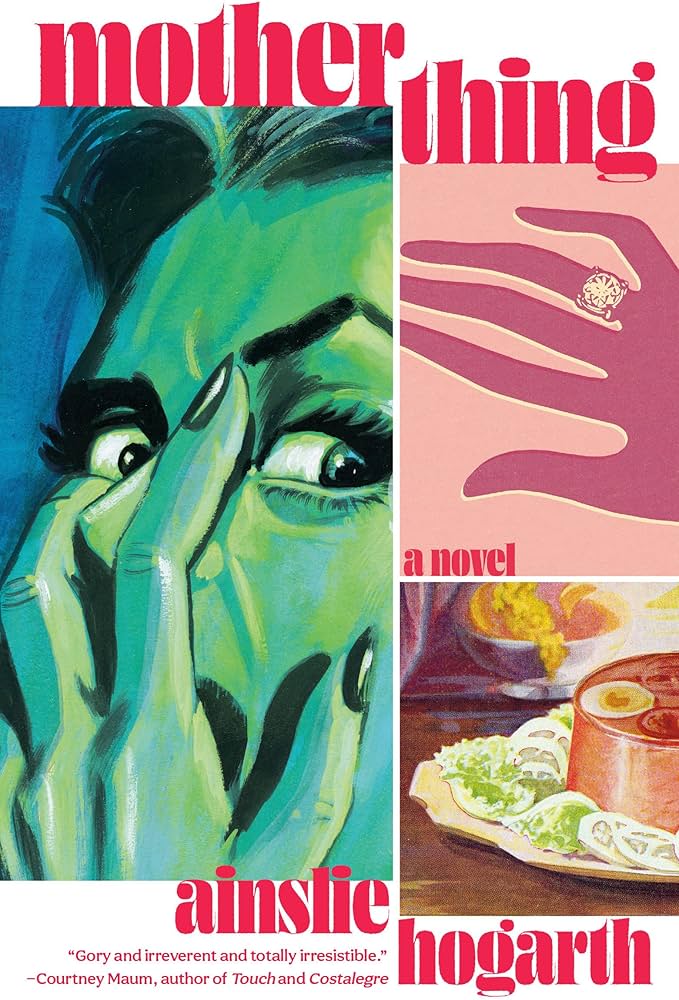
“Motherthing” (2022) by Ainslie Hogarth
Recommended by Erin LaBove, cataloger of published materials, Schlesinger Library
Abby Lamb has a lot of complicated relationships in her life, especially with her difficult mother-in-law, who, after her untimely death, seems to be relentlessly haunting her and her husband from the afterlife. With the guidance of her trusted 1930s cookbook, Abby navigates her current troubles and her past traumas to understand and define what a mother truly is and how they shape (or destroy) our lives.
Cataloging vintage cookbooks is one of my specialties, so it was very fun to have one so prominently featured in a horror novel; a gelatin mold even makes an appearance! Abby is a delightful character who adds a lot of humor to a pretty disturbing book. If you go the audiobook route, the narrator does a great job of depicting her!
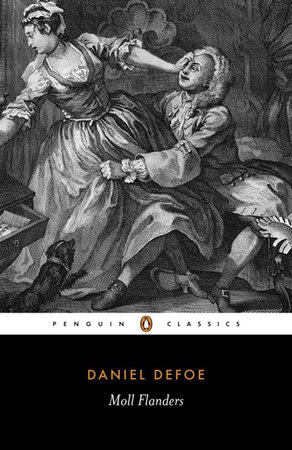
“Moll Flanders” (1722) by Daniel Defoe
Recommended by Edwin Frank ’82, editor of The New York Review Books
“Every narrator is unreliable — every narrative is.” Such was the talk at the breakfast table this morning, and, yes, I agree. Every narrative is told with some interest in mind and with the desire of awaking interest.
Narrative can be eager but never innocent, and least innocent of all are those that assume the mantle of omniscience. Religious texts, after all, are the most contested texts of all, especially by those who hold by them.
Given how slippery we know narrative to be, why do we like it so? Perhaps we listen in the hope of lulling suspicion to sleep, of a release from narrative into dream? Every story sets out in search of an end, an end to storytelling. Every story is at heart a bedtime story. Hush.
For a book that is perfectly un-innocent, and makes no bones about it, a book about someone who has designs on everyone, who lives in a world where being designing and as ruthless as necessary in executing those designs is not to be avoided; a book of tricks played, dangers braved, and rewards reaped, squandered, clawed back, foregone, all told in a hypnotic first person unfurled by an author who tracks that voice, its sentences and sequences, with the alertness of a private detective and the doting complacency of a contented spouse, I’d recommend Daniel Defoe’s “Moll Flanders.”
Moll is hardly omniscient, but she is indomitable, and like a good storyteller she knows how to go on. There’s no pinning her or her book down, and as to the matter-of-fact, unapologetic, but marvelous tale of her survival, we offer ourselves with joy into its untrustworthy hands.
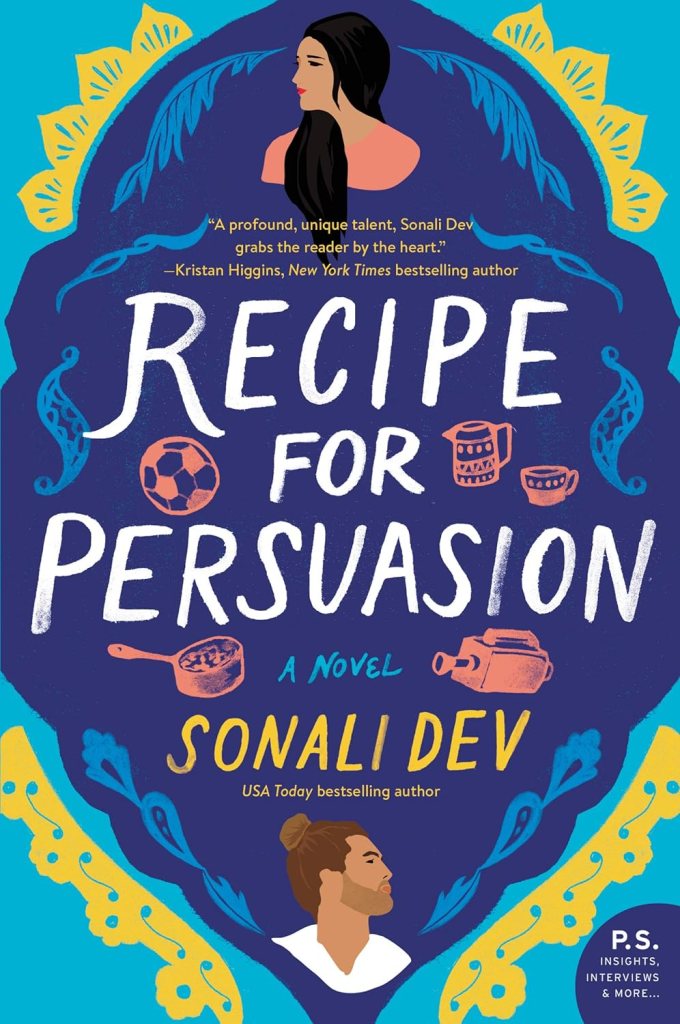
“Recipe for Persuasion” (2020) by Sonali Dev
Recommended by Kai Fay, discovery and access strategic projects manager, Harvard Library
In this contemporary romance retelling of Jane Austen’s “Persuasion,” chef Ashna Raje is paired with retired soccer player Rico Silva for a cooking competition that could determine the fate of her struggling restaurant. The two were high school crushes before life interfered, and neither is sure how to feel about their unexpected reconnection.
In addition to being a fun romance, the novel explores themes of grief, generational trauma, and familial expectations.
The story is told through alternating points of view from the two main characters as well as Ashna’s mother, Shoban. While the characters try their best to communicate with one another, they are all shaped by their own experiences to such a degree that they frequently fail to realize they are having entirely different conversations and telling different stories about the same set of events.
All three narrators are unreliable in their own ways, and much of the conflict in the story is driven by the miscommunications that occur when their version of reality collides with another character’s.
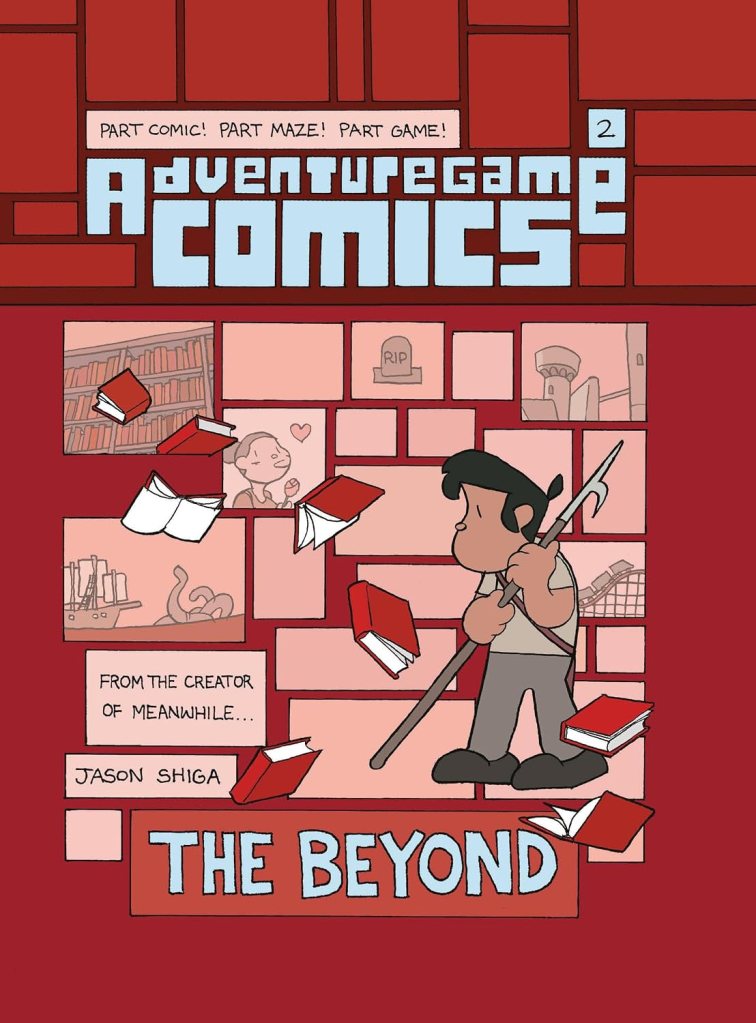
“Adventuregame Comics” series by Jason Shiga
Recommended by DZ Kalman, fellow at the Berkman Klein Center for Internet & Society
I’d like to pick the choose-your-own-adventure works of Jason Shiga. If you want a specific book, pick “Adventuregame Comics: The Beyond.”
The choose-your-own adventure genre is not typically treated as a place for literary creativity — or, really, for adults. Perhaps that is because most books of this type are annoyingly honest about what will happen when you turn to page 36 and because their numerous, arbitrarily branching paths mean that you can never finish the story, but instead simply exhaust it of its possibilities.
Shiga has contributed to the maturation of the genre by telling stories in which the reader can only be redeemed by questioning the rigidity of the format itself. This is a tricky thing to do without flipping the reader over into the anarchy of simply reading the pages in order, yet Shiga has pulled it off many times, each time breaking the genre in a different way. If you’ve ever played The Stanley Parable video game, you will like these books.
Within the context of a choose-your-own-adventure, the unreliability comes through the violation of the contract with the reader that you simply need to turn to page X to continue on with the story.
For example (spoilers): In one of the books, the story cannot be concluded until you question which character in the story is supposed to represent “you” (the reader). In another, the solution requires awareness of the full web of possible paths. In all of them, the reader needs to ignore what the book is telling you about how it is designed to operate. So perhaps the “narrator” is the instructions themselves.