Featured series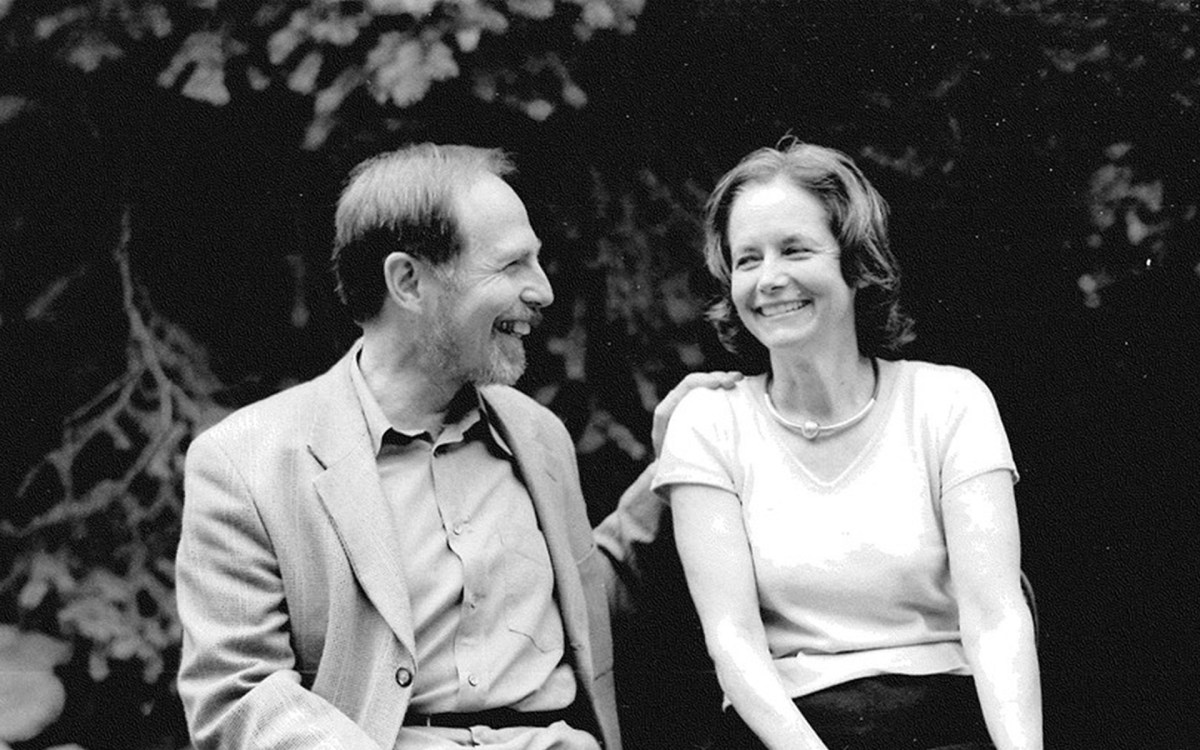


Arts & Culture
There may be several on your beach reads list. Ever wonder why?
Mysteries blend puzzle-solving with kind of catharsis, according to scholars, writers

Illustration by Oscar Armelles/Ikon Images
Mysteries have been around for about 175 years, are responsible for an estimated 30 percent of annual fiction sales in the nation — and tend to be mainstays of summer beach-read recommendations.
What accounts for their enduringly popularity?
Murder mystery writer David Freed says one main appeal is that they invite reader engagement.
“A well-constructed murder mystery offers the pleasure of solving a puzzle,” said Freed, who has written seven thrillers and teaches a course on how to write them at Harvard Extension School. “It’s an intellectual exercise, and entertainment at a minimum.”
But Freed, a former journalist, also thinks the tales appeal to readers on a deeper, almost primal level.
“When you think about it, a murder represents the ultimate act of disorder. A well-structured mystery offers some restoration from that chaos. It also allows readers to confront dark subjects within boundaries,” he said. “There’s an emotional thrill without real danger.”
Edgar Allan Poe is widely credited with pioneering the modern detective story with “The Murders in the Rue Morgue” in 1841. That tale centered on the brutal murder of a mother and daughter and the sleuthing of a brilliant outsider who, with a sidekick, solves the case through close observation and deductive reasoning.
Since then, the field has expanded into subgenres ranging from classic detective stories to more hardboiled tales, psychological thrillers to cozy mysteries, among many others.
And it has spawned legendary fictional practitioners such as Sherlock Holmes, Sir Arthur Conan Doyle’s brainchild, and amateur sleuth Miss Marple and detective Hercule Poirot, both conceived by Agatha Christie, the best-selling crime writer of all time.
“The real genius of Arthur Conan Doyle was figuring out a way to combine the suspense of a mystery with the satisfying pleasure of the puzzle solution and the compelling relationship between Holmes and Watson.”
Anna Wilson
Notable crime writers who followed in the steps of Doyle and Christie, including Raymond Chandler, Walter Mosley, Tana French, Louise Penny, Henning Mankell, and Keigo Higashino expanded the field in different directions.
Crime and mystery novels often appear in best-seller lists and they tend to draw a passionate fan base, such as the one around Holmes. The Sherlock Holmes Society of London celebrates its 75th anniversary this year.
Readers are drawn to Holmes because he is a 3D character and also because of his close relationship with Dr. John Watson, said Anna Wilson, assistant professor of English. Watson is Holmes’ loyal friend.
“The real genius of Arthur Conan Doyle was figuring out a way to combine the suspense of a mystery with the satisfying pleasure of the puzzle solution and the compelling relationship between Holmes and Watson,” said Wilson, who teaches a sophomore tutorial on literary methods using Sherlock Holmes stories. “Holmes himself is a very interesting character, but he could be absolutely unbearable, except that we experience him through the gaze of somebody who really likes him.”
Despite its popularity, or because of it, their formulaic plots and mass-market origins have often made crime and mystery fiction considered lowbrow entertainment. But some scholars view the works as cultural documents.
Maura Henry, A.M. ’90, Ph.D. ’96, who teaches a course on Christie at the Extension School, considers both Christie and Conan Doyle chroniclers of their times, offering insights into British society.
“The fact that they’re so popular is revealing of their literary value, their cultural value, and their historical value,” said Henry. “Agatha Christie is an astute observer of the time in which she lives. She’s offering us lenses into British society at the time, as one in which social class organized people’s lives, and where there is very little room for social mobility.”
For Freed, the mystery author, a key component of the genre’s allure is a protagonist who possesses depth and complexity that can propel both action and readers through the story. Early in his class, students have to submit a detailed protagonist’s biography.
Mystery readers seek an intricate plot and good prose, but they mostly want to experience the suspense of page turners, said Freed, and the satisfaction that good wins over evil.
“In one way or another, ultimately all mysteries conform to essentially the same construct,” said Freed. “You got a good guy; you got a bad guy; and ultimately, justice is delivered. There is a lot to be said of the comfort level that a mystery affords.”