Featured series
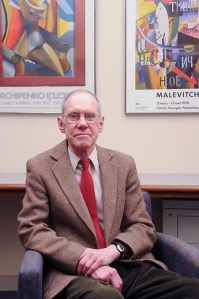
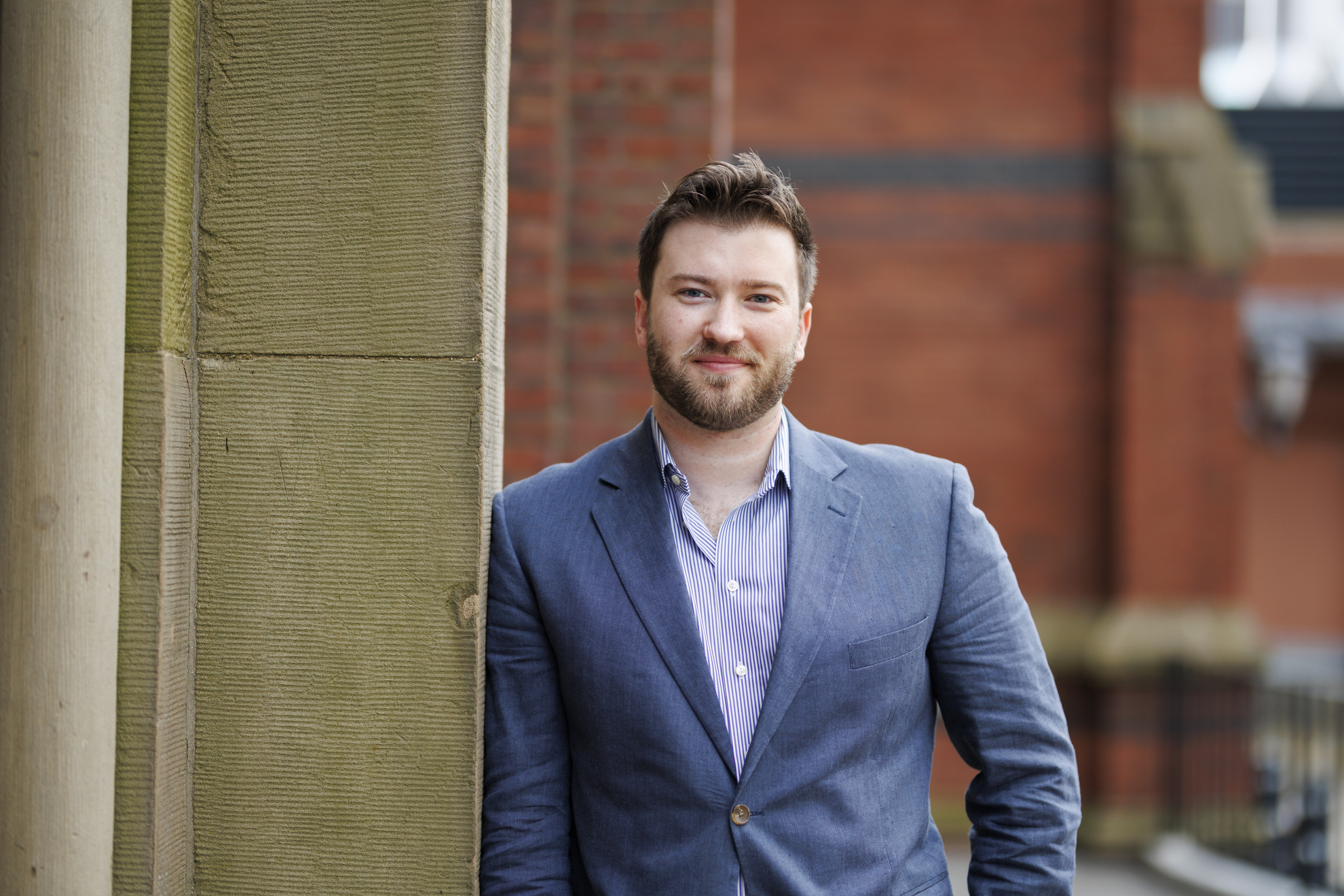
Seth Rosenberg.
Niles Singer/Harvard Staff Photographer
Campus & Community
Getting to the root of what drives war
After years of photographing combat, Seth Rosenberg finds new focus: psychology of power
Part of the Commencement 2026 series
A collection of features and graduate profiles covering Harvard’s 375th Commencement.
Seth Rosenberg is the rare student who, as one of his professors put it, can jump out of a helicopter wearing a 120-pound backpack yet also speak Latin.
The Minnesota native followed in the footsteps of family members and joined the military upon graduating from high school in 2017. After completing his training for the Marine Corps, he was assigned to be a combat photographer. Over five years, he worked with nearly every branch of the military and traveled to dozens of countries.
Engaging in global military operations was eye-opening, said Rosenberg — and while he was honored to be part of such an elite institution, when his deployment ended, he decided to continue his education to explore the strategic side of things.
“I really want to become someone who can be in the planning room and make systems better,” he said.
Initially, Rosenberg focused on psychology, specifically decision-making and behavioral economics. But as he continued his coursework, he became more drawn to political science and government. He will graduate with a double concentration in government and psychology.
“I really want to become someone who can be in the planning room and make systems better.”
During Rosenberg’s deployment to various countries, he interacted with communities, providing humanitarian aid after natural disasters or working with local leaders. These experiences made him curious about motivations, particularly how people use and assert power. Power dynamics are often overlooked in political science, he said, but have profound impacts on international relations.
“Power is the motivation for everyone’s actions,” Rosenberg said. “It’s very interesting to see how these dynamics play out again and again throughout history, and we still don’t know what drives them.”
Josh Kertzer, the John Zwaanstra Professor of International Studies and of Government, worked closely with Rosenberg during his time at Harvard.
“There was a time when scholars, not just in political science, but more broadly, were under the impression that war was disappearing,” said Kertzer. “Seth has this appreciation and understanding that the best way to prevent war from occurring is to understand why people fight in the first place.”
Rosenberg’s research focus on power is one that will pay dividends, according to Hanh Annie Vu, a College Fellow in the Department of Psychology, who said that understanding power matters immensely at this moment in time.
“People tend to trivialize a lot of these conflicts as normal in-group and out-group, which really ignores their imbalance dynamic when it comes to power,” Vu said. “[Seth’s research focus] has always been relevant, but it’s not being paid enough attention to.”
Sergio Imparato, a lecturer in government and assistant director of undergraduate studies in the Department of Government, was struck by Rosenberg’s smart, provocative participation in his seminar class, “Grand Strategy and International Relations.”
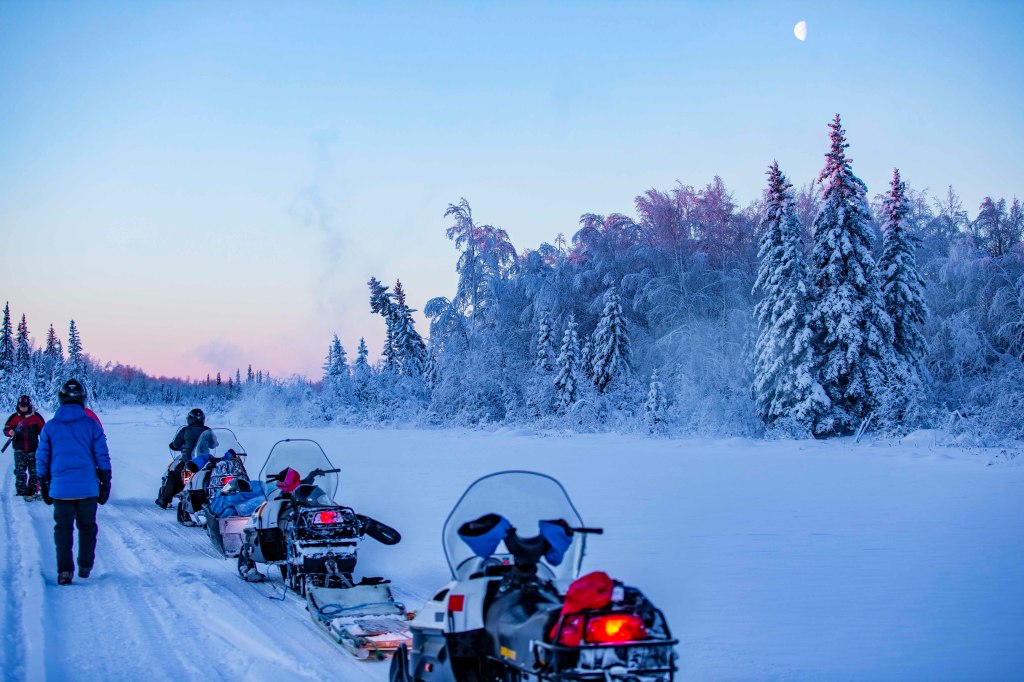
U.S. Marines with 4th Law Enforcement Battalion take a break during a 46-mile journey, snowmobiling through the Alaskan wilderness to Koyukuk, Alaska, Dec. 18, 2019. The Marines delivered toys to five local towns and dressed up as Santa Claus, delivering Christmas spirit as part of the Toys for Tots Alaska effort.
Photo by Cpl. Seth Rosenberg
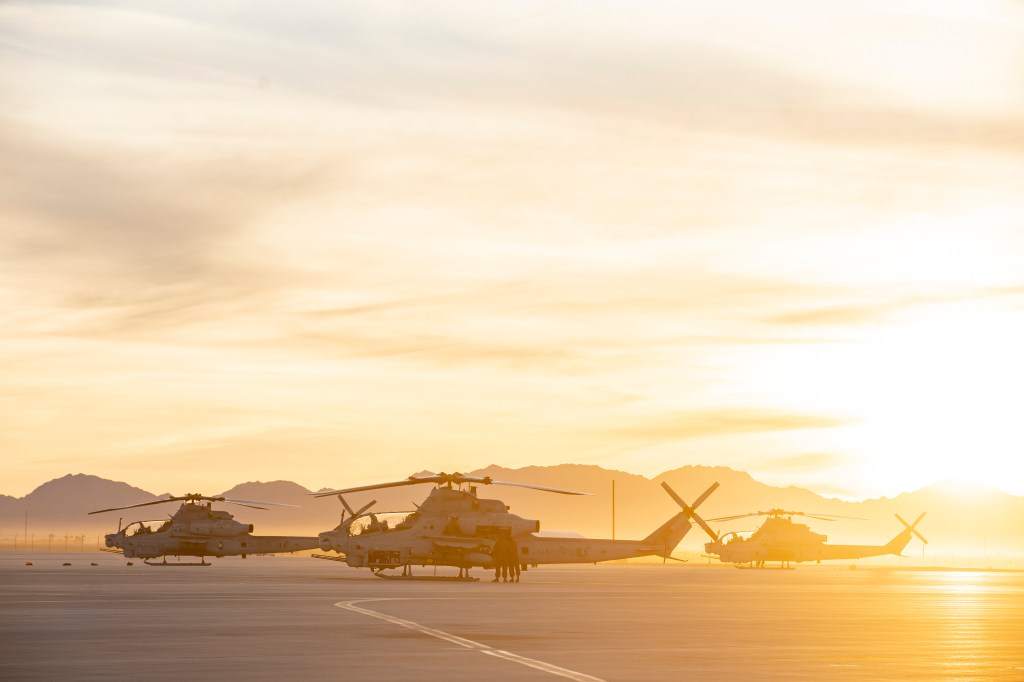
U.S. Marine Corps AH-1Z Vipers with Marine Medium Tiltrotor Squadron (VMM) 165 (Reinforced), 11th Marine Expeditionary Unit, sit on the flight line during Realistic Urban Training exercise at Marine Corps Air Station Yuma, Arizona, Feb. 23, 2021. RUT is the final shore-based predeployment exercise for the 11th MEU and provides an opportunity to train and execute operations as a Marine Air-Ground Task Force in urban environments.
Photo by Cpl. Seth Rosenberg
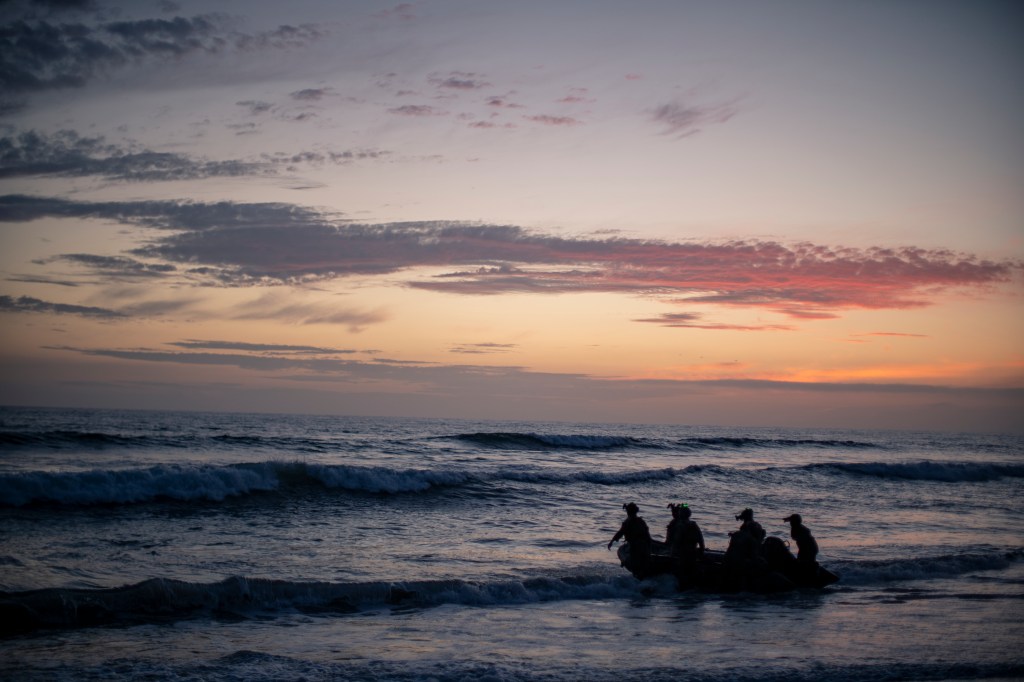
U.S. Marines with the All Domain Reconnaissance Detachment, 11th Marine Expeditionary Unit, pull a combat rubber raiding craft into the surf during amphibious assault training at Marine Corps Base Camp Pendleton, California, April 7, 2021. The training was conducted to enhance amphibious landing capabilities using CRRCs and scout swimmers.
Photo by Cpl. Seth Rosenberg
Students often are a bit timid, he said, but this was never the case with Rosenberg, even when he held a minority position on an issue.
“He was never afraid to speak his voice, always original in his way of thinking,” Imparato said. “When you give him a chance to engage with a meaningful moral question, he doesn’t hold back, and he engages in dialogue in the most respectful, kind way possible.”
After graduation, Rosenberg will head to UC Berkeley to pursue a Ph.D. in international relations. Reflecting on his own journey, his advice to others is to stay open to different opportunities and allow your experiences to shape your path.
“He worked as a pirate hunter in Southeast Asia,” said Kertzer. “I think he once he told me he nearly died from hypothermia after his snow machine got caught on cracked ice during a mission along the Yukon River. He’s worked on humanitarian aid strategies in the Philippines.”
For Ketzer, Rosenberg is the perfect example of why bringing people with different experiences to the University is so beneficial — to the individual student, but also to the Harvard community.
“There’s a long history at Harvard of veterans coming to Harvard, and I think Seth shows why it’s such a rewarding experience,” Kertzer said. “It’s not just that he’s getting the opportunity to have this excellent training in whatever discipline he chooses to study, but he really brings and contributes a lot to the classroom.”