Featured series
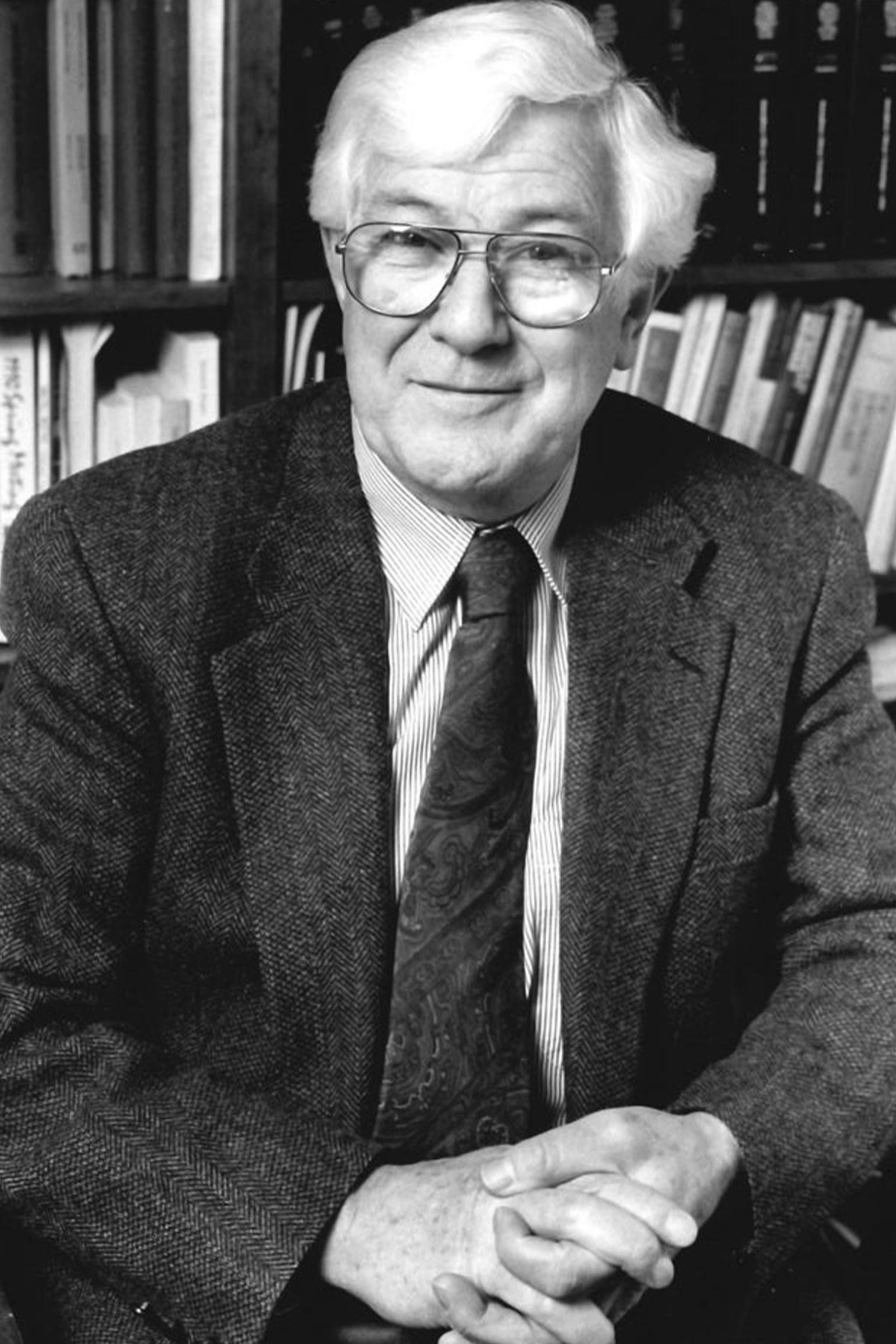
William Paul.
Harvard file photo
At a meeting of the Faculty of Arts and Sciences on April 7, 2026, the following tribute to the life and service of the late William Paul was spread upon the permanent records of the Faculty.
Born: March 31, 1926
Died: May 11, 2020
William Paul, Mallinckrodt Professor of Applied Physics and Professor of Physics, Emeritus, spent almost his entire career at Harvard, where he was one of the pioneers of experimental solid state physics, with many contributions in the areas of high pressure and semiconductor physics.
Paul was born on March 31, 1926, in Deskford, Scotland. He attended the University of Aberdeen, where he obtained an M.A. in Mathematics and Natural Philosophy in 1946 and a Ph.D. in 1951. The next year, he came to Harvard on a Carnegie Fellowship, attracted by the high-pressure laboratory of Nobelist P. W. Bridgman, where he wanted to test his ideas regarding the effect of volume changes on the electronic structure and optical properties of crystals. His success led to steady appointments as Lecturer, Assistant Professor, and Associate Professor of Solid State Physics in what was then the Division of Engineering and Applied Physics (DEAP). In 1963, he was appointed Gordon McKay Professor of Applied Physics, this at a time when promotions to tenure within the ranks were rare. Between 1991 and his retirement in 2000, he was Mallinckrodt Professor of Applied Physics, with a joint appointment as Professor of Physics.
Paul was a resourceful experimentalist, who brought key innovations to the high pressure field. He developed, for example, strong, flexible steel tubing to bring pressurized fluid into a cell, which made it possible to place the cell in a confined space, such as a low-temperature dewar for measurements. His 1963 book, “Solids Under Pressure,” is widely known in the field. The synthesis of his work on the pressure dependence of the energy gap between electronic states in semiconductors became known as “Paul’s Law,” which states that, for different semiconductors, that dependence is the same at the same points in the Brillouin zone.
In the early 1970s, Paul’s research interest turned to the amorphous semiconductors silicon and germanium, which, at the time, showed promise as inexpensive photovoltaic materials because they could be deposited as thin films from the vapor. Initially, there were concerns that these materials could not be doped because the aliovalent dopant atoms were thought to occur in their natural, non-tetrahedral coordination in the random silicon network. Furthermore, it was feared that the dangling bonds in the network would create an unacceptably high density of states in the energy gap. Paul was one of the pioneers who showed how these problems could be overcome: by depositing the silicon in the presence of hydrogen, the dangling bonds could be tied up, and, by supplying sufficient dopants, a usable fraction could be incorporated with the desired tetrahedral coordination.
When solid state physics emerged as a field in the post-war years, the lack of enthusiasm in many physics departments at that time for this new discipline led to the establishment of more welcoming “applied physics” departments at several major U.S. universities, often as part of their engineering schools. At Harvard, its home was the DEAP, led by Dean Harvey Brooks, a prominent theoretician in the field, who brought in Paul as one of the founding experimentalists. Paul advised more than 40 Ph.D. students and helped establish a strong graduate course curriculum in solid state physics. For several years, he directed the Materials Research Laboratory, which organized multidisciplinary research in materials and provided central research equipment, such as electron microscopes.
Paul stood out as a very articulate colleague who was not shy to voice his opinions and who was well respected for his insistence on precision, due process, and fairness. He could be counted on to speak up at the meetings of the Faculty of Arts and Sciences — and to bring solid figures to support his remarks. He spoke on over 30 topics at these meetings, ranging from student discipline to faculty retirement.
Paul, his wife Barbara (Babs), and their children, David and Fiona, lived in Lexington for many years, where Babs, or “Madame Paul,” was a beloved French teacher in the public schools. In retirement, Paul revived his interest in the theater, staging and directing plays at his retirement community in Bedford.
Paul died on May 11, 2020, during the early months of the COVID-19 pandemic, at the age of 94.
Respectfully submitted,
Michael J. Aziz
Eric Mazur
Peter S. Pershan
Frans Spaepen, Chair