Featured series

Arts & Culture
An exhibit marked with food stains and handwritten notes
Photos courtesy of Schlesinger Library, Harvard Radcliffe Institute; photo illustration by Liz Zonarich/Harvard Staff
Radcliffe explores social histories of recipes through its vast collection of community cookbooks
What do corn relish, Banbury tarts, and grape pies have in common?
They’re all dishes featured in community cookbooks — recipe collections compiled by civic or religious groups, often as fundraising efforts — the subject of the Schlesinger Library’s new exhibit, “Cooking Up Change: Women’s Agency and Community Building Through Cookbooks,” on display in the Lia and William Poorvu Gallery at Harvard Radcliffe Institute.
Drawing from the Schlesinger’s collection of more than 4,300 community cookbooks, the exhibit explores the publications’ cultural significance from the 19th to the 21st century.
“Published materials can be primary sources that hold a wealth of cultural and social information,” said Erin LaBove, who is the cataloger of printed and published materials at the Schlesinger Library and has been working with community cookbooks for more than a decade.
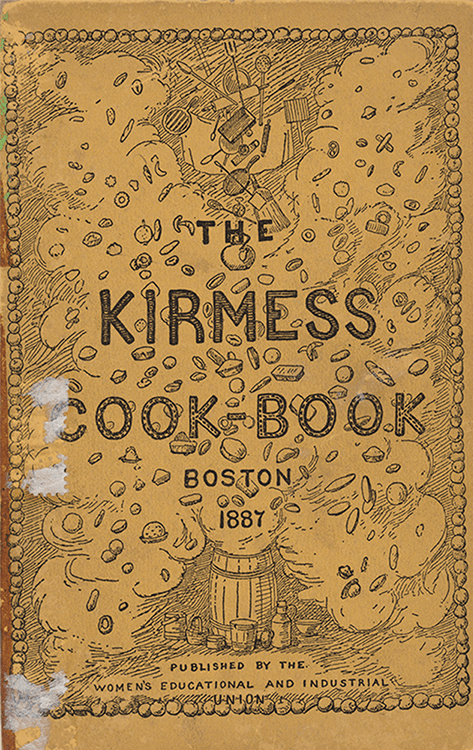
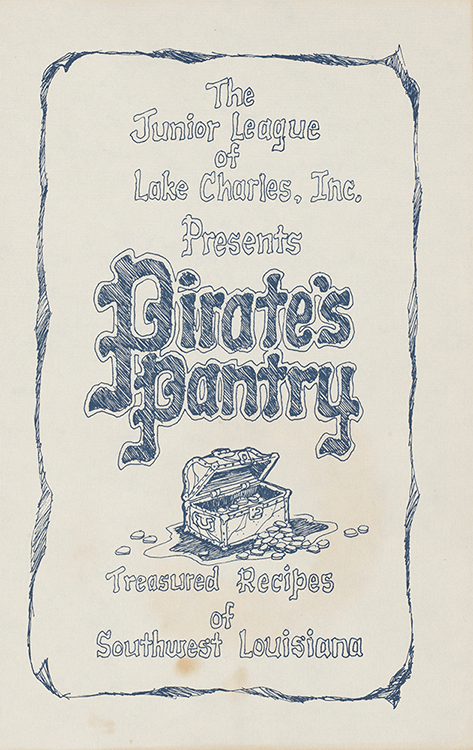
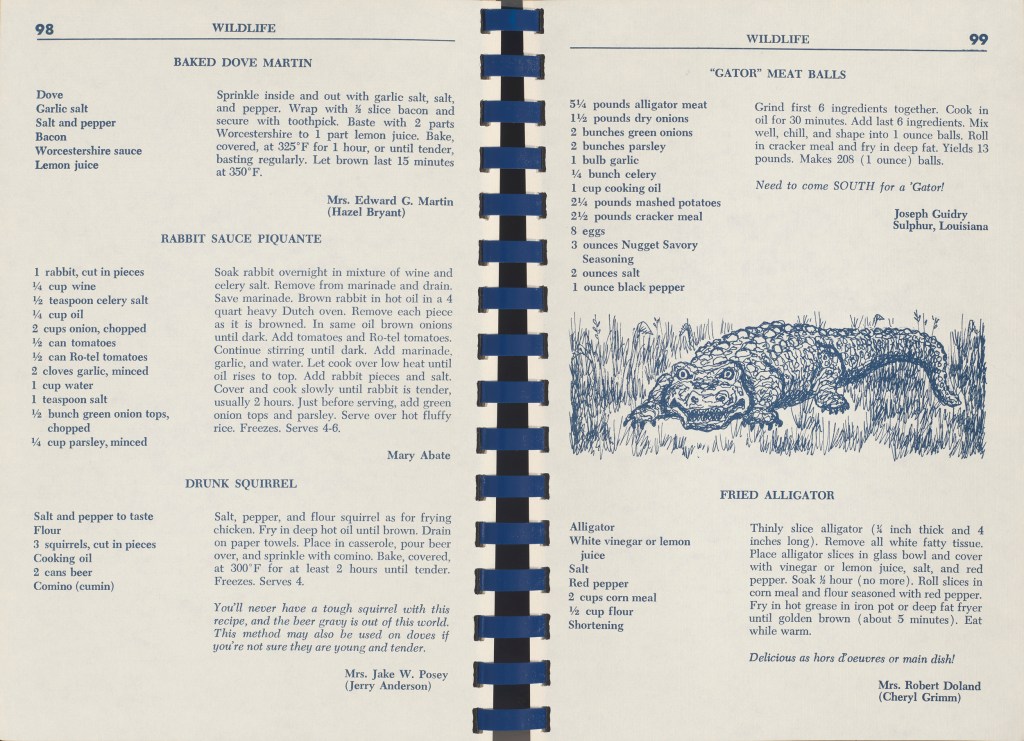
The collection showcases the efforts of women’s groups to raise funds for religious, educational, and civic causes, while also documenting the social and cultural history of their communities and culinary traditions.
Suffrage and later feminist movements earned women greater access to life outside the home. But sharing recipes remained a common way that women connected with one another and preserved cultural heritage. The introduction of specialty publishers in the 1930s and ’40s made it easier for groups to create their own fundraising cookbooks.
“These are pieces of social and cultural history that can tell us what kinds of organizations existed, who was in them, what they thought was important, what local business existed through advertisements they had in them, which ingredients were available and popular, and of course, what recipes people were excited to share,” LaBove said.
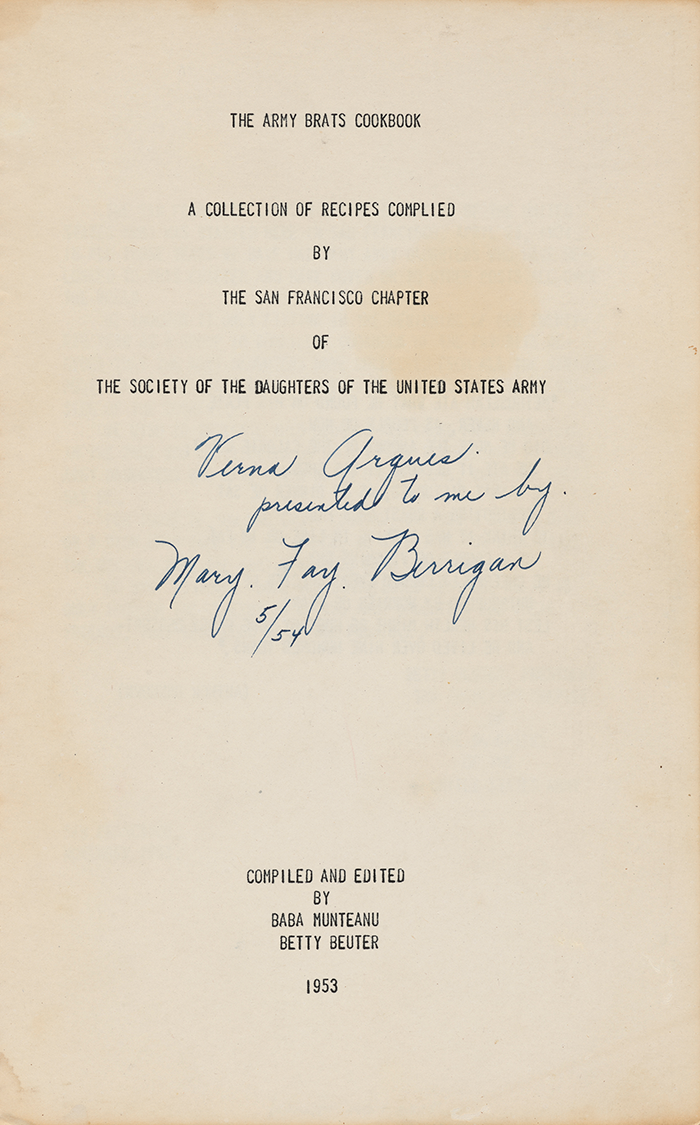
The army brats cookbook, Society of the Daughters of the United States Army, San Francisco Chapter, 1953.
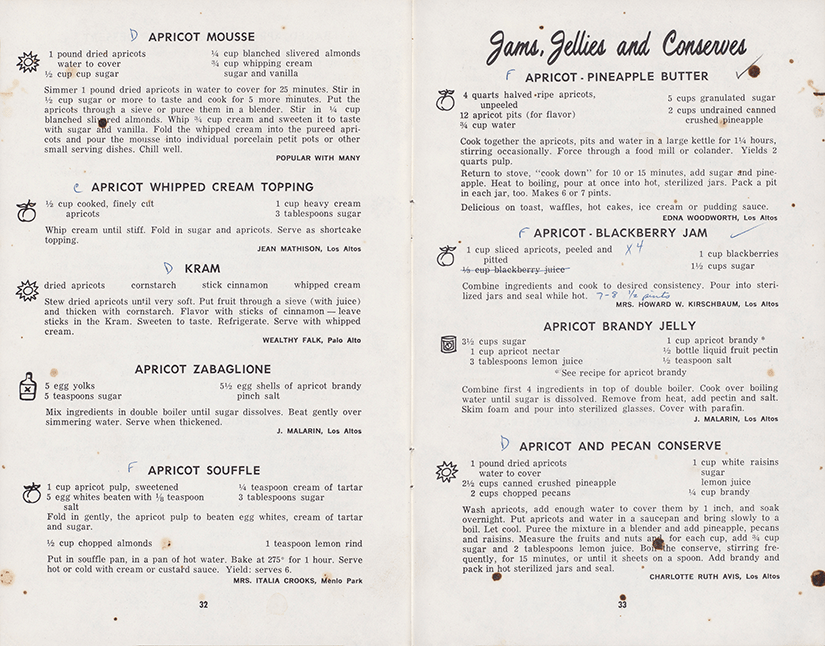
A harvest of apricot recipes (recipes for apricot desserts, jams, jellies, and conserves), Los Altos Quota Club (Los Altos, California), ca. 1970.
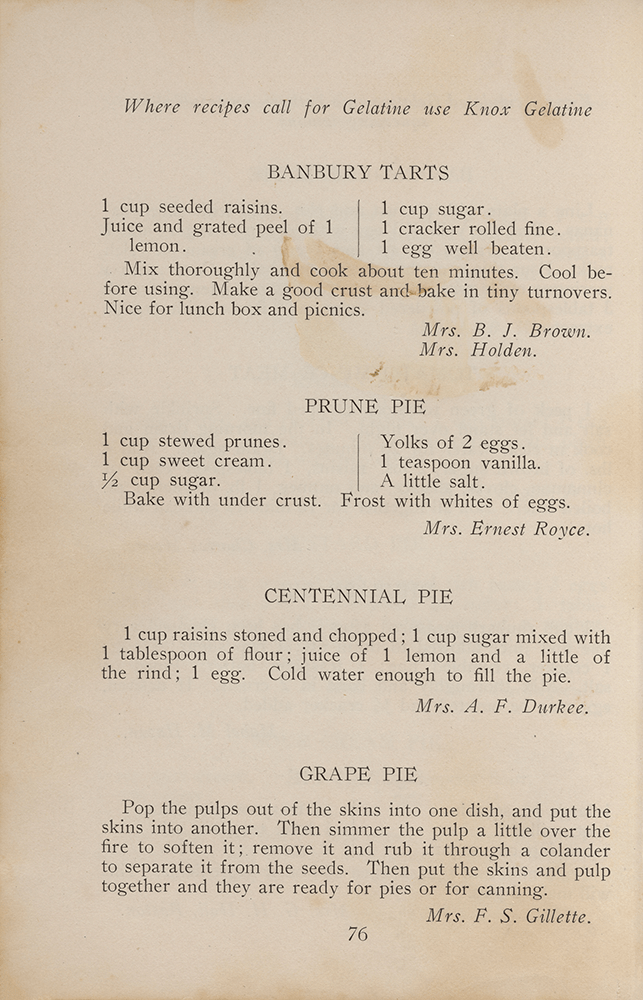
The tried and true cook book, East Swanton Church (Swanton, Vermont), ca. 1913–1927.
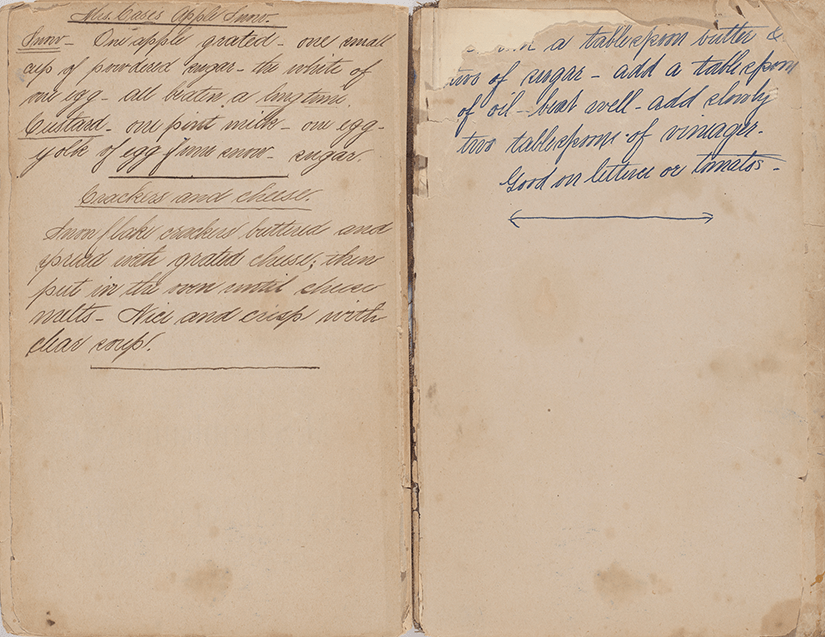
The Hawaiian cook book (endpapers), Central Union Church (Honolulu, Hawaii), Ladies’ Society, 1888.
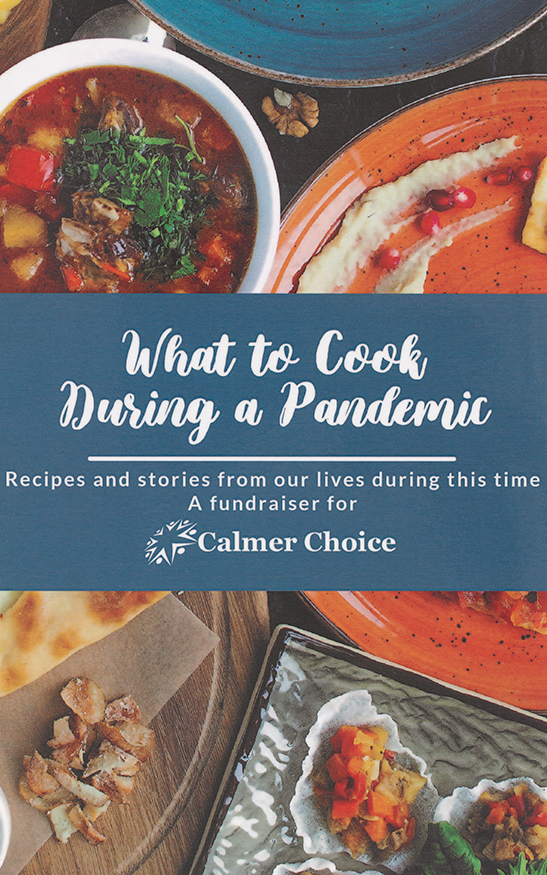
What to cook during a pandemic, Calmer Choice, 2021.
LaBove is particularly fond of cookbooks that have marks of previous owners, such as handwritten marginalia or the spills and stains of a busy kitchen.
Even in the age of readily available online recipes, community cookbooks remain popular as collector items, points of pride for the communities that produced them, and a way to connect over something that continues to bring us all together: food.
“The people who contribute to these collections are often people who don’t have their voice heard elsewhere,” LaBove explained. “They’re regular people sharing a recipe that was handed down in their family, or just one that they’re proud of. These kinds of social histories are often lost, but they’re here in these cookbooks.”
“Cooking Up Change” is on display through Jan. 8.