
 Featured series
Tag: paleontology
-
Science & Tech
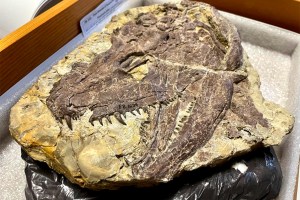
‘Croco-salamander’ bones offer clues to how early animals emerged from water
A study overturns the long-held belief that ancient species grew at slow, steady pace, and offers insights into human maturation.
-
Science & Tech
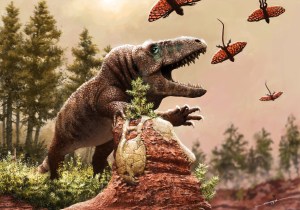
Why were reptiles such evolution success story?
Fast climatic shifts due to global warming coincided with high rates of morphological change in most reptiles.
-
Science & Tech
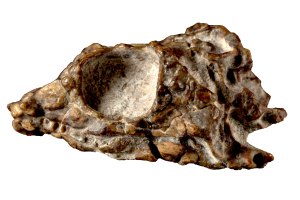
Knowing a big deal when you see it
The fossil was found to belong to a previously unknown species of a lizard-like reptile, representing the earliest evolving member of a lineage that today includes all lizards, snakes, and their closest relatives.
-
Science & Tech
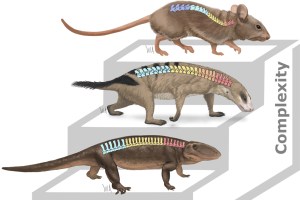
A second look at evolution
Researchers find clues to evolution in the intricate mammalian vertebral column.
-
Science & Tech
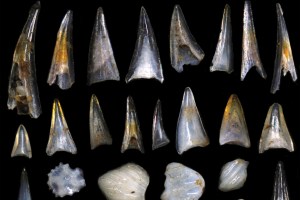
Fish teeth mark periods of evolution
Based on close examination of thousands of fossilized fish teeth, a Harvard researcher found that, while the asteroid impact that killed off the dinosaurs did lead to the extinction of some fish species, it also set the stage for two periods of rapid evolution among marine life.
-
Campus & Community
Harvard paleontologist awarded
Fisher Professor of Natural History Emeritus Alfred W. Crompton received the A.S. Romer–G.G. Simpson Medal from the Society of Vertebrate Paleontology.
-
Science & Tech
Dinosaur protein preserved over time
Ancient protein dating back 80 million years to the Cretaceous geologic period has been preserved in bone fragments and soft tissues of a type of duck-billed dinosaur, according to a study in the May 1 issue of Science. Led by scientists at Beth Israel Deaconess Medical Center (BIDMC) and North Carolina State University (NCSU), the…
-
Health
Molecular analysis confirms T. Rex’s evolutionary link to birds
Putting more meat on the theory that dinosaurs’ closest living relatives are modern-day birds, molecular analysis of a shred of 68-million-year-old Tyrannosaurus rex protein — along with that of 21 modern species — confirms that dinosaurs share common ancestry with chickens, ostriches, and to a lesser extent, alligators. The work, published this week in the…
-
Campus & Community
Finding a fossilized needle in an Arctic haystack
The first season searching Arctic Canada for a fossil that would illuminate how our ancestors first crawled onto land proved Harvard Professor Farish Jenkins’ explorer’s maxim: Never go any place for the first time. A crew of six trudged through a barren landscape during the summer of 1999, finding the wrong sort of rocks scattered…
-
Campus & Community
Researchers close in on date of critical rise in Earth’s oxygen
Findings by Harvard researchers and colleagues narrow the range of possible dates for a critical change in the Earth’s atmosphere. Scientists had previously believed oxygen first appeared sometime between 2.45 billion and 2.22 billion years ago, a span of about 230 million years. The new findings narrow that window dramatically – to about 130 million…
-
Science & Tech
What killed the dinosaurs?
Charles Marshall’s childhood passion led him to a career in paleontology, trying to understand the interplay between inheritance, environment, and catastrophe in directing evolution. Marshall’s work attracted media attention in 1996. He and University of Washington geologist Peter Ward concluded there may have been other causes than just the well-publicized comet or asteroid impact responsible…
-
Science & Tech
Charles Schaff brings knack for finding fossils to field — and Harvard
Charles Schaff ‘s official job description isn’t “fossil hunter.” He is a curatorial associate at the Museum of Comparative Zoology. Schaff, however, makes regular trips to look for fossils in places as far-flung as Africa, South America and Greenland. Though the trips provide high points of excitement, most of Schaff’s time is spent watching over…