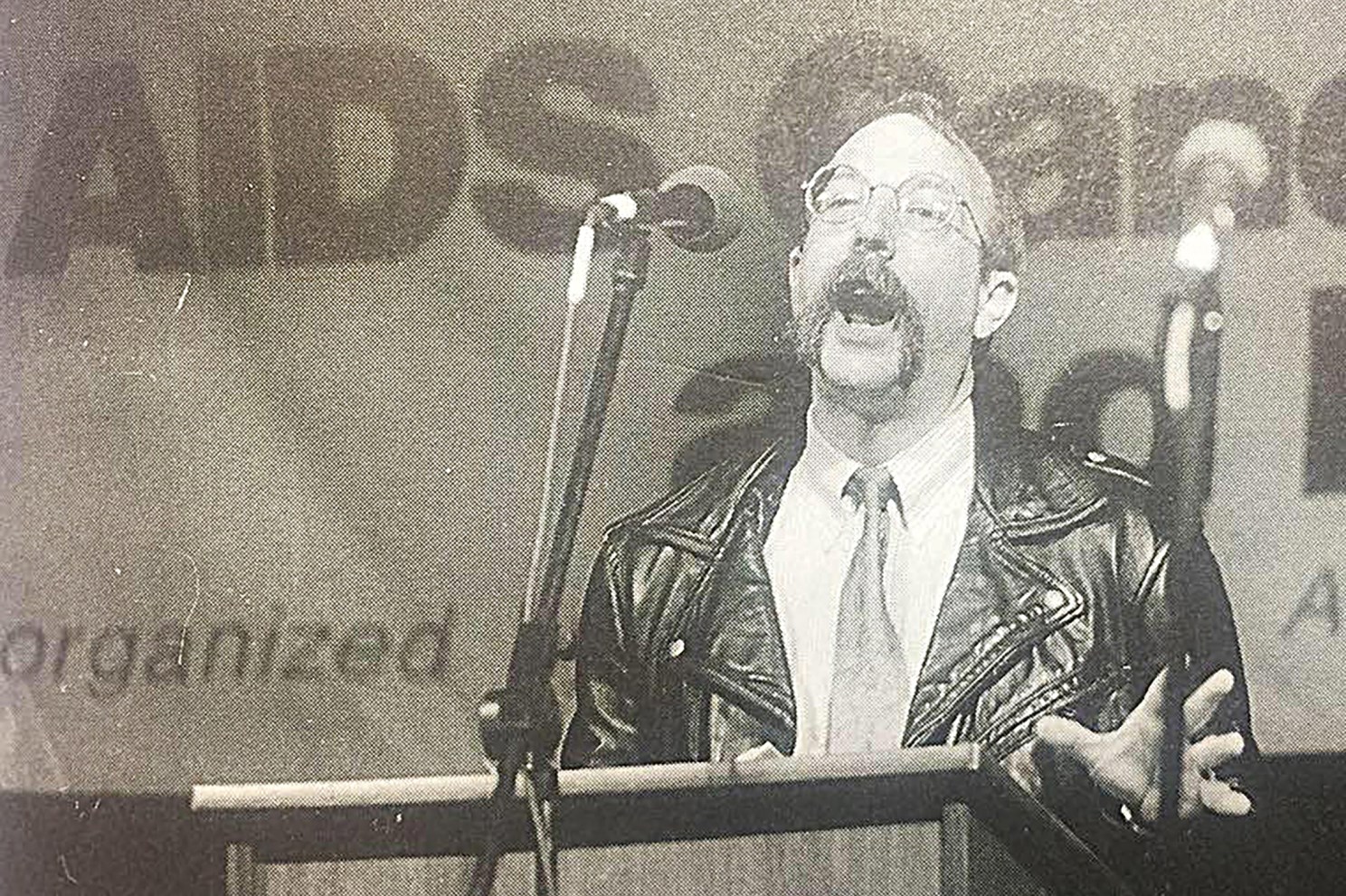
In the 1980s, the Metropolitan Community Church of San Francisco was one of the few gay-affirming churches in the United States and became a focal point for the social and humanitarian horrors of the AIDS epidemic in the Bay Area and across the country.
A new 10-episode podcast series, “When We All Get to Heaven,” explores the extraordinary hardships and challenges — personal, congregational, and community-wide — that the church faced in the early years of the crisis, including the deaths of hundreds of its members.
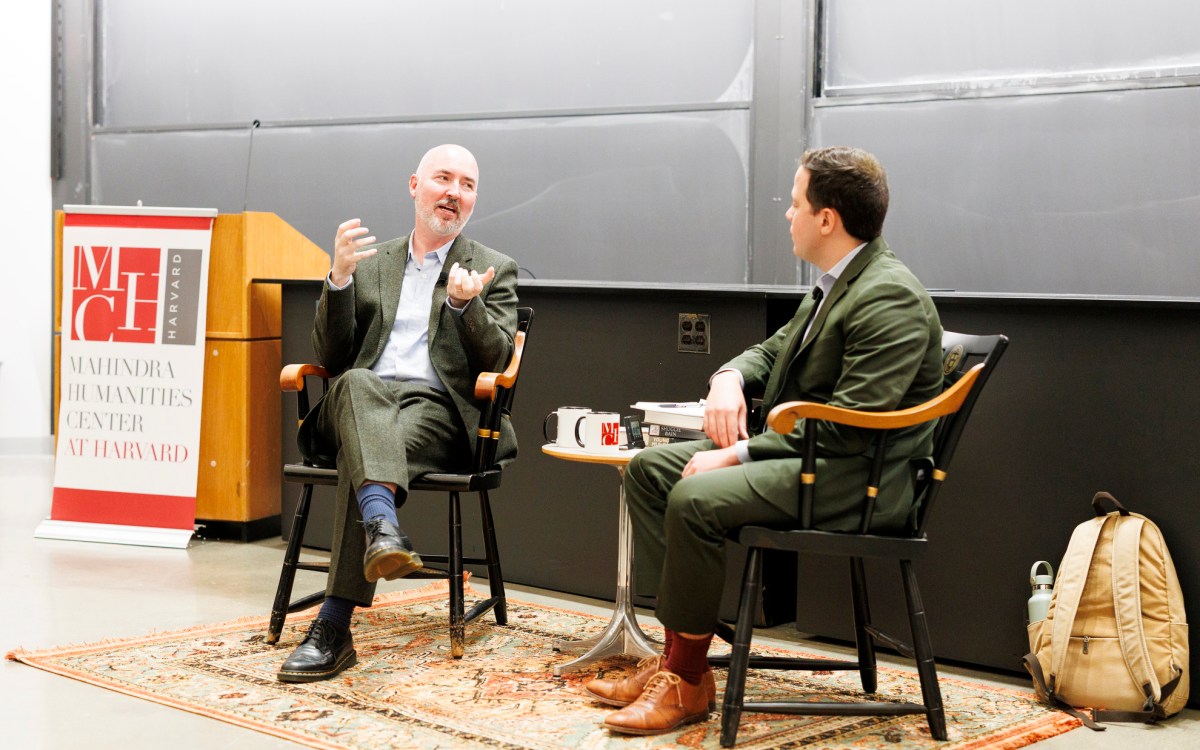
The creators of the Peabody-Award-nominated podcast will be the focus of this year’s William Belden Noble Lecture at the Memorial Church on April 16 at 6 p.m. Creators Lynne Gerber, Ariana Nedelman, and Siri Colom will be joined by former MCC pastor the Rev. Jim Mitulski for an evening discussion moderated by the Rev. Matthew Ichihashi Potts, Plummer Professor of Christian Morals in the Faculty of Divinity and Pusey Minister in the Memorial Church.
“I listened to this podcast late last year, and I was deeply moved by the story and the way it is told. It gives us not only a history of a prophetic church doing its work at a crucial time, but it also gives us a model of what it can mean for any church to be a church in a time of acute crisis,” said Potts. “These are lessons all of us need these days.”
Drawing on an archive of more than 1,200 cassette tapes — hidden beneath the church floorboards to save them from the trash and from being lost to history — the podcast offers a deep and vivid exploration of life within the MCC Church during the AIDS crisis, illuminating the lives of its clergy, members, and their wide, dynamic circle of friends and family.
The tapes were a recorded archive of nearly all services between 1987 and 2003, including powerful and personal sermons from the church clergy and visiting preachers, emotional memorial services for members who died, all accompanied by inspirational music, and words of humor, sorrow, hope, and empowerment.
Lynn Gerber is a scholar of American religion and a former Women’s Studies in Religion Visiting Scholar at the Harvard Divinity School, who lives in San Francisco. She was first introduced to the existence of the tapes in 2011, but it was not until 2015 that she, Nedelman, and Colom began listening to and cataloging the tapes.
They initially planned to write an academic book about a church in crisis, using the tapes as their primary source. However, Gerber said they soon realized the project demanded a different approach: a storytelling platform that could showcase the real voices of church members and clergy, captured in real time. The recordings conveyed the emotions, color, music, and sounds of MCC at a pivotal moment in its history.
The archive was narrowed to 325 tapes, representing holiday and memorial services, special programs featuring prominent guest speakers, and other significant events. Each tape was digitized and cataloged to enable efficient retrieval.
“It was just a ton of listening — listening, listening, listening — and making clips with no idea whether those clips would ever be used in a story,” Gerber said. “I listened for the sound, the speech, the words, and the music. I did one full pass just listening and picking out moments that were surprising, moving, meaningful, or striking in one way or another. Sometimes that was sermons, but a lot of the time it was announcements or somebody’s mother.”
The series also draws on interviews with church members and clergy, the families of deceased congregants, and other community members. Episode 5, “Healing Without a Cure,” focuses on the Rev. Ron Russell Coons, a prominent religious leader living with AIDS, who became a leading voice on the disease within more mainstream church communities. “Let me just say this because we could never have told that story. We were too busy living it,” said Mitulski. “And because of Lynne’s scholarship and her skill at editing, she has made a comprehensible chronicle of a time that would otherwise have been lost. These are grassroots people dealing with really critical issues. And I think that if people listen to it with an ear toward that, they can still find inspiration in it in the present.”
The series was recently nominated for a Peabody Award and was recently awarded a Wilbur Award by the Religion Communicators Council.

 Featured series