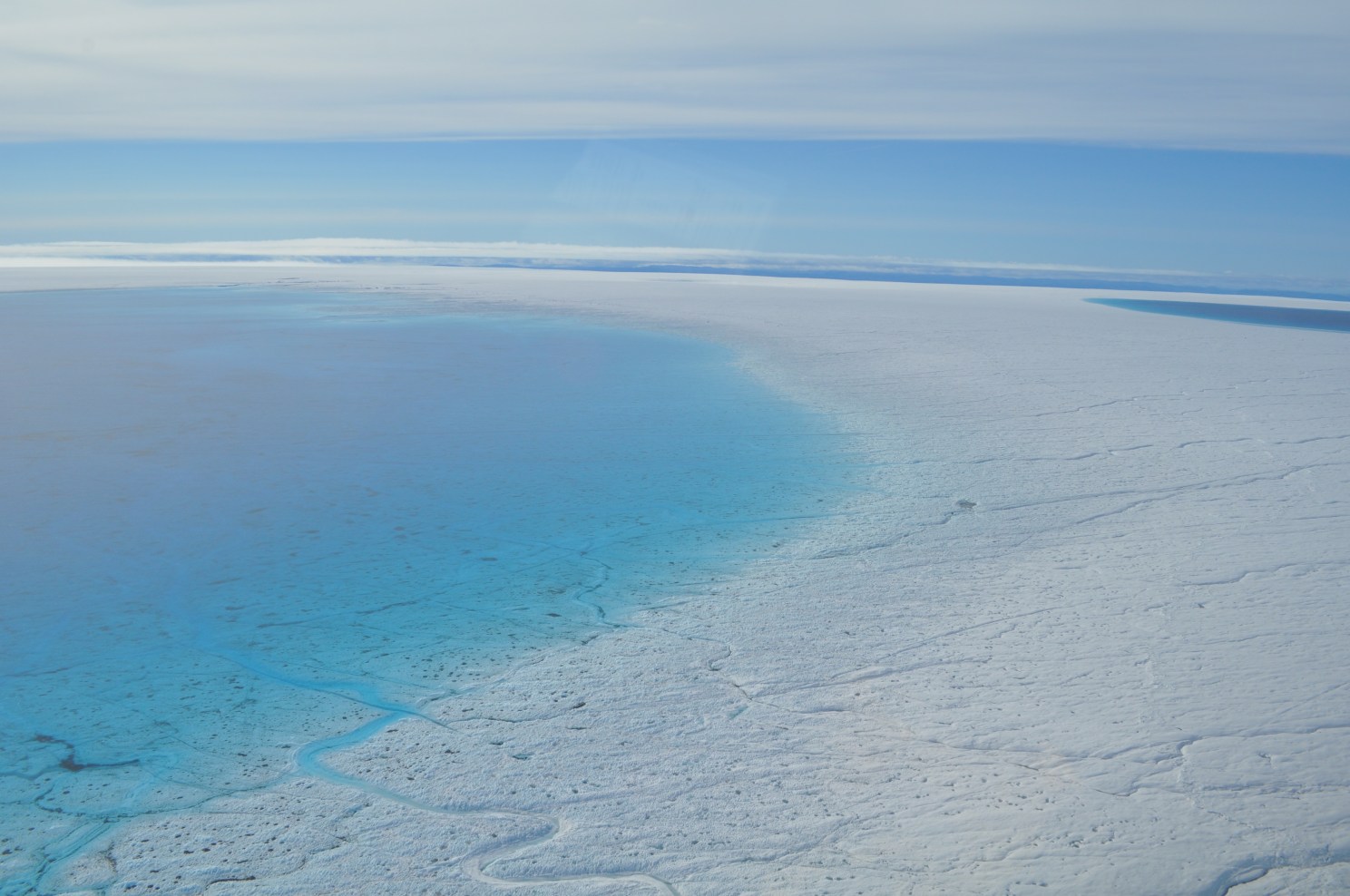
When lakes form on top of ice sheets, they can sometimes drain suddenly by cracking straight through the ice, a process called hydro-fracture. Scientists have worried that as the climate warms and more of these lakes form, this cracking could spread meltwater to the base of ice sheets, potentially destabilizing them and accelerating ice loss. Until now, it’s been hard to study this because researchers lacked the tools to measure how the surrounding ice responds and track these drainage events across wide regions.
To fill that gap, a team of researchers led by the 2025–2026 Radcliffe Fellow and geophysicist Laura A. Stevens set up a network of 22 GNSS sensors across a large stretch of the Greenland Ice Sheet to watch multiple lakes at once. What they found, just published in Nature Communications, was reassuring: When a lake drained through the ice, it did not trigger neighboring lakes at higher elevations to do the same. Drainage events did cluster together in small groups, but only among lakes at similar altitudes, and only as seasonal melting naturally crept uphill. In other words, meltwater works its way to the ice sheet’s base gradually, following the pace of the summer melt season. What it doesn’t do is set off a chain reaction that leapfrogs up the ice sheet faster than expected, the study found.
“Before these observations, we just understood the events leading up to single, isolated lake draining via hydro-fracture,” wrote Stevens via email. “With these new observations, we now understand how populations of lakes interact with each other, which allows us to see the full picture of how these lake drainages affect the Greenland Ice Sheet’s flow response to warming temperatures.”

 Featured series