In honor of the 250th anniversary of the Declaration of Independence and the founding of the United States, Harvard University is offering a new way to explore the campus’ ties to the nation’s earliest days.
The recently launched Harvard & the American Revolution Mobile Tour, available on www.harvard.edu/visit/tours and downloadable on the Visit Harvard app, explores Harvard’s role in the American Revolution through 16 stops beginning at the Smith Campus Center and continuing through Harvard Yard and nearby locations connected to the Revolutionary era. The free, self-guided walking tour is open to all and generally takes just under 90 minutes to complete. Key tour stops in Cambridge include Cambridge Common, the Old Burying Ground, and the Longfellow House-Washington’s Headquarters National Historic Site.
“Members of the Harvard community, and the campus itself, had a unique role in the Revolutionary era, and the semiquincentennial provides a meaningful opportunity to welcome people to Harvard and showcase the stories and historical sites that helped shaped our nation’s founding,” said Maile Takahashi, senior director of Community Programming at Harvard University.
In addition to sharing stories and information about the individuals and Harvard affiliates involved in the nation’s founding, the Harvard and American Revolution Tour explores how the campus transformed and operated between 1775 and 1776.
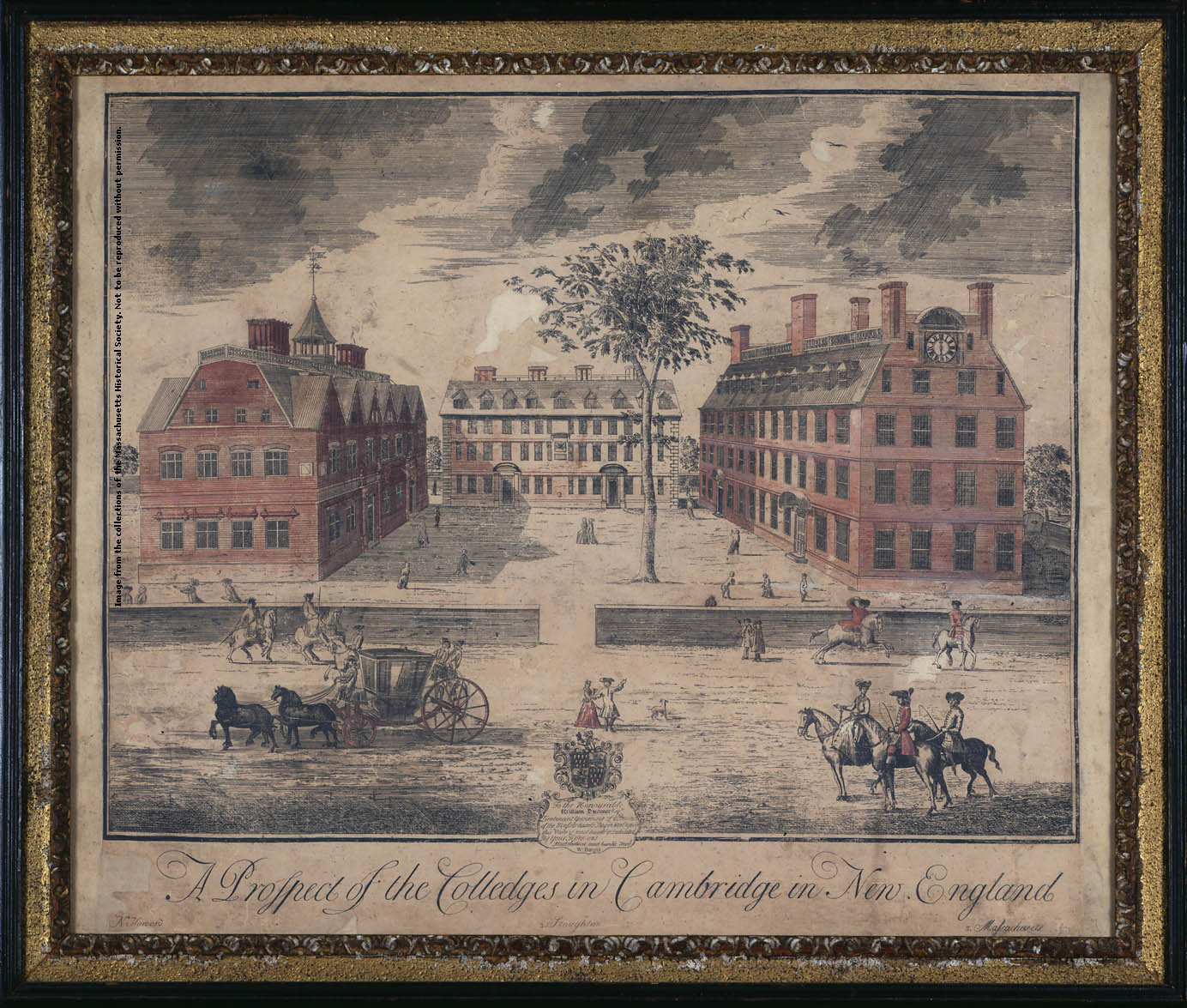
In the wake of the first battles of the American Revolution at Lexington and Concord in April 1775, Harvard students were sent home from their studies early, and the Massachusetts Provincial Congress took control of the campus, converting its buildings for use by the emerging Continental Army. That fall, Harvard temporarily relocated to Concord for the academic year, while troops led by George Washington occupied the Cambridge campus.
Harvard Hall, completed in 1766 after an earlier structure burned, became a hub of activity during the Revolutionary era. In the early 1770s, the Massachusetts legislature met there after relocating from Boston following the Boston Massacre. Throughout 1775-1776, Patriot soldiers used the building as a library, social space, and storage site, and even stripped lead from the roof to melt down for ammunition.
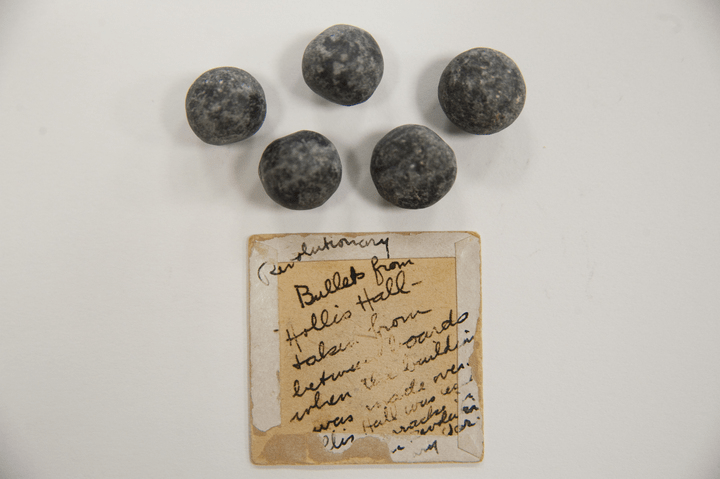
The five musket balls found in the floorboards of Hollis Hall during renovations in 1959.
Harvard file photo
The tour also highlights Hollis Hall, one of the oldest dormitories in Harvard Yard. Built in 1763, the Georgian-style building housed about 640 Continental Army soldiers during the war. In 1959, five musket balls were discovered beneath its floorboards, a small but vivid reminder of the campus’ wartime past.
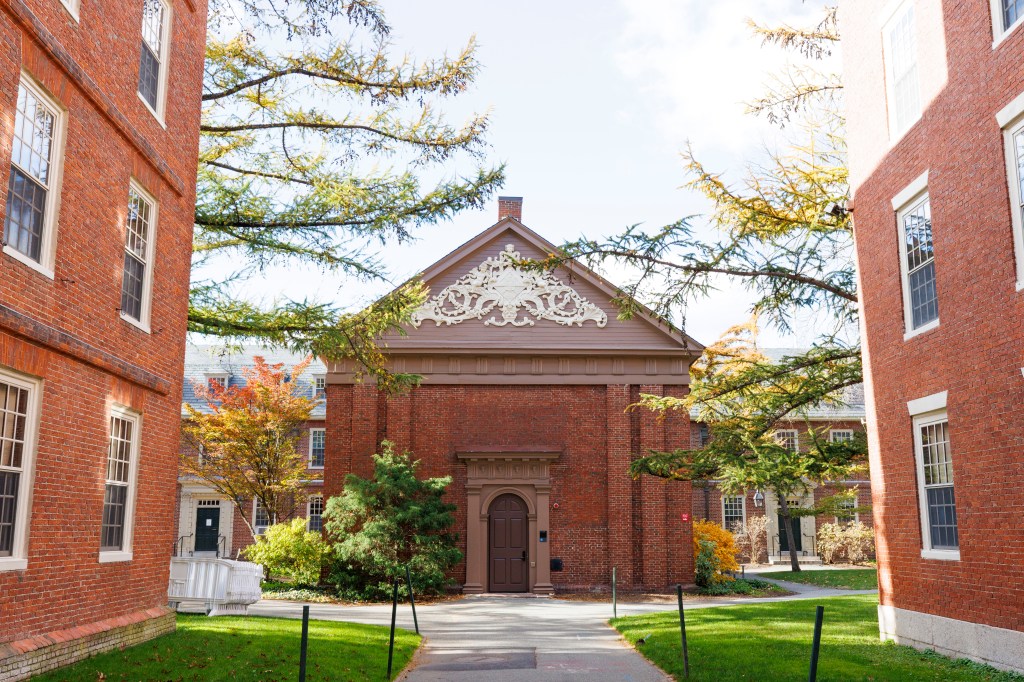
Just past Hollis Hall is Holden Chapel. The chapel was constructed in 1744 as the first Harvard building used chiefly for religious purposes. During the Revolutionary War, it was used as a military hospital to treat sick and wounded soldiers. After the war in 1783, it became the first dedicated home of Harvard Medical School, led by John Warren (A.B. 1771) who taught anatomy classes in Holden Chapel after having served as a surgeon in the Continental Army.
Holden Chapel in Harvard Yard
Veasey Conway/Harvard Staff Photographer
The tour experience is complemented by Harvard Art Museums and University libraries, where visitors can explore Revolutionary history through original works such as portraits of George Washington, John Adams, and Thomas Jefferson at the Art Museums, and an original Dunlap broadside of the Declaration of Independence at Houghton Library. Open to the public with free admission and rotating exhibits throughout the year, these institutions offer additional opportunities to engage with Harvard’s early history and its place in the founding of the United States.
The new mobile tour and exhibits are part of a broader, University-wide yearlong commemoration of the founding of the United States. Learn more about the role of Harvard and its affiliates in early America, through the website, 1776 at Harvard, or by visiting the “Harvard and the American Revolution” exhibit at the Pusey Library curated by Harvard University Archives (Learn more about the exhibit.).

 Featured series