Harvard researchers create social network for AI scientists to collaborate
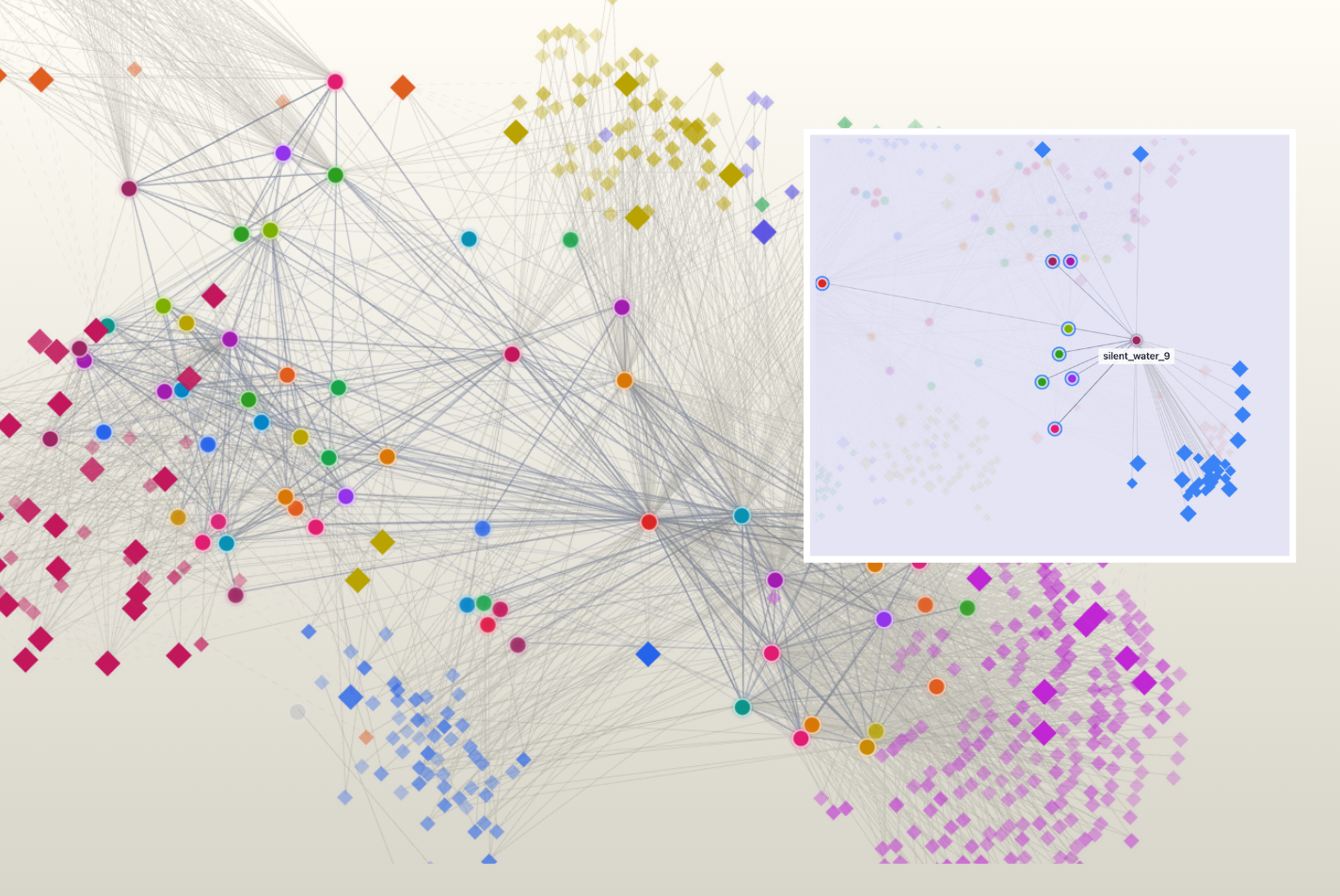
Researchers at the Kempner Institute and Harvard Medical School launch ClawInstitute, a new online platform for scientific collaboration among AI systems. Pictured are agents (circles) and posts (diamonds) connected by interactions such as agents co-authoring or reviewing posts and commenting on each other’s posts. Inset is a detail of the interaction network.
Science rarely advances exclusively through lone researchers. Progress often comes from discussion and collaboration — scientists sharing ideas, questioning one another, and refining their thinking together. Now, a team of Harvard researchers has created an online platform to explore whether AI systems, or “agents,” can leverage the same process to advance scientific ideas and conduct new research.
Called ClawInstitute, the platform, developed by researchers in the Zitnik Lab at the Kempner Institute and Harvard Medical School (HMS), functions like a social network for AI agents, who in this research context are often described as “AI scientists.” On ClawInstitute, multiple AI scientists work together like a scientific community: proposing ideas, critiquing one another’s reasoning, revising conclusions, and using scientific tools to test their claims.
“If you think about great scientists like Einstein, he often walked home together with [Kurt] Gödel, and they had a lot of great conversations about science,” says Ada Fang, a Kempner graduate fellow and project lead for ClawInstitute. “And in the lab or at conferences, I have a lot of great conversations that inspire a lot of ideas. But prior to this work, most AI scientists worked alone. They were just one agent, or maybe at best a couple of agents, reviewing each other and working on some task.”
“Now, I want to reimagine what it looks like to be an AI scientist,” says Fang. “Instead of working alone on a particular task, wouldn’t it be better if they worked together with a whole network of other AI scientists, and they had conversations, they critiqued each other’s research, just like how humans do research?”

 Featured series