Featured series


Arts & Culture
Mystery statue unearthed at Sardis archaeological dig
Photos © Archaeological Exploration of Sardis/President and Fellows of Harvard College
2,500-year-old marble sculpture of young man hid face-down for centuries, broken and recycled as paving stones
Researchers with the long-running Harvard-Cornell Archaeological Exploration of Sardis have unearthed a larger-than-life statue, estimated to be nearly 2,500 years old.
The discovery is remarkable for several reasons, said Nicholas Cahill, the field director of the AES team and a professor of Greek and Roman art and archaeology at the University of Wisconsin-Madison.
“It is very rare to find such monumental sculptures of this period anywhere in the Mediterranean, and this exceptionally well-preserved, unique monument casts important new light on the major arts of Lydia, and on the Lydians’ ties to their own past,” he said.
The excavation is sponsored by the Ministry of Culture and Tourism of the Republic of Türkiye and by Harvard Art Museums. The Turkish site was named a UNESCO World Heritage Site last year, cementing its position as a critical site for understanding the ancient world.
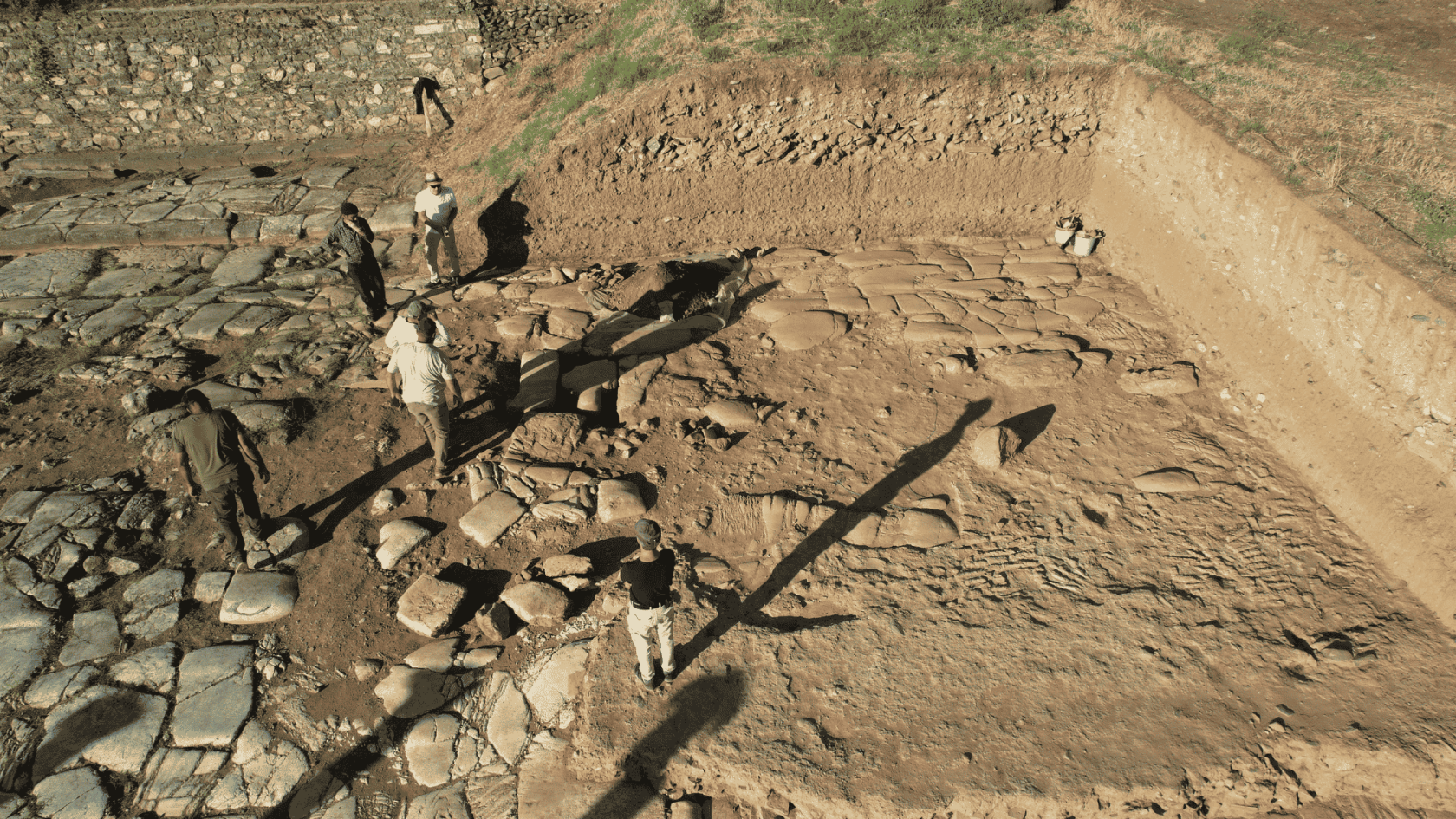
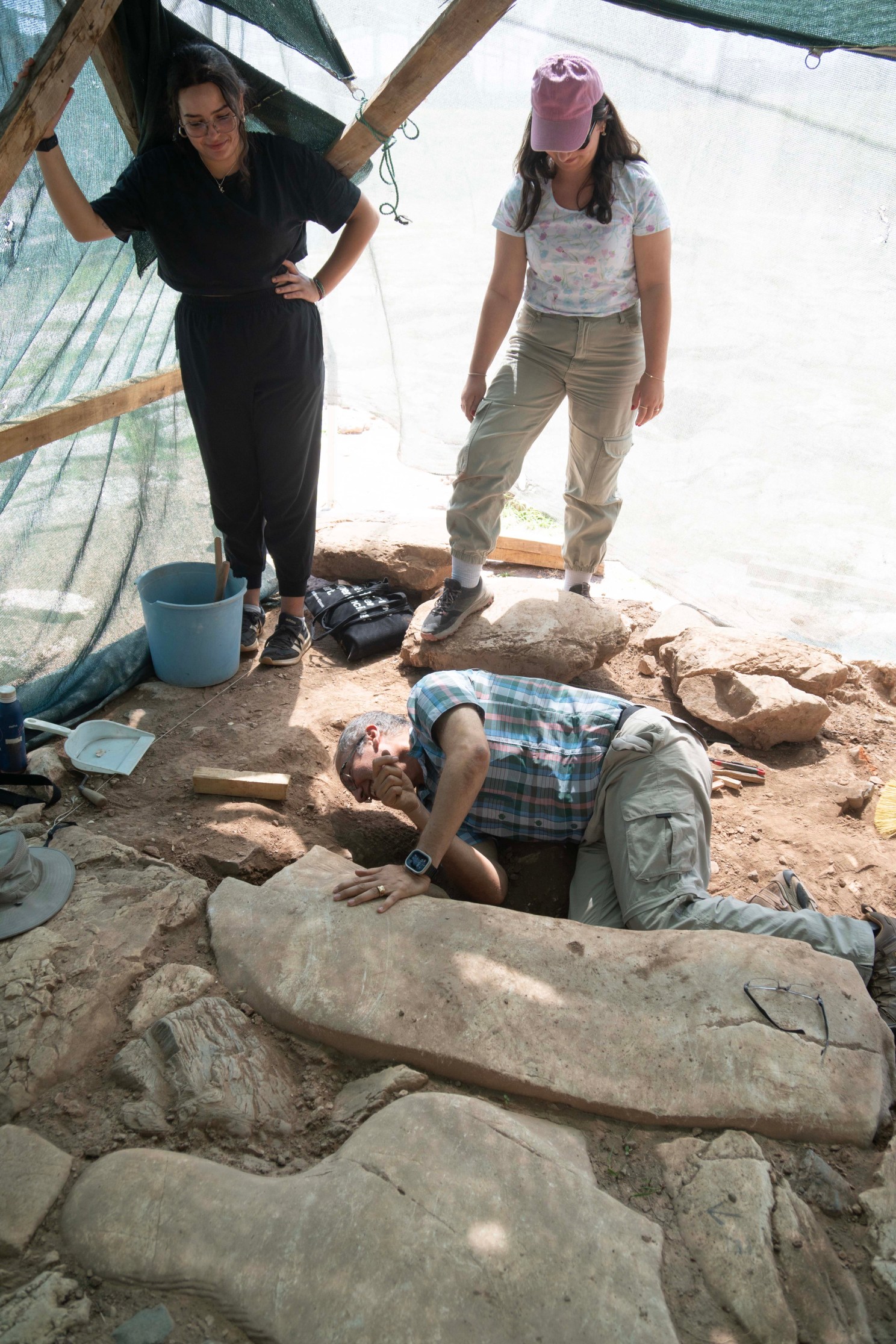
Researchers made the discovery in late May while examining a major Roman colonnaded avenue. The statue had been broken in two main pieces and reused, face down, as paving stones in the ancient thoroughfare.
“You sort of see these whole worlds opening up in front of you,” Cahill said of the moment he realized the team had found something extraordinary.
A team of conservators carefully excavated around the statue to gradually reveal its full shape and size in the ground.
“Then the guesswork started,” said Susanne Ebbinghaus, the George M.A. Hanfmann Curator of Ancient Art at the Harvard Art Museums, who was in Sardis for part of the excavation. “‘Is this archaic? Maybe not, it looks a little later. Is it a guy? Is it a girl?’ When they started cleaning the soil around the head, we saw he had sideburns, so that question was settled.”
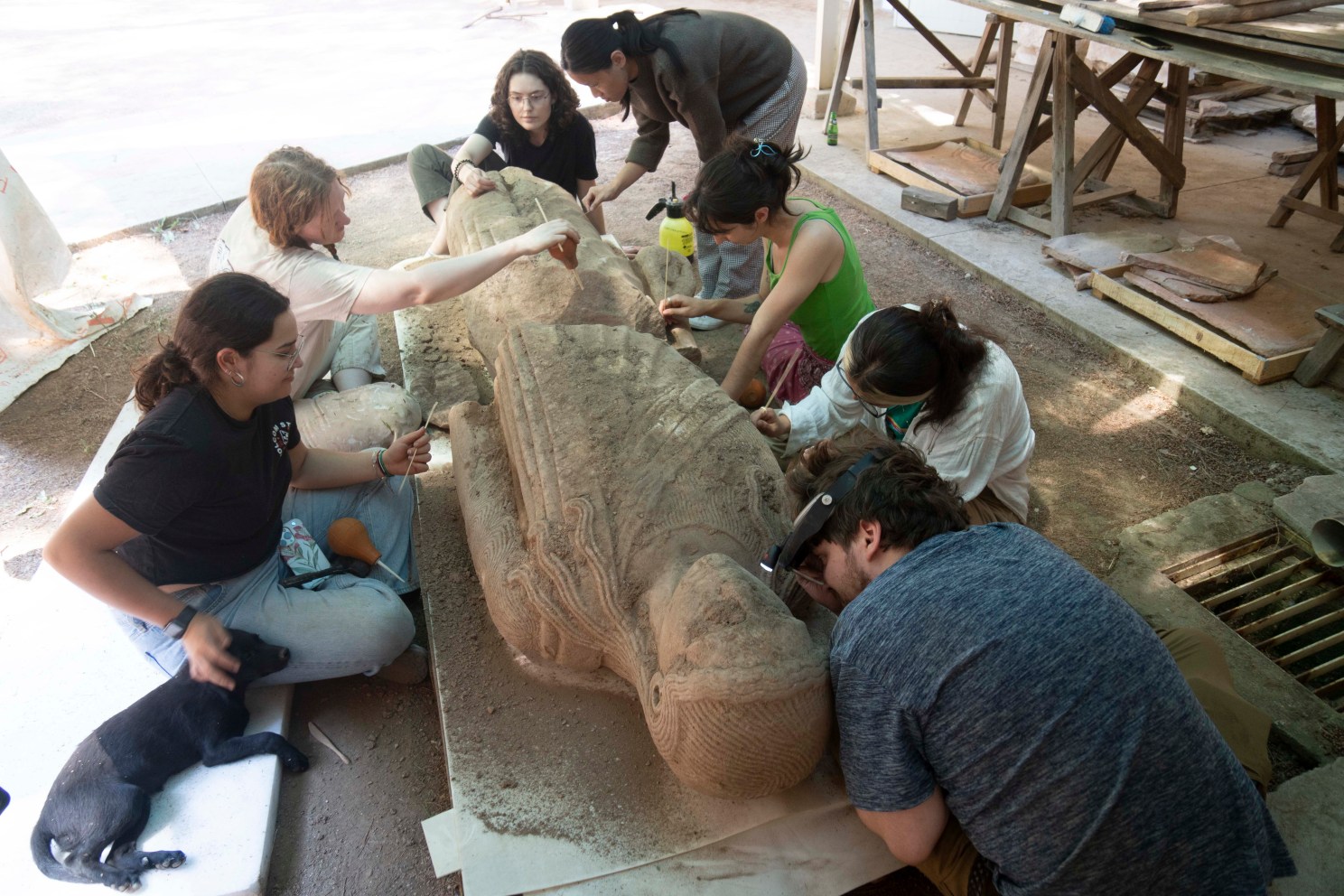
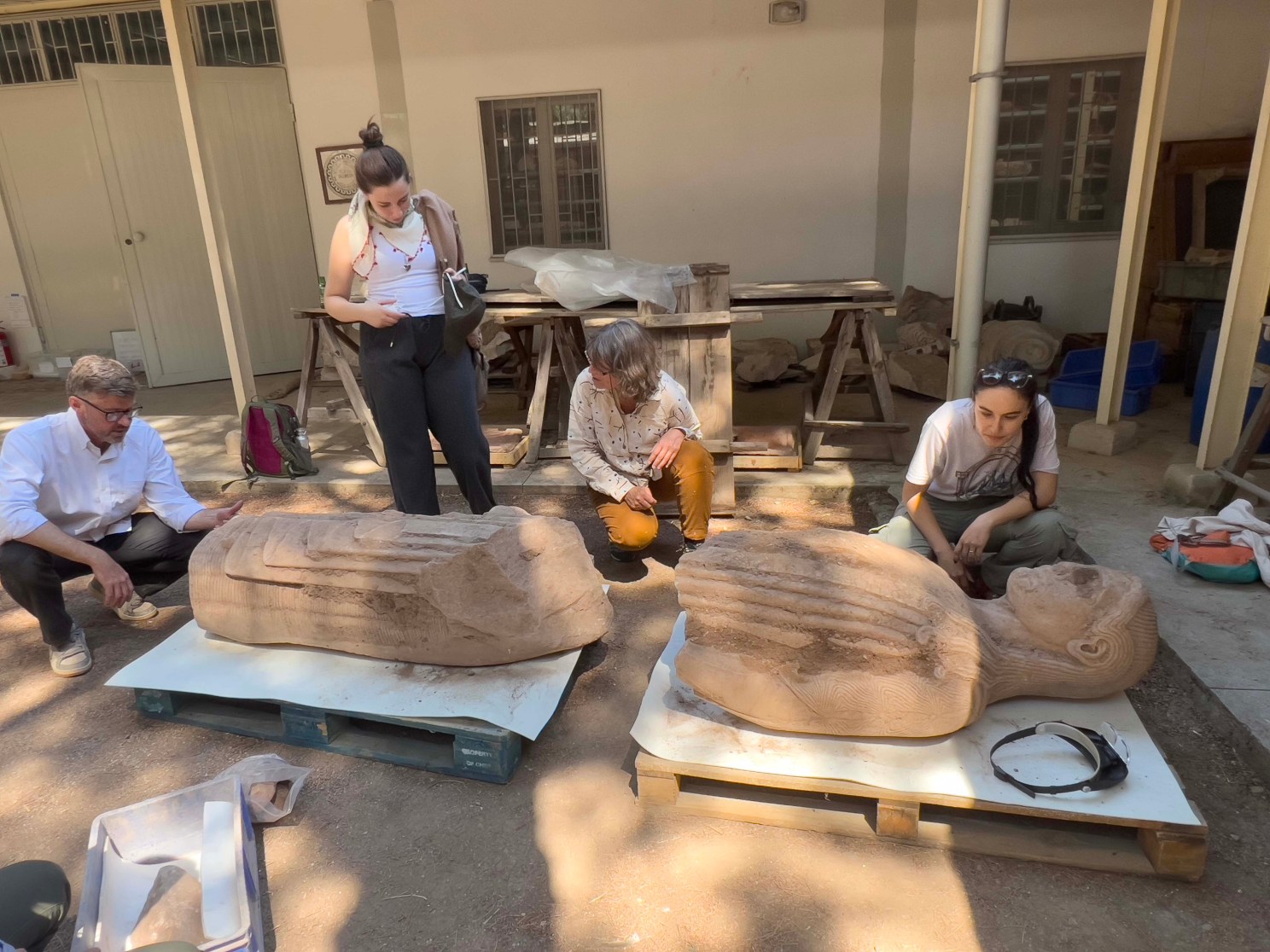
Upon arrival at the expedition compound, the statue gets an initial cleaning.
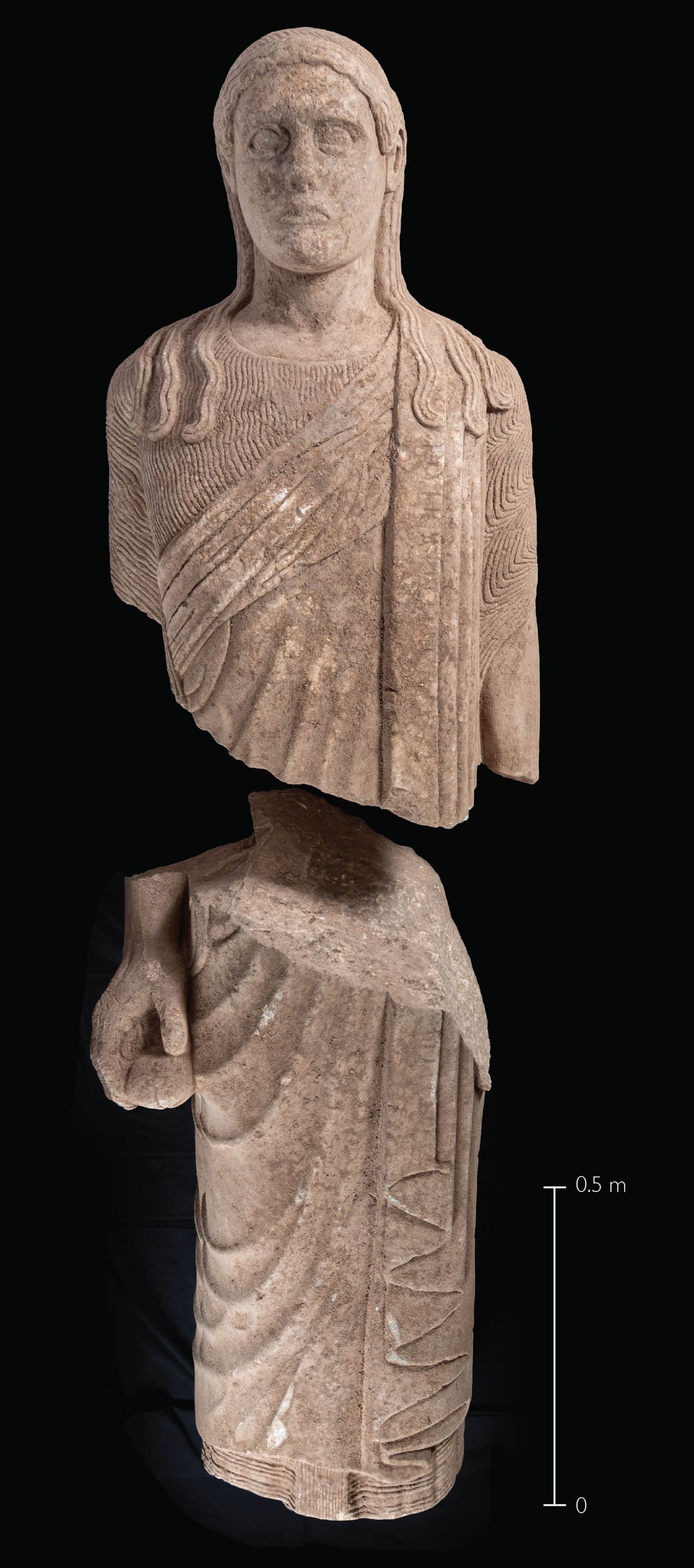
Archaeologists estimate the figure would have stood taller than 7 feet.
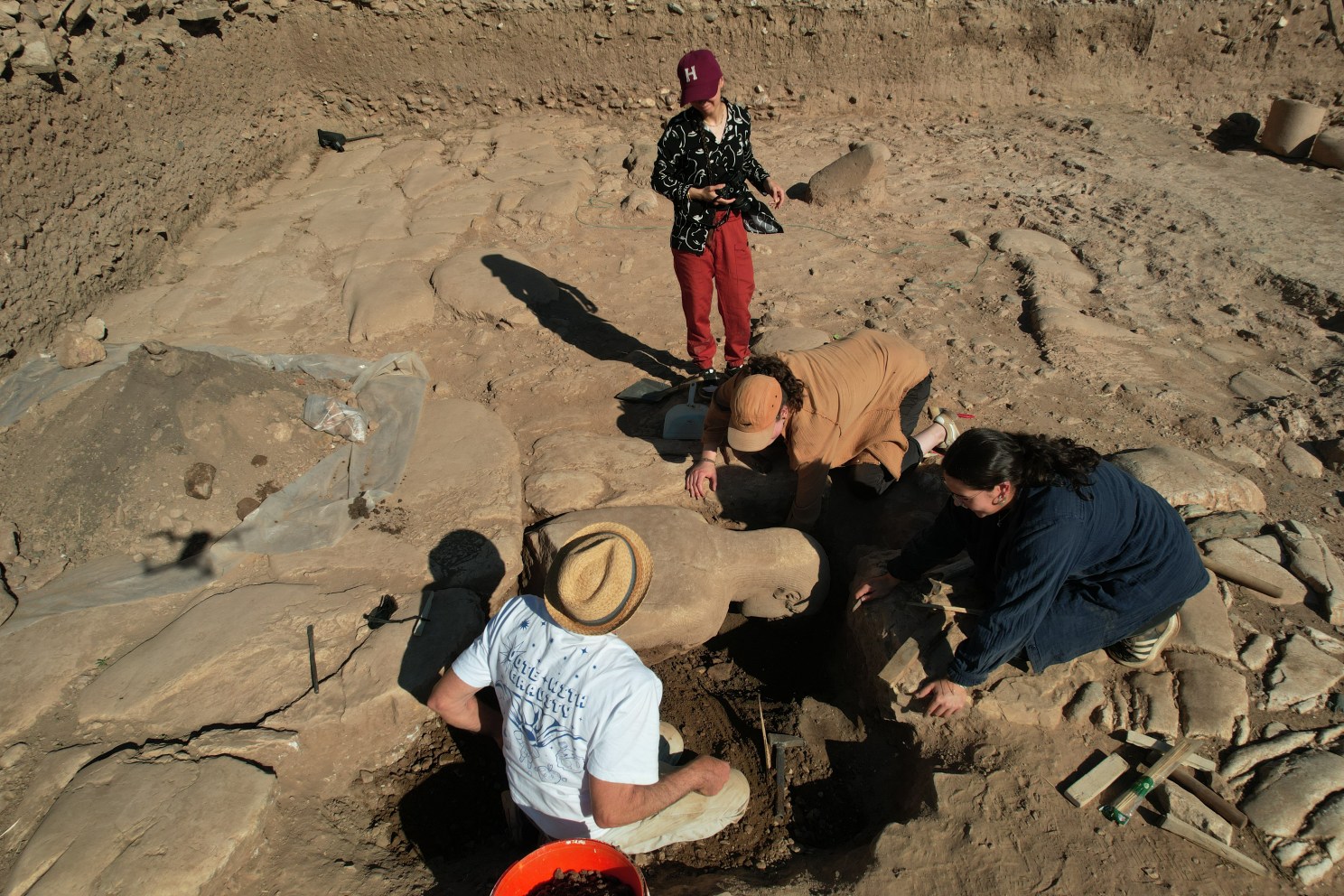
The team lifts the sculpture from the road.
The people of the Lydian empire, which controlled what is now western Türkiye from about the middle of the 7th century to the middle of the 6th century B.C., left little written record of their civilization. Much of what was known came from what Greeks and Romans wrote about it — and from their point of view, the Lydians were eastern barbarians. But archaeological evidence has revealed that Sardis, the capital of the Lydian empire, was a center for luxury and culture, particularly perfumes and fine clothing.
James McCurley ’27, a Classics and Physics concentrator who worked on the dig over the summer, said the excavation of the mammoth statue proved the highlight of his experience. “After all the anticipation, I was worried the statue might be underwhelming, that we’d dig it up and find its front weathered beyond recognition. Discovering that the statue was not only well-preserved, but almost intact and 2,500 years old was a wonderful surprise.”
Conservators lifted the pieces from the ground on July 13 and transported them to an AES conservation lab to begin a thorough, and still ongoing, analysis.
Many details have been revealed since that early, excited guesswork.
At well over 7 feet tall, the figure would have towered over onlookers. He wears a tunic of thinner material (called a chiton in Greek), a diagonally wrapped mantle, and a distinctive, perhaps local garment with fine horizontal folds. The design has few parallels in ancient sculpture, said Harvard Art Museums’ Bahadir Yildirim, who is the Sardis expedition administrative director and who participated in the cleaning and analysis.
“The surprising thing about this piece is that it has some features that haven’t been seen on sculpture like that … the drapery underneath, the distinctive horizontal patterning,” he said.
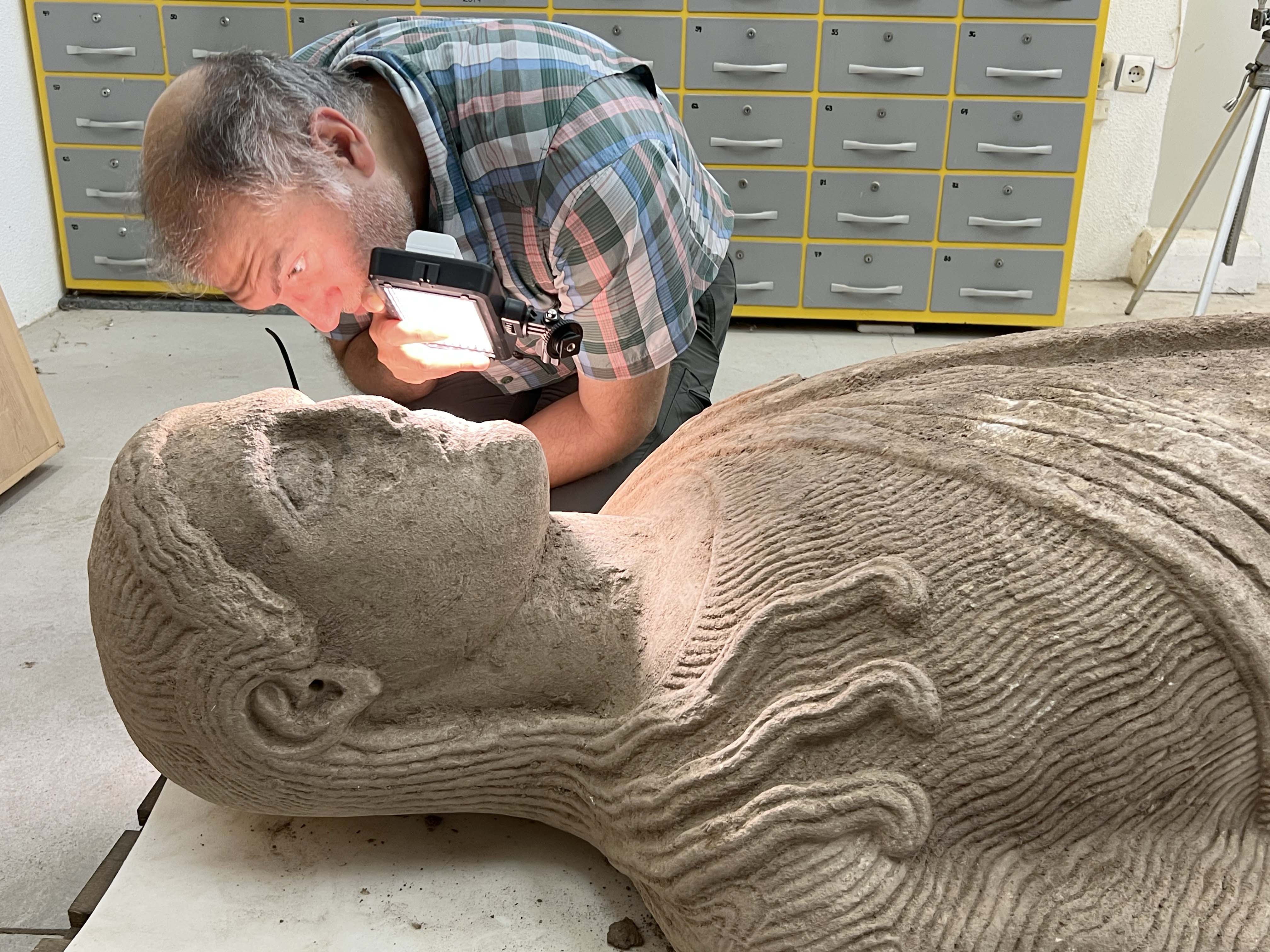
The statue’s bolt-upright stance, long coiffed hair, and manner of dress resemble archaic Greek sculptures from the 6th century B.C. But the prominent veins and other anatomical details betray a much later date, likely in the 470s to 450s B.C., the early Classical period in Greece. During this era, Sardis was no longer an independent capital but had been conquered by the Achaemenid Persians and had become a major provincial center.
But the figure shows no Persian influence. The statue, therefore, comes across at first as a very traditional sculpture, adhering to age-old hairstyles and dress codes, while also hinting at familiarity with the current styles in Greece where such a sculpture might have been depicted as a nude youth. But the Lydians and other Anatolian peoples did not exercise naked and did not depict their young men without clothes.
The references to multiple cultural traditions and time periods reflect an artist with a complex understanding of his or her place in the world, Cahill said.
“This sculptor knows about contemporary styles in Mediterranean and Anatolian sculpture, the interest in hands and the structure of the face and so forth, and yet [the statue is] wearing clothes from 100 years earlier,” Cahill said. “I think they’re very clearly looking back to their own past.”
The original placement and purpose of the monumental statue is unknown. But one possibility is that it stood at the sanctuary of Cybele, the native mother goddess, which has never been found but has been described in literary sources as one of the most important sanctuaries in Sardis. It was common for wealthy citizens or political leaders to ensconce their likeness in the presence of a deity so they could effectively worship in perpetuity, explained Ebbinghaus.
“You put yourself in a prominent place where your fellow citizens or subjects can see you, but also you are indeed worshiping the god — and if you’re a ruler, drawing legitimization from the relationship to that deity. So it might well have been an important person being represented,” she said.
Most ancient marble statues were painted, and this one was likely no exception. The Sardis conservation team is now working to clean the statue while preserving any remaining flecks of paint for color analysis.
When conservation is complete, the fragments will be joined and the statue will be displayed in a Turkish archaeological museum, along with other finds from Sardis. The first Harvard excavation of Sardis, a joint project with Cornell University, began in 1958 and was led by George M.A. Hanfmann (1911-1986), a professor of fine arts at Harvard and curator of ancient art at the Fogg Art Museum.