Featured series


Campus & Community
First rule of a disease fighter: Be curious
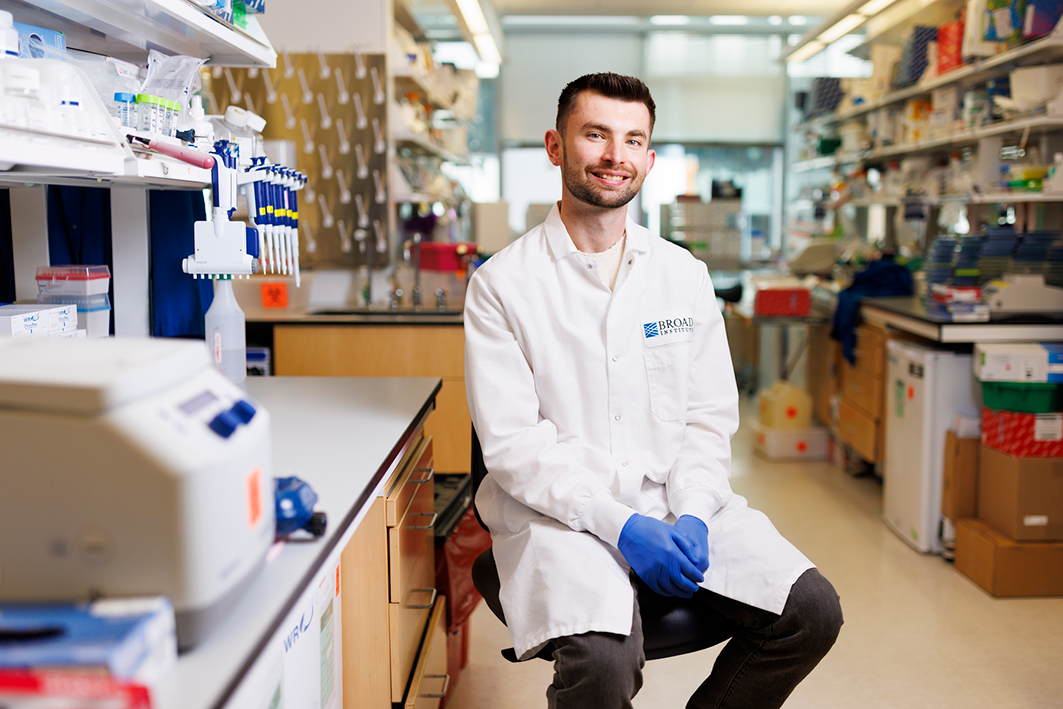
Isaac Witte.
Veasey Conway/Harvard Staff Photographer
Ph.D. candidate Isaac Witte retraces ‘incremental advances’ that unlocked CRISPR technique
Part of the Commencement 2026 series
A collection of features and graduate profiles covering Harvard’s 375th Commencement.
It was DNA replication that first captured Isaac Witte’s scientific imagination as a high school student in Overland Park, Kansas. “It’s this orchestration of so many different proteins and molecules that come together to do this core element of life,” he said. It always stuck with him how evolution could generate such a complex system that works — and that our cells run all the time.
It wasn’t just the discovery that intrigued Witte — who this month will receive his Ph.D. in biological and biomedical sciences from Harvard Griffin GSAS — but the experiment behind it, “the most beautiful experiment in biology.” By growing generations of E. coli with a heavy isotope of nitrogen and then allowing the bacteria to divide in a solution with a lighter isotope, Matthew Meselson and Franklin Stahl found that the new DNA was of an intermediate weight, proving Watson and Crick’s semiconservative replication hypothesis.
In the summer after his first year at the University of California, Berkeley, Witte began a research fellowship at Kansas City’s Stowers Institute for Medical Research, where he learned about RNA interference — depleting certain genes in a cell and seeing how the changes affected regeneration. Depending on the genetic pathway he manipulated in flatworms, they could end up with a couple of heads or tails.
His interest in RNA interference led Witte to the lab of like-minded Jennifer Doudna when he returned for his sophomore year, a few years before Doudna received a Nobel Prize for her developments in CRISPR technology. Though Witte was interested in the gene-editing tool’s promise for humans, he was more interested in studying the naturally occurring mechanism behind it.
“There’s a huge diversity within CRISPR systems,” a product of bacteria defending themselves against invading DNA sequences, like phages, and other mobile sequences called transposable elements, Witte said. He began studying CRISPR systems beyond the popular Cas9 mechanism, well-known for its simplicity and efficiency. Some CRISPR systems cut not DNA, but RNA. Others didn’t seem to cut anything at all.
One of the achievements of his undergraduate research was developing a small CRISPR system that bound to DNA and then began indiscriminately cutting other sections. Conducted in a test tube, the system could be useful for diagnostic tests, revealing the presence of certain DNA species. Witte dug deeper into the technology for a company run by former members of Doudna’s lab, seeking to improve the system’s ability to detect dangerous pathogens and viruses that might be present in a patient’s sample. He also discovered a new mechanism for how a Cas protein could modify CRISPR RNA.
Witte came to Harvard to study a different tool: phage-assisted continuous evolution (PACE). The process, developed by Witte’s adviser, Thomas Dudley Cabot Professor of the Natural Sciences David Liu, allows scientists to accelerate by more than 100-fold the evolution of proteins, nucleic acids, and other biomolecules.
Witte found that PACE could help solve a long-standing problem with gene editing. Researchers had recently discovered a CRISPR system in nature that didn’t have to cut DNA to insert new DNA; bacteria simply searched for a target site and latched on. While many CRISPR applications make one edit at a time, the newly discovered mechanism had the potential to perform many more sequence changes at once.
The mechanism had major potential for treating a wide swath of genetic disorders that require tens or even hundreds of genetic mutations. Instead of targeting each mutation individually, the process could insert an entirely healthy version of the gene.
The problem that Witte had to solve was that the naturally occurring CRISPR system rarely functioned in human cells. He and his collaborators decided to use PACE to evolve the system toward higher activity.
The process was challenging. The researchers were performing a directed evolution campaign in bacteria — but, in the end, they really wanted the higher activity to take place in human cells. Determining which traits to evolve the bacteria toward would dominate Witte’s Ph.D. career. Ultimately, he figured out which of the seven protein components the team wanted to increase and which they didn’t.
Co-evolving all the proteins together didn’t work. Boosting the presence of a transposase protein called TNSB had the strongest effect, as it was responsible for joining the new DNA to the target site. Over months, Witte and his collaborators boosted the rate of the process by more than 100 times in human cells.
The results were published in Science, which detailed the potential for the new technique to correct complex disease-causing mutations all at once, without the need for regulatory approval of each specific change.
“It really was this progress of many incremental advances that amounted to these large improvements.”
There was no single “Aha!” moment in Witte’s research. The process was incremental; in each evolution campaign, a certain protein might be five- or 10-fold more present than before. Then he would run another campaign — and that would take several months, as well. “It really was this progress of many incremental advances that amounted to these large improvements,” he said. “I think that was the most surprising and encouraging result.”
Witte’s mechanism could help treat a variety of loss-of-function diseases, especially ones that affect the liver, which has a cell type that’s relatively easy to target with Witte’s CRISPR technique. There are still years until the invention can be used in therapies; though it’s worked in a cell line, it hasn’t yet translated into cell types in the body. Many scientists, including Witte, will try to bridge this gap.
Even as he and others work to apply and optimize this new technology, Witte wants to make sure he has plenty of time to explore new ideas — the reason he got into science in the first place. “The curiosity-based focus is something I’d like to do long-term as a scientist,” he said. As he’s discovered, it’s curiosity, combined with persistence, that has led to the biggest scientific breakthroughs.